

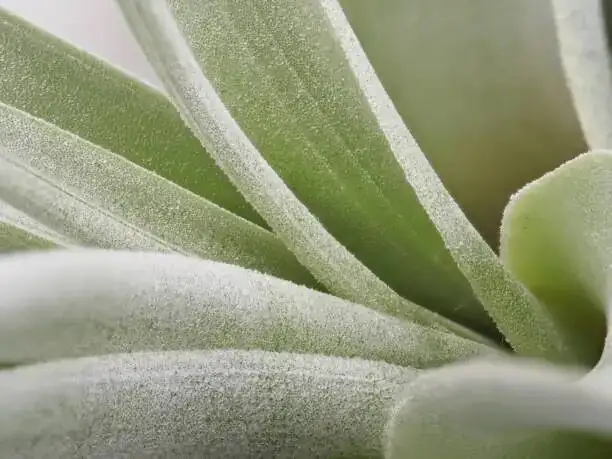
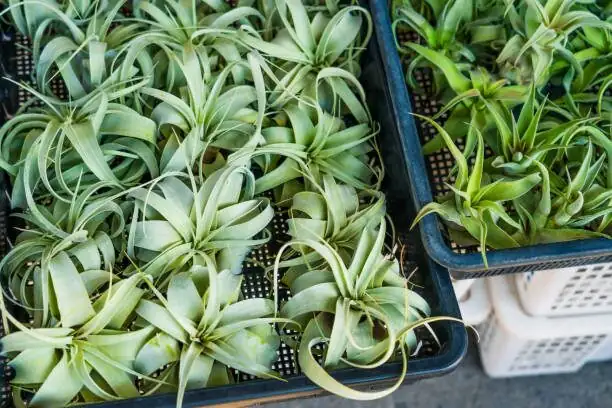
If a plant were a sculpture, Tillandsia xerographica would be the showstopper—broad, silvery ribbons curling into an elegant rosette, earning its nickname “King of the Air Plants.” Native to bright, breezy dry forests of southern Mexico through Honduras, it’s built for light, air, and restraint. Yet myths about watering and airflow still trip up even careful growers. Let’s bust the big ones—and dial in your water quality, rinse rhythm, and simple fan setups—so your xerographica stays firm, silver, and gloriously curly.
Meet the plant
- Scientific name: Tillandsia xerographica (Bromeliaceae, genus Tillandsia)
- Common names: King of the Air Plants, Giant Air Plant, Silver Air Plant
- Look: Silvery-gray, strap-like leaves covered in dense trichomes (tiny scales) that drink in moisture and protect from intense light; leaves curl into a layered rosette
- Size: Typically 6–24 in (15–60 cm) across; mature bloom spike can reach 12–35 in (30–90 cm), with small purple tubular flowers
- Habit: Epiphytic rosette; after flowering, the mother slowly declines while producing pups
Myth-busting water and wind
Myth 1: “All air plants need a weekly soak.”
Reality: Xerographica is a xeric species—born for bright light, lower moisture, and fast drying. It generally prefers thorough misting over soaking.
- What works best: Mist generously so all leaves are evenly moistened, then ensure the plant dries completely within about 4 hours.
- Quick rinse use-case: In very dry homes or after a dusty week, give a quick 5–10 second rinse, then dry fast.
- Soaks? Avoid routine soaks. Only consider a short rescue soak if the plant is severely dehydrated (leaves limp, accordion-wrinkled), then dry decisively and improve airflow.
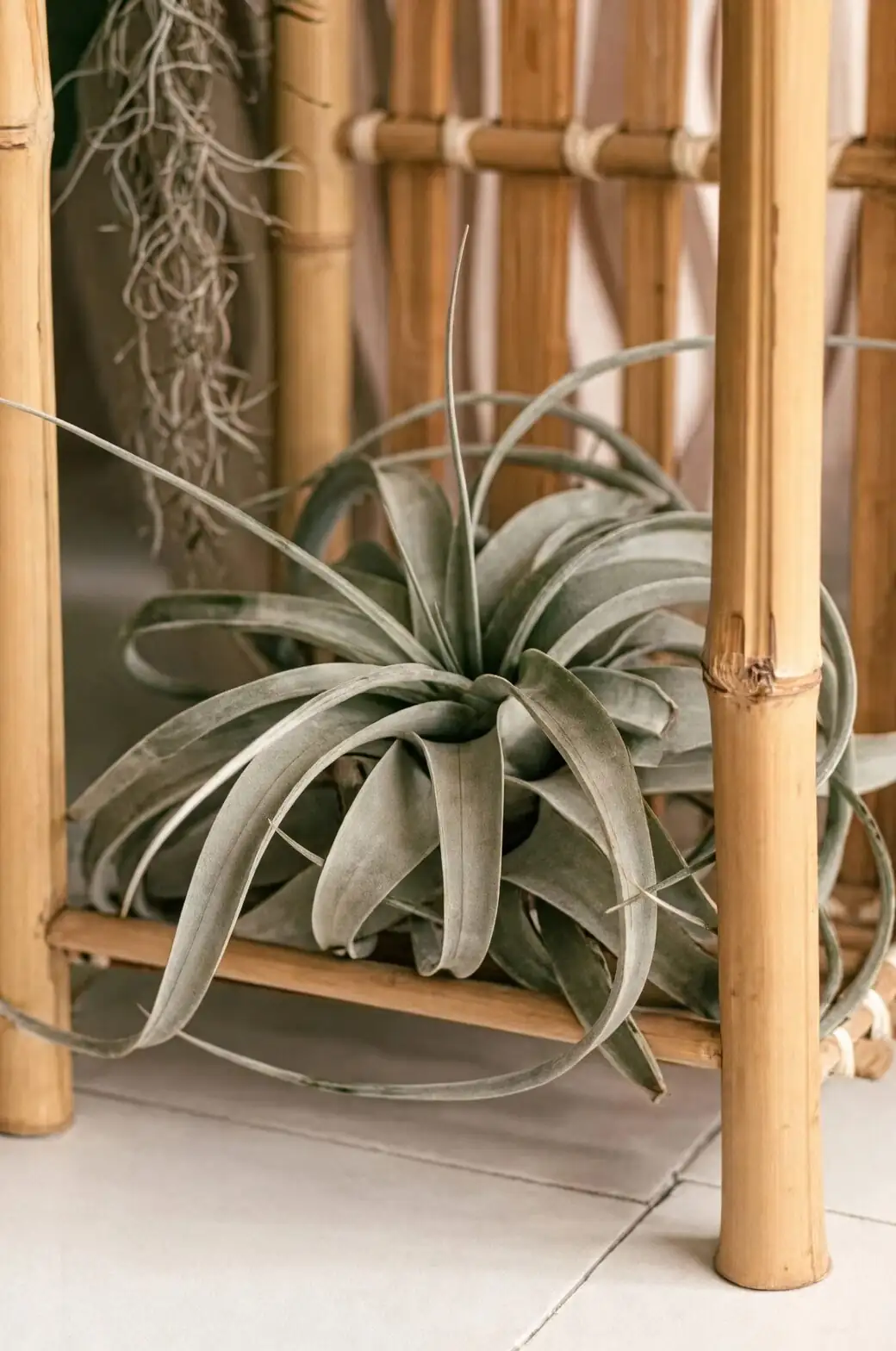
Myth 2: “Fans dry air plants out.”
Reality: Air is life for xerographica. Strong airflow is the single best rot-preventer and the secret to crisp, silver leaves.
- Target dry-down: Completely dry within about 4 hours after any moisture.
- Airflow = insurance: Good wind lets you water thoroughly without fear—what hurts is lingering wetness, not moving air.
Myth 3: “Any water is fine—plants don’t care.”
Reality: Minerals matter. High-TDS water leaves crusty deposits that clog trichomes and dull the leaf surface over time. Quality water is the quiet superpower behind great color and growth.
Myth 4: “Closed terrariums are perfect.”
Reality: Xerographica hates trapped moisture. Display it on a mount, mesh, or airy surface. If you must use a vessel, choose one that’s highly ventilated and only return the plant after it is fully dry.
Ideal water quality: TDS, sources, and simple choices
What is TDS?
Total Dissolved Solids (TDS) measures the dissolved minerals in water. For trichome-heavy species like xerographica, lower is better to prevent buildup.
- Sweet spot: About 10–100 ppm TDS is ideal
- Acceptable with extra rinsing: Up to ~150 ppm (expect more frequent mineral spots)
- Hard limit to avoid: Very hard or softened water (softened water often contains sodium that plants dislike)
Best water sources (ranked)
- Rainwater or RO (reverse-osmosis) water: Clean, low TDS; excellent for routine misting and rinsing
- Filtered tap water: Good if your filter reduces hardness/chloramine; check TDS
- Spring or bottled water: Often fine, but verify TDS—some are mineral-heavy
- Municipal tap water: Works in a pinch if not too hard; if >150 ppm, blend 1:1 with RO/rainwater to bring TDS down
- Tip: A pocket TDS meter is inexpensive and removes the guesswork.
Note on distilled/RO: These are great base waters. If you use only ultra-pure water, a light feeding monthly ensures the plant isn’t “on a diet” forever.
Preventing and clearing mineral buildup
Prevention
- Choose low-TDS water for routine misting
- Feed lightly (bromeliad/air-plant fertilizer at 1/4 strength) every 2–4 weeks in active growth, and follow with a plain-water rinse occasionally to flush residues
- Don’t let water dry in the leaf axils repeatedly if it’s hard—those spots add up
When to rinse
- After any fertilizing week (next watering should be plain water)
- If you’ve used harder tap water recently
- When leaves look “powdery-dull” with faint white flecks or gritty film
- After smoke, dust, or construction debris exposure
How to remove existing deposits (gentle method)
- Give a thorough rinse with low-TDS water and let dry quickly
- For stubborn crusts, use a very brief, dilute acidulated rinse: 1 teaspoon white vinegar per quart (5 mL per liter) of water for 10–20 seconds, then immediately rinse with plain low-TDS water and dry fast
- Always test a single outer leaf first
Watering, step-by-step (for most bright indoor settings)
- Frequency: 1–3 thorough mists per week in spring–summer; reduce to 1–2 in fall–winter
- Time of day: Morning, so it’s dry by midday–afternoon
- Technique:
- Mist until the entire rosette is evenly moistened (the silver will deepen slightly when wet)
- Gently shake off excess
- Set crown-down or on its side on a rack to drain
- Run airflow (see fan setups) to reach a complete dry-down within about 4 hours
Rescue rehydration (rare): If the plant is limp and wrinkled, a short soak may be used as triage. Keep it brief, drain thoroughly, and prioritize stronger airflow afterward to avoid rot.
Simple fan setups for fast dry-downs
You don’t need a wind tunnel—just a steady breeze that moves the leaf tips.
- Easiest: A ceiling fan on low after watering, 2–4 hours
- Desk or clip-on fan:
- Distance: 2–6 feet (0.6–1.8 m) from the plant
- Speed: Low to medium, enough to flutter the leaf ends
- Timer: 2–3 hours continuous after watering, or 15 minutes on / 15 minutes off cycles until dry
- USB shelf fan for displays:
- Mount the fan above or beside the plant, angled so air skims across the rosette
- Use a smart plug or USB timer on watering days
- Open-window assist:
- On mild days, park the plant near an open window for an hour or two of real wind
- Outdoor “drying station” (warm, frost-free climates):
- Place in bright shade with moving air for a few hours after watering; return indoors once dry
Pro tip: Always drain crown-down for 10–20 minutes before setting under a fan. This prevents water from pooling at the base—your number-one rot risk.
Light, temperature, and placement (quick guide)
- Light: Bright light with some direct sun is ideal. Near an east window or filtered south light works well. Too little light = greener, softer leaves; too much harsh sun = bleach or scorch
- Temperature: 59–86°F (15–30°C) is the comfort zone; keep it frost-free and protect from cold below 50°F (10°C)
- Humidity: Moderate (around 40–60%) is great—higher is fine if airflow is strong
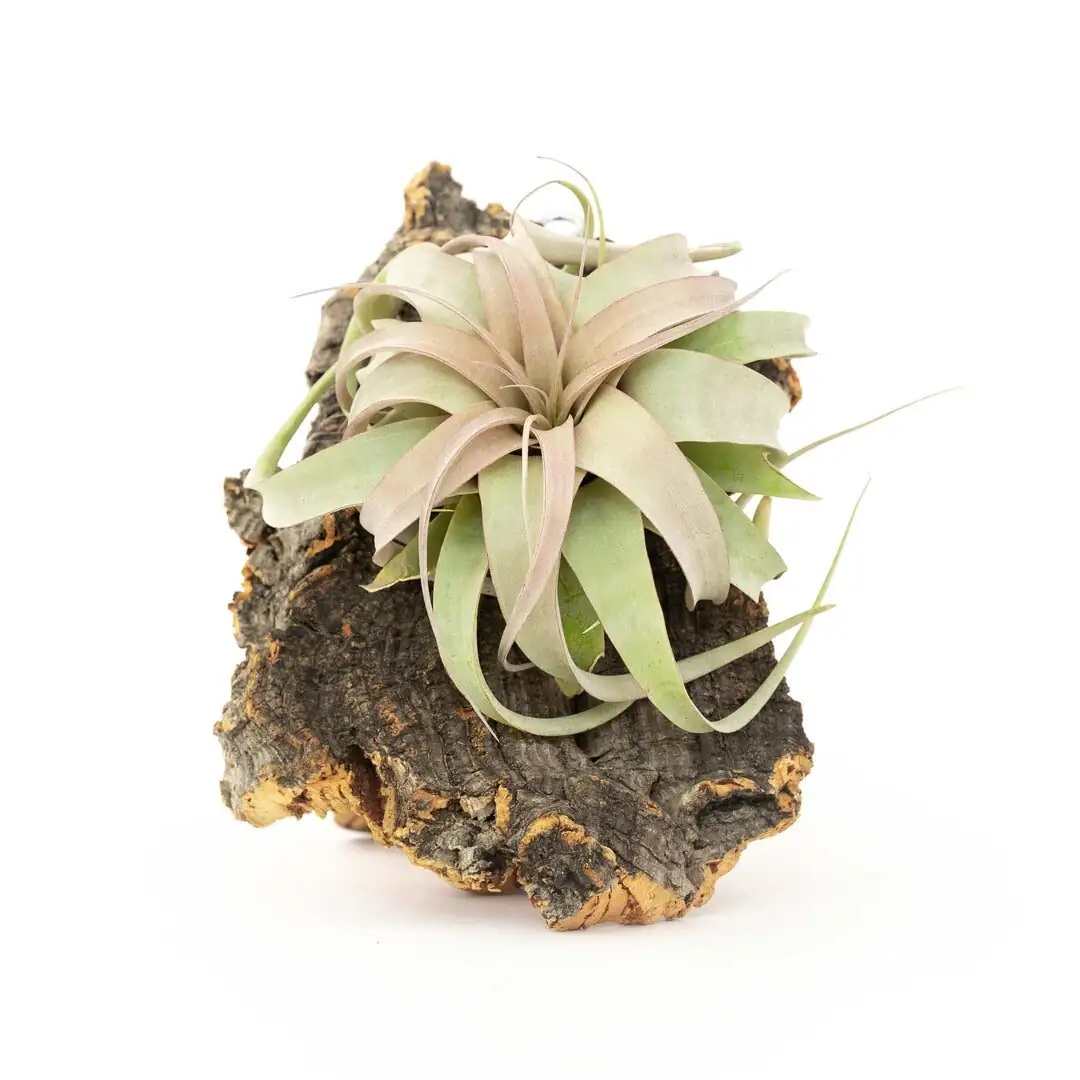
- Display: No soil needed; mount on wood/rock or set on a dry, airy surface. Avoid closed containers that trap moisture
A seasonal, ultra-simple routine
- Spring–summer:
- Light: Bright and bold (some direct morning sun)
- Water: 2–3 thorough mists weekly; quick rinse as needed
- Feed: Every 2–4 weeks at 1/4 strength; plain-water rinse occasionally
- Air: Fan assist on watering days; target dry in ~4 hours
- Fall–winter:
- Light: Maximize brightness near the best window
- Water: Cut back to 1–2 mists weekly; water early; fan assist is essential
- Warmth: Keep cozy and away from cold drafts
Troubleshooting fast
- Brown leaf tips
- Common causes: Very dry air, inconsistent watering, mineral-heavy water
- Fix: Slightly increase misting, switch to rain/RO, ensure strong airflow and bright light
- Soft, collapsing base or sour smell
- Cause: Staying wet without airflow (rot)
- Fix: Remove any soggy leaves, increase drying speed, water earlier, never allow water to sit in the crown
- Pests (mealybugs/scale)
- Spot treatment: Dab with 70% isopropyl alcohol on a cotton swab; improve airflow
- Avoid oil-heavy sprays on air plants
Flowering, pups, and patience
With great light and excellent airflow, a mature xerographica may throw a long-lasting spike with small purple tubular blooms. After flowering, the mother rosette slowly steps back while producing pups. Don’t “trim down” the mother—let nature do the handoff.
Symbolism and the “flower language” question
Traditional flower language rarely includes air plants, but modern culture has given xerographica a clear vibe: independence, resilience, and minimalist elegance. It thrives without soil, turning air and light into structure and grace—an icon of doing more with less. That’s the real message on your shelf.
—
Bottom line: For Tillandsia xerographica, think clean water, light feeding, and big air. Keep TDS low, rinse away residues, and lean on a simple fan for a quick, complete dry within about four hours. Master the myths, and the King will reward you with a silver crown worthy of the name.