

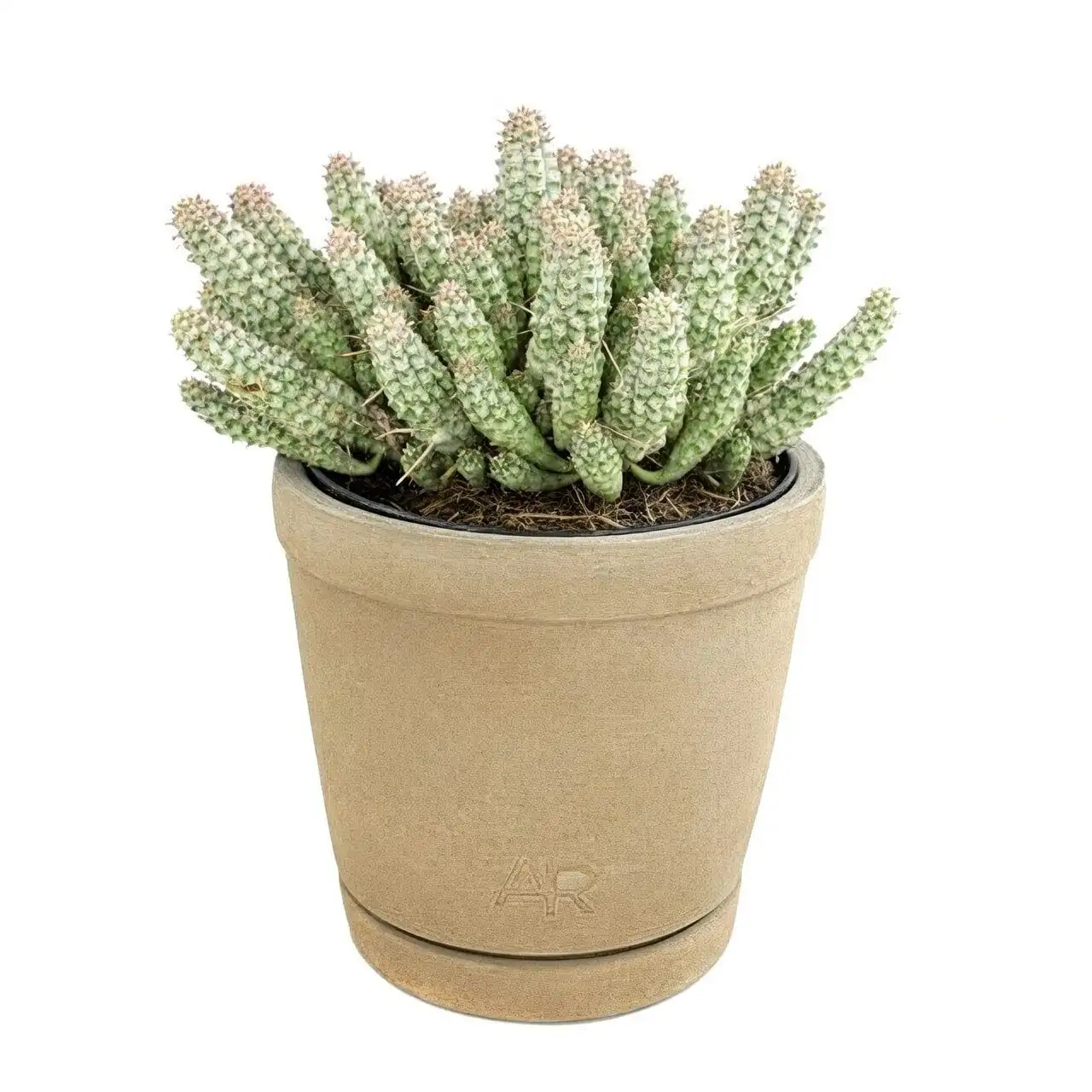
Craving a drought-tolerant display with sculptural punch? Red Coral Spurge (Euphorbia mammillaris) is your patio’s architectural anchor—compact, upright, and lined with short red spines that look like jewelry on gray‑green ribs. Give it bright light, quick‑draining soil, and long, lazy intervals between waterings, and it will shine in modern bowls, terrace troughs, and sun-washed urns. Below, you’ll find foolproof pairing principles and plug‑and‑play layout recipes that match its light and soil preferences—so everything in your container thrives on the same care.
Meet Red Coral Spurge (Euphorbia mammillaris)
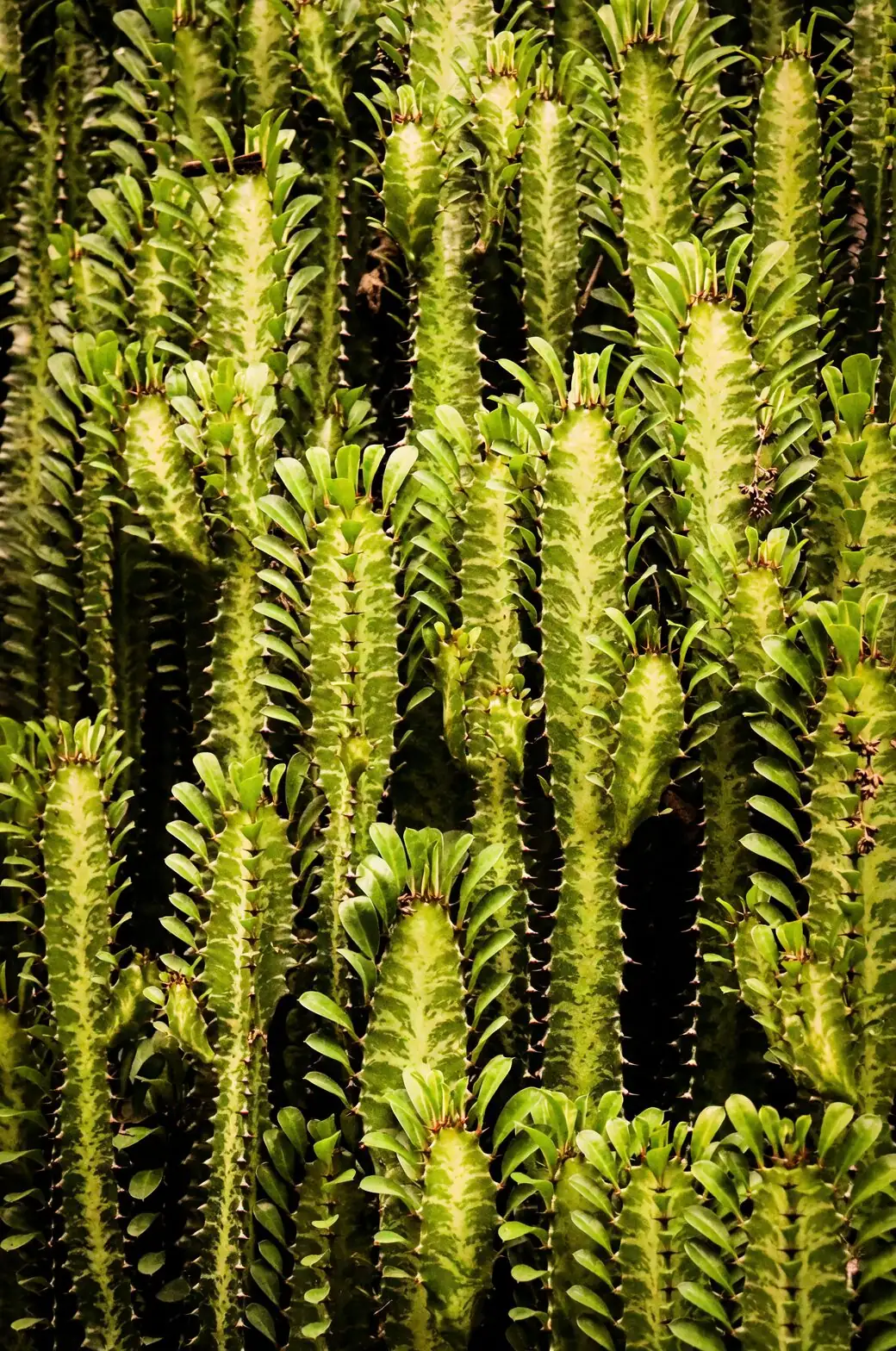
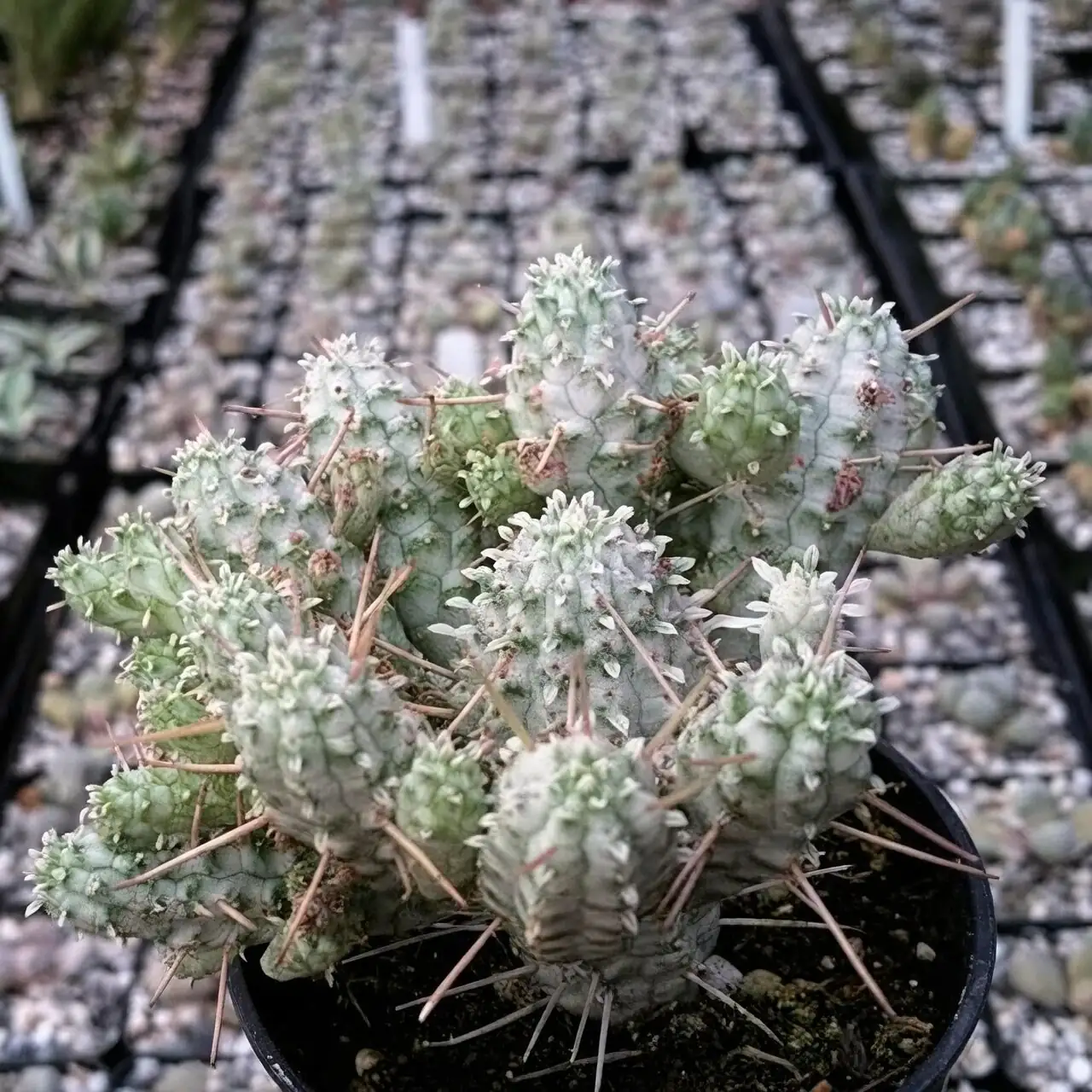
- Look and size: A branching, cactus‑like Euphorbia that forms tight clumps of ribbed, gray‑green stems banded with short red to reddish‑brown “spines.” Typically to 30 cm (12 in) tall and 20–40 cm (8–16 in) wide over time.
- Origin: South Africa (Cape Provinces).
- Light and heat: Bright light to full sun, about 4–6+ hours daily. Acclimate to stronger sun to prevent scorch. Warmth-loving: ideal 18–30°C (64–86°F). Keep above 10°C (50°F).
- Soil and water: Very fast‑draining cactus/succulent mix fortified with mineral grit or pumice. Water thoroughly, then let the mix dry completely. In spring–summer, usually every 10–21 days; in winter, every 3–6 weeks. Never leave pots sitting in water.
- Hardiness and humidity: USDA 10–11; not frost hardy. Prefers drier air and excellent airflow.
- Flowers: Small, yellowish‑green cyathia in spring–summer—subtle; it’s the silhouette you grow it for.
- Safety note: Like all spurges, it has milky latex sap that is irritating/toxic. Wear gloves and eye protection when pruning and keep away from children and pets.
The pairing principle: match the rhythm
Great drought‑tolerant containers are less about color and more about rhythm—light, drainage, drying time, and feed. Design for the same care schedule and everything looks good longer.
- Light sync: Choose full‑sun or high‑light partners that enjoy at least 4–6 hours of direct sun once acclimated.
- Soil sync: Use a gritty, mineral‑rich blend. A reliable recipe:
- 40% high‑quality cactus/succulent mix
- 40% pumice or coarse perlite
- 20% coarse sand or 3–6 mm gravel
- Watering sync: Deeply soak, then withhold until bone‑dry. This favors Euphorbia mammillaris and most rosette succulents, small aloes, crassulas, sedums, and many small cacti.
- Pot choice: Unglazed terracotta breathes and speeds drying; glazed or metal pots run wetter (compensate with extra pumice). Always use a drainage hole.
- Top-dress: 1–2 cm of mineral gravel or crushed lava curbs algae, prevents soil splash, and spotlights form.
- Seasonal placement: Summer outdoors in a warm, sheltered, sunny spot; bring indoors before nights drop below 10°C (50°F).
Ready‑made layout recipes for drought‑tolerant displays
1) Sun‑Baked Statement Bowl (low, modern silhouette)
- Vessel: 45–60 cm (18–24 in) wide, low bowl (terracotta or concrete) with drainage.
- Soil: Gritty blend (as above); add an extra 10% pumice in humid climates.
- Plants:
- 1 Euphorbia mammillaris (centered slightly off‑axis for movement)
- 3 Echeveria (e.g., ‘Lola’ or ‘Blue Atoll’) as mid‑ring rosettes
- 5 Sedum nussbaumerianum to weave warm amber tones
- 3 Senecio radicans (String of Bananas) to spill over the rim
- Finish: Top‑dress with crushed lava and tuck 2–3 smooth cobbles to echo the ribs.
- Care rhythm: Water thoroughly, then let dry fully—often every 10–14 days in summer; 4–5 weeks in winter indoors. Full sun with gradual acclimation.
Why it works: Every plant loves sharp drainage and bright sun; the upright “corn‑cob” Euphorbia contrasts with satiny rosettes and playful trails.
2) Desert Duet in Terracotta (compact patio accent)
- Vessel: 30 cm (12 in) terracotta cylinder.
- Plants:
- 1 Euphorbia mammillaris (primary thriller)
- 1 Aloe juvenna (Tiger Tooth Aloe) tucked off‑center as a vertical counterpoint
- 3 Graptopetalum paraguayense rosettes to soften the base
- Palette: Steely green ribs, red spines, tiger‑tooth texture, and opalescent rosettes.
- Placement: 6+ hours of sun; shield during the hottest week of summer while acclimating.
- Water/feeding: As above; feed lightly with diluted cactus fertilizer (¼–½ strength) every 4–6 weeks in spring–summer; none in winter.
3) Tall Urn “Thriller‑Filler‑Spiller” (entryway drama)
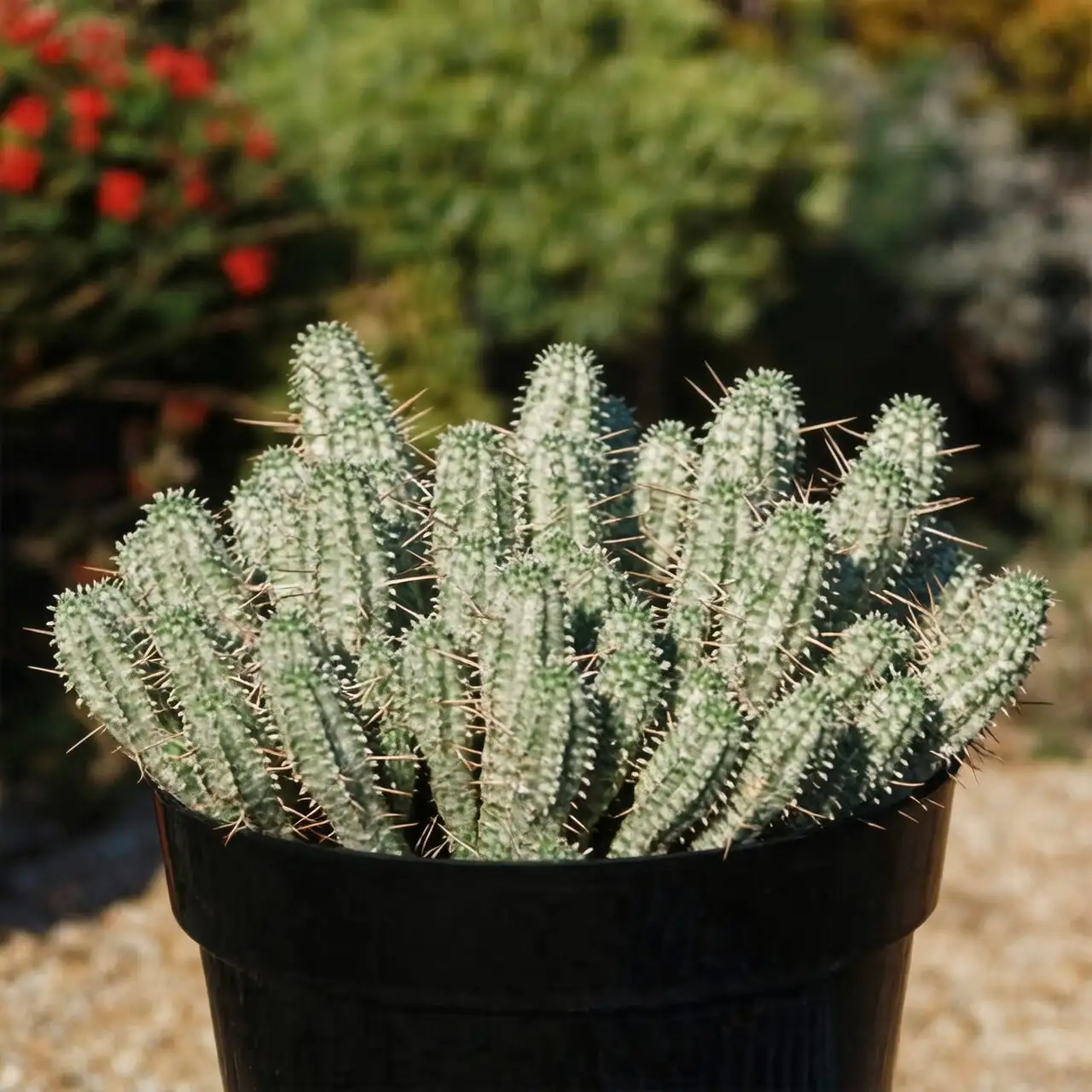
- Vessel: 35–40 cm (14–16 in) tall urn with a broad mouth.
- Plants:
- Thriller: 1 Euphorbia mammillaris (center‑back)
- Filler: 1 Crassula ovata ‘Hobbit’ to echo tubular forms
- Spiller: 2–3 Senecio radicans or S. serpens (blue chalksticks for a low spill alternative)
- Accent: 1–2 small Mammillaria cacti for textural punctuation
- Soil trick: Place a flat shard over the drain hole, not pot shards in the bottom. Keep the mix uniform top to bottom to prevent perched water.
- Water: Soak, then wait for a complete dry‑down—often 12–18 days in summer depending on heat and pot material.
4) Gravel‑Garden Railing Trough (linear color story)
- Vessel: 75 × 20 cm (30 × 8 in) trough with multiple drain holes.
- Plants (spaced to allow growth):
- 2 Euphorbia mammillaris, 30 cm apart
- 5 Echeveria ‘Perle von Nürnberg’ for cool mauve
- 7 Sedum rubrotinctum ‘Aurora’ threaded between rosettes
- 3 Kalanchoe tomentosa for fuzzy silver contrast on the breezier end
- Top‑dress: Pale granite chips for high contrast with mauves and greens.
- Rhythm: Full sun, excellent airflow, water every 14–21 days in summer after a full dry‑down.
5) Slim Ledge Desert Trio (windowsill or balcony ledge)
- Vessel: 25 cm (10 in) rectangular planter, terracotta.
- Plants:
- 1 Euphorbia mammillaris (center)
- 2 Mammillaria elongata ‘Copper King’ (front corners) for coppery echoes
- Note: If you add a haworthia, place it on the slightly shadier side or behind a taller stone—haworthias prefer bright light with gentler midday exposure, but share the same fast-draining soil and sparse watering.
- Care: Bright window with 4+ hours of sun; indoors water every 2–3 weeks in summer; much less in winter.
Acclimation, watering, and feeding—make the rhythm effortless
- Sun step‑up: Move from bright shade to morning sun, then add midday sun over 10–14 days to prevent scorch.
- Watering: Always soak thoroughly (until water drains) and then wait for a complete dry‑down. A wooden skewer pushed to the pot’s bottom should come out dry before you water again.
- Seasonal cadence:
- Spring: Increase light and water; repot if rootbound; start light feeding.
- Summer: Maximum sun; water only when fully dry; watch for mealybugs and scale.
- Autumn: Reduce water and stop feeding.
- Winter: Keep bright but drier and warmer than 10°C (50°F).
Potting mix, pots, and top‑dress—what to buy

- Mix components: Cactus/succulent mix, pumice (or coarse perlite), coarse sand or 3–6 mm gravel.
- Pots: Terracotta for faster drying; always with drainage.
- Top‑dress: Crushed lava, granite chips, or pea gravel.
- Tools and safety: Gloves, eye protection, long tweezers. Euphorbia sap is irritating—avoid contact with skin and eyes.
Propagation for matching companions
- Best method: Stem cuttings.
- Cut with clean tools; immediately rinse sap from the cut surface if needed, then allow both cutting and parent to dry and callus for several days.
- Set cuttings into dry, gritty mix. Begin very light watering only after roots form.
- Use rooted offsets to echo the main plant in other containers for a cohesive patio look.
Troubleshooting
- Soft, darkening base: Usually rot from overwatering or cold, wet soil. Unpot, cut away rot, save firm, healthy stems, let callus, and re‑root in a dry, gritty mix. Warmth and strong light help recovery.
- Pests: Mealybugs and scale love ribs and crevices. Dab early with isopropyl alcohol on cotton swabs or use horticultural soap; improve airflow.
- Etiolation (stretching): Increase direct sun gradually; rotate the pot weekly for even growth.
Symbolism and story
With its spiny, steadfast posture and drought resilience, Red Coral Spurge is widely linked with resilience and protection—it looks like a tiny fortress guarding your windowsill. Its cactus‑like guise is a classic case of convergent evolution: many Euphorbia species evolved in dry habitats and independently arrived at similar forms to true cacti, even though they’re not closely related. If you encounter “flower language” (花语) claims for spurges, they’re modern, ornamental interpretations rather than ancient lore; the real “message” here comes from the plant’s architecture—perseverance with style.
Quick answers
- Is it a cactus? No. It’s a Euphorbia with milky latex and specialized cyathia instead of typical cactus flowers.
- When can it go outside? Once nights stay above 10°C (50°F), acclimate gradually to sun and wind.
- Can I touch the red spines? Best not. They can prick, and stems exude irritating sap if broken.
Design it once, water it seldom, admire it always—Euphorbia mammillaris makes drought‑tolerant containers feel intentional, modern, and delightfully low‑maintenance.