
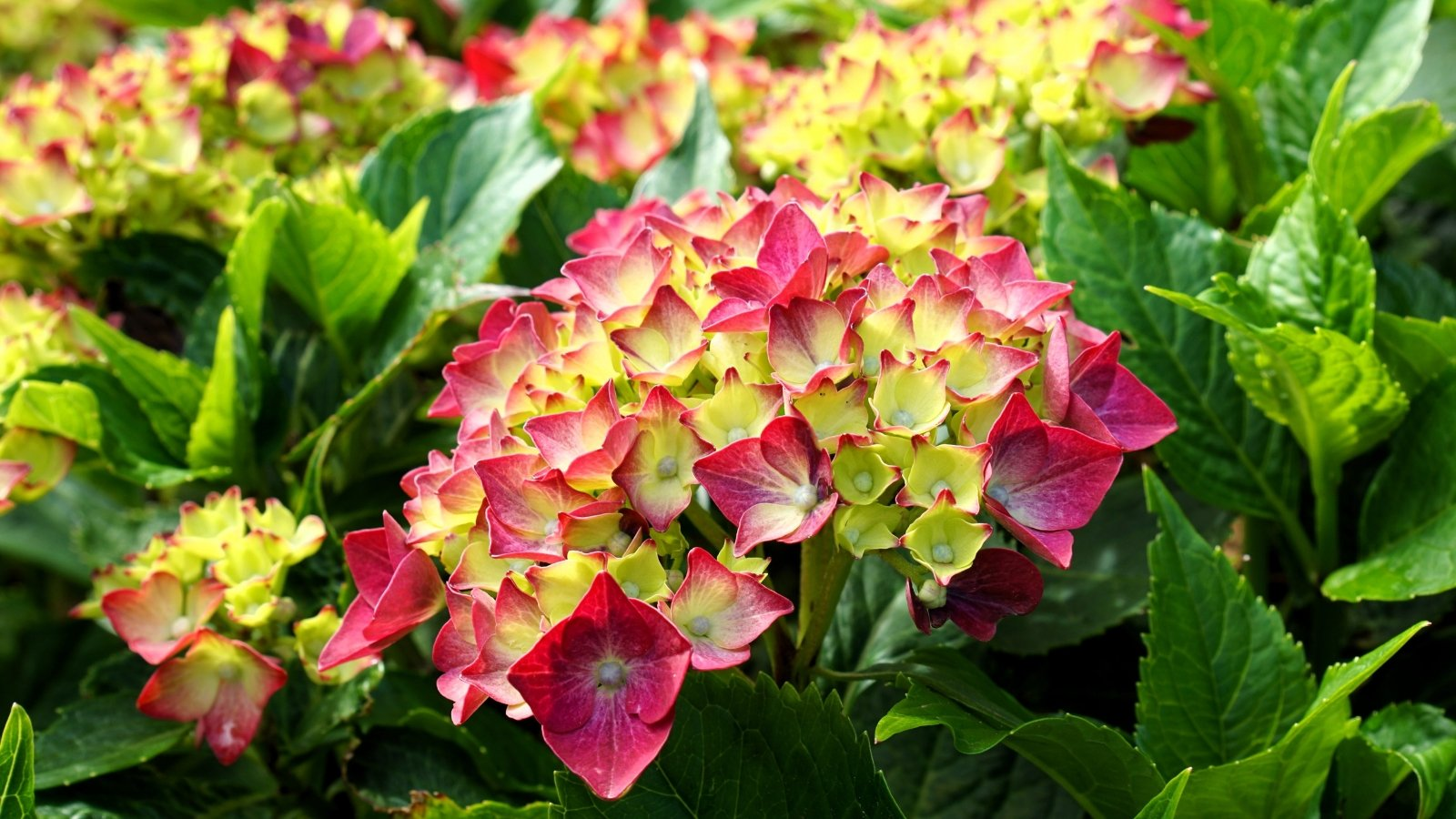
Imagine catching a hydrangea bloom mid–costume change—when its summer brights mellow to antique, papery tones. That’s the magic moment for drying Bigleaf Hydrangea (Hydrangea macrophylla), the beloved East Asian shrub of mopheads and lacecaps that can swing blue in acidic soils and blush pink in alkaline ones. Below, a creative, step‑by‑step guide to cutting at the perfect stage, choosing between vase‑dry and silica gel, preserving color, and turning those everlasting blooms into wreaths and centerpieces—plus a few smart safety notes.
Meet the bloom: quick portrait
- Name: Hydrangea macrophylla (Bigleaf Hydrangea; also called French, Mophead, and Lacecap Hydrangea)
- Origin: East Asia—primarily Japan, also China and nearby regions
- Season: Late spring through summer, with some rebloomers into fall
- Party trick: Many cultivars shift blue in more acidic soil (with available aluminum) and pink to rosy‑red in more alkaline conditions. White forms mostly stay white.
The “papery-snap” moment: how to cut at the perfect stage
Hydrangea macrophylla dries best when you wait past peak freshness. The ideal harvest window is late summer into early fall, when blooms have started to mature on the shrub.
Signs it’s time:
- Texture test: Sepals (those petal‑like parts) feel thicker, slightly papery or leathery, not thin and silky.
- Color mood: Bright summer tones have deepened to “vintage” hues—dusky pinks, blue‑greens, smoky purples, parchment whites with blush.
- Lacecap cue: Central fertile florets should be spent or drying; outer showy florets remain intact and papery.
When and how to cut:
- Time of day: Morning, after dew evaporates and before heat builds.
- Choose: Unblemished heads—no browning or water spots.
- Stems: Cut long (20–30 cm / 8–12 in), remove leaves to reduce moisture.
- Hydration cue: If you’re vase‑drying, place stems immediately in clean water to prevent a wilt dip.
- Bonus conditioning: For sturdier stems, recut at an angle and make a 1–2 cm vertical slit in the stem end. This helps with initial hydration before the slow‑dry.
What to avoid:
- Cutting too early (fresh, tender blooms); they wilt and shrivel.
- Cutting right after heavy rain; water‑logged heads brown more easily.
Drying paths: vase‑dry vs. silica gel (and when to use each)
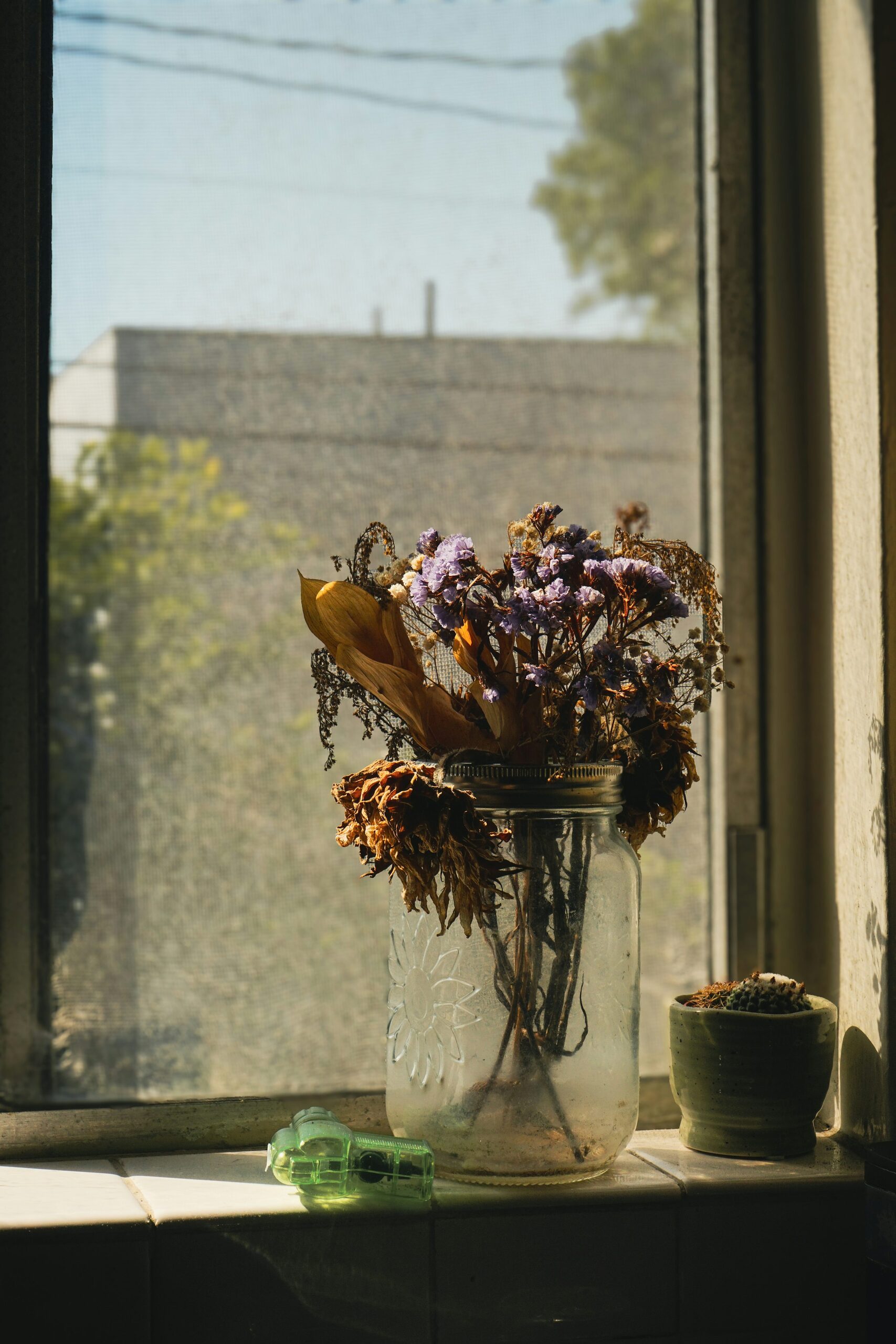
Method 1: Vase‑dry (aka “let the water run out”)
Best for: Easy, low‑cost drying with graceful shape and soft, antique color.
Step‑by‑step:
- Condition: Recut stems; strip leaves.
- Water level: Put 2–5 cm (1–2 in) of clean water in a vase—just enough to start, not a full vase.
- Placement: Bright, indirect light; good airflow; no direct sun or heat vents.
- Hands off: Let the water naturally evaporate over 1–3 weeks. The slow transition keeps heads from collapsing.
- Done: When blooms feel dry and hold their form, remove and use.
Pros:
- Incredibly simple; pretty to watch.
- Natural, timeless tones.
Cons:
- Colors mute and can fade with sunlight.
- Takes longer; not ideal for “electric” color retention.
Tip: Hanging upside down can work for some hydrangeas, but Bigleaf mopheads often droop when hung; vase‑drying supports the head as it firms.
Method 2: Air‑dry (standing or lightly supported)
Best for: Quick batches when space is limited.
Step‑by‑step:
- Tie small bundles (3–5 stems) and secure them upright in an empty vase or grid them in chicken wire so heads don’t flop.
- Keep in a dark, dry, ventilated room for 1–2 weeks.
Pros:
- No supplies needed.
Cons:
- More prone to shape distortion than vase‑dry.
Method 3: Silica gel desiccant
Best for: Preserving fuller shape and brighter colors, especially blues, pinks, and variegated tones.
Step‑by‑step:
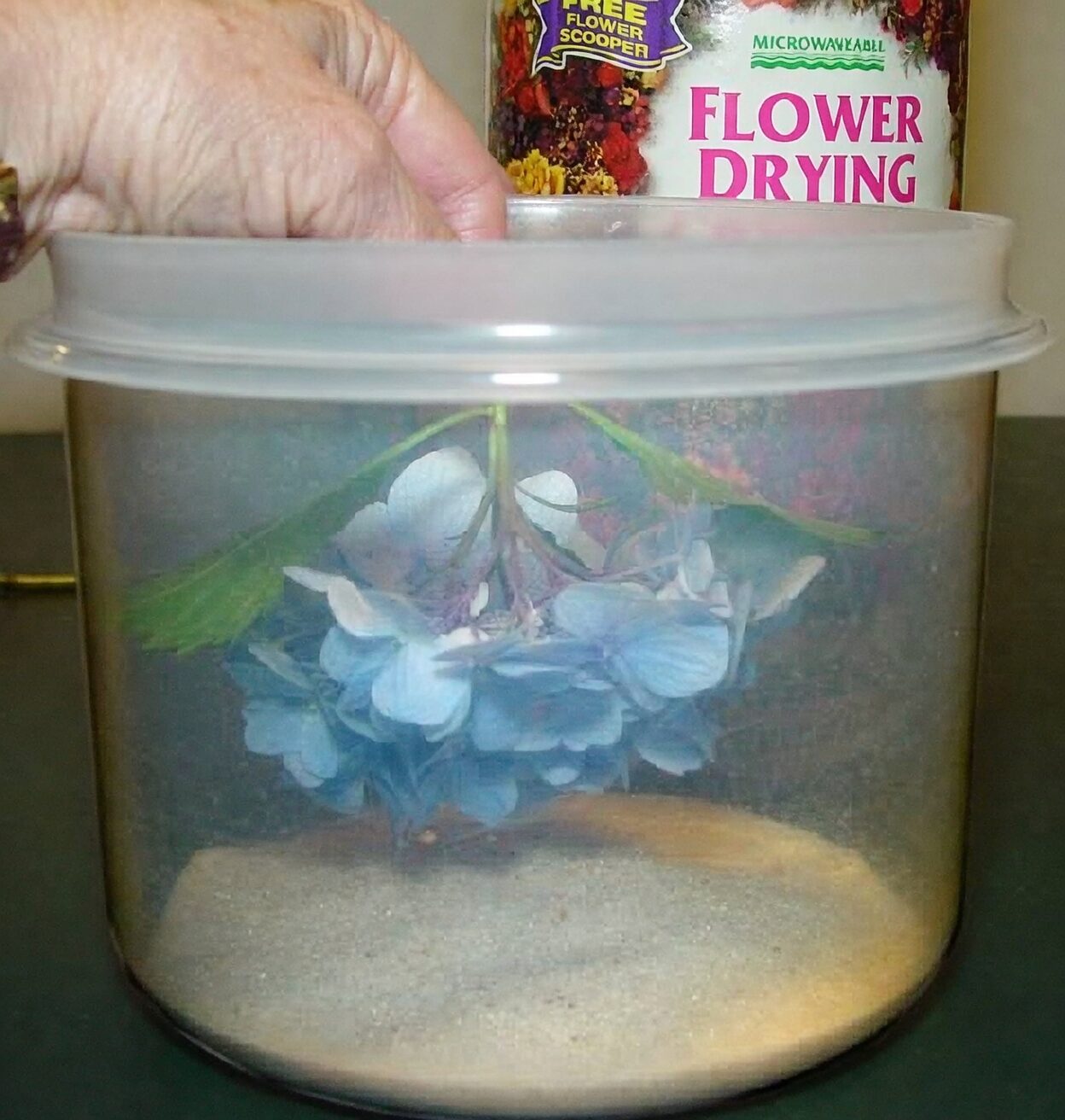
- Container: Choose an airtight bin deep enough for the heads.
- Layer: Pour 2–3 cm (about 1 in) of silica gel crystals.
- Nestle blooms: Place heads face‑up and gently sift crystals over and around the florets until fully covered.
- Seal and wait: 2–7 days at room temperature. Check a test bloom at day 2–3.
- Reveal: Tilt and brush off crystals with a soft paintbrush. Optional: a light spray of floral sealant to reduce future shattering.
Pros:
- Best color hold and plump form.
- Faster than vase‑dry.
Cons:
- Cost of desiccant; careful handling needed.
- Some cultivars darken slightly; whites may warm to cream.
Safety: Avoid breathing dust; wear a dust mask and gloves. Keep crystals away from children and pets.
Which should you choose?
- For effortless, antique looks: Vase‑dry.
- For punchy color and sculpted heads: Silica gel.
- For speed and simplicity: Air‑dry with support.
Color preservation: what you can (and can’t) control
Before you cut:
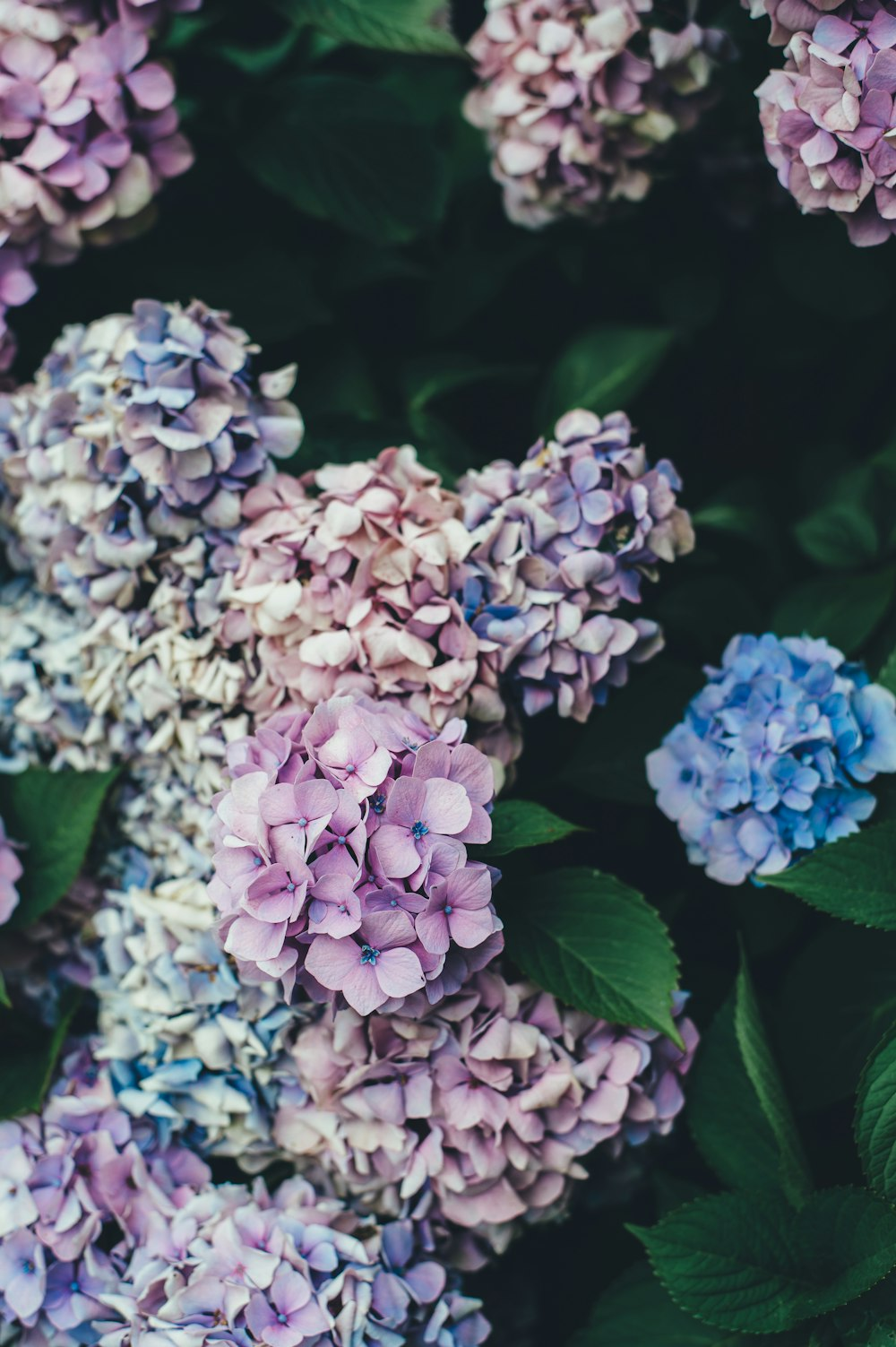
- Garden chemistry sets the stage. Blue tones generally need acidic soil with available aluminum; pink/red prefers more alkaline conditions. Changes are gradual—think months, not days—and white cultivars mostly stay white.
- Plant placement helps: Morning sun with afternoon shade and steady moisture keeps blooms pristine longer.
At harvest:
- Pick mature, papery heads without blemishes.
- Cut on a dry morning; avoid right after rain or sprinklers.
During drying:
- Keep out of direct sun to prevent bleaching.
- Cooler, drier rooms slow browning.
- Silica gel preserves the most saturated versions of whatever color the bloom had at cutting.
Afterward:
- Display away from south‑ or west‑facing windows and steamy rooms.
- Optional: A light, even coat of UV‑resistant clear floral spray can reduce fade and shatter. Test first—over‑spray can alter color.
Reality check:
- Once cut, you can’t swing a pink bloom to blue (or vice versa). Dry the best color you’ve already grown.
Crafting gorgeous hydrangea wreaths and centerpieces
Tools to have on hand
- Floral wire (22–26 gauge), wire cutters, floral tape
- Wooden floral picks or toothpicks
- Low‑temp hot glue gun and glue sticks
- Grapevine or straw wreath base; floral foam or a compote/vase with chicken wire for centerpieces
- Optional supporting cast: dried grasses, seed pods, eucalyptus, oak leaves, ribbon
Classic grapevine hydrangea wreath
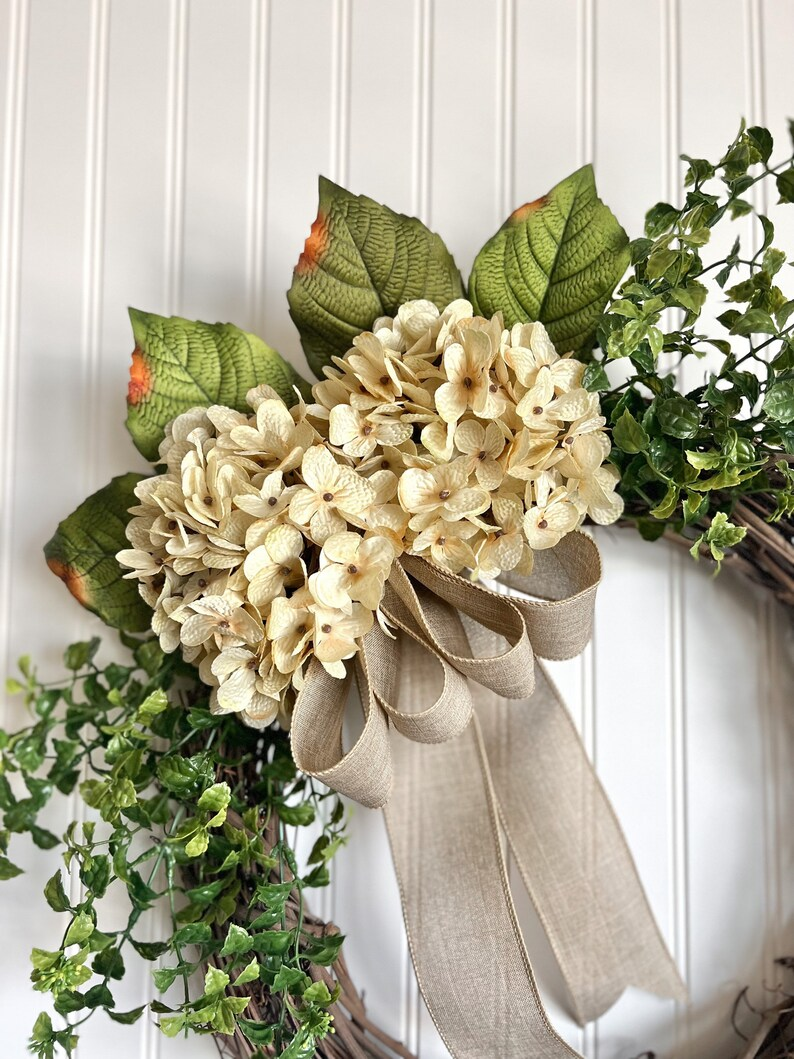
- Prep blooms: Choose uniformly dried heads; trim stems to 2–5 cm (1–2 in).
- Wire bundles: Pair small heads for fullness; wrap wire around stem bases.
- Start a direction: Working around the wreath base, tuck stem ends into the vine gaps and secure with wire. Slightly overlap heads for a lush, quilted surface.
- Texture breaks: Add sprigs of eucalyptus, grasses, or pods between hydrangea clusters to avoid a “one‑note” look.
- Final fix: Dot with low‑temp hot glue only where needed so future refreshes are easy.
Palette ideas:
- Moody blues + silver eucalyptus + black ribbon
- Antique pinks + dried roses + coppery seed pods
- Parchment whites + bleached grasses for a minimalist, modern ring
Foam‑based centerpiece (long‑lasting)
- Base: Use dry floral foam in a low bowl or compote; secure with floral tape.
- Grid: Add a loose chicken‑wire dome for extra hold.
- Build: Insert hydrangea heads first to set the silhouette (odd numbers read naturally).
- Fill: Tuck in accents (strawflower, nigella pods, oak leaves) for contrast and air pockets so the piece doesn’t look heavy.
- Finish: Check the 360° view; lift edges for a soft, cloudlike profile.
Design tips:
- Go asymmetrical for modern elegance; cluster weight to one side and counterbalance with a trailing element.
- Keep heads at slightly different heights for dimension (avoid a flat “helmet”).
Longevity and care:
- Display away from direct sun, radiators, and humid rooms.
- Dust with a soft brush or cool hairdryer on low.
- If a head loosens, re‑secure with a wooden pick and a dab of glue.
Pro move for flexibility:
- If petals feel brittle while arranging, hold the bloom briefly over gentle steam to relax it, shape, then let it re‑dry. Note: Over‑steaming can dull color.
Safety notes (plant and process)
- Plant toxicity: Bigleaf Hydrangea is mildly toxic if ingested (contains cyanogenic glycosides). Keep flowers and leaves away from children, cats, dogs, and grazing pets. Expect stomach upset if eaten.
- Craft safety: When using silica gel, avoid inhaling dust; wear a dust mask and gloves. Use low‑temp glue to reduce burns. Store dried pieces away from open flames.
Flower language, meaning, and how to gift wisely
Hydrangeas carry layered symbolism—gratitude, heartfelt emotion, grace, and abundance—likely inspired by their generous, many‑floreted heads. In Japan (where Hydrangea macrophylla is beloved as ajisai), a famous tale tells of an emperor offering blue hydrangeas in apology, linking blue blooms with remorse and understanding. Victorian floriography later amplified these meanings but also complicated them: the lavish heads were sometimes read as boastfulness because ornamental forms set few seeds. Translation? Flower language is cultural storytelling, not a fixed rulebook.
Modern gifting cues:
- Blue: apology, empathy, understanding
- Pink: sincere emotion, affection
- White: purity, clarity
- Purple: a wish for deeper understanding
Use them intentionally, and add a note—your words anchor the meaning more than any codebook.
Troubleshooting: crisp, colorful, and cloudlike
- Problem: Heads brown while drying
- Fix: Harvest later (papery stage), dry in a darker, cooler room, and avoid post‑rain cuts.
- Problem: Blooms collapse or shrivel
- Fix: You cut too early. Switch to vase‑dry with a little water to support the head as it transitions.
- Problem: Color fades fast on display
- Fix: Keep out of direct sun; consider a UV‑resistant floral spray; silica‑dry next batch for better color hold.
- Problem: Petals shatter during crafting
- Fix: Use low‑temp glue, handle by the base, lightly steam to relax before wiring, or seal lightly with floral spray.
- Problem: Wreath sheds at the door
- Fix: Hang indoors or on a shaded, protected porch. Add discreet wire ties through the base of each head.
Hydrangea macrophylla rewards patience and timing. Wait for that papery‑snap stage, choose the drying method that matches your color goals, and craft with a light touch. Your wreaths and centerpieces will look like they drifted in on a summer breeze—and stay that way right through winter.