

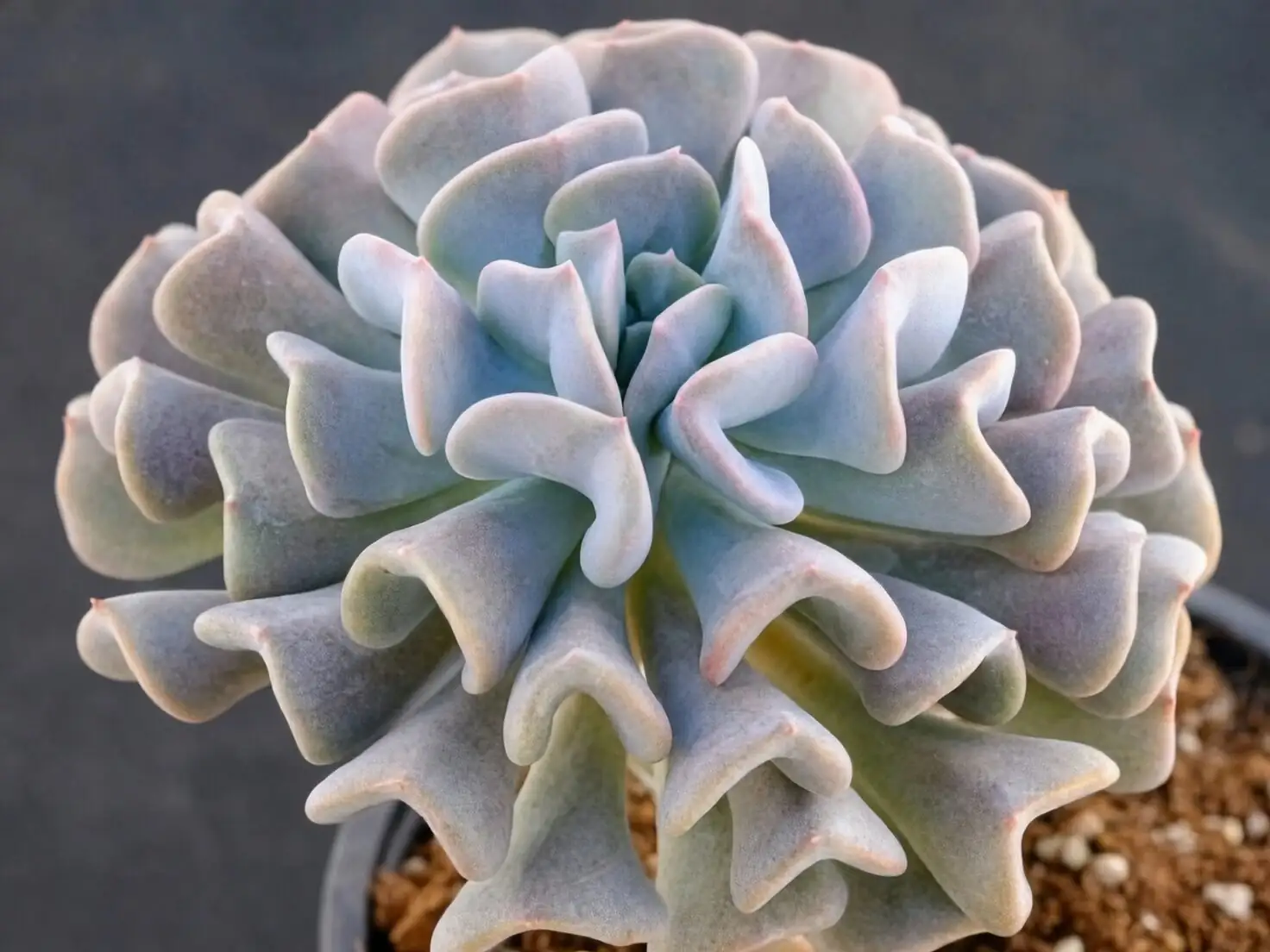
Meet the frosted cupcake of the succulent world: Echeveria sp. Those blue‑green rosettes dusted with a silvery “powder,” edged in burgundy when the light is just right—no wonder they’re the headliners of dish gardens and sunny windowsills. In this guide, we’ll decode the powdery coating (farina), reveal why stress can paint those wine‑red edges, and peek under the hood of that perfectly compact, spiraled geometry. We’ll also settle the touch‑or‑don’t‑touch debate, and explain when misting or “polishing” leaves actually harms your plant.
Quick ID: Echeveria, the polished rosette
- Botanical: Echeveria sp. (Crassulaceae)
- Native range: Mexico and Central America (many plants in cultivation are hybrids or selections)
- Common names: Mexican Snowball, Hens and Chicks (also used for other genera regionally)
- Size: Typically 10–20 cm tall (4–8 in); rosettes 10–25 cm wide (4–10 in)
- Flowers: Summer bloom; pink stalks 20–50 cm (8–20 in) with bell‑shaped flowers—pink outside, yellow to yellow‑orange inside
- Look: Blue‑green, fleshy rosette; with strong light and moderate dry‑down, the leaf margins can blush burgundy to wine‑red
The “powdered sugar” on the leaves: farina
What it is
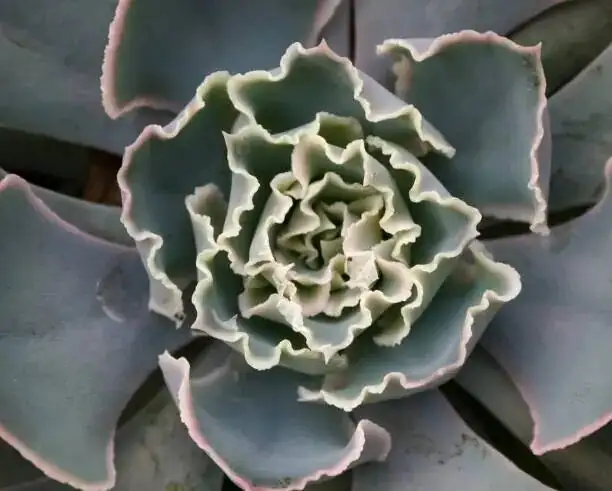
Farina (epicuticular wax) is a natural, micro‑crystalline wax that gives Echeveria their frosted, glaucous look. Think of it as a custom paint job and protective jacket in one.
Why it matters (science‑lite!)
- Sun shield: The pale, matte coating reflects a portion of intense light, reducing sunburn.
- Water repellent: Hydrophobic by nature, it beads water so droplets roll off—like a self‑cleaning raincoat.
- Pathogen barrier: A thin, physical line of defense against microbes and some insects.
- Aesthetic bonus: It’s what makes blue‑green Echeveria look velvety and luminous.
Important: Once rubbed off, farina on that particular leaf usually doesn’t return. New leaves will produce their own, but fingerprints on older leaves are “forever.”
How it gets ruined (and when that matters)
- Touching: Skin oils smudge the bloom. Cosmetic issue, yes—but also reduces that leaf’s sun/water protection.
- “Leaf shine” or polishing: Removes farina and can irritate tissue—skip it.
- Heavy sprays and oils: Insecticidal soaps and horticultural oils work for pests but can strip the coating. If you care about keeping the frosted look, treat carefully (see Pests).
- Misting: Beads of water can etch marks in the bloom; trapped moisture in the rosette also raises rot risk.
Is it mildew?
- Farina: Even, matte, bluish‑white film; doesn’t wipe off completely clean without smudging; water beads and rolls.
- Powdery mildew: Patchy, flour‑like growth that wipes away; often spreads irregularly and affects new growth shape. If in doubt, isolate and inspect.
The “stress blush”: why edges turn burgundy
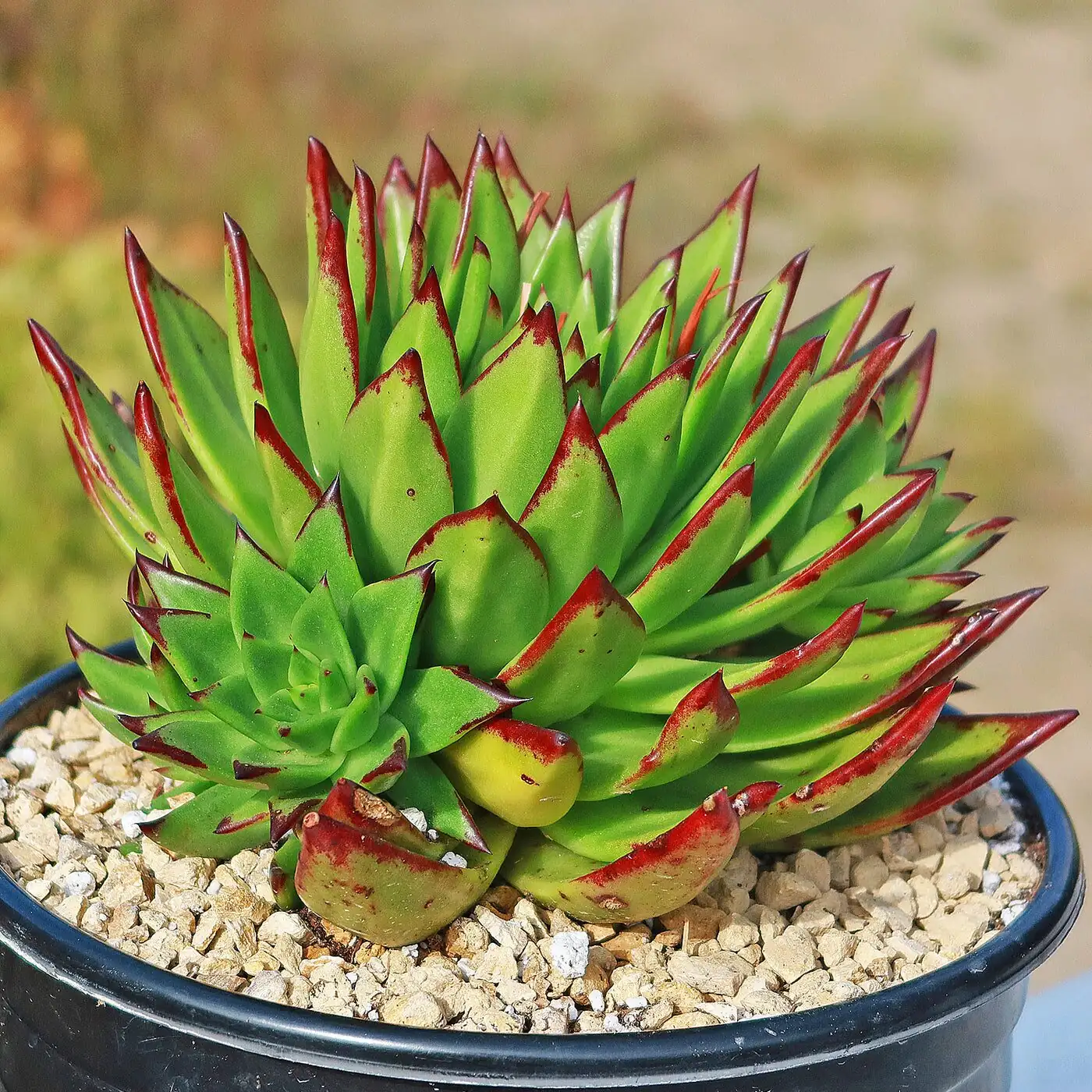
That wine‑red or burgundy rim is plant chemistry at play—mainly anthocyanin pigments acting as sunscreen and antioxidant. You’ll see the best color when:
- Light is strong (4–6+ hours of sun or equivalent grow‑light intensity)
- Soil dries thoroughly between waterings
- Temperatures are mild to warm by day with cooler nights (but frost‑free)
How to coax color safely:
- Increase light gradually over 10–14 days to avoid sunburn.
- Use a fast‑draining, gritty mix and let it dry fully before rewatering.
- Provide excellent airflow. “Healthy stress,” not hardship—don’t bake or desiccate the plant.
Why that rosette is so satisfyingly compact
Echeveria leaves stack in a spiral (a phyllotactic pattern you’ll also see in pinecones and sunflowers). This design:
- Minimizes self‑shading, so each leaf gets light
- Funnels occasional rain past the crown, helping keep the core dry
- Stores water efficiently in thick leaves without flopping
When light is too low, the geometry “relaxes”: the stem elongates and the rosette opens (etiolation). Translation: your succulent is stretching for the sun.
Light and placement
- Aim for bright light to full sun for best shape and color—4–6+ hours daily.
- Indoors: Brightest window (south or west in the Northern Hemisphere) or strong grow lights plus airflow.
- Outdoors: Sunny patio/balcony; shelter from prolonged rain. In extreme heat, give midday shade and ventilation.
Watering (the soak‑and‑dry rhythm)
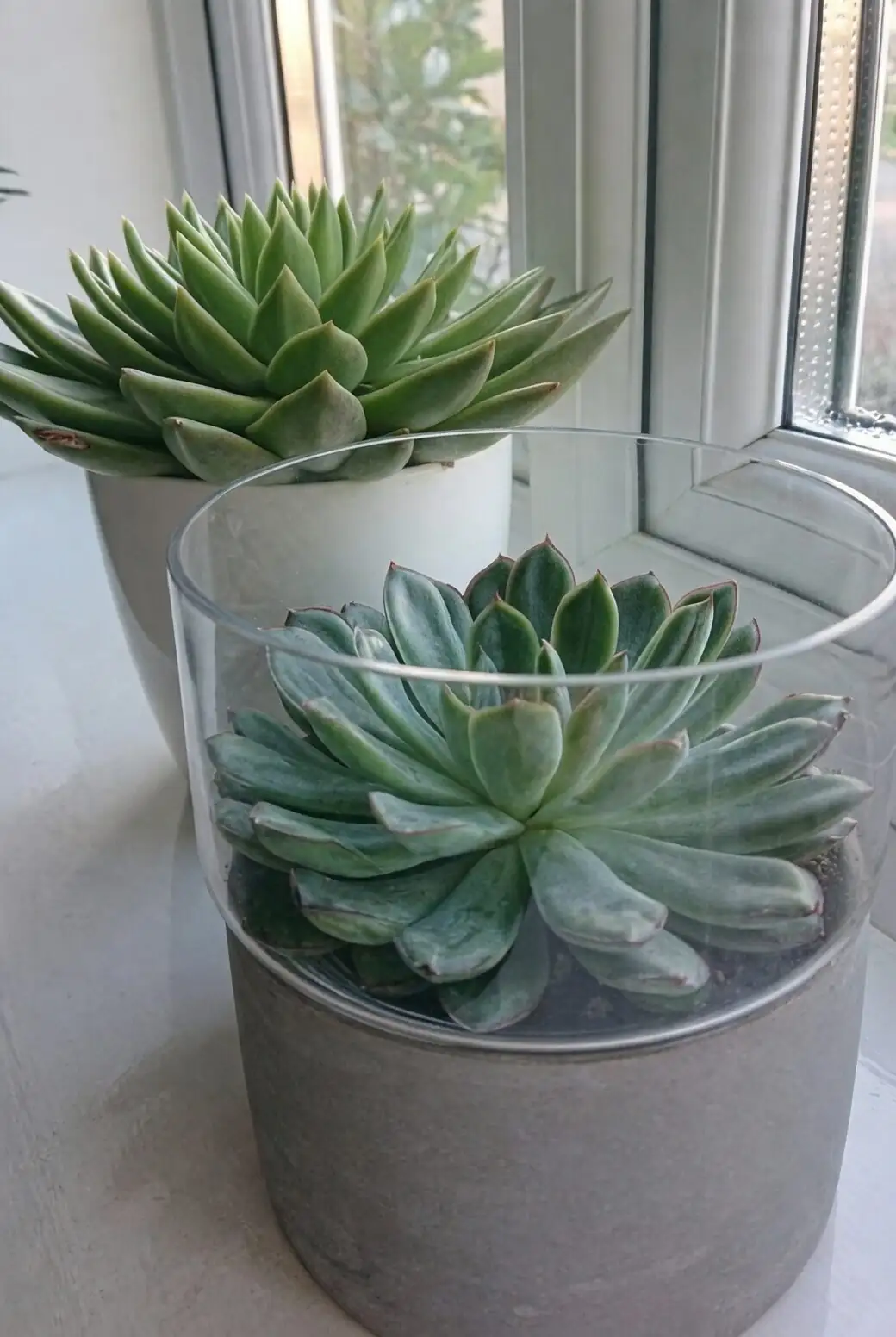
- Water deeply, then let the mix dry out completely before watering again.
- In warm, bright conditions: typically every 7–14 days.
- In winter/low light: about every 3–5 weeks.
- Keep water out of the rosette center and never let the pot sit in water.
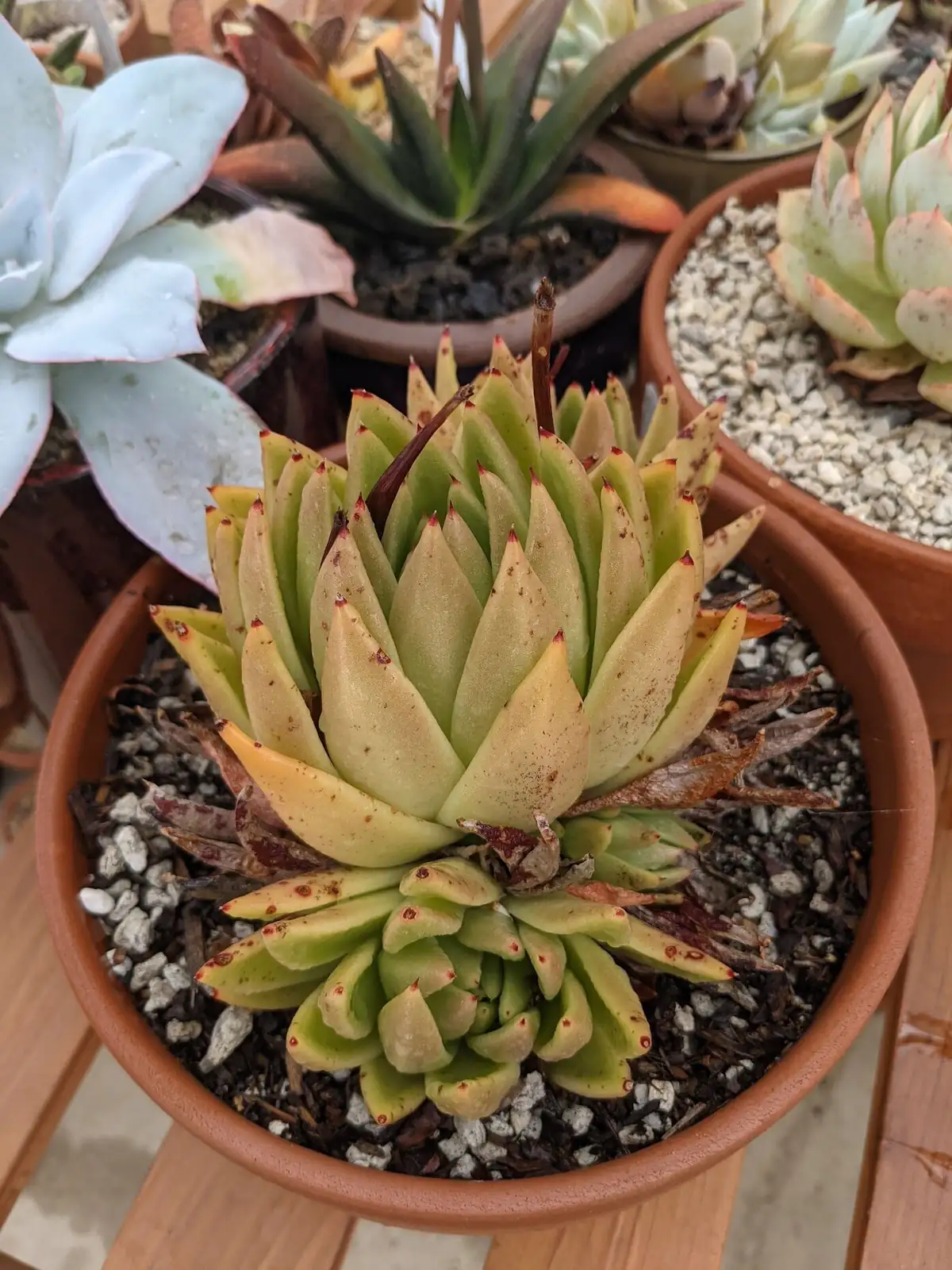
Soil, potting, and repotting
- Soil: Very fast‑draining cactus/succulent mix. Boost with mineral grit like pumice or perlite to keep roots airy.
- Pot: Must have drainage. Terracotta helps mixes dry faster.
- Repot: Every 1–2 years or when crowded. After repotting, wait 3–7 days before watering so roots can callus.
Temperature, humidity, and airflow
- Best growth: 15–27°C (59–81°F)
- Keep above 5°C (41°F); generally frost‑tender (approx. USDA 9–11)
- Prefers low to average humidity; stale, humid air invites rot. Prioritize ventilation.
Hands off! Touching, misting, and polishing—what actually harms the plant
- Touching the leaves: Leaves fingerprints, removes farina, and reduces that leaf’s built‑in “sunscreen.” Handle by the pot, not the rosette.
- Misting: Encourages rot and soft growth in a plant adapted to arid air; water can pool in the crown. Skip misting—water the soil.
- Polishing/wiping: “Leaf shine,” paper towels, or even vigorous microfiber rubs strip the bloom and can scratch tissue.
- Safer cleanup: Use a soft makeup brush, a puff of air, or gently tilt and rinse soil from leaves—then dry thoroughly and keep out of direct sun until fully dry.
Feeding, grooming, and shape‑keeping
- Fertilizer: Lightly in spring/summer with a low‑nitrogen cactus/succulent feed at 1/4–1/2 strength every 4–6 weeks. Skip in winter.
- Pruning: Remove spent flower stalks. Gently peel away dry lower leaves to improve airflow—don’t tug at firm, healthy ones.
- Etiolation fix: If it’s leggy, “behead” the rosette, let the cut callus, and re‑root in a gritty mix. The old stem may sprout pups.
Propagation
- Leaf cuttings: Twist off a full, healthy leaf; let callus 2–5 days; lay on dry mix and mist sparingly until roots form.
- Offsets: Separate and pot when big enough to handle.
- Stem cuttings: Great for rejuvenating stretched plants.
Pests and problems
- Usual suspects: Mealybugs in leaf joints, aphids on flower stalks, spider mites in hot, dry rooms.
- Treatments:
- Dab mealybugs with cotton swabs dipped in rubbing alcohol.
- Insecticidal soap works; rinse residue gently afterward.
- Horticultural oils can be used but may remove the powdery bloom—effective, yet expect a temporary cosmetic change on treated leaves.
- Culture cures: More light, faster‑draining soil, and better airflow reduce repeat issues.
- Biggest disease: Root/stem rot from soggy soil + low light. Let soil dry fully, improve drainage, and increase light and ventilation.
Seasonal rhythm
- Spring: Ramp up light and watering; begin light feeding.
- Summer: Acclimate to stronger sun slowly; protect from extreme heat and heavy rain.
- Autumn: Ease off watering as temperatures drop.
- Winter: Keep bright and cool (but frost‑free); water sparingly.
Buying guide: choose a keeper
- Look for a compact, symmetrical rosette with firm leaves.
- Avoid translucent spots, mushy stems, blackened bases (rot flags).
- Check leaf joints/undersides for white, cottony mealybug residue.
FAQs
- Why is my rosette opening and the stem stretching?
- Etiolation from insufficient light. Move to a brighter spot gradually or use strong grow lights. Behead and re‑root if it’s already leggy.
- Why are the bottom leaves wrinkling or dropping?
- A little lower‑leaf loss is normal. Many shriveled leaves quickly = likely underwatering; translucent or mushy = overwatering/rot. Adjust watering and improve drainage, light, and airflow.
- How do I keep the burgundy edges strong?
- Give brighter light (with careful acclimation), use a fast‑draining mix, and let the soil dry completely between waterings. Mild, non‑damaging stress brings out the best color.
Safety, history, and uses
- Toxicity: Generally considered non‑toxic to people and pets, though nibbling can cause mild stomach upset.
- Name‑drop: The genus honors Atanasio Echeverría y Godoy, a Mexican botanical illustrator.
- Uses: Ornamental standout for windowsills, succulent arrangements, rock gardens, and drought‑tolerant landscaping in mild, dry‑winter climates.
Symbolism and “flower language”
Echeveria often symbolizes endurance and resilient love—plump leaves quietly bank water for dry spells while the rosette stays elegant. As with most “flower language,” these meanings are cultural, not botanical; they likely arose from how steadfastly the plant keeps its poise through drought rather than any historic folklore. Still, it’s a fitting emblem for beauty that doesn’t wilt under pressure.
Fun facts
- Many Echeveria sold under trade names are hybrids, so bloom and color details can vary.
- That powdery farina is a self‑cleaning “lotus effect” surface—water beads collect dust and roll away.
- Once rubbed off, the frosty coating typically won’t return on the same leaf—handle with care.
Happy growing—and remember: the prettier the powder, the lighter the touch.