Let’s set a few rumors on a drying rack and see what actually holds up with air plants (Tillandsia spp.). These sculptural bromeliads don’t need soil, but they are not “set-and-forget” decor either. Think of them as tiny cloud-sippers that perch on bark or rock, drink through their leaves, and absolutely adore a breeze.
Here’s your myth-busting, delightfully nerdy field guide.
1) Roots are anchors, not straws
- Myth: “If it has roots, it’s drinking from them.”
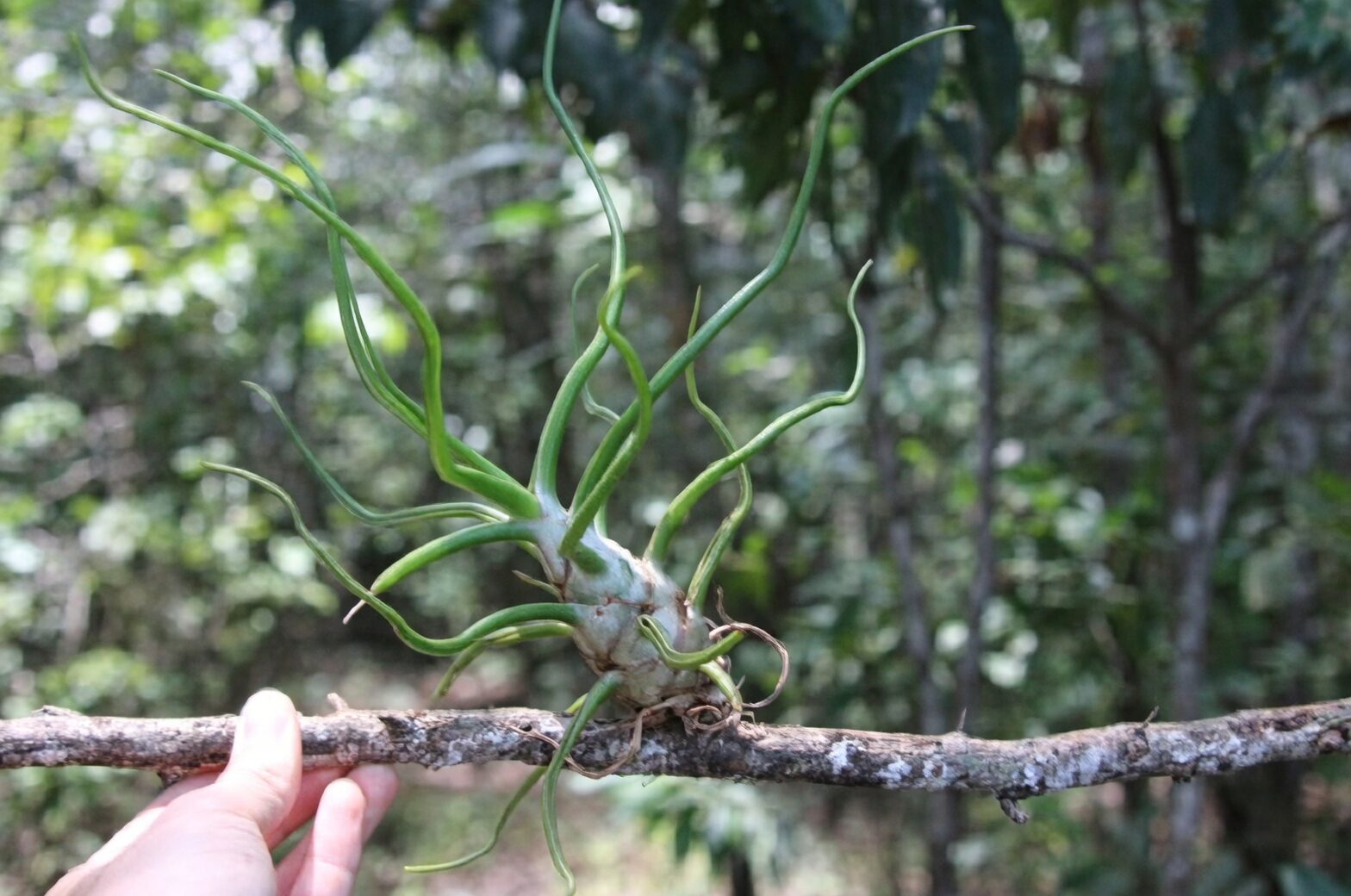
Reality: Tillandsia are mostly epiphytes (and some lithophytes). Their roots act like grappling hooks, helping them cling to tree branches, cork, driftwood, or rock. Feeding and drinking happen through the leaves.
- The gear that makes this work: trichomes—those silvery scales that look like frost. They wick up rain, mist, and dissolved minerals. Grayer, denser-trichome species handle brighter, drier conditions; greener, smoother-leaved species prefer more shelter and humidity.
- Practical tip: Don’t pot in regular soil. Mount them or set them in open holders. You can gently trim long, wiry anchor roots for aesthetics (avoid cutting into the base). If you want them to grab onto wood, let the roots keep growing.
2) Soil‑free ≠ care‑free: how air plants actually drink and eat
- Myth: “They live on air alone.”
Reality: They need water, light, and a little nutrition—just not from potting mix.
- Watering that works:
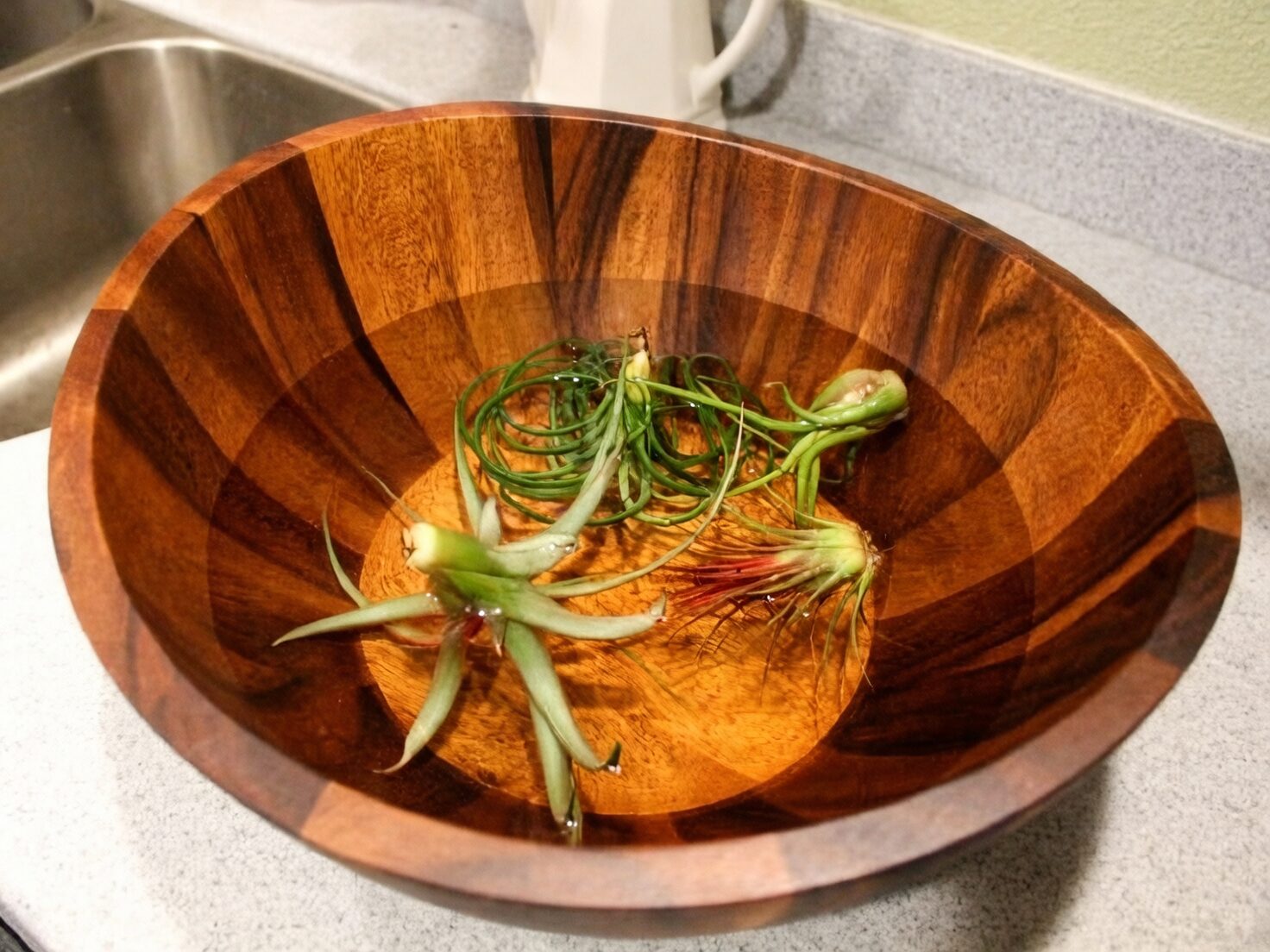
- Soak about once weekly for 30–60 minutes using rain, distilled, or low‑mineral water.
- Shake off excess and place the plant upside down or on its side to drain; aim to dry within about 4 hours.
- In hot, dry rooms, add light misting between soaks (often 2–3 times weekly). In winter or low light, water less often and keep them drier—but not bone‑dry for long stretches.
- Keep flowers as dry as possible during soaks to prevent damage.
- Food, lightly: Mist or soak with a very weak bromeliad/air‑plant (or orchid) fertilizer about monthly in active growth; rinse with plain water occasionally to prevent mineral buildup. Pause or reduce in winter.
- Light: Bright, indirect light is the sweet spot. Filtered morning sun is great; avoid harsh midday sun behind glass, which can scorch leaves.
3) One‑and‑done blooms… that make a family of pups
- Myth: “It flowered, so it’s dead.”
Reality: Each rosette typically blooms once with colorful bracts and tubular flowers, then slowly declines—but in the process, it produces offsets (pups). That clump you covet? It’s a family photo.
- What to do:
- Let pups grow attached for a fuller cluster, or separate when they’re about 1/3–1/2 the size of the mother.
- Remove fading bracts once they’re spent to keep airflow clean and prevent decay.
4) Spanish moss is an air plant (and not a moss at all)
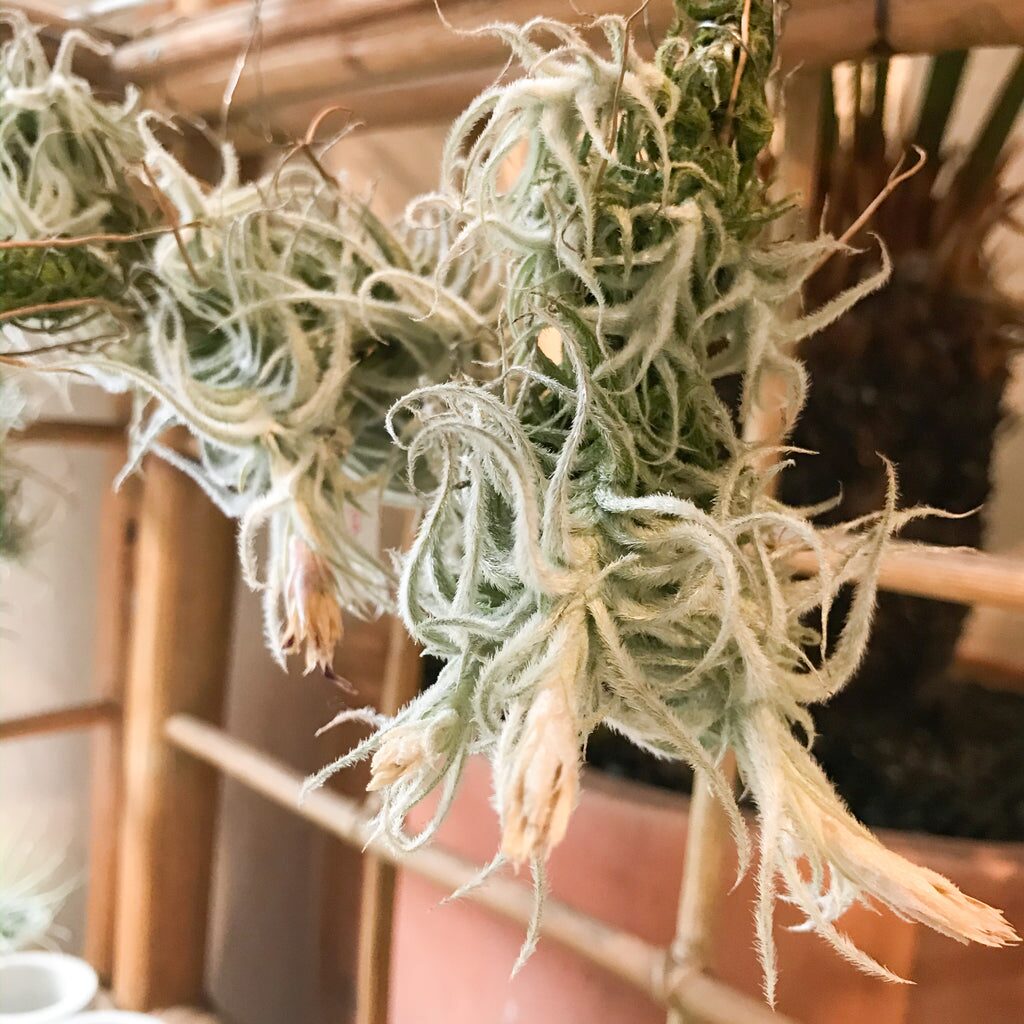
- Meet your wispy cousin: Spanish moss (Tillandsia usneoides) is a bona fide Tillandsia. It festoons trees from the southern/southeastern United States through parts of the Neotropics. Like its kin, it’s an epiphyte—not a parasite—borrowing a perch while its trichomes harvest moisture from humid air and rain.

5) Airflow: the invisible lifeline that prevents rot
- Myth: “They’re safer in a cozy closed terrarium.”
Reality: Still, wet air is a recipe for rot. These plants need to get wet, then dry quickly, with steady ventilation.
- Air-ballet basics:
- After every watering, drain thoroughly and dry fast—ideally within about 4 hours.
- Display in open vessels, on cork bark or driftwood, on wire cradles, or hanging where a gentle draft moves the leaves. If you use glass, keep it open and only return the plant once fully dry.
- Avoid parking them near heater/AC vents that blast hot/cold air; choose naturally airy, bright spots instead.
6) Night-breathing nerdiness: many Tillandsia use CAM
- Myth: “Photosynthesis is a daytime-only affair.”
Reality: Many air plants use CAM (Crassulacean Acid Metabolism), opening stomata at night to take in CO₂ when humidity is higher, which reduces water loss in arid or exposed habitats.
- Care tie‑in:
- Morning watering gives plants a full day to photosynthesize and fully dry before nightfall.
- Don’t get hung up if a schedule slip happens; the must‑follow rule is still fast drying plus good airflow.
Where they come from and how they vary
- Range: Native across the Americas (the Neotropics)—from the southern/southeastern United States through Mexico, Central America, and the Caribbean, and across much of South America to central Argentina. You’ll find species in rainforests, cloud forests, on mountainsides, deserts, and coasts.
- Shapes and sizes: Common indoor rosettes are often 5–20 cm tall and across; big species can exceed 30 cm and some spread wide with maturity. Leaves may be needle‑straight, arching, or curled with a “spider‑leg” vibe.
- Color: From green to blue‑gray to silvery; many blush red or purple at bloom time.
The nerdy care cheat sheet
- Light: Bright, indirect; filtered sun. Grayer plants tolerate more sun; greener plants prefer brighter shade.
- Water: Soak weekly 30–60 minutes; shake and dry within ~4 hours. Mist more in heat/dry spells; reduce in winter. Keep flowers as dry as possible.
- Airflow: Non‑negotiable. Open displays; never closed terrariums for long‑term care.
- Temperature: Best at 15–25°C (59–77°F). Keep most above ~10°C (50°F); brief dips to ~5°C (41°F) only if dry, protected, and well‑aired. Not frost‑hardy.
- Humidity: Moderate to high (aim ~50–70%+), but ventilation matters as much as moisture.
- Feeding: Very weak fertilizer monthly in the growing season; rinse occasionally; light or none in winter.
- Placement: Near bright east windows or set back from south/west light; avoid harsh midday sun and vents. Great for living rooms, offices, and bright bathrooms with a window.
- Outdoors: Generally suitable in USDA Zones 10–11 (some marginal in Zone 9 with protection).
Troubleshooting like a pro
- Rot at the base/crown? Usually from staying wet and cool in still air. Increase airflow, water earlier in the day, and ensure rapid drying.
- Leaf scorch or crispy tips? Too much direct midday sun or chronic under‑watering in hot, dry air.
- Pests: Mealybugs or scale can appear; treat with insecticidal soap or carefully dab with diluted isopropyl alcohol. Keep the crown from sitting wet afterward.
- Pet safety: Generally considered non‑toxic to people, cats, and dogs—though curious nibblers can rough up the foliage.
Quick myths, busted
- “They live on air.”
They live on rain, mist, light, and trace nutrients absorbed through trichomes—no soil required, but still real care.
- “Roots feed the plant.”
Leaves do the drinking; roots mainly anchor.
- “Closed terrariums are ideal.”
Gorgeous for a photo, risky for the long haul. They need air movement and quick drying.
- “Blooming means it’s over.”
The mother rosette is one‑and‑done, but pups carry the torch—your single turns into a clump.
Symbolism and “flower language,” thoughtfully considered
Air plants are often linked with freedom, resilience, creativity, and “living lightly.” It’s easy to see why: they perch high above the ground, make do with what the sky delivers, and still muster a flamboyant bloom once per rosette. Some enthusiasts also associate them with “perfection,” a nod to those tidy rosettes and architectural forms. As with most flower‑language traditions, these meanings are cultural rather than botanical—think of them as poetic reflections of how Tillandsia live, not scientific labels.
Inspiration for display
- Mount on cork bark or driftwood with removable ties so you can take plants down to soak.
- Cradle in open glass or metal holders; return only when fully dry.
- Nestle in shells or on stones for desk or shelf vignettes—just don’t let water pool at the base.
- Create airy hanging mobiles where light is bright and the breeze is steady.
The real “secret sauce” is simple: bright, gentle light + regular watering + strong airflow so they dry quickly. Nail that rhythm, and your Tillandsia will repay you with sculptural poise, a once‑in‑a‑lifetime bloom, and generations of pups.