

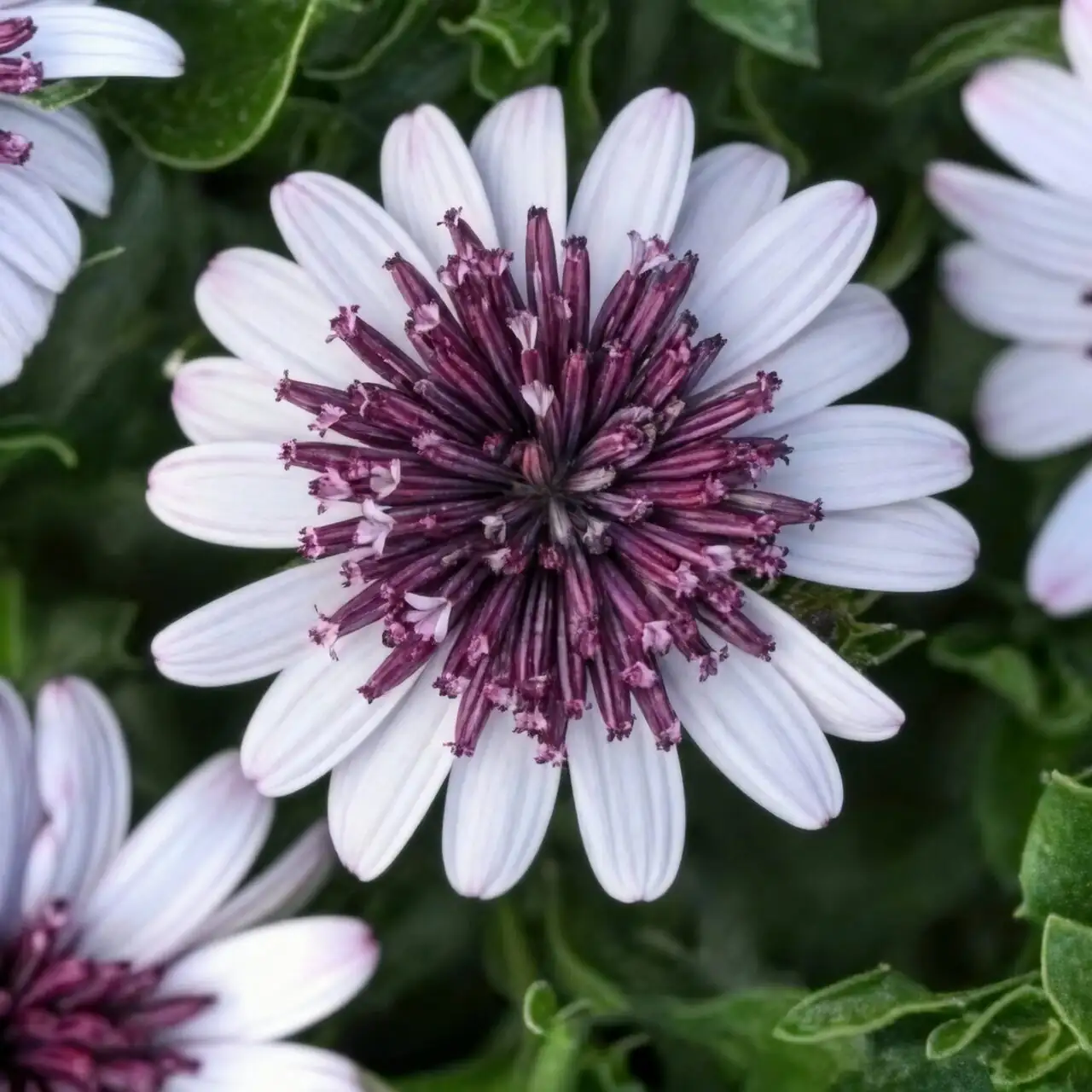
Imagine a daisy that knows when to wake up, when to nap, and exactly how to flash a “landing target” to bees. That’s Falling Stars Cape Daisy (Osteospermum ecklonis) in a nutshell—part clockwork, part billboard, and entirely mesmerizing. Let’s unpack how light cues and petal physics choreograph its daily opening and closing (nyctinasty), and how that inky central “eye” helps pollinators make bullseye landings for better seed set.
Meet Falling Stars Cape Daisy (Osteospermum ecklonis)
- Origins and vibe: Native to South Africa’s Cape region, this member of the Asteraceae family thrives where days are bright and drainage is sharp.
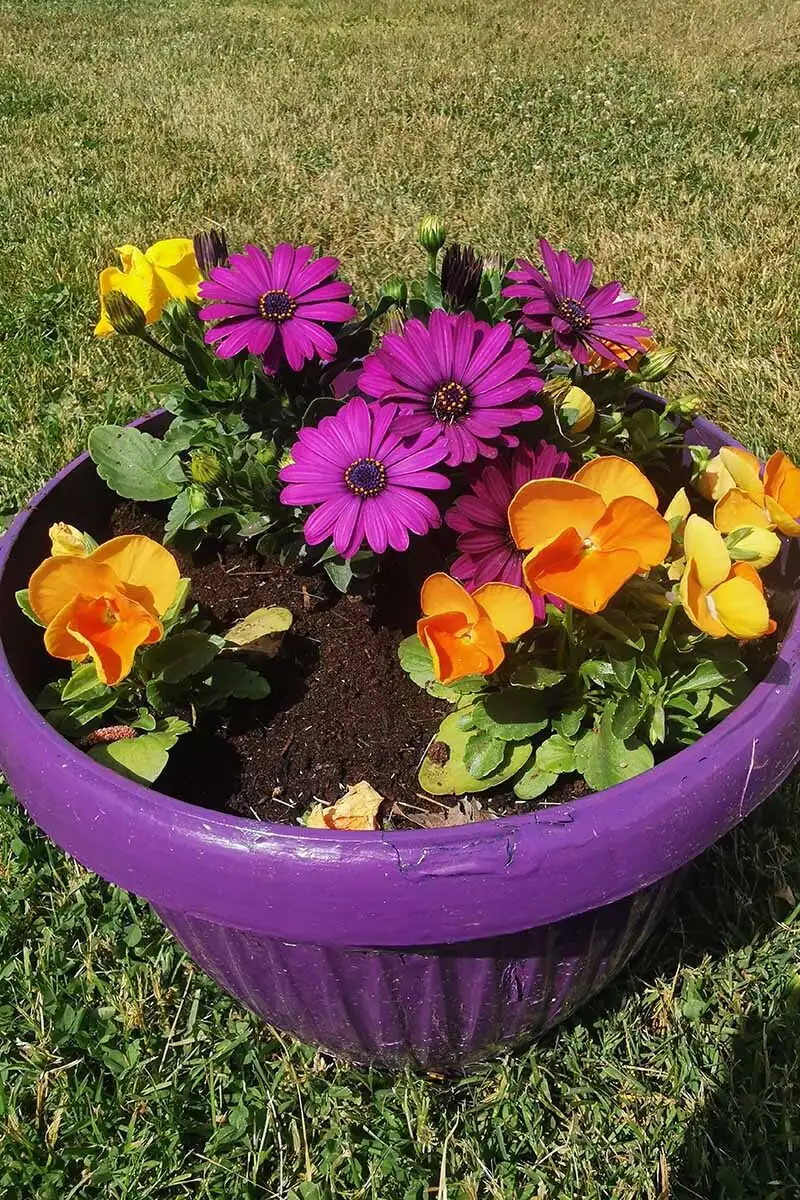
- Looks: A compact, mounding clump with narrow to spoon-shaped, medium-green leaves and masses of pale to light blue daisies—each typically with a deeper-toned center that reads like a dramatic eye.
- Size: Usually 20–45 cm tall and 30–60 cm wide, depending on cultivar and care.
- Season: A marathon bloomer in cool-to-mild weather—often from early spring well into fall.
- Best seats in the garden: Front-of-border beds, patio containers, and sunny balconies.
Aliases you’ll hear: African Daisy, Blue-Eyed Daisy, Cape Daisy, and Falling Stars.
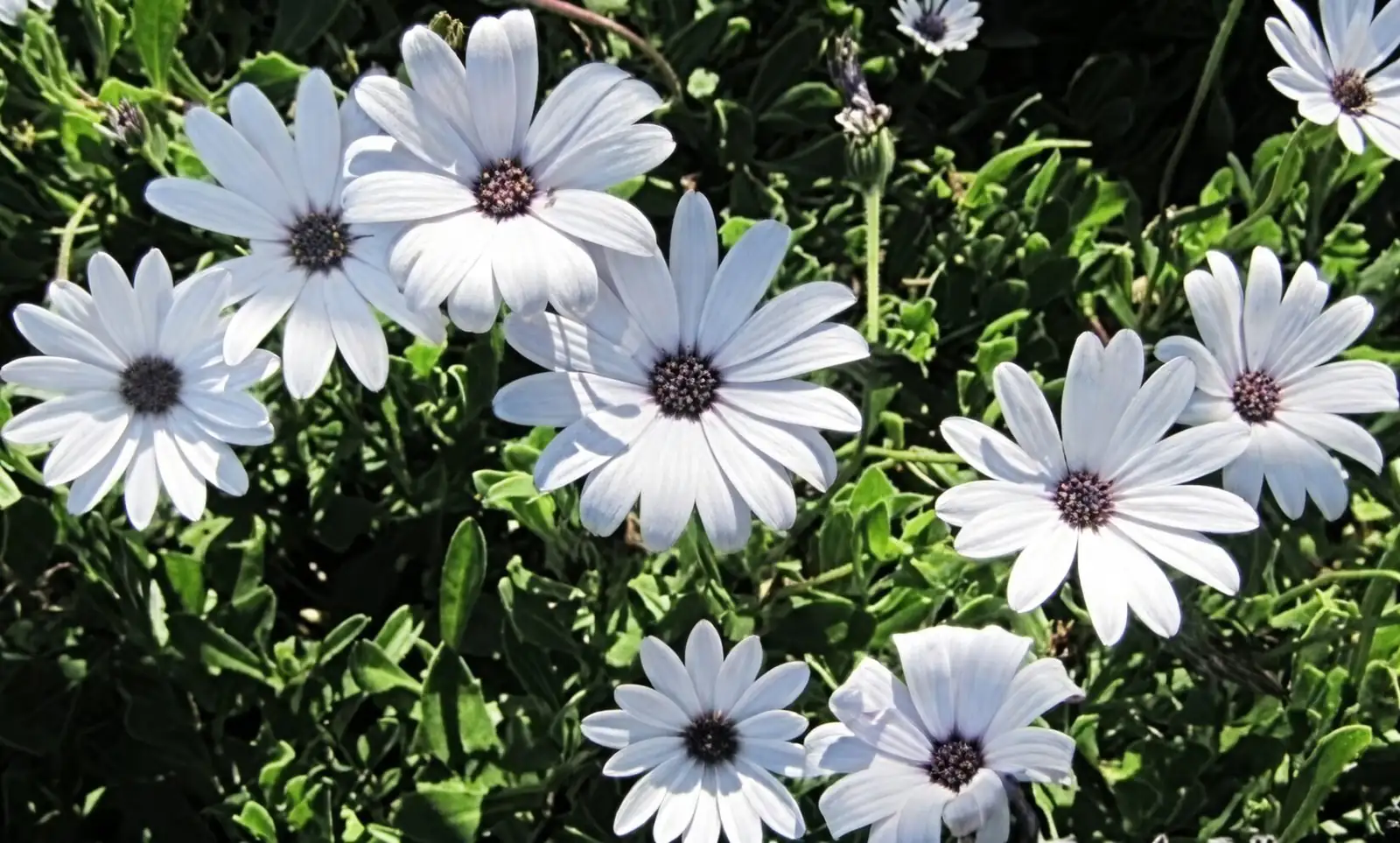
Why these daisies “sleep”: Nyctinasty 101
Nyctinasty is the daily open/close rhythm you’ll notice as flowers unfurl in bright light and fold under low light or at night. In other words, your Cape daisy keeps garden hours.
The daily script: light sensors, clocks, and temperature
- The light cue: Like many plants, Osteospermum uses photoreceptors that sense the balance of red and far-red wavelengths, helping set its internal clock. Bright daylight tilts the physiology toward “open”; dusk and low light tip it toward “close.”
- The circadian gate: Even on a cloudy day, the plant runs on an internal 24-hour rhythm that primes the flower head for daytime showtime.
- Temperature assists: Cool, low-light conditions favor closing; warm, sunny conditions favor opening. Aim for 6+ hours of sun daily to see peak performance and pollinator traffic.
Petal physics: how a flat sunburst folds
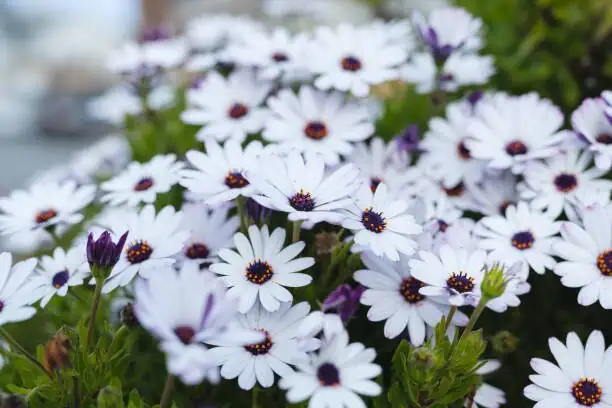
Each “flower” is actually a tight flower head (capitulum) composed of:
- Ray florets (the “petals”) that open and close.
- Disk florets (the central “eye”) where nectar and pollen live.
Opening and closing are driven by changes in cell turgor (water pressure) across specialized tissues at the base of the ray florets. When one side of that tiny hinge loses water relative to the other, the “petal” bends. This reversible hydraulics lets the plant:
- Protect pollen and stigmas from night moisture and dew.
- Save nectar from dilution.
- Reduce unnecessary nighttime scent/visual advertising when pollinators are inactive.
The dark “eye” bullseye: a landing light for pollinators
That moody center isn’t just pretty—it’s a signpost. In many daisies, the central disk and surrounding rings create high-contrast patterns that guide pollinators straight to the goods. Here’s why that matters:
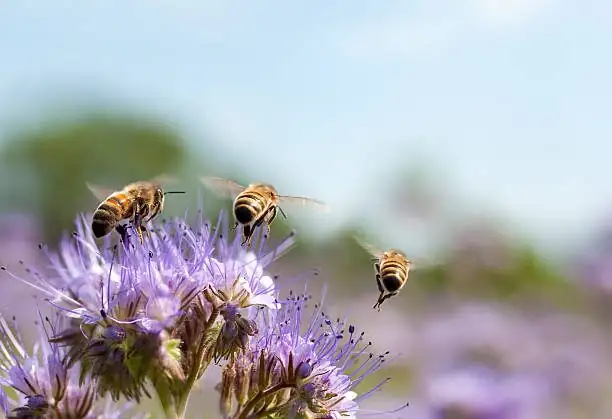
- Visual nectar guides: Bees see patterns differently from us, detecting contrasts (often including ultraviolet cues) that trace a runway to nectar and pollen. In Osteospermum ecklonis, the darker-toned center and paler rays create a classic bullseye that says “land here.”
- Efficiency = better seed set: When pollinators reach the disk florets quickly and repeatedly, more pollen gets transferred to receptive stigmas. Fewer wasted visits, more successful fertilizations.
- Bonus physics: Darker centers can absorb more light and may warm slightly in sun, potentially making the floral hub more attractive or physiologically favorable for pollen performance—think cozy café versus cold sidewalk.
Timing the message
- Open in sun, message broadcast: When the rays are wide in bright light, the bullseye is bold and visible during peak pollinator hours.
- Closed in low light, message muted: When the head folds, the “advertisement” turns off, conserving resources and protecting reproductive parts—ready to reboot at first light.
Turn your patio into a tiny flower-physics lab
Try these simple experiments and observations:
- Sun vs. shade watch: Place one plant in full sun and another in light shade. Note opening width and timing. Expect fuller, earlier opening in stronger light.
- Time-lapse: A smartphone on a window ledge can capture the daily yawn-awake and goodnight fold.
- Cloud test: On an overcast day, watch how far the rays open; they’ll often stay partially closed, fine-tuning exposure to conditions.
- Pollinator runway: Sit near a blooming pot on a bright morning. You’ll spot bees and hoverflies homing to the center quickly—proof that the bullseye works.
Grow it like a pro: culture that supports the show
- Sunlight: Full sun for best flowering; tolerates light shade with fewer blooms.
- Temperature: Best at 10–24°C (50–75°F). Protect from hard frosts; overwinter frost-free in cold regions (USDA Zones ~9–11 outdoors).
- Soil: Well-drained, sandy or loamy mixes. Avoid waterlogging to prevent root/crown rot.
- Watering: Soak, then let the top 2–3 cm of soil dry before watering again. Never let pots sit in saucers of water.
- Feeding: Light but regular. Use a balanced liquid fertilizer at half strength every 2–4 weeks in active growth, or a slow-release product as labeled. Ease off when cool and dim.
- Grooming: Deadhead to extend bloom. Pinch or trim leggy stems; after heavy flushes, a slightly harder cutback sparks fresh growth and another round of buds.
- Propagation: Softwood cuttings in spring/summer are most reliable. Seed is possible, but named varieties may not come true.
- Overwintering in cold zones: Bright, cool indoor spot at ~10–15°C (50–59°F); water sparingly.
Design cues that amplify pollination (and seed set)
- Cluster plantings: Group several plants so pollinators can “commute” efficiently among many heads.
- Choose contrast: Cultivars with pronounced eyes and light rays make clearer runways.
- Keep them blooming: Deadheading and steady, non-soggy moisture ensure plenty of open heads during pollinator hours.
- Place for light: Containers on sunny patios or front-of-border spots guarantee the daily open state when visitors arrive.
Safety notes and plant health
- Pests to watch: Aphids, whiteflies, spider mites, thrips. Manage early with insecticidal soap or horticultural oil and keep airflow strong.
- Disease: Root/crown rot in wet soils—drainage is your insurance policy.
- Toxicity: Not widely reported as toxic to people or pets, but any ingestion can cause mild stomach upset. Best not for nibblers.
Symbolism and “flower language”
Cape daisies are often linked with cheerfulness and optimism—their starry, sky-toned blooms feel like a patch of good weather. As for the Victorian-style “language of flowers,” treat it as cultural poetry rather than botany: lovely to share in a card, but not a scientific taxonomy of meaning. Here, the daily bloom-from-dawn habit and open-sky palette naturally read as hopeful and upbeat.
Quick answers
- Why did my plant stop flowering in mid-summer?
- Cape daisies relish cool-to-mild weather and may pause in intense heat. Keep it in full sun, water consistently without waterlogging, deadhead often, and lightly trim after a flush—blooms usually resume as temperatures ease.
- Can I grow it indoors?
- It flowers best outdoors. In colder zones, overwinter indoors in very bright light, keep it cool (about 10–15°C/50–59°F), and water sparingly to avoid rot.
The take-home
Falling Stars Cape Daisy doesn’t just decorate; it communicates. Light-sensing “clockwork” opens the stage by day; hydraulic petal physics closes the curtain by night. The dark central eye paints a perfect bullseye that speeds pollinators to the prize—boosting pollen transfer and, ultimately, seed set. Give it sun and sharp drainage, and you’ll get a long-running show that’s as smart as it is beautiful.