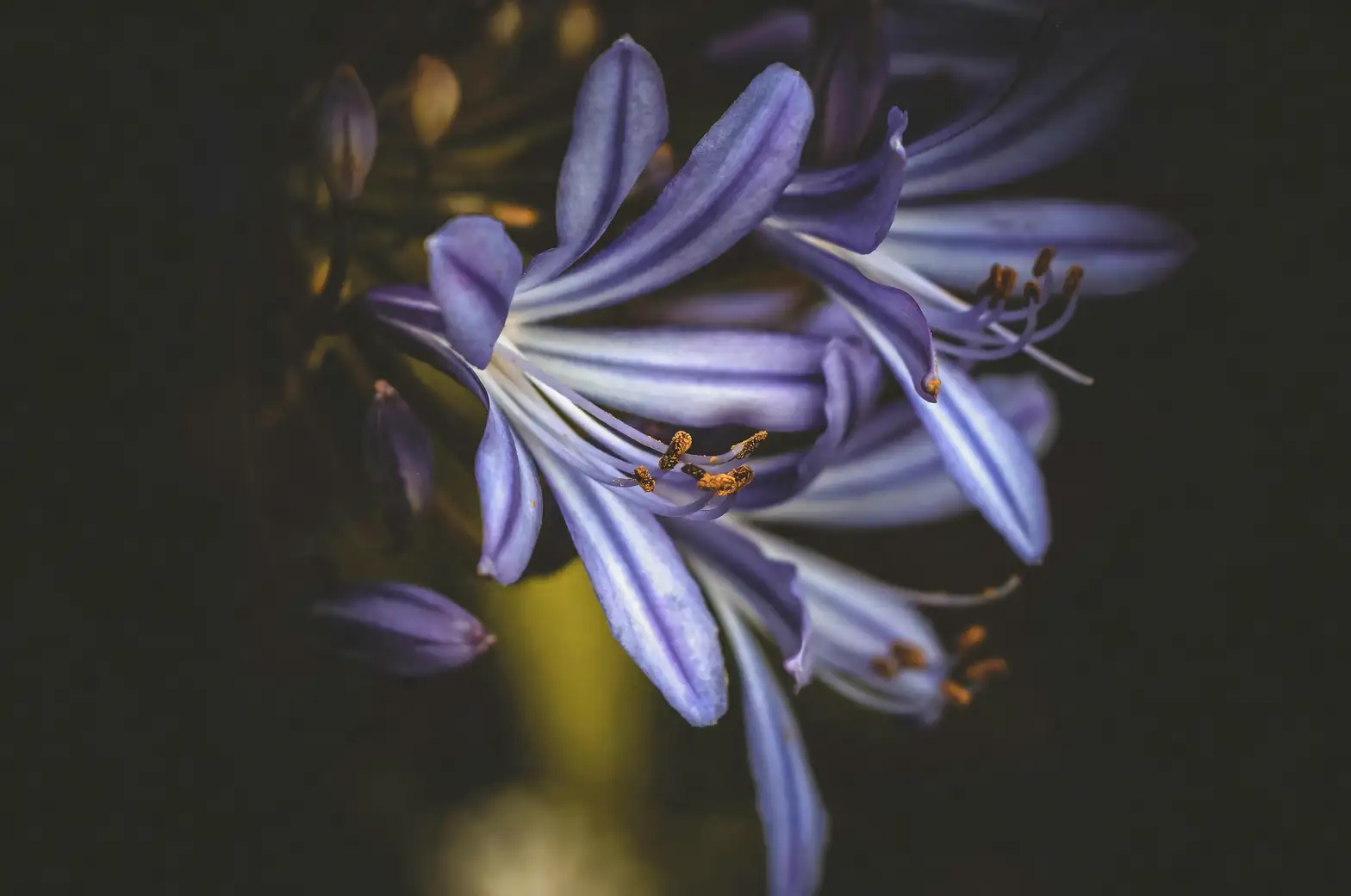
If you’ve ever watched a summer border suddenly fizz with sky‑blue “firework” spheres, you’ve probably met Agapanthus africanus—Lily of the Nile, the love flower from South Africa. It’s a plant that rewards good timing and clean technique. Divide it right, sow seed at the sweet spot, and you’ll multiply the magic without sacrificing next year’s bloom show.
Below is a hands‑on guide to dividing deciduous vs. evergreen clumps, a clean and safe sterile tool workflow, smart aftercare, and seed collecting and sowing windows—plus realistic timelines so you know exactly when to expect those first umbels to pop.
Meet the plant quickly
- What it is: A rhizomatous perennial forming glossy, strap‑like clumps with tall stems topped by rounded umbels (often 20–100 trumpet blooms per head).
- Size: Foliage 60–90 cm tall and ~60 cm wide; flower stalks to 90–120 cm.
- Style: Summer star for sunny borders and containers; superb cut flower; tolerates dry spells once established if drainage is good.
- Sun and soil: Full sun (6–8 hours) for best flowering; fertile, well‑drained soil, ideally slightly acidic (pH ~5.5–6.5).
- Hardiness: Generally USDA 7–11; deciduous types handle cold better than evergreens and dislike soggy winter soil.
Division: timing is everything
Agapanthus are either deciduous (go dormant) or evergreen (keep leaves in winter). Both can be divided, but the calendar differs.
- Deciduous clumps (more cold‑tolerant)
- Best time: Early spring, just as new shoots emerge and before strong growth.
- Why: Rhizomes wake up quickly and re‑root into warming soil, minimizing shock.
- Evergreen clumps (more cold‑sensitive)
- Best time: Autumn after flowering, while soil is still warm but high summer stress has passed.
- Why: Gives roots a head start before winter; foliage can be tidied without interrupting bloom.
How often: Every 4–6 years in the ground (about 4–5 in pots) to rejuvenate bloom and prevent congestion.
The sterile tool workflow (fast, safe, repeatable)
Agapanthus sap can irritate skin, and dirty blades spread rot—so work clean.
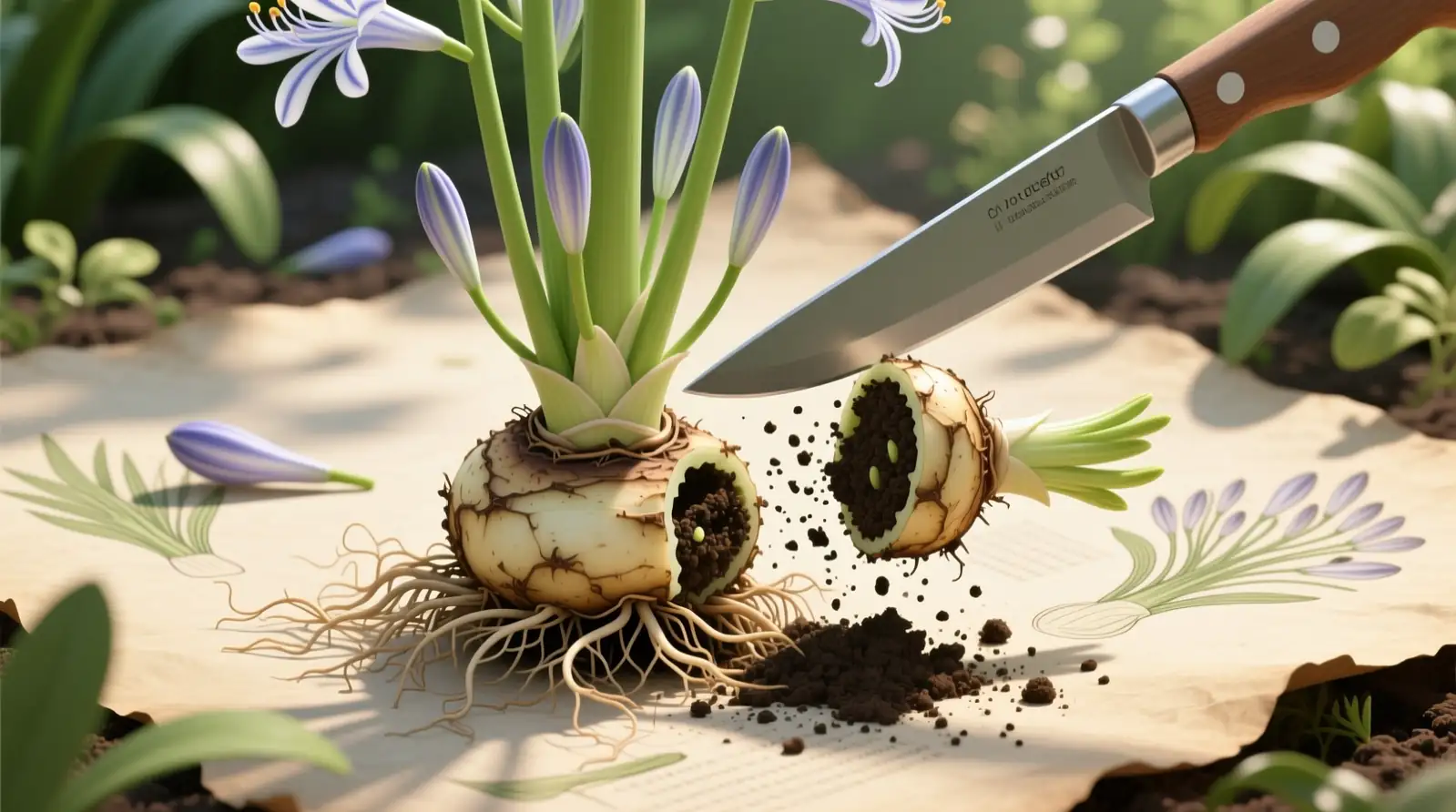
- Personal protection and setup
- Wear gloves, long sleeves, and eye protection (sap can irritate skin).
- Stage a clean tarp for the rootball, plus labels for each division.
- Tools you need
- Two garden forks, a sharp spade, and a clean pruning saw or sturdy knife.
- Disinfectant: 70% isopropyl alcohol in a spray bottle, or a 10% bleach solution (1 part bleach to 9 parts water) plus clean rags/paper towels.
- Clean as you go
- Scrape soil from blades; wipe/spray with alcohol (or dip in bleach and rinse) before starting, then between plants—and especially after cutting out any discolored, mushy tissue.
- Keep tools sharp for clean cuts that heal faster. Dry metal thoroughly after bleach to prevent corrosion.
How to divide, step by step
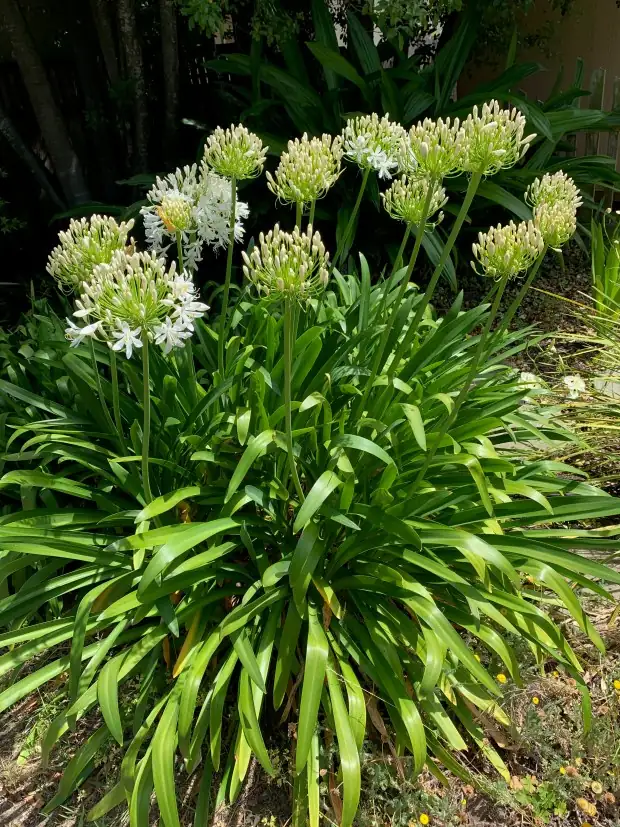
- Prep the plant
- Water the day before for easier lifting.
- Evergreen only: Shear foliage to 15–20 cm to reduce transpiration and improve visibility.
- Deciduous: Leave any lingering green leaves until they naturally yellow—divide as the noses just push in spring.
- Lift the clump
- In beds: Insert forks back‑to‑back and rock to loosen; undercut with a sharp spade.
- In pots: Slide out the rootball; if pot‑bound, saw cleanly through the mass.
- Split the crown
- Aim for divisions with 3–5 healthy fans and a generous portion of rhizome and fibrous roots.
- Slice through tight crowns with a disinfected knife/saw. Discard any blackened, mushy, or foul‑smelling roots (a rot red flag).
- Optional pause
- Let large cut surfaces air‑dry for 30–60 minutes in shade before replanting; this helps callus and reduces infection risk.
- Replant right away
- Set crowns at the same depth as before (crowns just at/above the soil line to avoid rot).
- Spacing in beds: about 45–60 cm apart. In containers, choose a pot that keeps them slightly snug—agapanthus often bloom better a bit root‑bound.
- Backfill with a free‑draining mix; sandy loam or potting mix amended with grit works well.
Aftercare that locks in success
- Watering
- Water in deeply to settle soil; then keep evenly moist—not soggy—while roots knit (roughly the first 2–6 weeks depending on heat).
- Thereafter, let the top layer dry between waterings. Greatly reduce water in winter until spring growth resumes.
- Light and shelter
- Give bright light but provide light shade for the first week if weather is hot or windy.
- Feeding
- Hold fertilizer for 4–6 weeks post‑division.
- Then feed in spring with a balanced formula (e.g., 10‑10‑10), and again about two months later. For stronger bloom, switch to a phosphorus‑leaning mix like 5‑10‑10 mid‑season. Avoid heavy nitrogen.
- Grooming
- Deadhead spent stems at the base to tidy and focus energy.
- For deciduous types, keep foliage until it yellows naturally—those leaves recharge next year’s flowers.
- Winter notes
- Mulch in colder zones, and keep soil on the dry side. Evergreen types are more cold‑sensitive; containers can be moved to a bright, frost‑free spot.
Bloom expectations after division: Many plants skip or reduce flowers the next season while they re‑establish, then bounce back strongly.
Seed: collecting, storing, and sowing windows
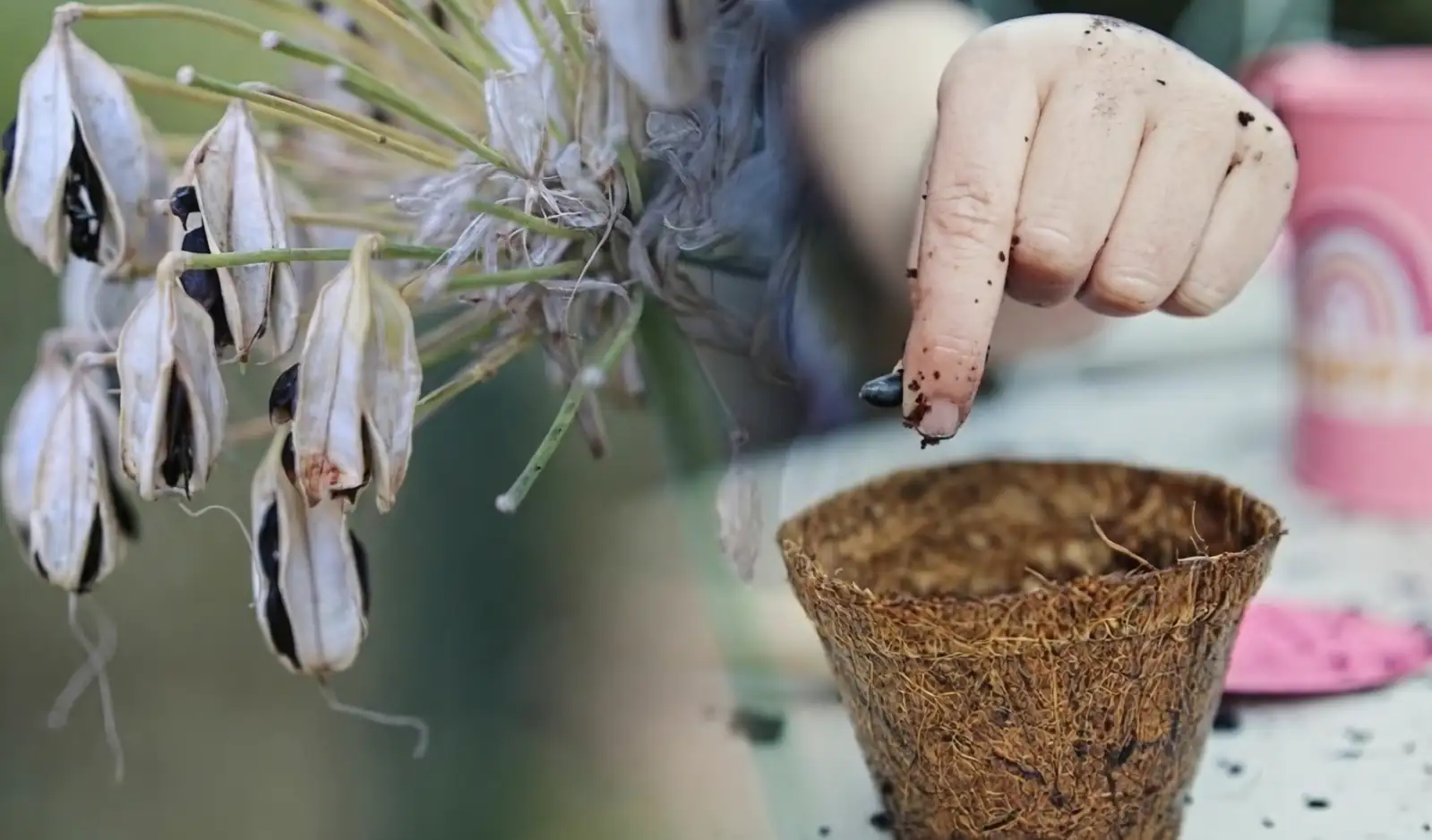
- When to collect
- Allow summer blooms (June–August) to ripen on the plant until the heads turn papery brown and capsules begin to split—typically late summer into early autumn.
- Snip heads into a paper bag during dry weather. Wear gloves if handling lots of sap.
- Cleaning and storage
- Shake out the flat, winged black seeds; discard any pale, undeveloped ones.
- Best: sow fresh. Or store dry in a labeled paper envelope in a cool, dark place until late winter/early spring.
- Sowing technique
- When: Immediately after harvest, or late winter to spring under cover.
- Medium: Fine, well‑drained seed mix; firm the surface.
- Method: Surface‑sow or barely cover; top‑dress with a thin layer of sharp grit to steady moisture and deter algae.
- Conditions: Bright, indirect light; consistent, light moisture; good airflow. A mild 18–21°C suits most windowsills/prop stations.
- Germination: Expect 1–4 months. Prick out when seedlings have sturdy roots and a couple of true leaves; pot on individually.
- Growing on
- Keep evenly lit and lightly fed during the growing season. Protect from hard frost the first winter (containers are ideal).
- Pot up as roots fill; don’t overpot—slight snugness encourages earlier flowering.
Realistic bloom timeline from seed: 3–5 years to first flowers. Seedlings often differ from the parent (many garden plants are hybrids), which can be half the fun.
Troubleshooting bloom and vigor
- Not flowering?
- Not enough sun: Aim for 6–8 hours daily.
- Too much nitrogen: Favors leaves over flowers.
- Recently divided: Expect a recovery year.
- Pot too large: They bloom better slightly root‑bound.
- Too young: Seedlings simply need time (3–5 years).
- Rot or wilt issues?
- Biggest risk is waterlogged soil. Improve drainage, raise crowns slightly, and avoid winter wet.
- Overcrowding and high humidity can invite fungal problems—divide on schedule and space for airflow.
Where to plant, for keeps
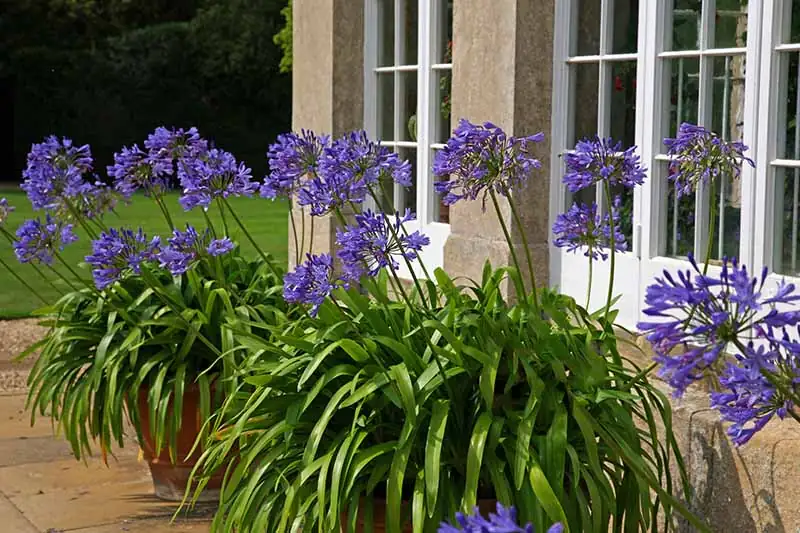
- Borders and paths where the tall stems read above foliage.
- Containers on sunny patios/balconies (easier winter protection in cold zones).
- Soil: Fertile but free‑draining; sandy loam is excellent. Slightly acidic (pH ~5.5–6.5) often suits Agapanthus africanus.
Safety first
All parts are toxic if eaten and sap can irritate skin. Keep away from children and pets (cats and dogs are especially sensitive), and wear gloves when dividing or deadheading.
Flower language: why the “love flower” resonates
The name Agapanthus fuses the Greek agape (love) and anthos (flower), so cultural symbolism centers on steadfast affection and devotion. Color traditions add nuance:
- Blue: loyalty and enduring bonds.
- White: sincerity and purity.
It’s a fitting emblem for a plant that rewards patience and care with ever‑richer summer displays.
Quick calendar
- Spring: Divide deciduous clumps; plant, feed, and resume regular watering.
- Summer: Peak bloom; deadhead and keep moisture steady; light mid‑season feed if needed.
- Fall: Divide evergreen clumps after flowering; taper watering and stop feeding by late summer.
- Winter: Keep much drier; mulch in‑ground; shelter containers from hard frost.
With clean cuts, spot‑on timing, and gentle aftercare, Agapanthus africanus will repay you with more fans, more stems, and those signature “firework” umbels—summer after summer.