

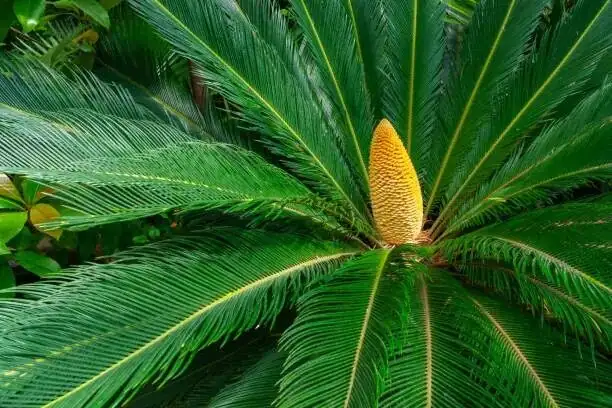
Think of Cycas revoluta as your living fossil with a flair for theatrics. Most of the year it’s all glossy, prehistoric fronds; then—suddenly—it stages a once-in-a-while show from the crown: either a bold, golden cone or a plush, feathery structure. Learn to spot which is which, catch the brief “now or never” window for pollination, and—if you have access to a pair—set seed at home safely and ethically.
Meet Cycas revoluta, the not-a-palm with a plan
- Scientific name: Cycas revoluta (aka Sago Palm, Japanese Sago Palm, King Sago—though it’s not a true palm, it’s a cycad).
- Origin: Southern Japan, including the Ryukyu Islands.
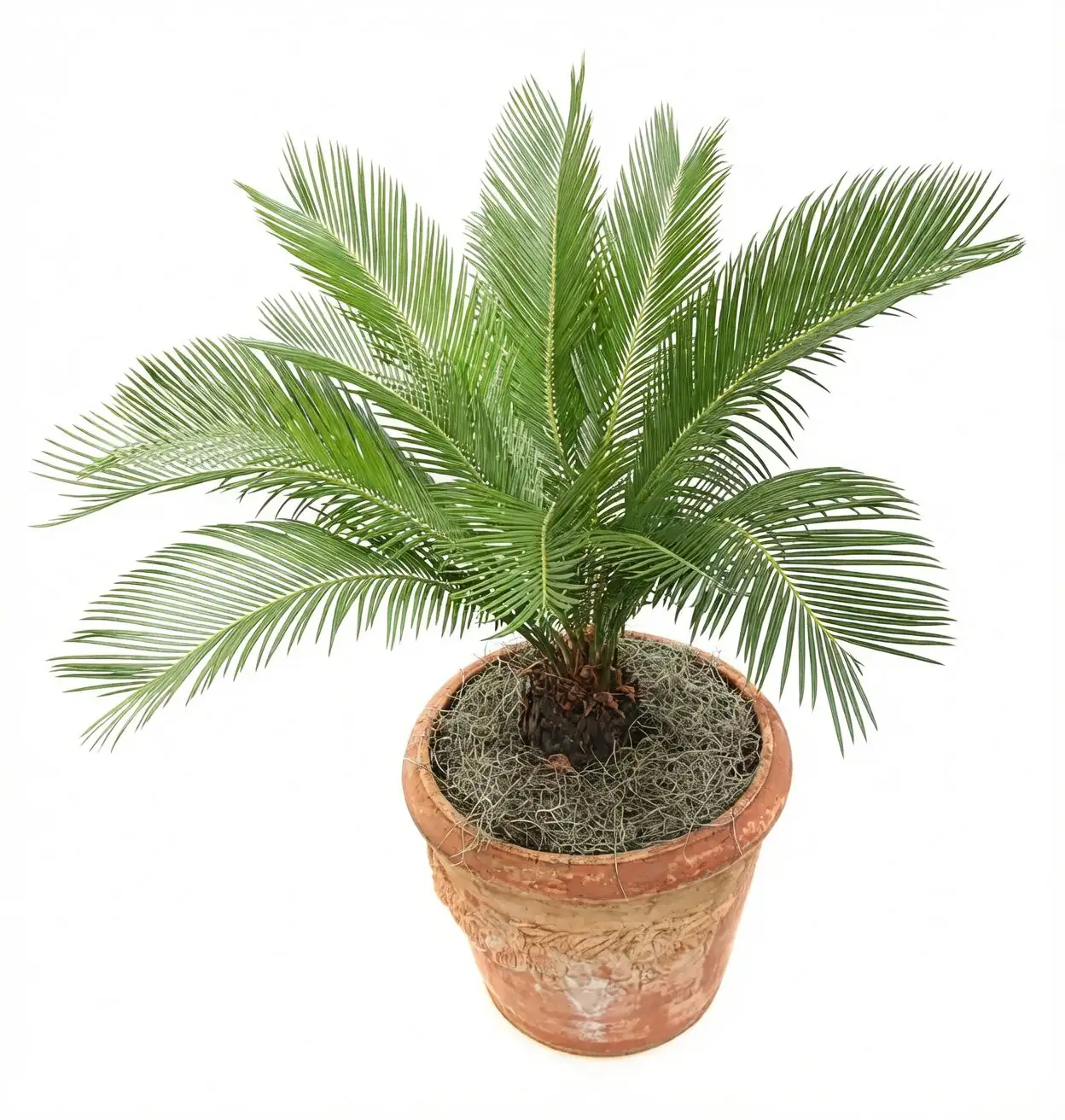
- Habit: Slow-growing and long-lived, with a stout caudex (trunk) and a tidy rosette of stiff, glossy fronds. In containers it’s typically grown in 15–50 cm (6–20 in) pots and appreciates bright light, airflow, and sharp drainage.
- Dioecious: male and female cones occur on separate plants.
Cones 101: Spot the differences at a glance
When mature plants “bloom,” they make cones (not flowers). These appear from late spring into summer in many climates.
The male cone (the pollen-maker)
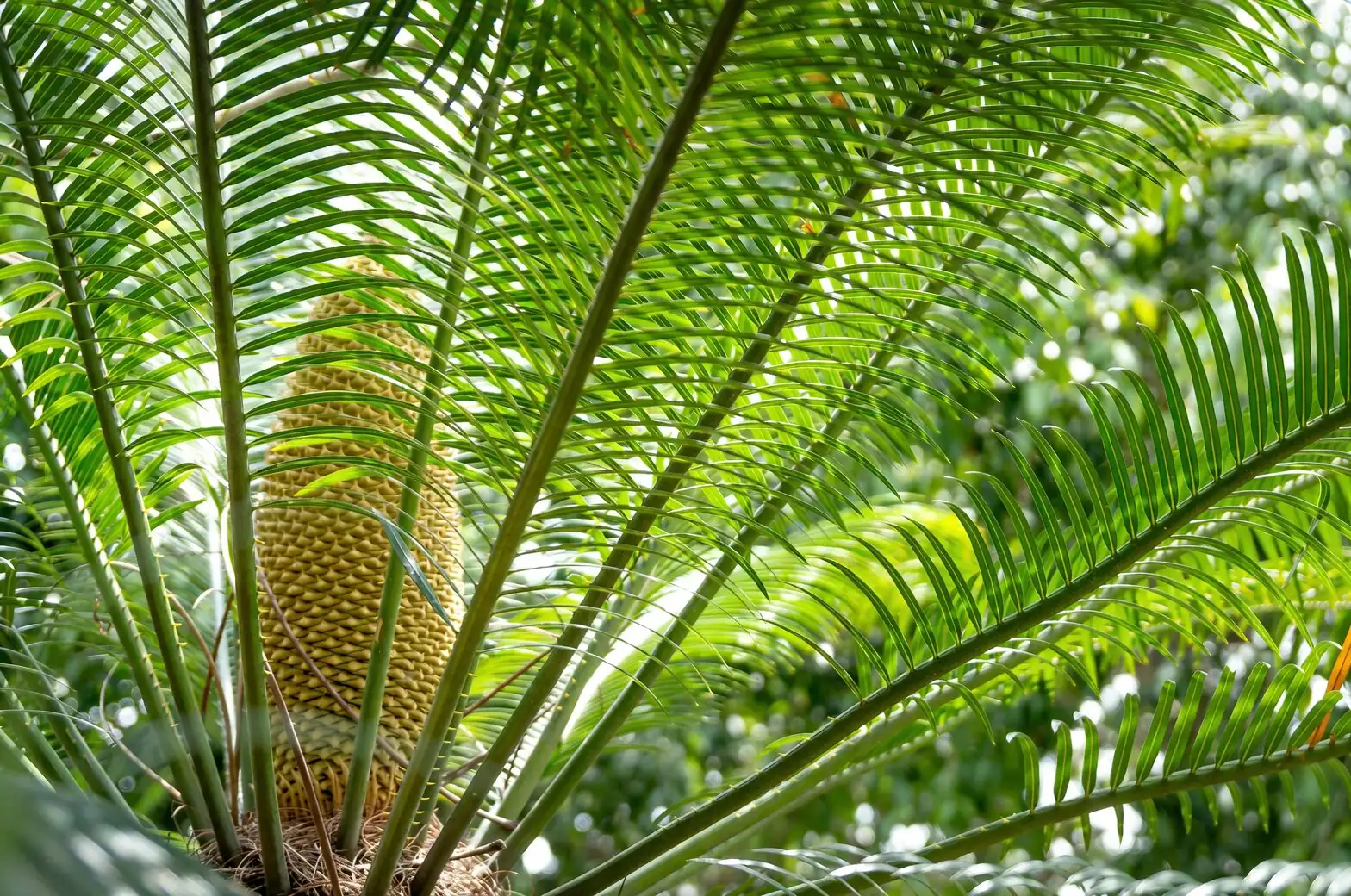
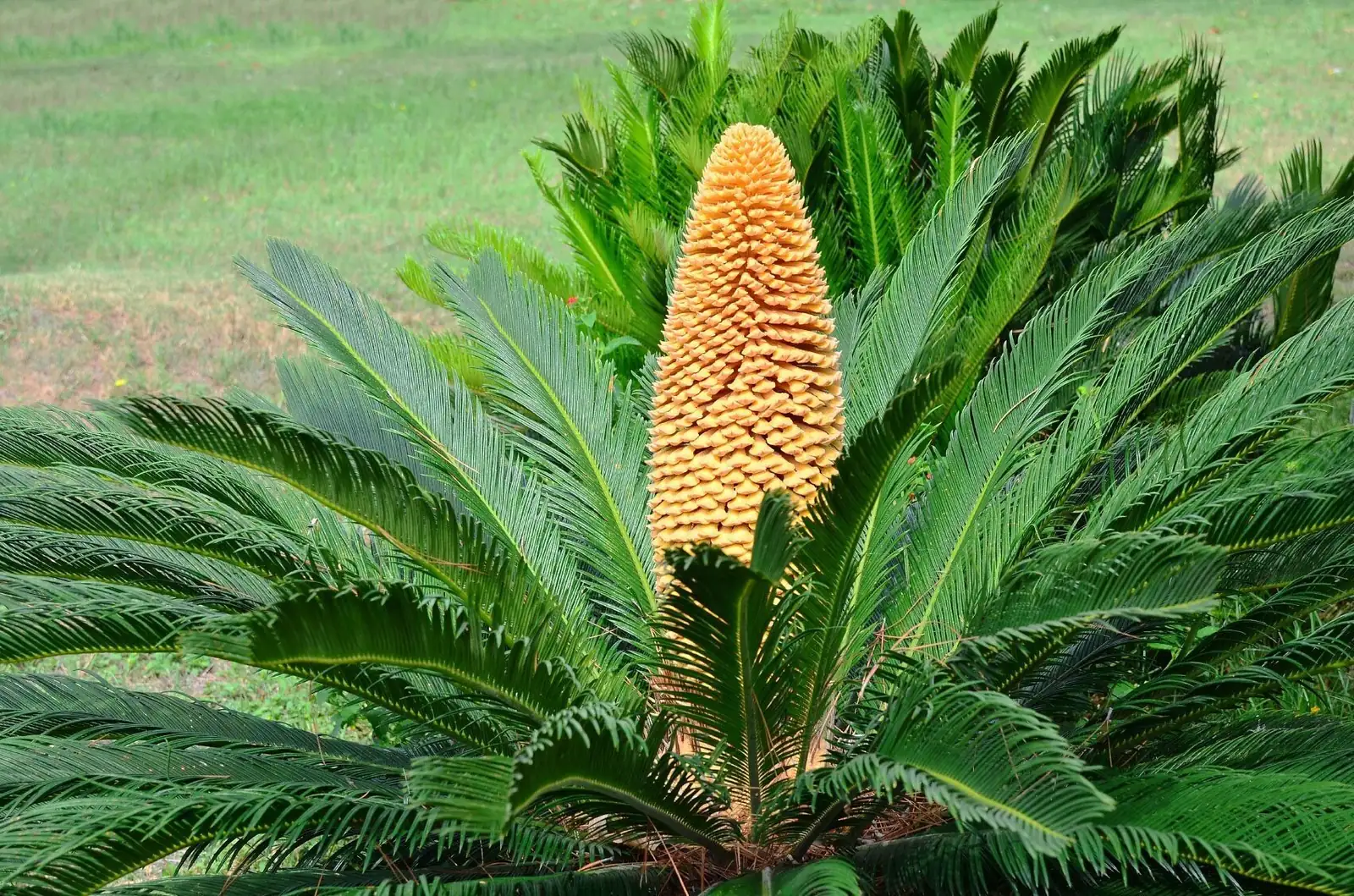
- Shape: A tall, upright, pineapple-like golden cone (often a single spear).
- Texture/behavior: The cone’s scales open as it matures and sheds abundant yellow dust-like pollen; it may release a faint sweet scent.
- Duration: Active for several days to a week as it dehisces pollen. After it finishes, you can remove the spent cone so the plant can refocus energy on leaves.
The female structure (the seed-maker)
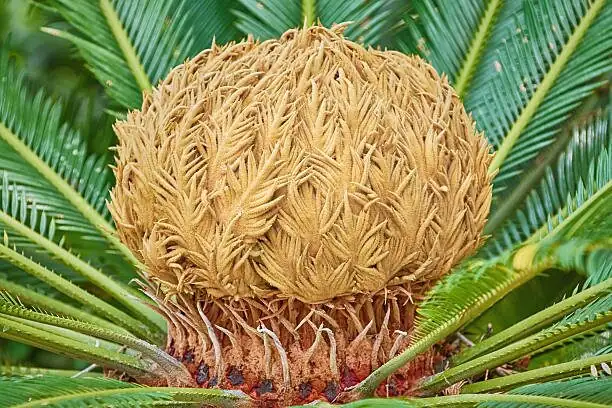
- Shape: A large, plush, feathery-looking golden structure sitting like a soft “nest” at the crown.
- Receptivity: Loosens and slightly opens when ready, then closes again after a few days. If pollinated, it knits into a dense seed head that slowly matures.
- After pollination: Over summer, successful seed heads swell; ripe seeds typically transition from yellow to bright orange before harvest.
Tip: New frond flush vs cone. A fresh leaf flush emerges as a ring of many fuzzy spearlets that quickly expand into fronds. A cone (male or female) is a single, central structure.
When will mine cone? Timing cues you can trust
- Season: Late spring to summer is the prime window for Cycas revoluta. In many places, activity ramps up around late May into early summer.
- Frequency: Not every year—often every second or third year on mature, well-established plants.
- Maturity matters: Young potted plants usually just make leaves; coning tends to start on larger, established specimens.
- Conditions that help: Bright light to full sun (acclimated), warm temperatures (best growth around 13–27°C / 55–81°F), and a fast-draining mix. Avoid staying wet, especially in cool weather.
Safe and ethical hand-pollination at home
You’ll need a male and a female plant in cone at the same time, whether they’re both yours or you’ve got a friendly neighbor with the complementary plant.
Before you begin: legality, plant health, personal safety
- Ethics and permission: Only use plants you own or have explicit permission to access. Never collect from wild or public plantings.
- Toxicity: All parts—especially the seeds—are highly poisonous to people and pets. Wear gloves, avoid touching your face, and keep cones/seeds away from children and animals.
- Tools and timing: Clean pruners, a paper bag or container, a soft brush or bulb syringe (optional). Work in still air, preferably morning.
- Plant welfare: Don’t force cones open. Avoid oil sprays or harsh treatments on developing cones or new fronds.
Easiest method: the shake-and-share routine
Ideal when the male and female are close by and accessible.
- Watch for readiness
- Male ready: Cone scales open; a puff of fine yellow pollen is visible when tapped; sometimes a sweet scent.
- Female receptive: The “feathered” structure loosens slightly, with tiny openings between scales for several days.
- Cut or snap the ripe male cone and gently shake it over the receptive female cone.
- Repeat once daily for several days, until the female begins to close. One male cone usually supplies ample pollen for multiple females or multiple days.
- Replace the male cone in a paper bag between sessions if you’re reusing it in the next day or two.
Cleaner method for patios and interiors
If pollen dust is a concern:
- Collect pollen: Enclose the male cone in a paper bag and tap to release pollen. Let it dry a few hours in the bag in a cool, airy spot.
- Apply: With the female slightly open, use a soft brush, paper funnel, or a bulb syringe to puff pollen gently into the openings. Repeat daily for several days while the female remains receptive.
- Freshness counts: Use fresh pollen the same week for best results.
Aftercare once you’ve pollinated
- Let the female cone close undisturbed. Keep the plant bright and airy; avoid overwatering.
- Growing-season feeding: About once a month with a balanced fertilizer at a conservative dose.
- Pest watch: Scale insects love sheltered spots—wipe and use horticultural soap if needed, but avoid spraying oils directly on cones or fresh fronds.
- Spent cones: Remove the male cone once finished; remove the female seed head only after the seeds are mature.
Harvesting and sowing your own sago seeds
Handled carefully and kept far from pets, home seed set is straightforward.
How to know seeds are ready
- Color and feel: Ripe seeds are typically bright orange and detach more easily from the compact head.
- Timing: Maturation follows over summer; don’t rush—allow full color change and firming-up.
Safe handling and cleaning
- Wear gloves. Place seeds in a tray and carefully twist free.
- Remove the fleshy outer coat under running water; do not compost residues where pets could access them.
- Label your batch with date and parent info if you’re tracking.
Sowing for success
- When to sow: Late spring to early summer.
- Medium and depth: A fertile but fast-draining mix; cover seeds with about 2 cm (0.8 in) of mix. Bright shade with good airflow.
- Warmth: Aim for 15–29°C (59–84°F). Under ideal warmth, germination may begin in about 2 weeks, but slower starts are common—patience pays.
- Watering: Keep evenly barely-moist, never soggy. Cold + wet is the fast track to rot.
- After sprouting: Move seedlings to bright light (no harsh midday sun initially). Feed very lightly and step up pot size gradually.
Troubleshooting: why seed set or cones fail
- No cones this year: The plant may be too young, under-lit, or simply taking a leaf year. Coning commonly alternates with leaf flushes.
- Missed timing: Female cones are receptive only for several days; males shed for a short window too. Check daily in late spring–summer.
- Pests and rot: Scale outbreaks or waterlogged soil weaken plants. Improve airflow; use fast-draining soil; keep drier in cool seasons.
- Misidentification: A ring of many fuzzy spears = leaf flush. One central golden spear or plush “nest” = cone.
Quick care refresher that supports cone production
- Light: Bright light to full sun with acclimation; low light during a new flush can stretch fronds.
- Temperature: Best at 13–27°C (55–81°F); can take brief heat up to about 40°C (104°F) if the soil drains well. Protect from frost; keep above 7–10°C (45–50°F) in winter.
- Soil: Sharply draining, fertile mix (loam/garden soil + peat/coir + sand/grit). True drainage matters more than a “drainage layer.”
- Water: Let the top of the mix dry before rewatering; never let pots sit in water. Keep drier in winter, especially if cool.
- Feeding: Monthly, balanced, conservative dose in the growing season; go light or none in winter.
- Repotting: Every 2–3 years for small/medium plants; 5–6 years for large ones. Avoid overpotting.
Symbolism and the long view
Cycads are often linked with good fortune, freedom, happiness, and longevity—fitting for a plant that can outlast generations. That “flower language” grows from centuries of East Asian cultivation and admiration for its endurance and poise. In the home, a sago’s slow, steady rhythm is a quiet nudge to think in decades, not days—exactly the mindset that makes hand-pollination and seed raising so satisfying.
Safety recap (read this twice if you have kids or pets)
- All parts are poisonous; seeds are especially dangerous. Ingestion can cause severe gastrointestinal distress and, in pets, potentially serious liver damage.
- Always wear gloves when handling cones or seeds; avoid inhaling dust; wash hands and tools well.
- Store seeds and cones locked away from children and animals; dispose of waste responsibly.
With an eye for cone cues, a few calm mornings, and good safety habits, you can witness one of the oldest plant partnerships on Earth—right on your patio—and maybe even raise the next generation of your own Cycas revoluta.