

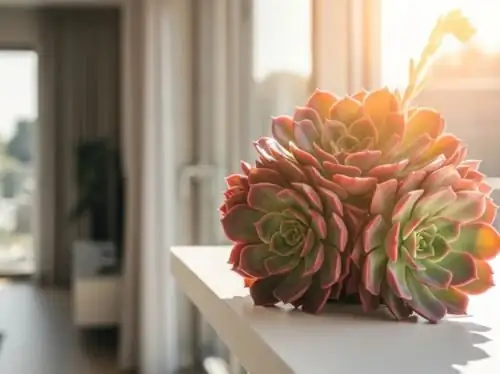
Think of Echeveria “Meililian” (美丽莲) as a tiny gray sculpture that asks for just one thing in return for its beauty: the brightest seat in the house. When you style this rosette with soft-matte ceramics and give it a south- or west-facing perch, the leaves deepen to elegant gray tones and the plant stays compact—then, in spring, it hoists brilliant pink-red starry flowers like little fireworks above the foliage. Form meets function, and your decor gets a living focal point that thrives.
Meet the gray rosette that loves the spotlight
- Botanical identity: Echeveria (ornamental cultivar sold under the trade name “Meililian”/“美丽莲”); family Crassulaceae; genus native mainly to Mexico and Central America.
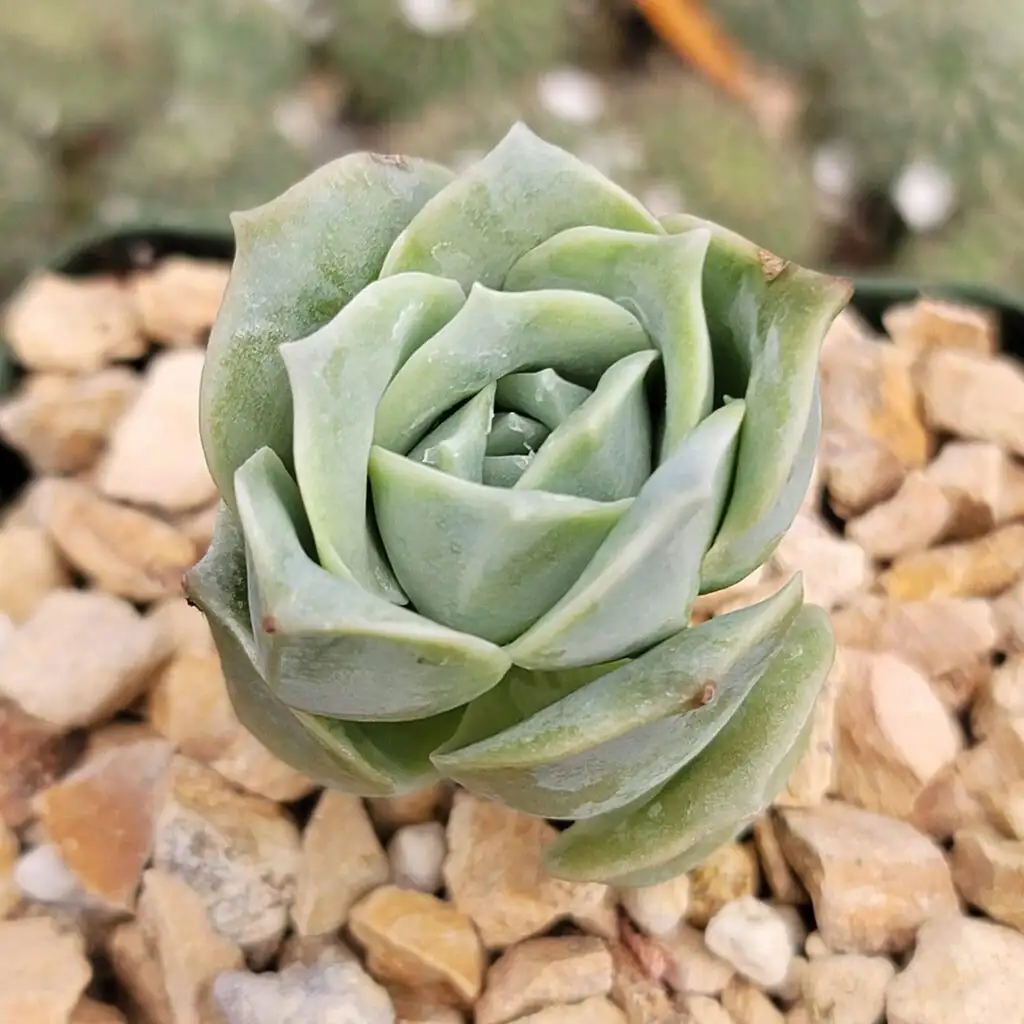
- Look and size: A tight, symmetrical rosette of thick leaves in gray to dark gray, often with paler edges. About 15 × 10 cm (6 × 4 in); flower stalks can rise several times taller than the rosette.
- Flower moment: Spring to early summer, with airy, branched stems tipped in bright pink-to-red, star-shaped blooms—like a floating bouquet.
- Personality: Slow-growing, drought tolerant, and compact—ideal for small pots and bright windowsills.
Light-first styling: put “Meililian” where it can thrive
Echeveria color and symmetry are powered by light. More light (introduced gradually) means tighter rosettes, richer gray tones, and reliable flowers.
- Best indoor placement: Full sun to bright partial sun on a very bright windowsill—south- or west-facing is often best.
- Aim for abundance: Think 5+ hours of very bright light daily. Acclimate plants to strong sun over a couple of weeks to prevent scorch.
- Air and dryness: Low humidity and good airflow keep leaves crisp and discourage pests. This is not a bathroom plant.
South- and west-facing windowsill strategies
- Use sheer curtains at midday if the window gets fierce summer sun; keep the plant within 15–60 cm (6–24 in) of the glass to maximize brightness.
- Rotate the pot a quarter turn weekly so the rosette stays even and compact.
- In winter, keep it bright but a touch cooler and drier; avoid icy drafts against single-pane glass. Ideal temperature range is 10–27°C (50–81°F).
Avoid the stretch: why low-light corners don’t work
That dim bookcase across the room? It will cause etiolation—leaves spacing out, a lanky stem, paler color, and fewer (or no) blooms. If you don’t have a bright windowsill, add a small grow light rather than compromising placement.
Pots, palettes, and textures that flatter gray
The gray-to–dark-gray rosette absolutely sings against matte finishes and mineral tones.
Matte ceramics with drainage: form that follows function
- Choose small, shallow-ish pots (about 10–12.5 cm / 4–5 in) with drainage holes. “Meililian” prefers being slightly snug.
- Material matters: Unglazed clay breathes and helps the mix dry; matte-glazed stoneware works too—just ensure a drainage hole and an empty saucer (never let water sit beneath).
- Nesting trick: Keep the plant in its drainage nursery pot and drop it into a decorative cachepot; lift out to water, let it drain fully, then return.
Top-dressing and finishing touches
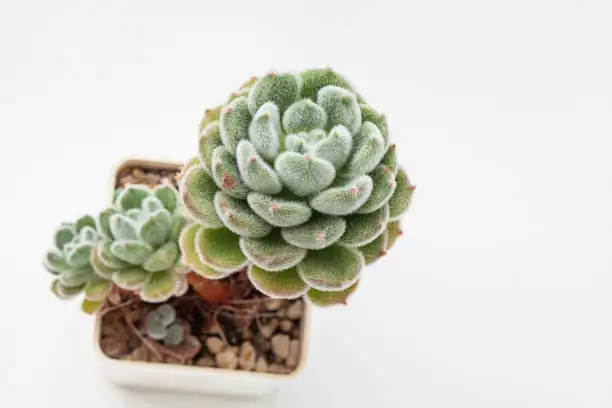
- Use a top-dress of pale gravel, pumice, or crushed granite in gray/ivory tones. It elevates the look and keeps leaves clean.
- Many gray echeverias carry a delicate, powdery bloom on their leaves; handle by the pot rim to avoid fingerprints. Dust with a soft brush rather than wiping.
Grouping for impact—without sacrificing airflow
“Meililian” shines in curated clusters and dish gardens, but don’t crowd the rosettes.
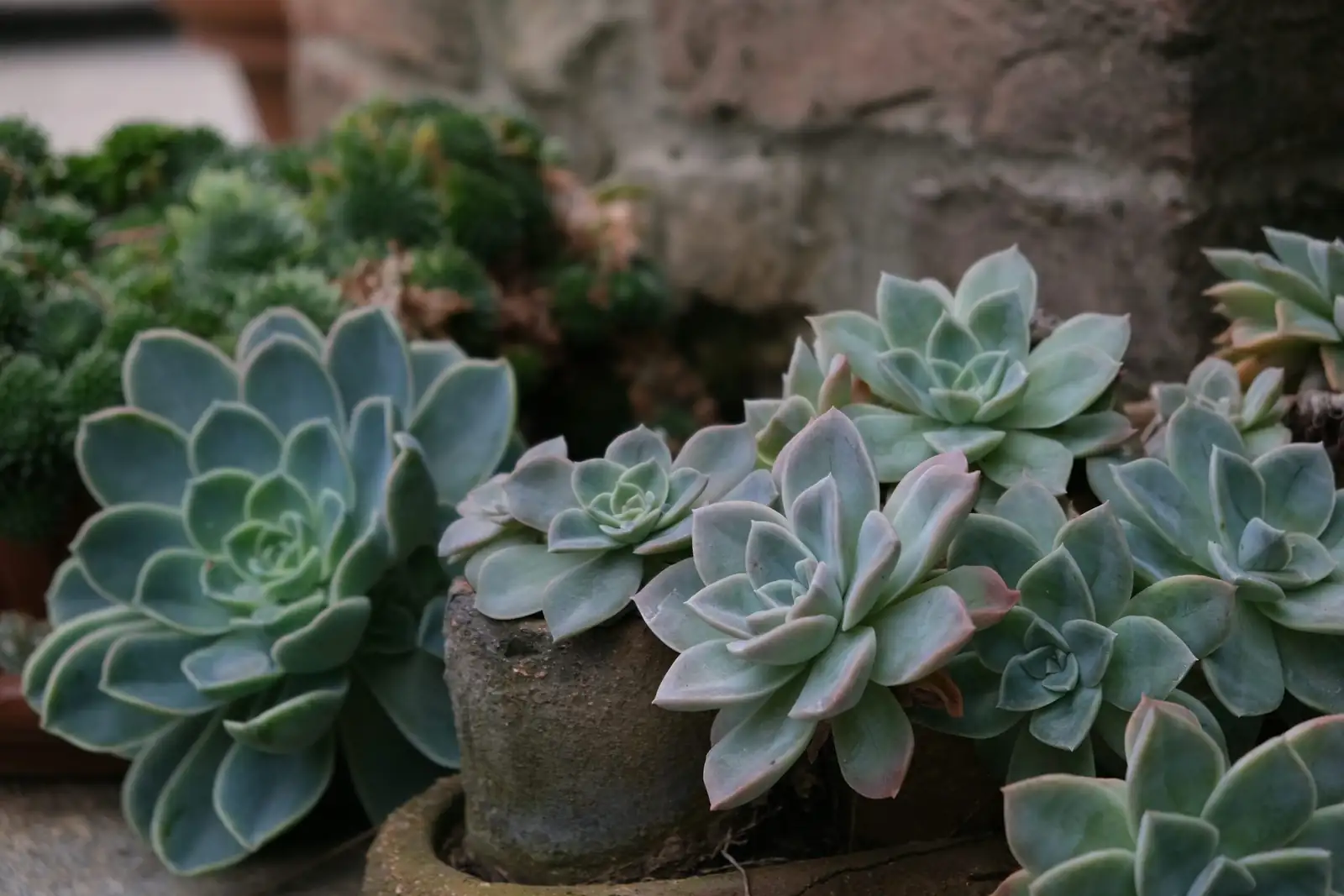
- Compose in odd numbers (3, 5) and vary heights using low stands or stacked books near a bright window.
- Keep a thumb’s width of space between plants to promote airflow and reduce pest issues.
- Companion picks with similar light/soil needs: other sun-loving rosette succulents (e.g., Graptopetalum, certain Sedum and Crassula selections). Keep the palette mineral and matte for a gallery-like vignette.
Water, soil, and feeding—simple rules that keep it pristine
- Watering rhythm: Soak thoroughly, then let the mix dry out completely before you water again. Spring–autumn, wait for a full dry-down. Winter, water sparingly—just enough to prevent excessive shriveling.
- Keep the crown dry: Don’t leave water sitting in the rosette; if it happens, wick it out with a corner of paper towel.
- Soil: Use a very well-draining cactus/succulent mix. If using regular potting soil, amend heavily with grit, pumice, or coarse sand so it never stays soggy.
- Feeding: During active growth (spring to autumn), feed 2–3 times with a balanced liquid fertilizer at half strength (or a low-nitrogen succulent formula). Do not fertilize in winter dormancy.
- Repotting: Only when root-bound (every 2–3 years). Stick with small pots and fast-draining mixes.
Seasonal rhythm and those “floating fireworks”
- Growth and color: Strong light deepens the leaf color and sets the stage for blooms.
- Flowering: Typically spring to early summer; tall, branched stems carry vivid pink-to-red, starry clusters above the rosette.
- Aftercare: Snip spent stalks to tidy the plant and conserve energy for new growth.
Quick fixes and gentle prevention
- Soft, mushy leaves or sudden leaf drop? Usually overwatering or dense soil. Let it dry thoroughly; repot into a grittier mix if needed.
- Stretchy, pale, open rosette? Not enough light. Move to a south/west window or add a grow light and rotate weekly.
- Pests: Mealybugs and scale can hide in tight leaf bases. Dab with cotton swabs dipped in isopropyl alcohol or use an appropriate insecticidal soap. Strong light, airflow, and dry leaves help prevent issues.
Safety and symbolism
- Safety: Generally considered non-toxic, though sap may mildly irritate sensitive skin. Still, discourage pets and children from nibbling.
- Symbolism: Echeveria is often linked with resilience, calm balance, and a quiet beauty that suddenly dazzles when it flowers. Modern “flower language” (a blend of Victorian floriography and contemporary houseplant culture) reads this plant’s tidy geometry and drought tolerance as poise under pressure—composure first, fireworks later.
Three styling recipes to steal
1) Minimalist gray-on-gray windowsill
- Pot: Low, matte charcoal bowl with drainage, 12 cm (5 in).
- Top-dress: Fine gray pumice.
- Placement: West-facing sill, 20 cm from glass; sheer curtain during the hottest hours.
- Care cue: Rotate weekly; water only after the mix feels bone-dry through the drain hole.
2) Trio vignette for a south window
- Group: Three “Meililian” in matte eggshell cylinders, each 10 cm (4 in), on a slim black metal tray.
- Heights: One slightly elevated on a small stand to create a gentle staircase of rosettes.
- Companion: Add a single pale granite stone for texture echo.
- Care cue: Keep space between pots for airflow; bright sun with gradual acclimation for color pop.
3) Coffee-table statement, light-permitting
- Vessel: Shallow stoneware dish with drainage holes, filled with gritty mix.
- Composition: One “Meililian” centered with two smaller rosette succulents offset for asymmetry; pale gravel top-dress.
- Placement: Pull it to the south/west window by day; return to the table for guests in the evening.
- Care cue: Never leave water pooling in the dish; snip flower stalks after bloom to keep the silhouette tight.
—
Buying tip: Choose a firm, symmetrical rosette with tightly arranged leaves. Skip plants with black spots, mushy bases, or visible cottony pests.
Parting thought: If your styling starts with light—south or west, bright and airy—everything else falls into place. The gray rosette stays sculptural, the flowers put on their sky show, and your room gains a living object that looks curated and cared for, because it is.