

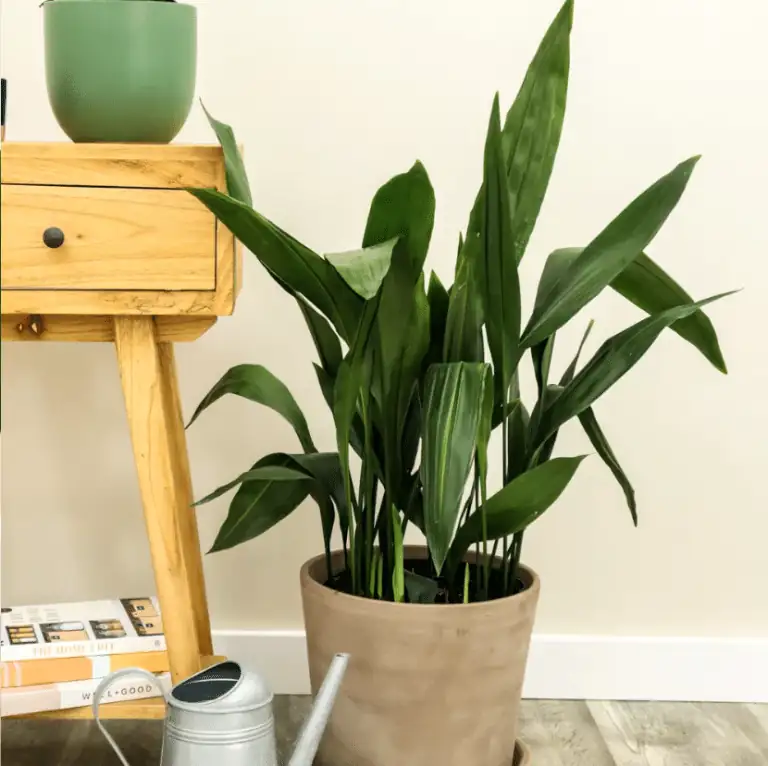
If you have a hallway that reads midnight even at noon, or a living-room corner that swallows table lamps whole, meet the plant that turns shadows into chic: Aspidistra elatior, the cast-iron plant. Long, leathery leaves rise in poised, architectural fans—deep green or quietly variegated—bringing the kind of moody elegance designers chase with velvet drapes and blackened brass. Best of all, it does it without extra grow lights.
Why Aspidistra is the stylist’s secret for dark zones
- Shade tolerance with polish: Thrives in partial to full shade and stays composed where many plants sulk.
- Understated architecture: Upright, arching leaves form tidy clumps about 60 × 60 cm (24 × 24 in) indoors—great scale for vignettes.
- Variegation that catches what light there is: Cream stripes and speckles add shimmer in dim rooms.
- Truly low upkeep: Forgiving of missed waterings, average humidity, and cool interiors (prefers 5–20°C / 41–68°F).
Light realities (no-grow-light edition)
No plant thrives in total darkness, but cast-iron plant tolerates very low light better than almost any indoor foliage. Aim for:
- Placement in dim rooms, halls, or shaded corners—bright, indirect light is fine; avoid harsh direct sun.
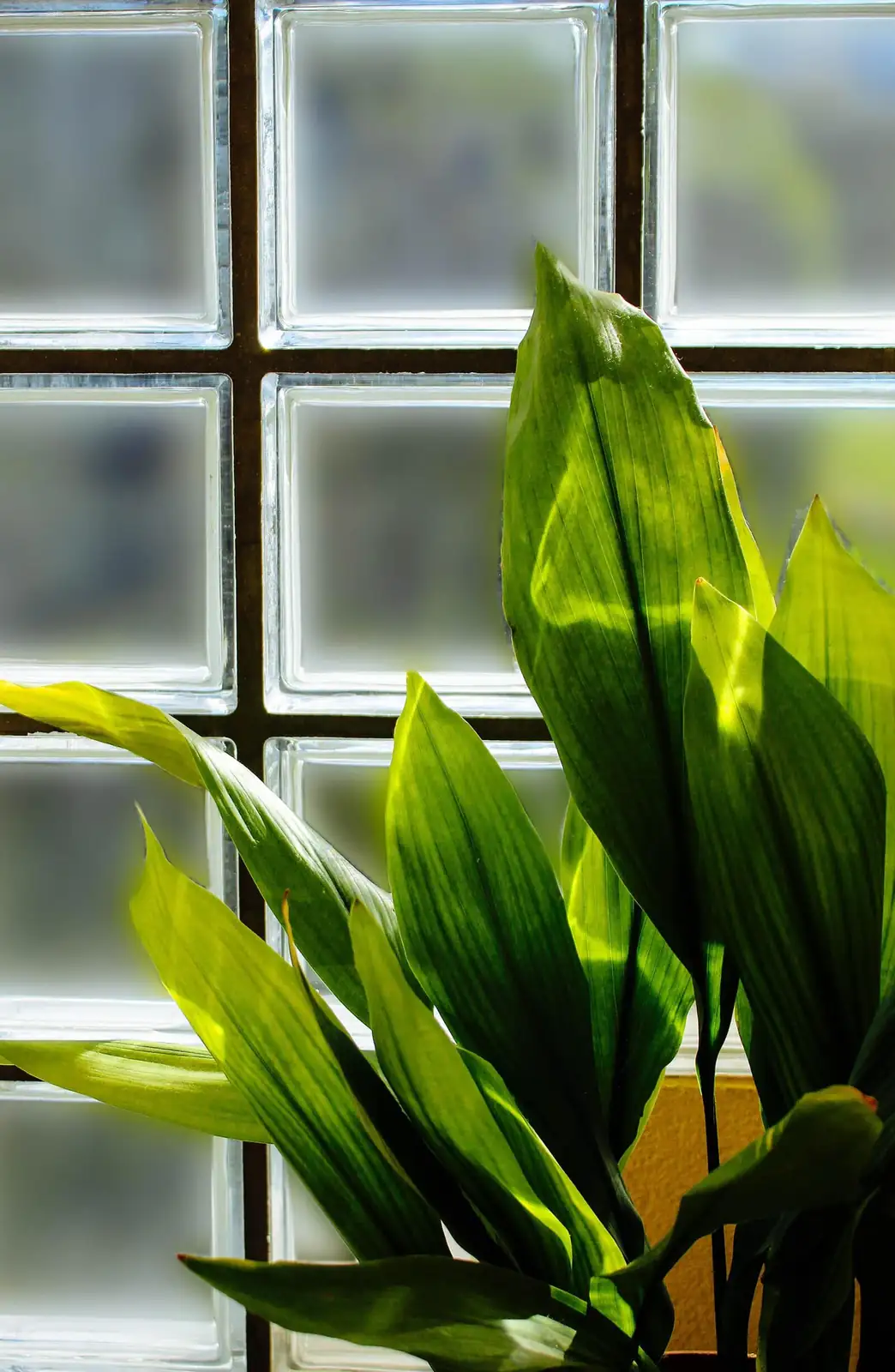
- A small ambient boost: near a doorway, frosted window, or opposite a pale wall or mirror to bounce light.
- Water less in very low light. Growth slows, and the plant drinks more slowly—overwatering is the enemy in dark spots.
Pro tip: If you can barely read a book in that corner, you’re in “very dark.” The plant can cope—but check soil dryness more conservatively and expect slower growth.
Pots that make shadows look intentional
Cast-iron plant is rhizomatous and dislikes soggy mix, so pair design with function.
Shape and scale
- Right-size the container: 12.5–20 cm (5–8 in) diameter is typically sufficient indoors. Move up just one size when repotting.
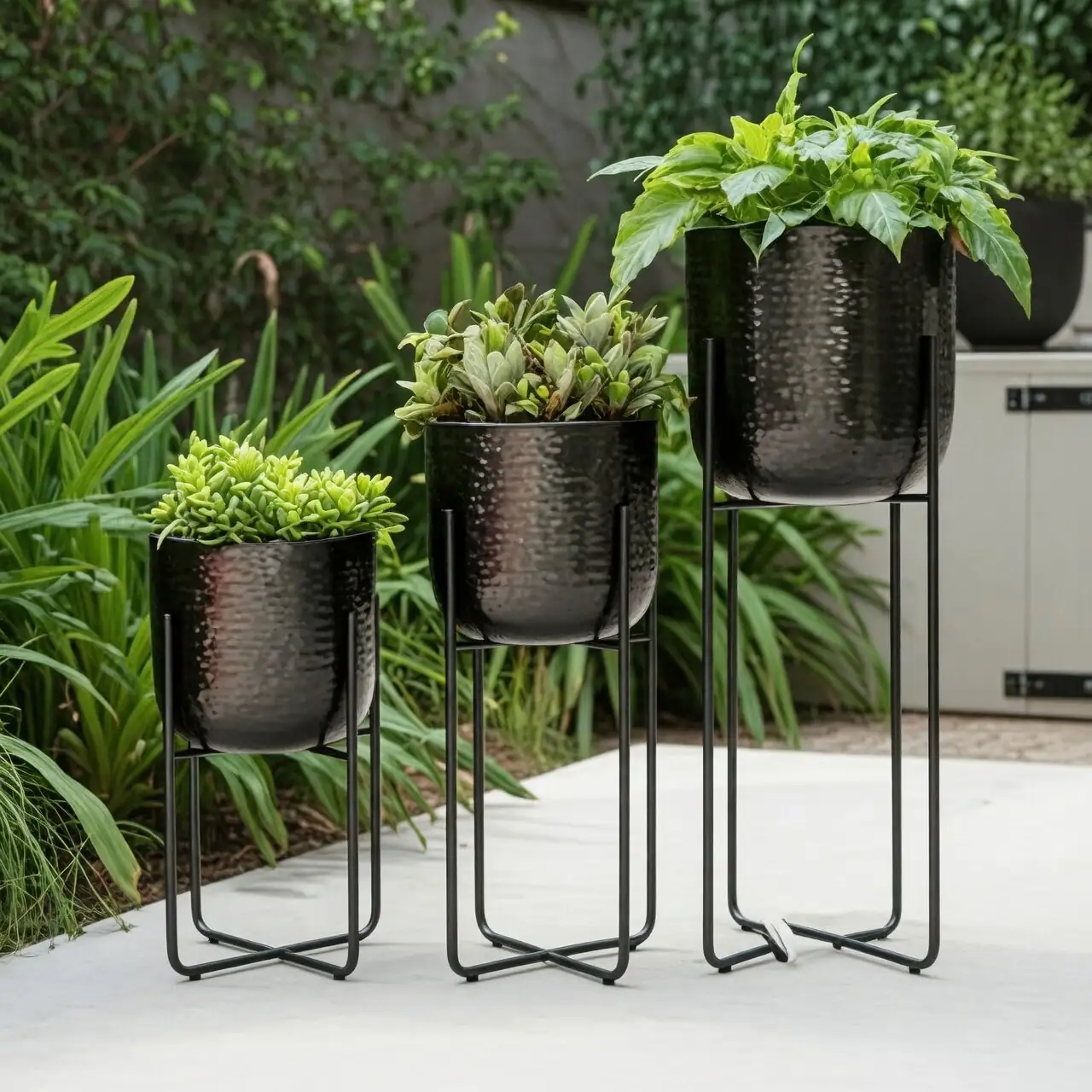
- Go upright, not cavernous: Tall cylinders or footed bowls show off the leaf arches without encouraging wet, oversized soil volumes.
- Weight and stability: Heavier ceramic or stoneware keeps tall leaves steady in narrow spaces.
Materials and finishes
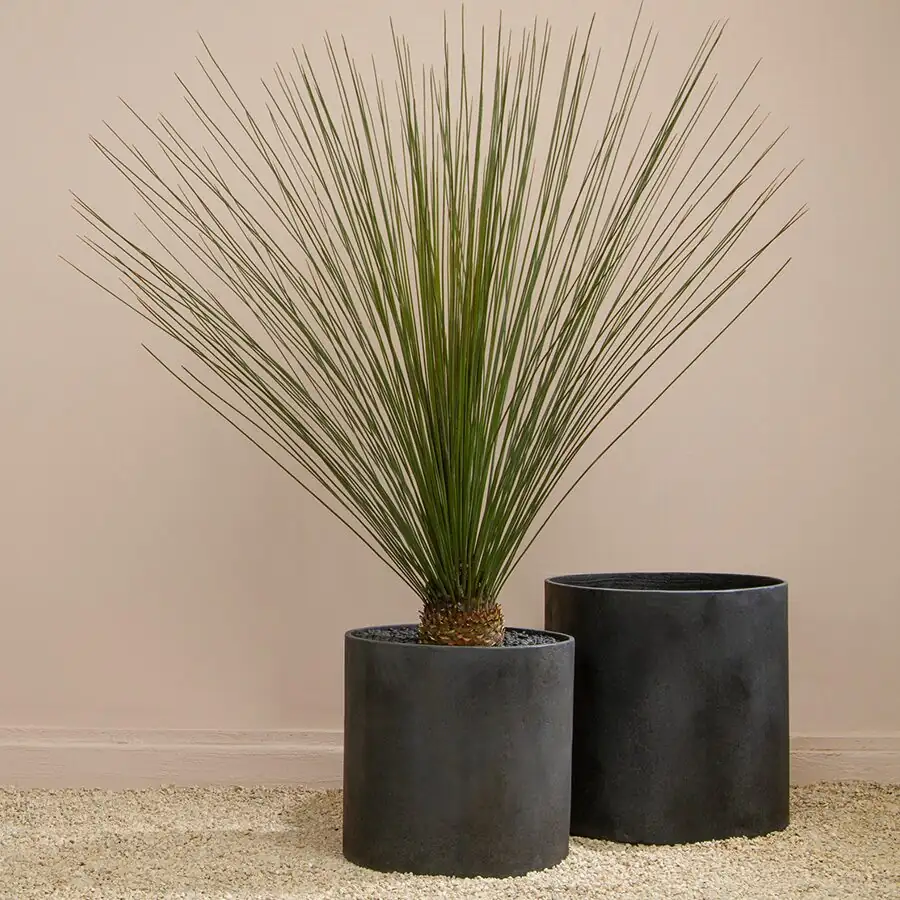
- Matte black, charcoal, or smoked clay: Deep tones amplify the plant’s moody elegance.
- Oxidized brass or burnished bronze: Adds warmth that plays beautifully with cream variegation.
- Stone, travertine, or lime-plaster cachepots: Soft, chalky neutrals turn Aspidistra into an art object.
Always use drainage. If your dream vessel lacks a hole, slip the plant in its nursery pot inside the cachepot and lift to pour off excess water.
Layered height = instant vignette
Think in vertical tiers so your cast-iron plant doesn’t just sit in the dark—it stages the dark.
- The anchor (floor level): A classic deep-green Aspidistra in a matte charcoal cylinder on a low pedestal or stand draws the eye upward and sets the mood.
- The middle note: A variegated cultivar in a footed pot beside or slightly in front, 10–30 cm higher or lower than the anchor for pleasing stagger.
- The glint: A petite, speckled cultivar on a stack of coffee-table books (protected by a tray) or a short plinth to catch ambient glimmers.
Finish with a low, textured element—rough stone, a sculptural bowl, or a candle snuffer—in a tone that echoes the pot hardware.
Pairing palette: variegated cultivars that “paint with light”
Mix one deep-green plant with one or two patterned cultivars to create depth without visual noise.
- Elegant frosts and tips
- ‘Asahi’: airbrushed white-frosted tips that glow in dim rooms.
- ‘Sekko-kan’: crisp white striping; mature leaves can finish with pale, dramatic tips.
- Quiet stripes
- ‘Variegata’ (syn. ‘Okame’): irregular white streaks along leaf length.
- ‘Goldfeather’ or ‘Goldspike’: yellow-gold or single golden stripe—subtle warmth in shadowy corners.
- Starry speckles
- ‘Milky Way’: fine white spatter—think star-dusted leaves.
- ‘Hoshi-zora’: “starry sky” effect with yellow or white dots.
- ‘Ginga Giant’ / ‘Well Spotted’: bolder, larger flecks for a punchier look.
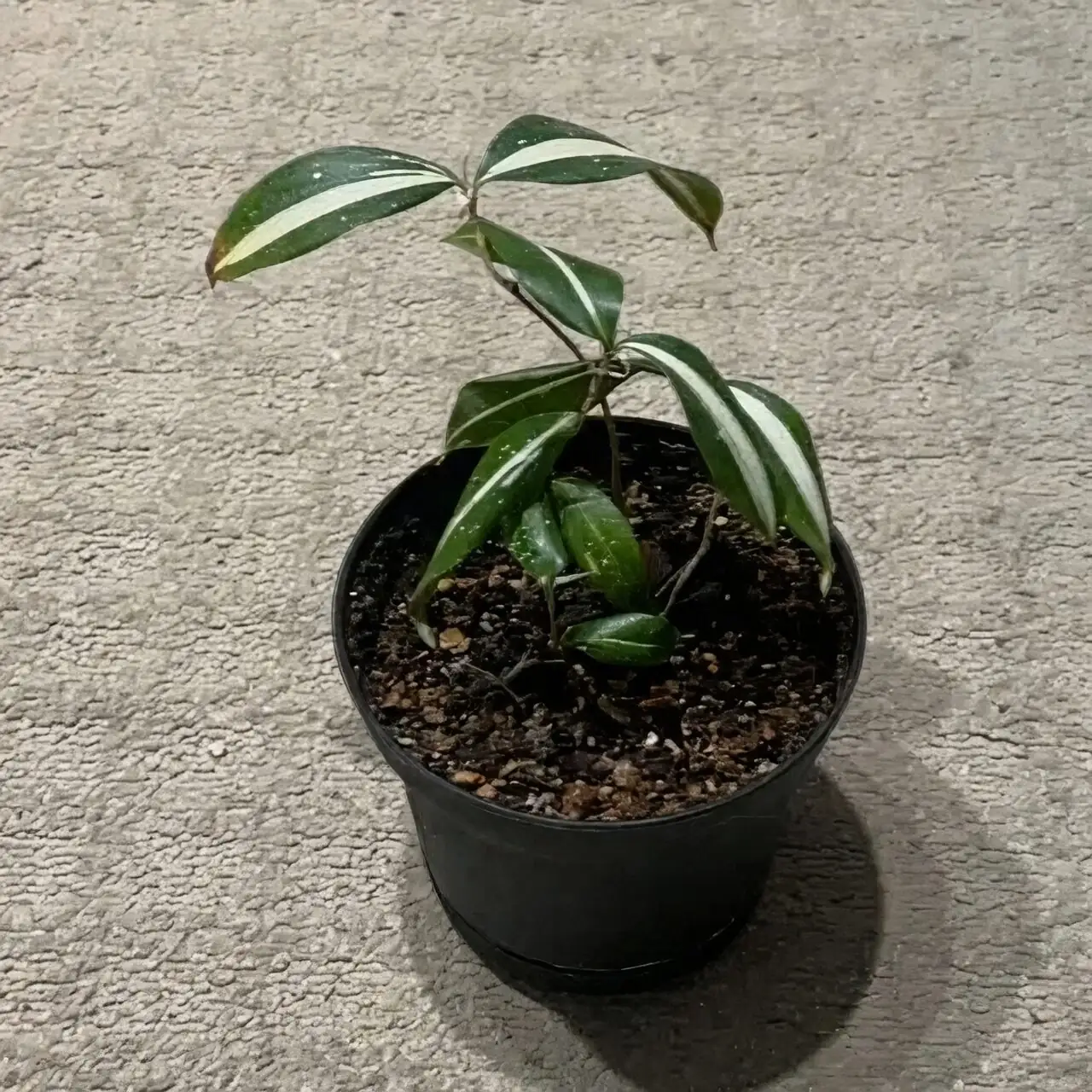
Styling tip: Place the brightest-variegated plant slightly closer to any available ambient light; keep the solid-green form deeper in the shadow to anchor the scene.
Placement recipes for moody, elegant corners
- Narrow hallway nook
- Anchor: deep-green Aspidistra in matte black pot on a slim plinth.
- Middle: ‘Variegata’ in a pale stone footed pot to soften shadows.
- Accent: ‘Milky Way’ on a shallow tray with a single brass object. Mirror opposite to bounce any stray light.
- Bedroom reading corner
- Anchor: solid-green plant beside a lounge chair.
- Middle: ‘Asahi’ near the aisle side so its frosted tips catch lamplight in the evening.
- Accent: rough travertine bookend and linen-shaded floor lamp—no grow light needed, just ambiance.
- Low-light office
- Anchor: tall cylinder on the floor, just outside the path of foot traffic.
- Middle: ‘Hoshi-zora’ on a credenza where speckles pick up window glow.
- Accent: framed art with off-white matting behind the plants to amplify contrast.
Care that keeps the look effortless
- Watering: Let the surface of the potting mix dry before watering. Reduce watering in winter. Never let the pot sit in water.
- Soil: Use a loose, well‑draining mix—try a 1:1 blend of standard potting soil and a multi‑purpose mix, kept airy (add perlite if needed).
- Feeding: From spring through late summer, feed monthly with a balanced liquid fertilizer at half strength.
- Temperature and humidity: Comfortable indoors at 5–20°C (41–68°F). Tolerates low to average humidity—no extra misting needed.
- Pruning: Snip yellowing or damaged leaves cleanly at the base; otherwise minimal pruning.
- Repotting: Every 2–3 years, step up only one pot size. A 12.5–20 cm (5–8 in) container suits most interiors.
- Pests and health: Generally trouble-free. In very dry rooms, watch for scale, mealybugs, or spider mites. Root rot only appears if the mix stays wet—good drainage prevents it.
- Propagation: Divide rhizome clumps during repotting; pot sections with roots attached.
Smart shopping checklist
- Choose plants with firm, upright leaves and a healthy crown (the base where leaves emerge).
- Skip any pot that smells sour or feels persistently wet; yellowing leaves in the nursery often signal overwatering.
Safety, symbolism, and a tiny secret
- Pet- and people-friendly: Commonly regarded as non-toxic to cats, dogs, and humans.
- Symbolism: Long associated with endurance and resilience—traits earned by shrugging off low light and sporadic care.
- The hidden bloom: Small, brownish‑purple flowers form right at soil level, often tucked under leaves. Indoors they’re easy to miss—treat them as your vignette’s whisper, not its shout.
Troubleshooting your vignette
- Leaves paling or variegation fading: Nudge the plant a little closer to ambient light (but still indirect).
- Yellowing, mushy bases: You’re watering too often or the pot lacks drainage—let the surface dry between waterings.
- Sparse clump or slow fill: Normal in shade—stylistically layer heights and pair with a brighter-variegated cultivar for fullness while growth catches up.
With the right pots, a little height play, and a cast of variegated Aspidistras, the darkest corners stop apologizing and start smoldering. No grow lights, no drama—just quiet, enduring glamour from a plant built for shadow.