

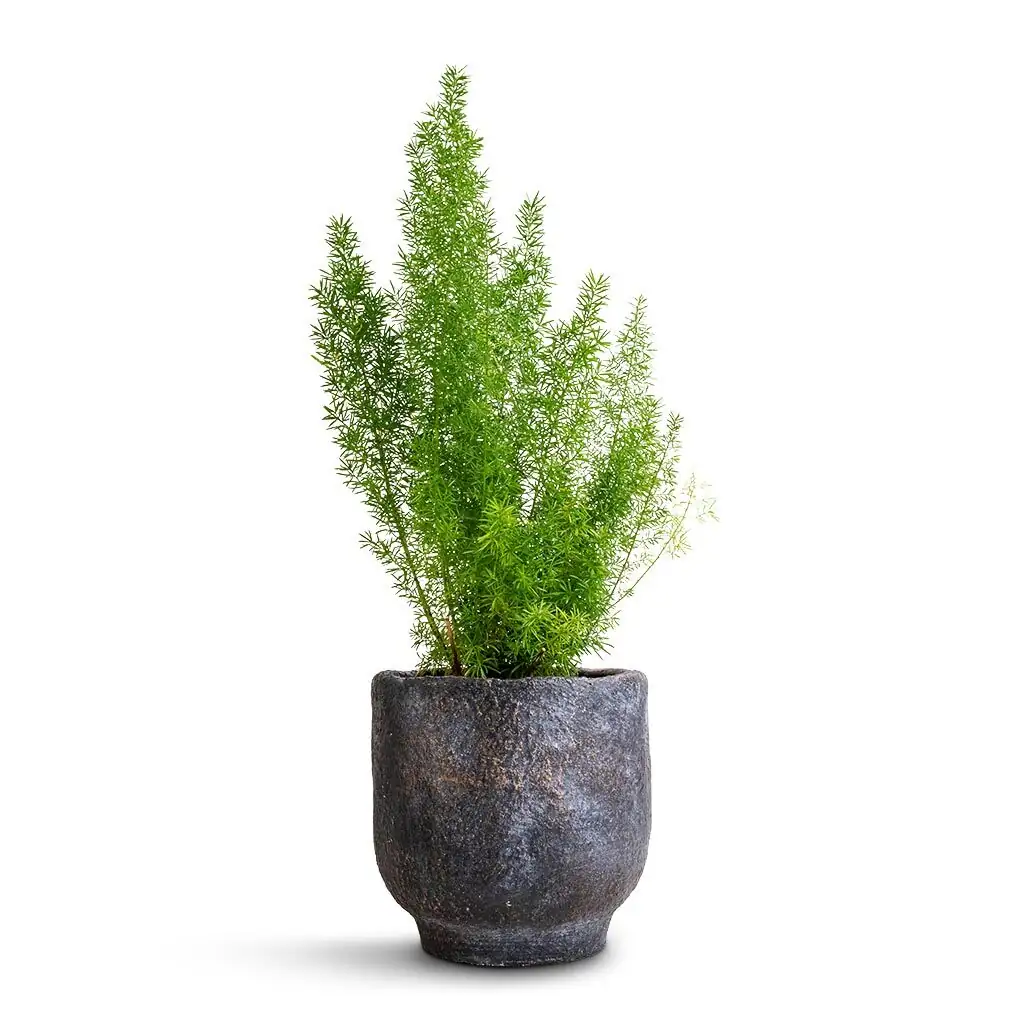
If you’ve ever brought home an “asparagus fern” and then wondered why yours looks nothing like your friend’s, you’re not alone. The name gets slapped on several different species and a handful of cultivars—some upright and foxtail-y, others spilling and feathery. Here’s your quick, confident ID guide to Asparagus densiflorus, its common lookalikes, and the care tweaks that keep each type lush.
Meet the plant behind the name
Asparagus densiflorus—often sold simply as “asparagus fern”—is a Southern African native in the Asparagaceae family. It isn’t a true fern: the soft “needles” are actually tiny modified stems called cladodes. In containers it typically forms a 60 × 60 cm (24 × 24 in) mound with arching, cascading stems, perfect for hanging baskets or tall planters. Mature plants may surprise you with small, starry white flowers and occasional red berries indoors.
Tougher than it looks, A. densiflorus stores water in tuberous roots and generally shrugs off average indoor humidity better than true ferns—as long as you avoid soggy soil and cold drafts.
Quick ID: Which “asparagus fern” did you buy?
Start with silhouette and texture. The overall shape is the fastest tell.
Asparagus densiflorus ‘Meyeri’ (often sold as ‘Myersii’) — the Foxtail Fern
- Look: Dense, upright bottlebrush plumes—like soft green fox tails—rising from the crown and gently arching.
- Texture: Full and plush, with needles packed tightly along the plumes.
- Habit: Forms tidy, freestanding clumps; great in pots where you want structure.
- Tag clues: May read “Foxtail Fern,” “Emerald Fern,” or just “Asparagus Fern.”
Care nudge: Likes bright, filtered light to keep those plumes tight; too dim and it loosens up.
Asparagus densiflorus ‘Sprengeri’ (Sprengeri-type) — the Basket Spiller
- Look: Airy, fountain-like sprays that arch and cascade, soft and ferny to the eye.
- Texture: Fine, feathered fronds that drape attractively over pot edges.
- Habit: Trailing/cascading; classic in hanging baskets.
- Tag clues: Often sold as “Sprenger’s Asparagus,” “Emerald Feather,” or simply “asparagus fern.”
Care nudge: Tolerates partial shade; keep evenly moist in the growing season so the sprays don’t yellow.
Other A. densiflorus forms you might bump into
- ‘Compacta’: A denser, lower-growing mound with shorter sprays.
- Trade names vary: You’ll see ‘Meyeri’ vs ‘Myersii’ used interchangeably for the foxtail type.
Tip: Labels are notoriously loose. Use the plant’s posture—upright foxtails versus draping fountains—to guide care.
The usual lookalikes (and how to tell them apart)
These cousins and near-cousins often share bench space and common names.
Asparagus setaceus (lace/plumosa fern)
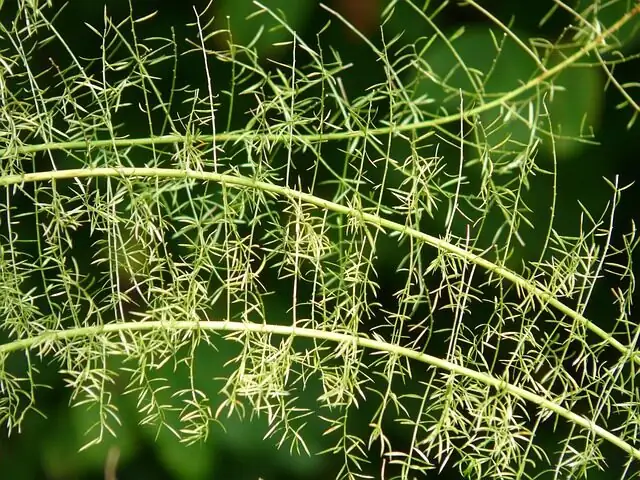
- How to spot it:
- Silhouette: Cloud-like, lacy, almost gauzy fronds—think green mist.
- Stems: Fine, wiry, and often climbing if given support.
- Feel: Ultra-soft, delicate texture compared to densiflorus.
- Care differences:
- Light: Bright, indirect; avoid hot sun.
- Air: Resents very dry rooms—watch for spider mites. Slightly more finicky than A. densiflorus.
Asparagus aethiopicus (often sold as “Sprenger’s asparagus”)
- How to spot it:
- Silhouette: Trailing like densiflorus Sprengeri-type, but stems are usually tougher and more noticeably prickly.
- Texture: Needles can look a bit coarser; clumps sprawl vigorously outdoors in warm zones.
- Care differences:
- Light: Bright, indirect to partial shade; afternoon sun can yellow foliage.
- Note: Various “asparagus ferns” have naturalized in mild climates—check local guidance before planting outdoors.
Asparagus retrofractus (Ming asparagus)
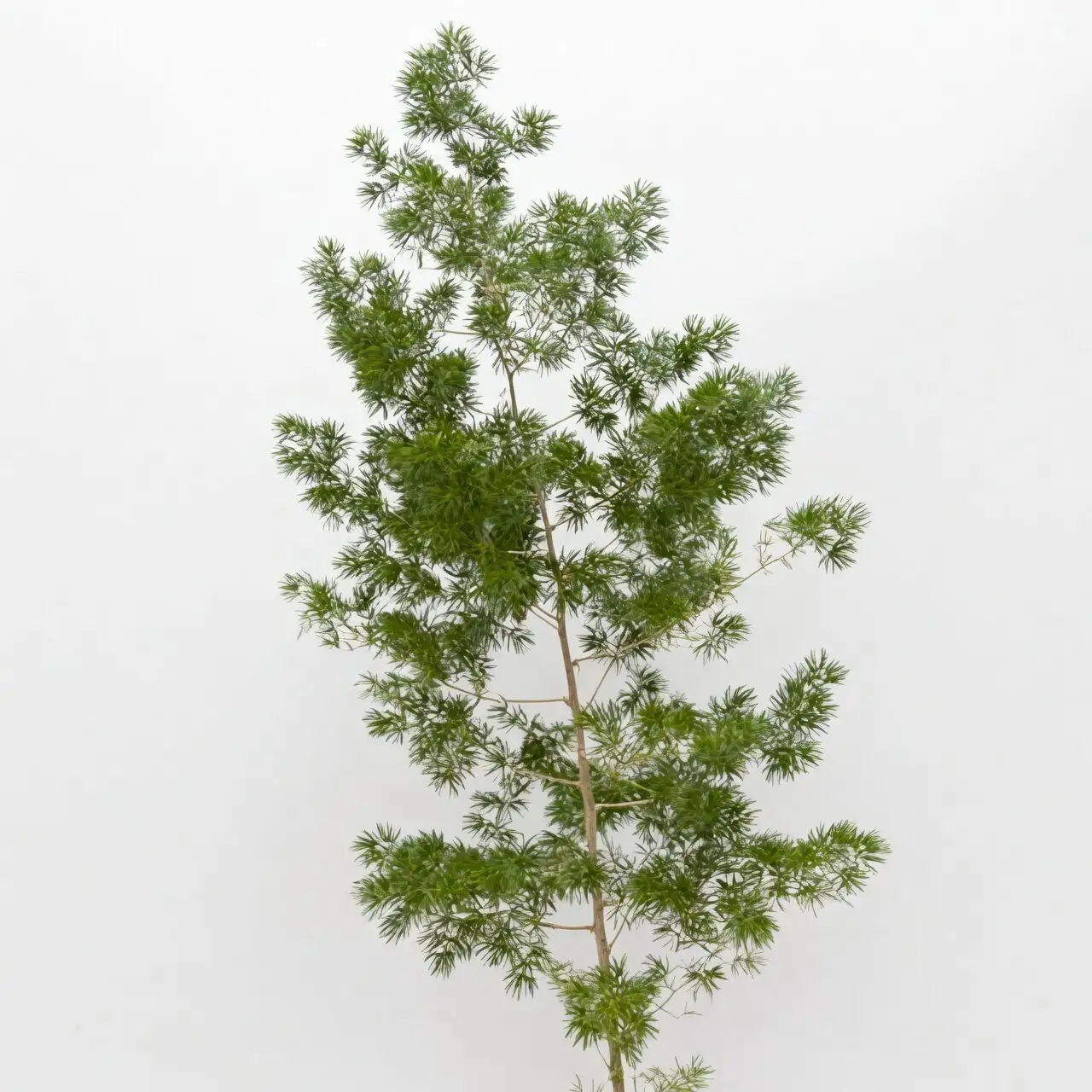
- How to spot it:
- Silhouette: Distinct pom‑pom tufts on branching, broom-like stems—more sculptural than feathery.
- Texture: Plumes form in rounded clusters rather than foxtails or lacy sprays.
- Care differences:
- Similar general needs, but it appreciates steady bright, filtered light to keep its architecture crisp.
Care that keeps Asparagus densiflorus happy
These notes apply to both foxtail and basket forms.
- Light
- Bright, indirect light to partial shade.
- A few hours of gentle morning or late-afternoon sun is fine; harsh midday sun can scorch and bleach.
- Water
- Spring–autumn: keep the mix evenly moist; water when the top 1–2 cm (0.4–0.8 in) begins to dry.
- Winter: water less; let the surface dry between waterings.
- Remember the tuberous roots store water—occasional slight dryness beats chronic sogginess.
- Soil and pot
- Use a loose, well‑draining potting mix (peat/coco or soil‑based) in a pot with drainage holes.
- Avoid heavy, water‑retentive mixes.
- Temperature and humidity
- Ideal: 13–24°C (55–75°F); protect from cold drafts.
- Avoid temps below about 10°C (50°F).
- Low to moderate humidity is fine; occasional misting is a nicety, not a necessity.
- Feeding
- Spring–autumn: monthly, balanced liquid fertilizer at 1/2 strength.
- Pause or greatly reduce in winter.
- Pruning and shaping
- In spring, cut brown, damaged, or overlong stems off at the base to refresh the plant.
- For a denser look, especially on trailing forms, tip‑prune new growth.
- Repotting and propagation
- Repot when root‑bound (about every 1–2 years); step up 2–5 cm (1–2 in) and refresh the mix.
- Best propagation is by division in spring—split the tuberous root ball, ensuring each piece has roots and healthy stems.
- Where it shines
- Hanging baskets or tall planters near bright east or north windows, or set back from sunny south/west exposures with filtered light.
- Outdoors in mild climates, it’s commonly container‑grown; it’s not frost hardy (USDA Zone ~9–11).
Seasonal rhythm (quick planner)
- Spring: prune, repot/divide if crowded; resume regular watering and feeding.
- Spring–autumn: keep evenly moist; fertilize monthly at half strength.
- Winter: water less, keep warm and in bright filtered light.
Troubleshooting at a glance
- Yellowing or “needle” drop
- Most often inconsistent watering (too wet more than too dry), low light, or spider mites.
- Adjust to bright, indirect light; water when the top 1–2 cm dries; inspect and treat for mites if needed.
- Scorched, bleached patches
- Too much direct midday sun. Shift to filtered light and remove worst‑affected stems at the base.
- Brown tips or crispy patches
- Underwatering spells, heat blasts, or fertilizer salts. Water thoroughly, occasionally flush the pot, and keep feedings gentle.
- Pests
- Spider mites, mealybugs, and scale favor dry, still air. Improve airflow, rinse foliage, and use insecticidal soap or horticultural oil if needed.
Safety, flowers, and berries
- Toxicity: Mildly toxic if ingested—berries and foliage may cause gastrointestinal upset in people and pets. Sap can irritate sensitive skin. Wear gloves if you’re prone to irritation and keep plants out of reach of children and pets.
- Flowers and fruit: On mature plants, small starry white flowers may appear, sometimes followed by red berries indoors. Flowering is variable under houseplant conditions.
Tiny taxonomy and trade-name tangle
“Sprenger’s asparagus,” “foxtail fern,” “asparagus fern”—nursery tags mix and match these names across a few related species and forms. That’s why visual ID is your best friend:
- Upright bottlebrush plumes = A. densiflorus ‘Meyeri’ (foxtail type).
- Draping, fountain-like sprays = A. densiflorus Sprengeri-type.
- Cloudy lace and vine-like stems = A. setaceus.
- Pom‑pom tufts on broomy branches = A. retrofractus.
Once you know the shape, you’ll know the care.
Symbolism and how it’s used
Because it looks delicate yet proves resilient, Asparagus densiflorus is often associated with enduring affection and quiet toughness. In floral language traditions, evergreen, feathery greens symbolize constancy and soft support rather than showy romance. Florists value its long-lasting sprays as an airy backdrop that makes blooms look lusher—proof that the “supporting cast” can steal the scene with texture alone.
Ready to ID yours at a glance? Look for fox tails versus fountains, lace versus pom‑poms—and then give it bright, filtered light, a freely draining mix, and steady, moderate moisture. Your “fern” will reward you with effortless, evergreen elegance.