

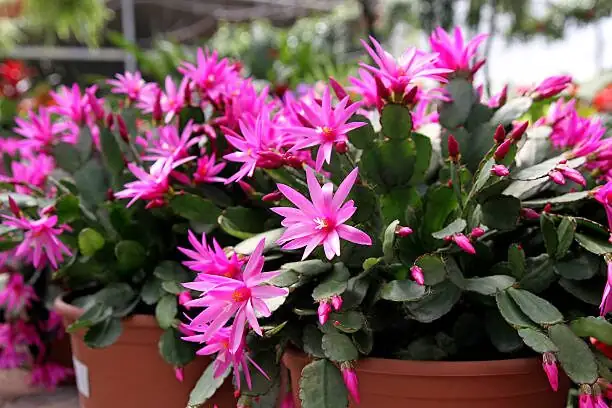
Imagine a cactus that wakes with the sun, tucks its petals in at night, and quietly “breathes” after dark. Meet the Easter Cactus—Hatiora gaertneri (syn. Rhipsalidopsis gaertneri, Schlumbergera gaertneri)—a rainforest epiphyte from southeastern Brazil that trades spines for glossy, scalloped segments and explodes into star-shaped color right around spring.
Meet the Easter Cactus: a rainforest rebel
- Not a desert dweller: This tropical cactus naturally perches on tree branches or rocks, sipping rain and leaf litter rather than rooting in deep soil.
- Looks: Flat, fleshy segments (not true leaves) with gentle scallops and tiny bristles at the joints; new growth can blush purplish-red in bright light.
- Size: About 15–30 cm (6–12 in) tall and 30–60 cm (1–2 ft) wide, becoming full and a bit trailing with age—great for hanging baskets.
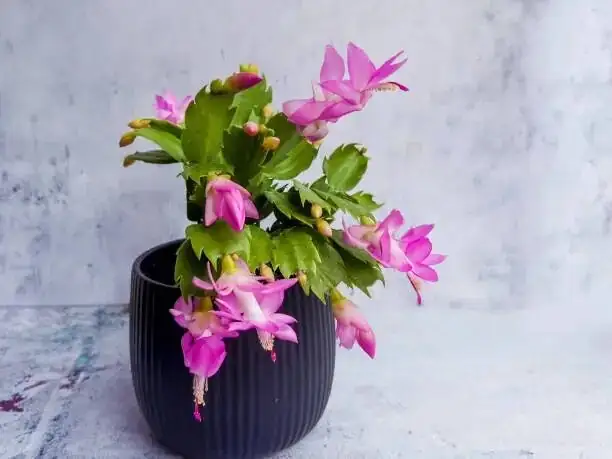
- Flowers: Star-shaped in red, pink, orange, purple, or white with pale yellow stamens. They typically open in daytime and close at night, and a well-grown plant can carry many at once.
- Bloom season: Spring (usually March–May), often right on cue for Easter.
Daylight choreography: why flowers open by day and close at night
Think of each bloom as a tiny, solar-timed dancer. The petals (technically tepals) respond to light and temperature by shifting water pressure in their cells—a bit like mini hydraulic hinges. This day–night rhythm:
- Protects pollen and nectar from cool, damp nights.
- Conserves the flower’s “energy budget,” often stretching the life of each bloom over many days.
- Syncs with daytime pollinators in its native forests.
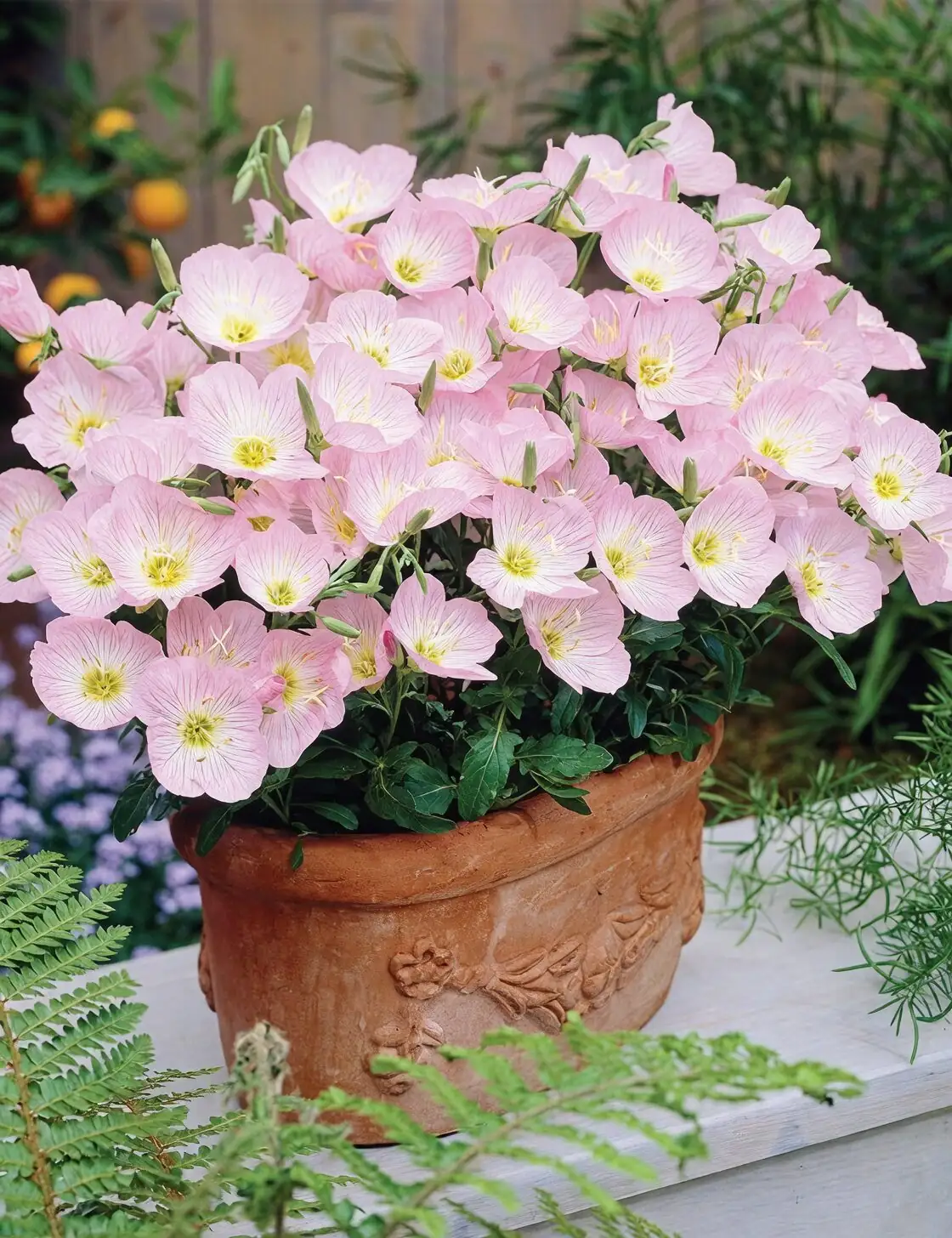
Try this at home: On a bright day, note when flowers are wide open. Move the plant to a dim room for an hour and watch the tepals begin to ease shut. Return it to bright, indirect light to see them reopen. (If your plant is full of forming buds, avoid lots of moving—sudden changes can trigger bud drop.)
Night breathing 101: CAM photosynthesis made easy
Here’s the neat trick: the Easter Cactus uses CAM photosynthesis—a water-saving strategy common in succulents.
- At night: Tiny pores (stomata) open to take in CO₂ when evaporation is low. The plant stores it as malic acid.
- By day: Stomata close to conserve moisture while stored CO₂ fuels photosynthesis.
Why it matters for care:
- Airy, fast-draining mix is essential—roots want oxygen as much as moisture.
- “Evenly moist, never soggy” beats drought or saturation.
- Gentle humidity (aim ~50%+) pairs perfectly with its CAM strategy.
How to cue the spring show: the cool-and-dark routine
To set buds and stage that spring spectacle, give your plant a pre-bloom nudge about 6–8 weeks before your target flowering window:
- Nights: Cool, around 10–13°C (50–55°F).
- Darkness: Roughly 12 hours of uninterrupted night.
- Water: Reduce a bit—keep the top layer dry between drinks, but don’t let the mix go bone-dry for long.
- Light by day: Bright, filtered light.
- Temperature drop: A noticeable day–night difference (around 10°C / 18°F) really boosts bud formation.
Important guardrails:
- Protect from cold below about 5°C (41°F).
- Pause fertilizer in fall and winter; resume feeding after flowering.
- Once buds appear, keep conditions steady—sudden moves, drafts, or drought can cause bud drop.
Light, water, and other easy-care smarts
- Light: Bright, indirect light or partial shade. Gentle morning sun is fine; avoid harsh midday rays that can scorch segments.
- Temperature: Best at 15–24°C (60–75°F).
- Humidity: Likes 50%+; mist lightly, use pebble trays, or park near a humidifier.
- Watering: Drench thoroughly, drain well, then let the top portion of the mix dry before watering again. Keep lightly and evenly moist in active growth; don’t let it fully dry out while in bloom. Give a 2–3 week rest after flowering with reduced water.
- Soil: Fast-draining and airy—cactus mix + perlite + orchid bark; slightly acidic pH ~6.0–6.5.
- Feeding: During active growth, use a balanced fertilizer monthly (or every 2–4 weeks at half strength). A touch more phosphorus helps during bud formation. Stop in fall/winter.
- Repotting: Every 2–3 years after bloom; slightly pot-bound is fine. Terracotta helps airflow.
- Pruning: Right after flowering—twist or snip segments at the joints to shape and encourage branching (more tips = more flowers).
- Propagation: 2–3 segment cuttings 2–3 months after bloom; let callus 1–2 days, then root in a lightly moist, airy mix. Roots in ~2–4 weeks.
- Placement: Bright bathroom? Perfect. Indoors, set near filtered windows or 5–8 ft back from strong south/west exposure. Outdoors only in warm climates (USDA 10–12) in sheltered shade.
Easter vs. Christmas Cactus: spot the difference
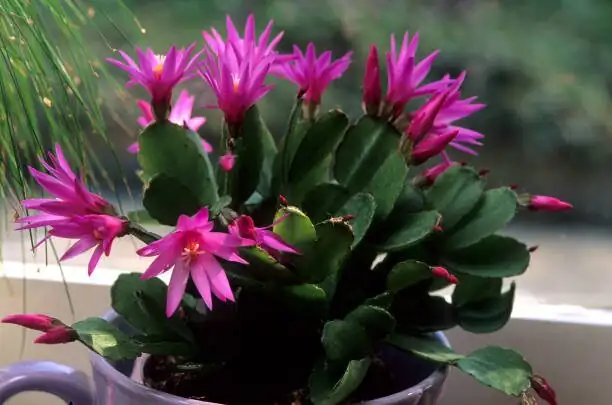
- Easter Cactus (Hatiora gaertneri): Smoother, scalloped segment edges; star-shaped flowers; blooms spring.
- Christmas/Thanksgiving Cacti (Schlumbergera spp.): More pointed, toothy segments; tubular, asymmetrical flowers; bloom late fall to winter.
Troubleshooting the lovable quirks
- Bud drop: Most common when store-bought plants in bud are moved into new conditions. Keep light, temperature, and humidity steady. Avoid drafts, hot dry air, and letting the mix swing from wet to parched.
- Root rot: Caused by heavy soil or standing water. Use an airy mix and empty saucers.
- Pests: Watch for mealybugs, scale, spider mites, and fungus gnats (often tied to overwatering). Good airflow helps.
- Pet safety: Generally non-toxic to people, cats, and dogs, though nibbling any plant can cause mild tummy upset.
Fun facts to share
- The blossoms keep “office hours”: open in daylight, close at night.
- It’s a cactus from rainforests—humidity lover, not a desert drifter.
- In nature, it often grows on tree branches or rocks, using leaf litter as a nutrient sponge.
- A mature, happy plant can carry dozens of blooms for weeks.
- Older books list it under different scientific names thanks to botanical reclassification.
Symbolism and the “flower language” question
The Easter Cactus is widely seen as a symbol of spring renewal and hope—those punctual, starry blooms feel like a celebration of brighter days. As for “flower language” (花语): many meanings come from Victorian-era floriography and later cultural storytelling, not ancient codes tied to this Brazilian epiphyte. Its modern symbolism is seasonal and emotional—new growth, longer light, and a fresh start.
A simple seasonal game plan
- Spring (Mar–May): Bloom time—bright filtered light, higher humidity, evenly moist soil. Don’t let it dry completely.
- Early Summer–Late Summer: Protect from hot sun, water when top mix dries, feed regularly, enjoy lush growth.
- Fall: Reduce watering, stop feeding, keep bright filtered light.
- Winter to late winter (6–8 weeks before bloom): Cool nights (10–13°C / 50–55°F), about 12 hours dark, lighter watering. Then hold steady and watch the buds pop.
With just-right light, an airy mix, and that cool-and-dark prelude, Hatiora gaertneri will perform its daily petal ballet and deliver a spring show that feels almost miraculous—science and season working perfectly in sync.