

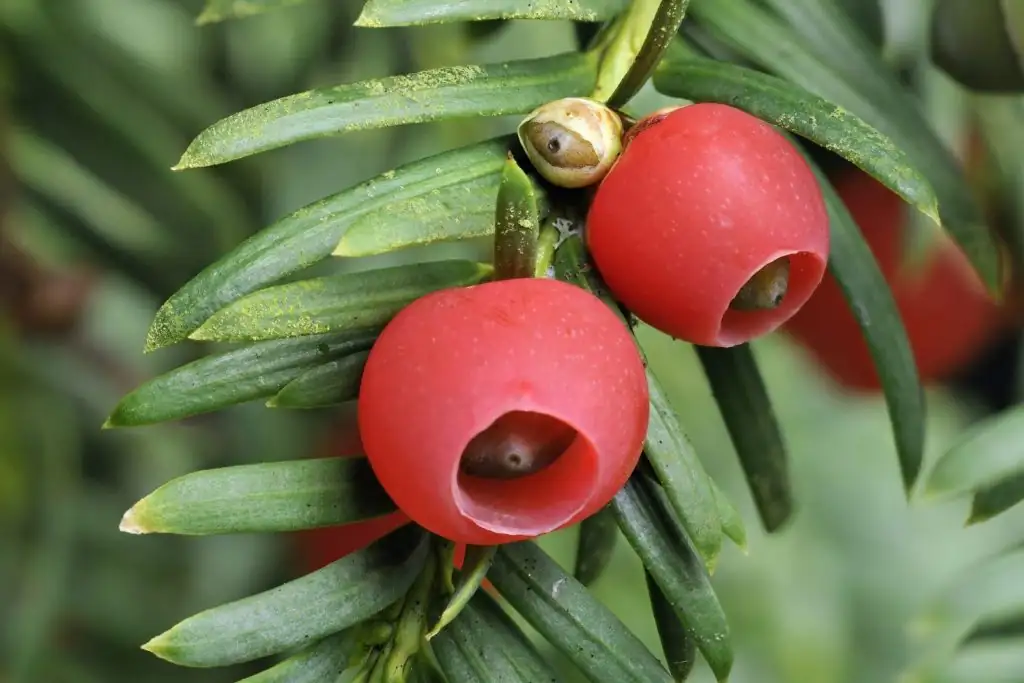
If you’ve ever admired the dignified poise of Chinese yew (Taxus chinensis)—those deep-green needles, the bright red arils glowing in cool autumn light—you’ve probably also heard two truths: it’s both slow and steady. Propagation is no exception. On one hand, semi-hardwood cuttings from youthful stock can deliver faithful clones in a couple of seasons. On the other, seed work rewards only the ultra-patient, with 1–2 years of cold stratification before you even see a sprout. Add in layering and grafting for special cases, and you’ve got a complete playbook. Let’s get hands-on.
Meet the plant you’re multiplying
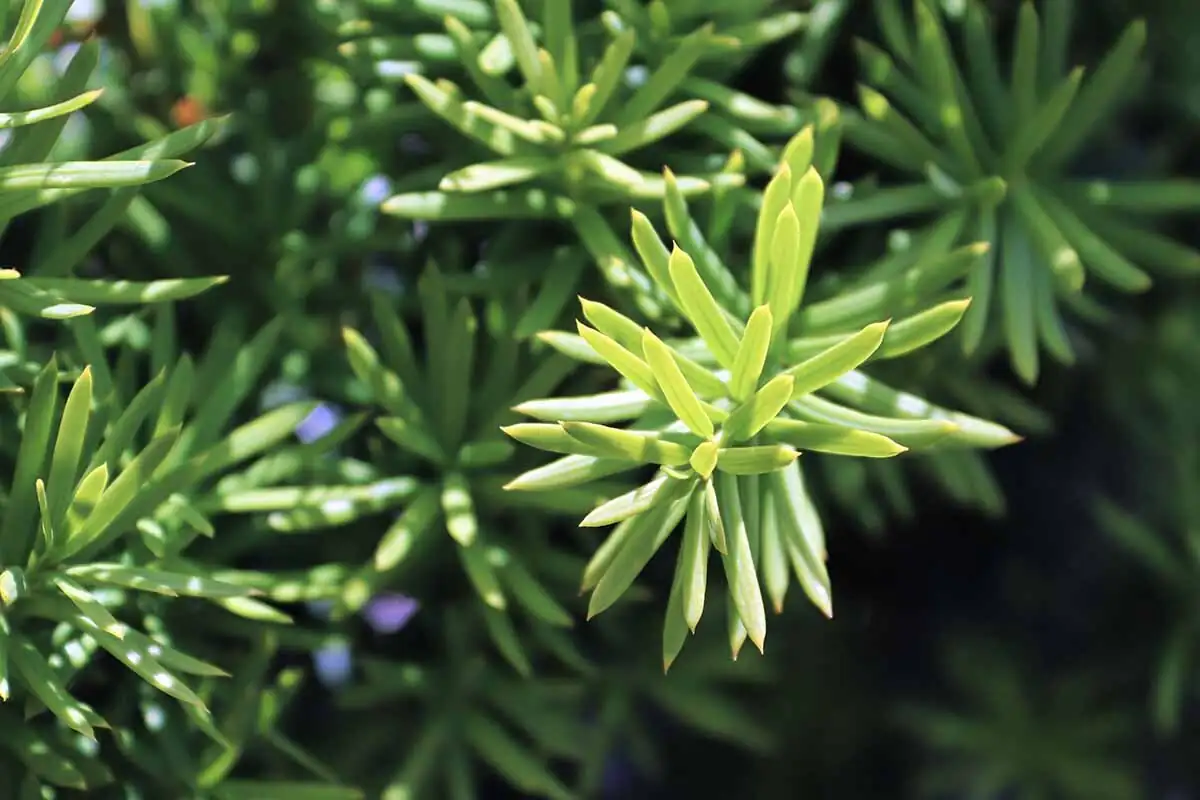
- Evergreen conifer with dense, deep-green needles; fresh growth emerges yellow-green before deepening.
- In gardens can grow into a sizable tree; in containers it likes cool, moist air and bright, filtered light.
- Partial shade suits it best; avoid scorching sun and waterlogged soil.
- Cold tolerant outdoors to roughly -15°C (5°F), but potted roots need protection in hard freezes.
- Highly toxic if ingested. The red aril is less toxic than needles, bark, and seeds—but the seed inside is dangerous. Handle with care and keep away from children and pets.
Quick chooser: which propagation method fits your plan?
- Want a clonal match and a practical timeline (1–2 years to a small, pot-ready plant)? Choose semi-hardwood cuttings—from young stock.
- Willing to wait several years for genetically diverse seedlings? Choose seed (with 1–2 years of cold stratification).
- Have a flexible, low branch and time for a slow-but-sure start? Try simple layering.
- Need to perpetuate a select form onto robust roots? Consider grafting onto yew rootstock.
Semi-hardwood cuttings: the reliable, hands-on route
You’ll get the best rooting from relatively young mother plants (often under ~10 years old). Juvenile wood really is the secret sauce with yews.
Best timing
- Late summer to early autumn, when new shoots are semi-ripe (firm but still flexible).
- In cool climates, late summer is ideal; in warmer areas, aim for early autumn to avoid heat stress.
What to take
- Non-flowering, pencil-thick lateral shoots, 7–12 cm long.
- If possible, take “heel” cuttings (a sliver of older wood attached). Otherwise, make a clean basal cut just below a node and lightly wound two opposite sides of the base to expose cambium.
Prep and hygiene
- Tools: sterilize pruners between plants (isopropyl alcohol or a 10% bleach solution), and work on a clean surface.
- Strip needles from the lower 2–3 cm.
- Dip the base in a rooting hormone suited to conifers:
- Quick-dip: 2,000–4,000 ppm IBA (indole-3-butyric acid).
- Or powder at a comparable strength. Tap off excess.
Medium and environment
- Medium: an acidic, sharply draining blend—think 1:1 peat (or fine, rinsed coco coir) and perlite, or peat:sand. Pre-moisten to evenly damp, not soggy.
- Containers: deep trays or small pots with ample drainage; bottom vents help.
- Light: bright, indirect light or dappled shade—no harsh midday sun.
- Air vs. root temperatures: cool air, gently warm root zone is ideal. Aim for about 18–22°C (64–72°F) at the medium with good airflow.
- Humidity: use intermittent mist, a humidity dome with vents, or a shaded cold frame; keep foliage turgid but avoid constant leaf-wetness that invites rot.
Watering and aftercare
- Keep the medium evenly moist, never waterlogged. Let excess drain freely.
- Begin very light feeding only after roots are visible (dilute, balanced fertilizer).
- Once rooted, wean from high humidity over 1–2 weeks. Pot up into a humus-rich, acidic, well-drained mix and grow on in bright shade.
Realistic timeline for cuttings
- Callus: 4–8 weeks.
- Initial roots: 8–16+ weeks (yews can be deliberate).
- Potting up: often by late winter/spring after the cutting season.
- From cutting to a tidy, small shrub: roughly 12–24 months, depending on conditions and stock age.
Pro tips for higher strike rates
- Younger donors root better—prioritize shoots from plants under ~10 years old.
- Maintain cleanliness: sterilize tools, use fresh medium, and discard any cuttings that brown from the base.
- Avoid over-misting; allow brief dry-downs on foliage to reduce fungal pressure.
Seed: the ultra-patient path (1–2 years cold stratification)
Seedlings won’t clone the parent, but they do broaden genetic diversity—great for breeding or long-term collections. Success here is all about patience and temperature discipline.
Collecting and cleaning
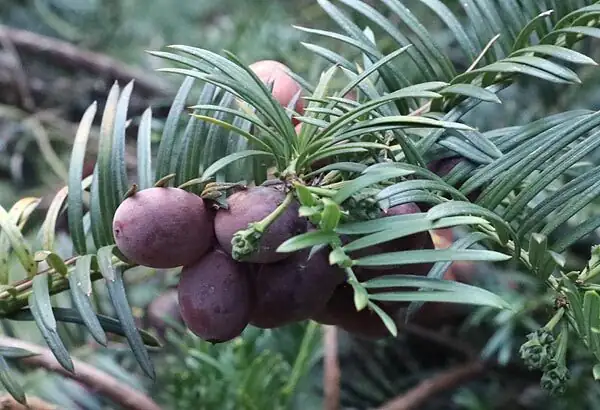
- Harvest in late summer to autumn when the arils are bright red.
- Wear gloves. Gently remove the fleshy arils and extract the seeds; the seed is toxic.
- Rinse seeds thoroughly to remove all pulp.
The long nap: cold stratification
- Place clean seeds in a labeled bag or box of barely moist, sterile medium (peat or a peat:sand/perlite blend).
- Refrigerate at about 2–5°C (36–41°F) for 1–2 years. Check monthly to:
- Vent briefly to refresh air.
- Ensure medium stays just moist.
- Remove any moldy seeds (hygiene is everything).
- Note: Some propagators also cycle warm and cold periods to mimic natural seasons, but the workhorse approach that consistently pays off is extended cold stratification over 1–2 years before spring sowing.
Sowing and growing on
- After stratification, sow in spring on a well-drained, slightly acidic mix. Cover lightly with grit or vermiculite.
- Keep evenly moist in cool, bright shade. Germination can be irregular and extended.
- Prick out and pot on seedlings as they develop sturdy roots. Protect from heat spikes and harsh sun.
Realistic timeline for seed
- Year 0 (autumn): collect, clean, start cold strat.
- Year 1: continue cold strat; occasional early germination can occur.
- Year 2: complete strat; spring sowing; first true flushes.
- Years 3–4: pot on; shape lightly; maintain cool, moist, filtered light.
- Landscape-ready size: often 4–7 years, depending on goals and climate.
Layering: low effort, high patience
Chinese yew lends itself to simple layering—ideal when a flexible branch skirts the ground.
How to do it
- Timing: early spring or early autumn.
- Choose a healthy, low lateral. Gently wound a 2–3 cm section on the underside (scrape bark to expose cambium).
- Dust with rooting hormone. Pin the wounded section into a slit trench of acidic, well-drained soil or a bag/pot of your rooting mix; cover by 3–5 cm and secure with a U-pin or small stone.
- Keep evenly moist in bright shade. Mulch helps regulate moisture and temperature.
When to sever
- Check after 6–12 months for root development; many layers need a full season (or two) to root well.
- Once a firm root system forms, sever from the parent and pot up. Grow on in sheltered, filtered light for a season before planting out.
Grafting: for select forms and strong roots
When you have a choice clone or a desired habit, grafting onto vigorous yew rootstock can combine traits predictably.
Basics
- Timing: late winter to early spring, while rootstock is just waking and scion wood is dormant and firm.
- Methods: side veneer or cleft grafts work well for Taxus material sized to match.
- Hygiene: razor-sharp, sterile blades; tight unions with grafting tape; seal exposed cuts.
- Aftercare: cool, bright shade; consistent, gentle moisture; avoid heat and direct sun until the union knits and buds push.
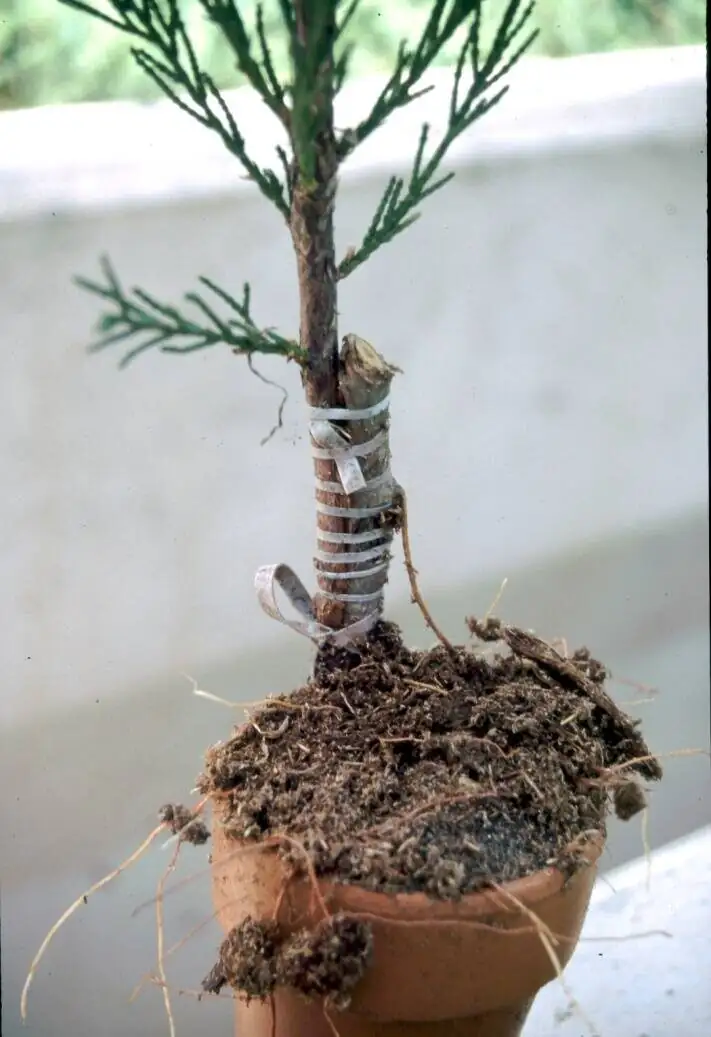
Timeline
- Union formation: 6–10 weeks in cool, steady conditions.
- Establishment: grow on in containers for the first season; shape lightly the following year.
Hygiene, safety, and timing essentials
- Sterility: clean hands, disinfected tools, fresh medium, and well-draining containers reduce losses dramatically.
- Watering: yews abhor soggy feet. Keep media evenly moist, never standing in water.
- Light and temperature: bright, indirect light; best growth around 16–26°C (61–79°F). Shelter cuttings and seedlings from harsh sun.
- Feeding: once growth is active, a balanced fertilizer (for example, a monthly NPK 20-20-20 at label rates) supports steady development.
- Frost caution: even though Chinese yew is cold tolerant in-ground, potted roots are exposed—protect during deep freezes.
- Toxicity: all parts (especially seeds) are highly toxic if ingested. Wear gloves when handling arils, seeds, and sap; keep materials away from pets and children.
Troubleshooting your propagation
- Cuttings won’t root: check donor age (too old), hormone strength (too low), and temperature (too cold at the root zone or too hot in the air). Try heeled cuttings and gentle basal wounding.
- Bases turning brown/black: too wet, stagnant air, or contaminated medium. Increase drainage, improve airflow, refresh media, and sterilize tools.
- Seed stratification mold: reduce moisture slightly, improve air exchange at monthly checks, and cull affected seeds.
- Seedlings yellowing: potting mix may have drifted alkaline; repot into an acidic mix and consider an iron supplement per label directions.
Realistic expectations at a glance
- Semi-hardwood cuttings: 3–6 months to root, 12–24 months to a handsome small shrub.
- Layering: 1–2 seasons to root, then a year to shape and grow on.
- Grafting: union in 6–10 weeks, a full season to establish.
- Seed: 1–2 years cold stratification, then several years of careful growing before meaningful size.
A closing nudge
Chinese yew rewards craft and patience. Cuttings give you the near-term satisfaction of clonal success; seeds teach you long-game horticulture; layering and grafting round out your toolkit for special cases. Keep it cool, keep it clean, and resist the urge to rush—this evergreen’s steady tempo is part of its enduring charm.