

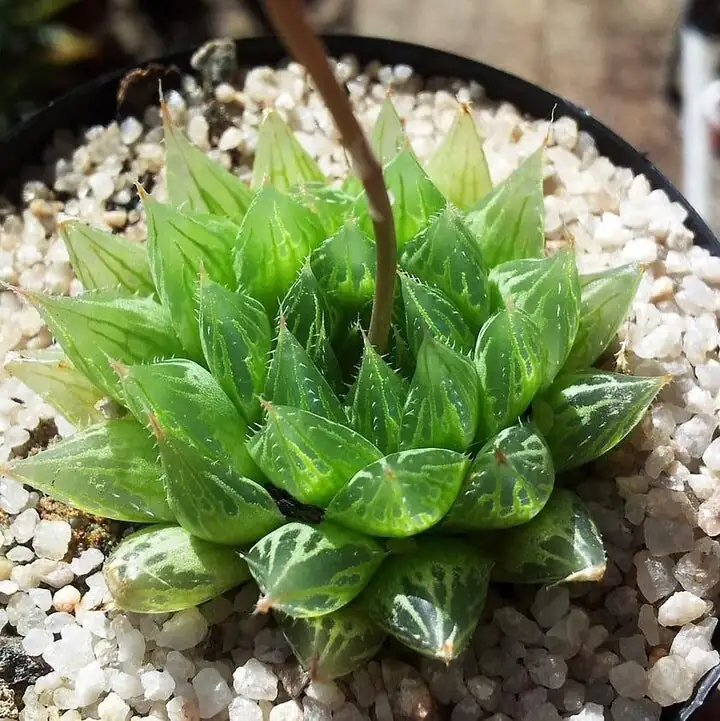
If you’ve ever peered into a pot and felt like a tiny clutch of glass marbles was staring back, you’ve likely met Haworthia cooperi—玉露, the “crystal” or “window” haworthia that launched a thousand wishlists. For collectors, though, the sparkle is just the opening act. The real fun is confidently telling H. cooperi apart from a sea of lookalikes and mislabels. Grab your loupe: this is an ID tour guided by four cues—leaf thickness, window patterns, rosette shape, and flower spikes.
Meet Haworthia cooperi, the little crystal that could
- Scientific name: Haworthia cooperi (Asphodelaceae)
- Origin: Southern Africa, especially South Africa’s Eastern Cape
- Habit and size: Compact, clump-forming rosette, typically around 10 cm (4 in) across
- Foliage: Thick, fleshy leaves with translucent “windows” at the tips; light to medium green with darker, vein-like markings
- Flowers: Slender spring stalk with small, pale tubular blooms (pretty, but modest)
- Light and comfort: Bright, filtered light to partial shade; happiest protected from harsh midday sun
Those windows aren’t just for show: they capture and channel light down into buried or shade-basking leaves—one reason H. cooperi can glow like a gemstone even when grown away from blazing sun.
The collector’s ID tour: 4 reliable cues
1) Leaf thickness and feel

- H. cooperi: Think plump jelly-beans or water balloons. The leaves are turgid and softly domed toward the tip, often slightly yielding if you press very gently (don’t squeeze hard).
- Lookalike contrast:
- H. cymbiformis: Leaves are boat-shaped and generally thinner and flatter toward the tip—more canoe than marble.
- Retuse types (e.g., H. retusa and kin): Leaves are thicker but with a defined, triangular profile and a noticeably flattened “window” face—more architectural than jelly-like.
- “Zebra haworthias” (Haworthiopsis attenuata/fasciata): Fibrous, rigid, opaque leaves with white bands or spots—no jelly, no translucence.
2) Window pattern and clarity
- H. cooperi: The translucent area is concentrated at the leaf tip, often making up the top third. Windows look glassy and slightly bulged, with fine, soft lines or “veins.” In bright, indirect light, the tips seem to glow or look water-filled.
- Lookalike contrast:
- H. cymbiformis: Windows extend more broadly and flatter across the upper leaf surface; the transparency reads as a panel rather than a bubble.
- Retuse types: Windows are flat “skylights,” often polygonal or distinctly geometric, not domed.
- “Zebra haworthias”: No true windows—opaque leaves with white tubercles or bands.
Tip: Window “veins” in H. cooperi are usually subtle and organic; severe, grid-like reticulation tends to point to other windowed haworthias.
3) Rosette shape and posture
- H. cooperi: Forms a tight, low dome, leaves often arching slightly inward at the tips. With age, it offsets into neat, compact clumps.
- Lookalike contrast:
- H. cymbiformis: Rosette is more open and flared—leaves spread outward like paddles on a round raft.
- Retuse types: Starry, geometric rosettes made of triangular “windows,” often more solitary (depending on clone).
- “Zebra haworthias”: Upright, fountain-like rosettes with outward-pointing leaves; overall silhouette is spiky, not domed.
4) Flower spike (a supporting clue)
- H. cooperi: In spring, a thin, wiry stalk rises with small, pale tubular flowers. The display is delicate and understated.
- How to use this: Haworthia flowers are famously look-alike, so use bloom traits only as supporting evidence—never as your sole ID feature.
Side-by-side: separating H. cooperi from the usual suspects
H. cooperi vs H. cymbiformis
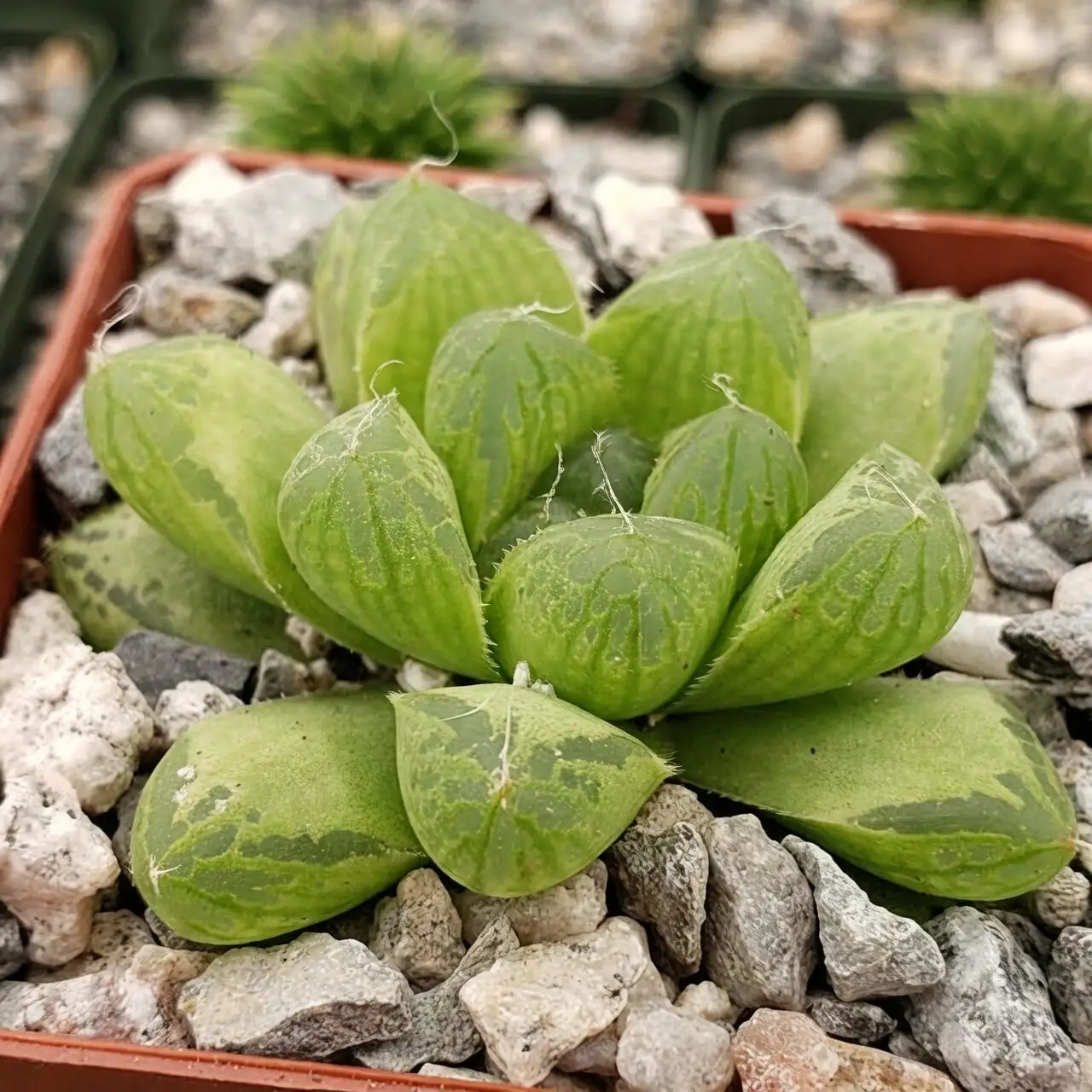
- Leaf thickness: Cooperi = plumper, jelly-like; Cymbiformis = thinner, canoe-shaped.
- Windows: Cooperi = domed windows at tips; Cymbiformis = broader, flatter windows across the upper leaf surface.
- Rosette: Cooperi = tight, domed, inward-leaning tips; Cymbiformis = open, flared, outward-leaning paddles.
- Collector shortcut: If the plant reads like a mound of glass beads, bet on cooperi; if it’s a sunlit canoe fan, lean cymbiformis.
H. cooperi vs plants sold as “H. obtusa” in the trade
- Trade reality: Many “obtusa” plants in circulation are selections closely aligned with the cooperi look—bubbly windows and all.
- Practical cues (use together):
- Cooperi-type plants often have more obviously domed, jellylike tips and maintain a compact, inward-leaning rosette.
- “Obtusa”-labeled forms can present broader, more uniformly rounded window tips and a slightly looser dome.
- Collector tip: Because labels vary and forms intergrade, rely on the full package—leaf thickness, window doming, rosette tightness—rather than the name on the tag.
H. cooperi vs retuse haworthias (e.g., H. retusa and kin)
- Feel: Cooperi = soft, domed “bubbles.” Retuse types = thicker, triangular leaves with a flat, “windowed” face.
- Geometry: Cooperi = soft dome; Retuse = star-like, with each leaf a triangular facet.
- Windows: Cooperi = curved, bulged at the tip; Retuse = flat, geometric skylights.
H. cooperi vs the “zebras” (Haworthiopsis attenuata/fasciata)

- Windows: Cooperi = present. Zebras = absent (opaque leaves).
- Texture: Cooperi = smooth, glassy tips. Zebras = white raised bands or spots, often on both sides of leaves (fasciata has smoother inner leaf faces).
- Posture: Cooperi = low dome. Zebras = upright, spiky fountain.
- Beginner flag: If you see bold white striping, it’s not H. cooperi.
H. cooperi vs fan-form “window” species (e.g., truncata-like)
- Rosette vs fan: Cooperi = classic rosette. Fan-form species = leaves arranged in a single line like a book spine.
- Windows: Both have translucence, but architecture is the giveaway—fan shapes are never cooperi.
A quick field checklist for fast IDs
- Plump, jellylike leaves? Check.
- Translucent, domed windows focused at the tips? Check.
- Tight, low, inward-leaning rosette that clumps over time? Check.
- Springtime skinny flower spike with small, pale tubular blooms? Bonus check.
- No white zebra striping, no fan formation, no flat polygonal skylights dominating every leaf? Checkmate—likely Haworthia cooperi.
Grow it to show it: cultivation that sharpens the ID
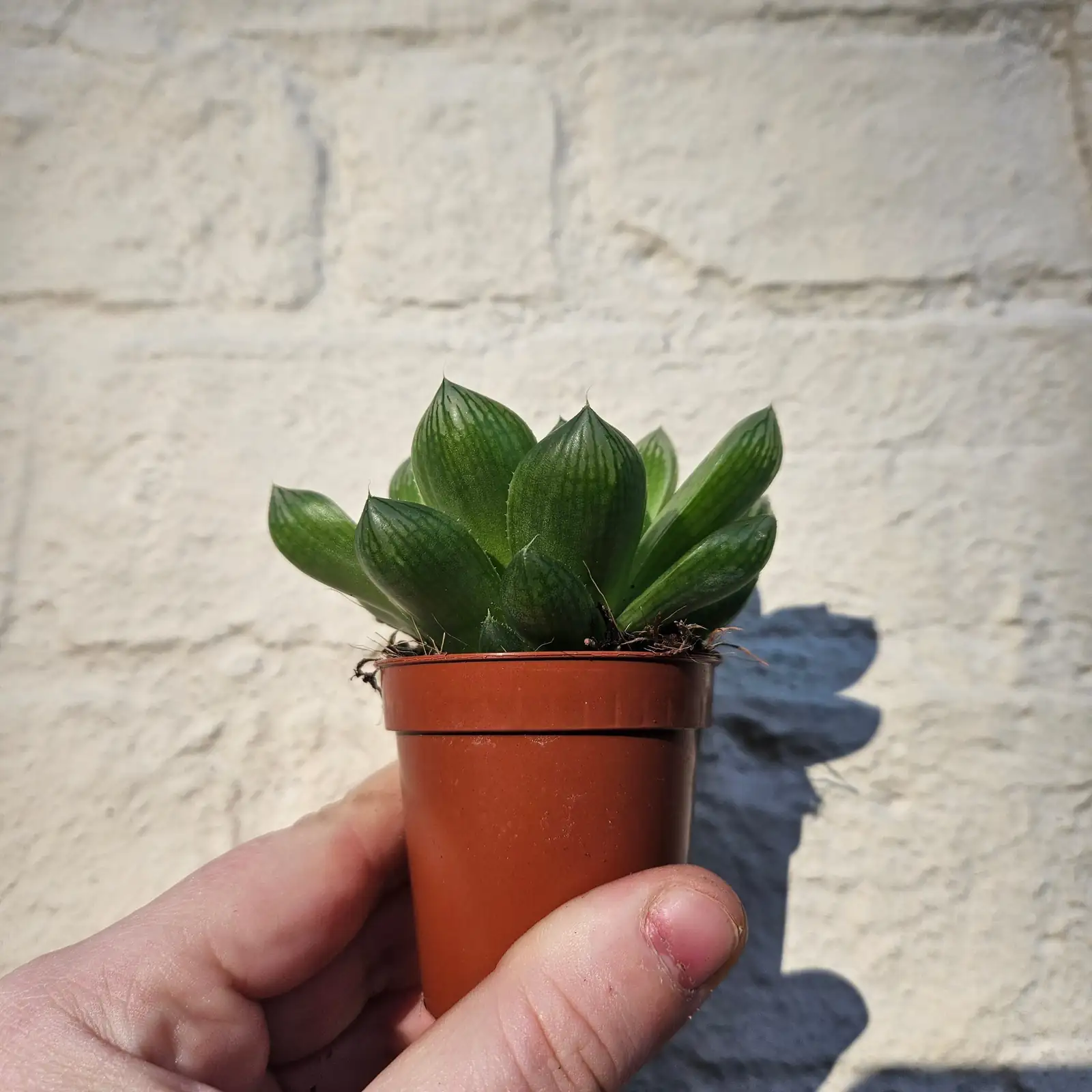
The clearer the windows, the easier the ID—good culture makes the plant “read” correctly.
- Light: Bright, filtered light to partial shade. East windows or lightly shaded south exposures keep tips crystal-clear without scorching.
- Water: Thorough drinks only after the mix dries. In spring/fall growth, this can be about weekly indoors; back off in hot midsummer when growth slows. In winter, water very sparingly and keep above 5°C (41°F).
- Mix and pot: Gritty, fast-draining succulent mix; shallow pots with excellent drainage suit the shallow roots.
- Temperature: Happy around 18–22°C (64–72°F); protect from frost.
- Grooming: Remove shriveled lower leaves at spring repot; cut flower stalks if you prefer the rosette to conserve energy.
- Propagation: Offsets are easiest—separate, let callus, pot into a gritty mix, and go easy on water at first.
Pro tip for window brilliance: Keep the plant slightly pot-bound in a mineral-leaning mix, give bright filtered light, and let the soil dry between waterings. Plump but not waterlogged leaves make those tips glow.
Buying smart and dodging mislabels
- Choose a sturdy, symmetrical rosette ~10 cm across with firm, glassy window tips and no scorch or soft spots.
- Red flags for mislabel:
- Bold white bands or bumps on leaves = a zebra haworthia, not cooperi.
- Fan-shaped, single-line leaf arrangement = not cooperi.
- Tall, rigid, spiky posture with fully opaque leaves = not cooperi.
- Accept some variation: Cooperi comes in many forms. Prioritize the four core cues over the cultivar or trade name.
Health, safety, and peace of mind
- Main risks: Overwatering and poor airflow (root/crown/leaf rot). Mealybugs or whitefly may show up—treat promptly.
- Pet/people friendly: Generally considered non-toxic, though chewing may cause mild stomach upset.
Symbolism and the quiet meaning behind the “window”
Haworthia cooperi often symbolizes resilience and quiet determination. The poetry here is rooted in biology: those translucent windows are a survival strategy, funneling precious light into leaves that often sit low, shaded, or partially buried in their native terrain. In modern “flower language,” that adaptation becomes metaphor—strength without spectacle, thriving on little, and storing light for leaner days. It’s not an old folk legend so much as a contemporary reading of a clever plant that makes the most of what it’s given.
—
Consider this your pocket lens: when the plant you’re eyeing looks like a low dome of dew-filled beads—plump leaves, domed windows, compact rosette, modest spring bloom—you’re very likely looking at Haworthia cooperi. And once you see it, you can’t unsee it.