

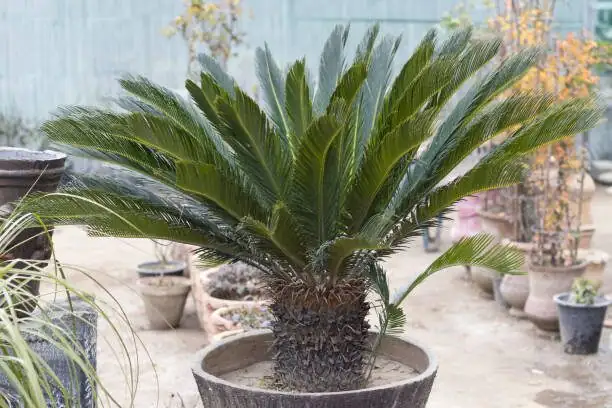
The sago “palm” that isn’t a palm at all—Cycas revoluta—begs to be treated like living sculpture. Its armored caudex (trunk) and halo of glossy, architectural fronds look their best with thoughtful grooming, the right pot, and a curator’s eye for display. Here’s how to polish your specimen from handsome to unforgettable: when to remove old fronds, how to handle cones, which shallow pot to choose, and simple staging tricks that make the caudex the star.
Read the plant: timing is everything
The flush and the fade
Cycas revoluta grows in poetic pauses. It sits… then suddenly pushes a perfect ring of new fronds (a “flush”). Those soft, tender leaves harden over a few weeks. Meanwhile, the oldest, outer fronds gradually fade to yellow-green and eventually wither—your cue for cleanup.

- Light shapes the flush. In low light, new fronds can emerge longer and narrower (a stretched look). For crisp proportions, place the plant bright and airy, and rotate the pot a quarter turn every few weeks so the rosette develops evenly.
When to remove old fronds
Think of grooming as frame-by-frame editing rather than a haircut.
- Best moment: After the newest fronds have fully expanded and hardened, remove outer fronds that are yellowing, badly spotted, storm-damaged, or already brown. Green, vigorous fronds are still feeding the plant—don’t “hurricane-cut” a sago into a lollipop.
- Season: Spring to summer is ideal (the active growth period). Avoid heavy pruning in cold weather.
- How-to:
- Wear gloves—this plant is highly toxic if ingested, and leaf tips can be prickly.
- Use clean, sharp bypass pruners or a fine saw.
- Cut aging fronds as close to the caudex as you can without gouging the trunk.
- Step back often and work symmetrically to preserve the classic, tiered silhouette.

- Result: A cleaner crown that highlights the newest flush and keeps energy focused on future leaf growth.
What to do with cones (male vs. female)
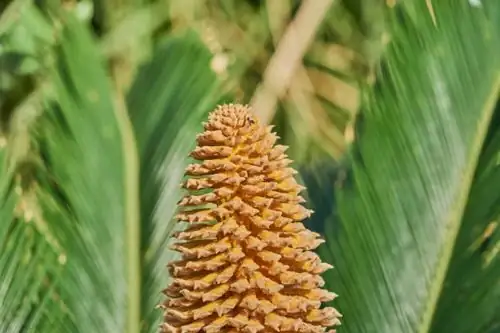
Sagos are dioecious—male and female cones appear on separate plants, typically in summer.
- Identification:
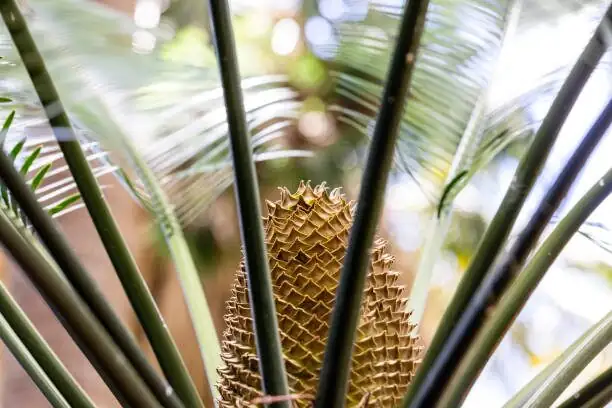
- Male: a single, elongated cone.
- Female: a lower, shaggy, nest-like structure that later carries seeds if pollinated.
- Handling:
- Allow a male cone to finish its show; then remove the spent cone to help redirect energy to leaves.
- If yours is female and has set seed, wait until seeds mature before removing the structure.
- Tips:
- Use gloves and dispose of cones/seeds safely; all parts, especially seeds, are highly toxic to pets and people.
- Not chasing seeds? Removing spent structures keeps the plant’s profile clean and supports the next flush.
Pot like a pro: shallow, stable, and fast-draining
The container is the picture frame—choose one that flatters the form and protects the roots.
Why a slightly shallow pot works
- Cycas revoluta prefers a stable, well-aerated root zone and hates lingering moisture. A slightly shallow, broad, well-drained pot supports that and visually elevates the caudex—perfect for bonsai-style display.
- Typical sizes for container-grown plants: 15–50 cm (6–20 in) wide, scaled to the caudex and frond span. Avoid overpotting; lots of unused, wet mix around slow roots invites rot.
Pot checklist
- Form: Slightly shallow, round, and heavy enough not to tip.
- Material: Unglazed clay/ceramic breathes and adds stability; fiberglass works if it has generous drainage.
- Drainage: Large, unobstructed holes. Add pot feet to improve airflow under the pot.
- Top-dressing: A thin, decorative layer of gravel, akadama, or fine lava frames the caudex and discourages fungus gnats—keep it thin so you can read soil moisture.
Soil that keeps pace
- Use a fertile but sharply draining mix: for example, loam or quality garden soil + peat/coir, with added coarse sand or grit for porosity.
- Prioritize the mix itself. A “drainage layer” alone won’t fix heavy soil.
- Positioning: Keep the caudex slightly proud of the soil line—don’t bury it.
Repotting rhythm and root care
- Frequency: Small–medium plants every 2–3 years; large specimens every 5–6 years.
- Best time: Spring to summer, when warmth speeds recovery.
- Steps:
- Water lightly the day before to ease removal.
- Tease away just enough old mix to refresh; don’t aggressively strip roots.
- Reposition at the same depth (or a hair higher) in the new pot.
- Water thoroughly once; then let the top of the mix dry before watering again.
- Keep bright with good airflow; avoid baking sun for a week while roots settle.
Have a “bald” market caudex (no leaves)? Pot into clean, coarse sand to root with minimal rot risk. Keep bright with gentle humidity (light misting in warm rooms), water sparingly, and start dilute feeding only after new roots and fronds appear.
Connoisseur grooming: pups, symmetry, and staging the caudex
Pups: to keep or not to keep
Offsets (pups) at the base can create a multi-headed, ancient look—or clutter the lines.
- For a single, sculptural trunk: Remove pups during spring repotting. Let cut surfaces callus, dust with fungicide if you like, then pot pups into a 50/50 sand-and-soil mix. Keep in bright shade until new growth proves they’ve taken.
- For a dramatic clump: Leave pups to mature, editing only those that crowd the front view.
Clean lines around the caudex
- Once spent frond bases have dried fully, you can carefully pare away loose, dead fibers to reveal the geometric patterning—never carve into living tissue.
- Present a “front.” Angle the plant so the most symmetrical side faces the viewer, with the caudex slightly off-center in its pot for a dynamic, gallery feel.
Stage like sculpture
- Backdrop: Plain walls or dark foliage make the rosette glow.
- Scale: Give fronds breathing room; avoid busy companions right under the crown.
- Light: Bright, indirect to morning sun; acclimate before stronger sun. Even light during a flush prevents lopsided crowns.
Light, water, and air: the invisible polish
- Sunlight: Adaptable—from bright indoor light to full sun outdoors if acclimated. Airy, ventilated spots yield tight, glossy fronds. Low light during a flush invites stretching.
- Temperature: Best at 13–27°C (55–81°F). Can handle heat to about 40°C (104°F) if the soil drains fast. Winter minimum: keep above 7–10°C (45–50°F). Cold + wet is a rot trap.
- Humidity: Enjoys warm, moderately humid air. In rooms above 18°C (64°F), light misting is fine; keep the root zone drier in winter.
- Watering cadence:
- Spring–summer: Water thoroughly, then let the top of the mix dry before the next drink.
- Autumn: Taper.
- Winter: Keep noticeably drier; never leave the pot sitting in water.
Feeding: During active growth, feed monthly at a conservative dose with a balanced fertilizer or a gentle organic feed. Skip heavy feeding in winter.
Pests and safety
- Common pest: Scale, especially indoors with stale air. Improve ventilation, wipe off by hand, and treat with horticultural oil or insecticidal soap, repeating as needed.
- Toxicity: All parts are highly poisonous if ingested—seeds especially. Keep away from children and pets; wear gloves when pruning or handling cones/seeds.
Safety, symbolism, and longevity
Cycas revoluta hails from southern Japan (including the Ryukyu Islands) and belongs to an ancient lineage—no wonder it’s often linked with good fortune, freedom, happiness, and longevity. If you see “flower language” ascribed to this plant, remember it doesn’t make flowers but cones; the symbolism springs from its enduring, prehistoric presence and its potential to live for decades (and far beyond in ideal conditions), not from blossoms.
Quick seasonal checklist for a showpiece sago
- Spring
- Brighten light and airflow before a new flush.
- Repot or divide pups if needed.
- Begin monthly, gentle feeding.
- Early–mid Summer
- Watch for cones; remove spent male cones or female structures after seeds mature.
- Groom yellowing outer fronds once the new flush hardens.
- Maintain steady moisture with fast drainage; acclimate to stronger sun.
- Autumn
- Reduce watering; bring containers in before cold.
- Edit any battered fronds to tidy the silhouette.
- Winter
- Keep bright and drier; maintain temps above 7–10°C (45–50°F).
- Check for scale; improve ventilation indoors.
Curate your Cycas revoluta like a museum piece: prune with restraint, pot with intent, and let the caudex command the stage. With a few well-timed edits, your “living fossil” becomes living art.