

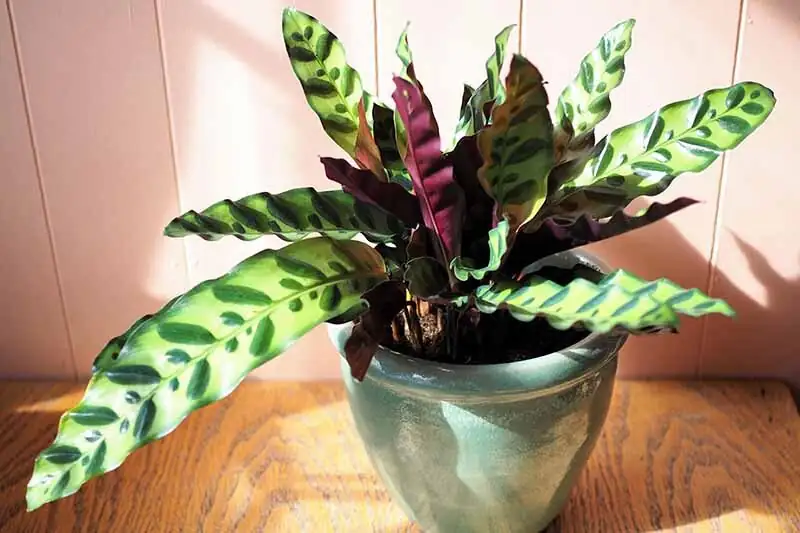
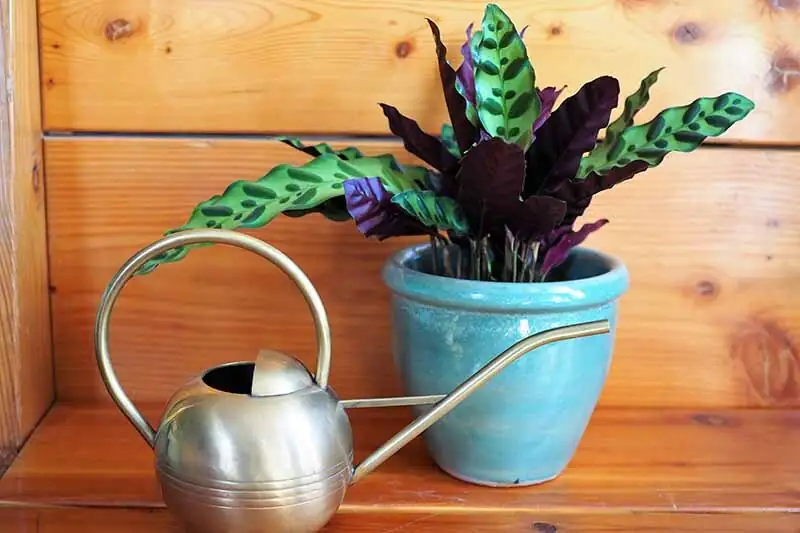
Meet Goeppertia insignis (aka Rattlesnake Plant): your rainforest-patterned roommate that thrives on consistency. When its leaf edges crisp, its markings fade, or pests arrive, this plant is simply reporting a mismatch in care. Here’s a fast, practical troubleshooting manual with exact fixes and prevention habits—so your rattlesnake pattern stays sharp, burgundy undersides glow, and roots stay happy.
First, lock in the “sweet spot”
- Light: Bright, indirect light to light shade. No harsh direct sun. East or north window, or filtered light is ideal.
- Temperature: 15–24°C (59–75°F); avoid dips below ~13°C (55°F).
- Humidity: 50%+ (higher is better). Bathrooms and kitchens are great.
- Water: Keep evenly moist spring–autumn; let the top 1–2 cm (0.4–0.8 in) dry before watering again. In winter, let the surface dry a bit more.
- Water quality: Prefer rainwater or distilled. Mineral-heavy tap water often causes brown tips.
- Soil: Moisture-retentive but airy: 2 parts houseplant potting mix to 1 part perlite (2:1).
- Placement: Away from cold drafts and heating/cooling vents.
—
Quick diagnosis at a glance
- Brown edges/tips? Low humidity, mineral-heavy water, or drafts; sometimes irregular watering.
- Fading or washed-out markings? Too much direct sun or not enough bright light; occasionally nutrient/light imbalance.
- Root rot signs? Sour/musty soil smell, wilting even in wet soil, yellowing leaves, mushy stems/roots.
- Common pests? Spider mites (speckling/webs), mealybugs (white tufts), scale (brown bumps).
—
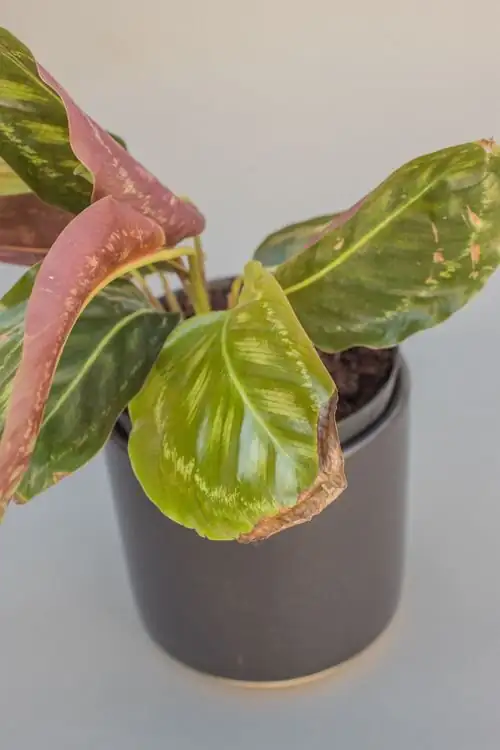
Brown edges or crispy tips: the fast fix
Likely causes: dry air, mineral-heavy tap water, drafts, or letting the potting mix swing bone-dry between waterings.
Exact fixes (do all together for best results)
- Raise humidity to 50%+:
- Run a humidifier nearby, or set the pot on a water-filled pebble tray (pot above waterline).
- Group with other plants for a microclimate.
- Switch your water:
- Use rainwater or distilled. If you must use tap, consider filtered water.
- Watering rhythm:
- In growing season, water thoroughly when the top 1–2 cm is dry; never let it sit in a saucer of runoff.
- Move away from air blasts:
- Keep clear of AC/heat vents, fans, and drafty doors/windows.
- Cosmetic clean-up:
- Trim dry brown tips/edges with clean scissors, following the natural shape.
Prevention habits
- Keep humidity steady year-round (humidifier on a schedule, not “as needed”).
- Calibrate your watering to soil feel, not the calendar.
- Use gentle fertilizing in spring–autumn (1/2 strength every 2 weeks) and flush the mix with rain/distilled water every couple of months to minimize salt buildup.
- Expect new leaves to emerge clean within 2–4 weeks in good conditions.
—
Fading or washed-out leaf markings: restore the pattern
Likely causes: too much direct sun (bleaching) or prolonged low light (dullness/stretch). Nutritional sluggishness can also blunt color.
Exact fixes
- Correct the light immediately:
- Aim for bright, indirect light. East or north exposure is perfect; sheer-curtain-filtered light also works.
- Keep it out of strong midday/afternoon sun to prevent fading and scorch.
- Feed lightly in season:
- Spring–autumn, apply a balanced liquid fertilizer at 1/2 strength every 2 weeks. Pause or reduce in winter.
- Rinse dust:
- Gently wipe leaves or give a lukewarm shower to remove dust so markings pop again.
- Keep temps stable and warm:
- 15–24°C; avoid cold drafts that stall growth and color.
Prevention habits
- Rotate the pot a quarter-turn monthly for even light.
- Use the “shadow test”: a crisp, soft-edged shadow near midday = good bright indirect light.
- Avoid window glass scorch by pulling back 0.5–1 m (1.5–3 ft) from strong south/west windows or use a sheer.
—
Root rot rescue and prevention
Red flags: constant soggy soil, sour smell from the pot, leaves yellowing/wilting while soil is wet, mushy roots or stem bases.
Immediate rescue (same day)
- Unpot and inspect roots.
- Trim all brown, mushy roots with sterilized scissors; keep only firm, pale roots.
- Rinse roots gently to remove old soggy mix.
- Repot into fresh, airy mix: 2 parts houseplant potting mix to 1 part perlite.
- Use a pot with a drainage hole. If using a cachepot, keep the nursery pot elevated and never allow it to sit in water.
- Water once to settle the mix, then allow the top 1–2 cm to dry before watering again.
- Place in warm, bright, indirect light; avoid fertilizer for 4–6 weeks while roots recover.
Long-term prevention
- Adopt the “evenly moist, never soggy” rule; empty saucers promptly.
- Check moisture with your finger; don’t top up on a strict schedule.
- Repot every 2–3 years (ideally spring) to refresh structure and drainage.
- Keep the plant away from cold drafts that reduce uptake and keep soil wet for too long.
—
Common pests: fast ID and treatment plan
Likely culprits: spider mites, mealybugs, and scale—especially in dry air.
Identify
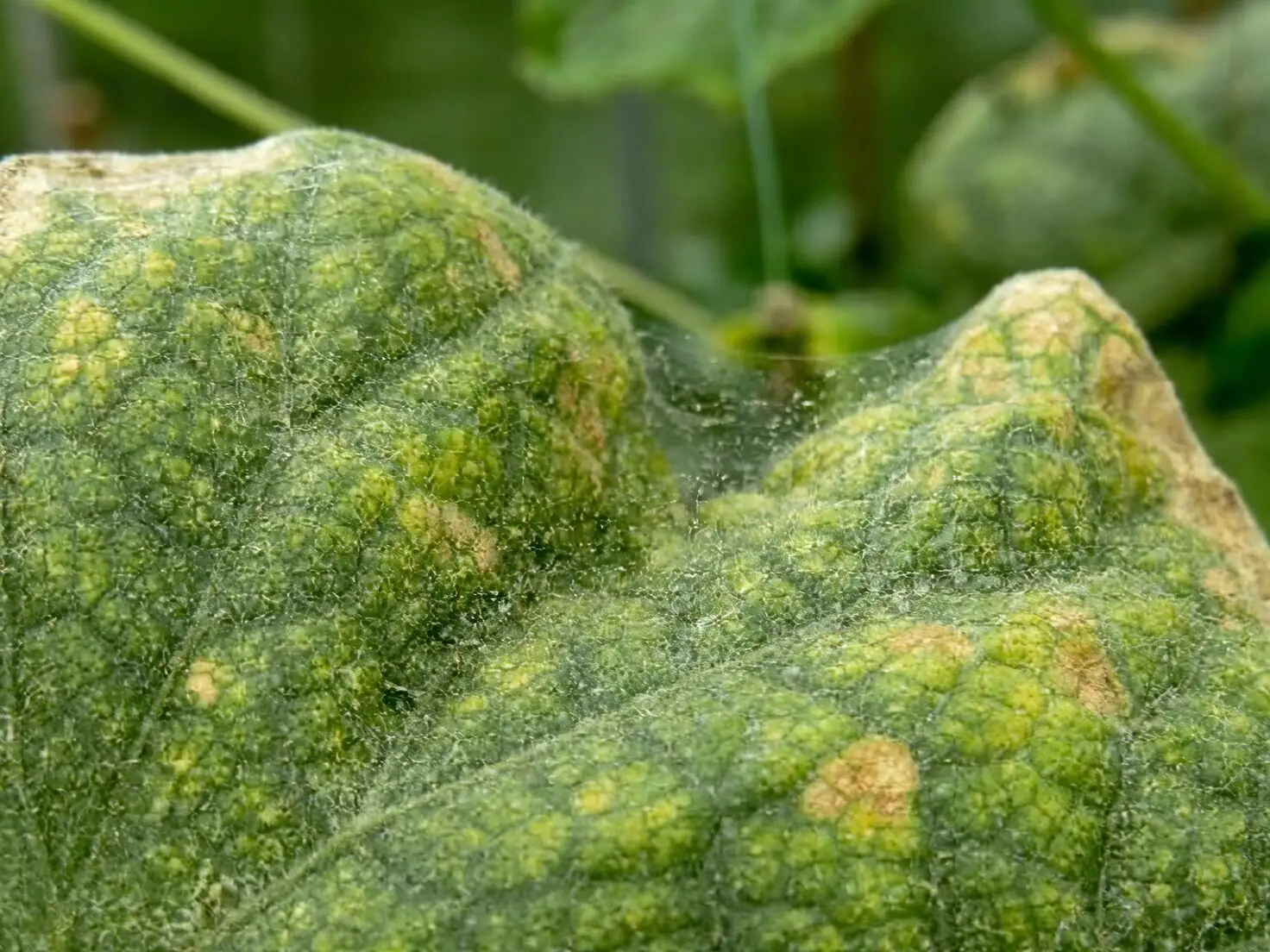
- Spider mites: tiny speckling, fine webbing, leaf dulling.
- Mealybugs: cottony white tufts in leaf axils and undersides.
- Scale: immobile brown/tan bumps on stems/leaf veins.
3-step treatment
- Isolate the plant.
- Rinse:
- Take it to the sink/shower and rinse both leaf surfaces gently to knock pests down.
- Treat:
- Apply insecticidal soap or a horticultural oil (such as neem oil) per label directions to all leaf surfaces, including undersides and stems.
- For scale, dab stubborn individuals with a cotton swab dipped in isopropyl alcohol before your soap/oil spray.
Repeat every 7 days for 3–4 cycles to catch new hatchlings. Keep humidity at 50%+; spider mites hate moist air.
Prevention habits
- Inspect undersides weekly (use a phone flashlight).
- Give a gentle lukewarm shower monthly to deter dust and mites.
- Quarantine new plants for 2 weeks.
- Maintain steady humidity and avoid overly dry, hot spots.
—
Your no-guess watering method
- In spring–autumn:
- Check every few days; water thoroughly when the top 1–2 cm is dry, then drain fully.
- In winter:
- Allow the surface to dry a little more before watering again.
- Always favor rainwater or distilled. Mineral-heavy tap commonly burns tips on this species.
- Misting is fine for a momentary boost, but a humidifier or pebble tray is the reliable, long-term solution.
—
Potting, repotting, and division (fast specs)
- Mix: 2 parts houseplant potting mix : 1 part perlite.
- Pot size: Start around 12.5–15 cm (5–6 in); upsize when root-bound.
- Repot timing: Every 2–3 years in spring, or sooner if the clump is crowded.
- Propagation: Divide during repotting—separate a clump with attached roots and pot it up individually.
—
Environment cheatsheet
- Ideal rooms: Bright bathrooms and kitchens.
- Final size indoors: About 75 × 45 cm (30 × 18 in).
- Hardiness: Not frost-tolerant; outdoors only in very warm climates (approx. USDA 11–12).
- Pet safety: Generally non-toxic to cats and dogs; any chewing may cause mild stomach upset.
—
Weekly 5-minute checklist
- Feel the top 1–2 cm of soil.
- Empty any saucer water.
- Check leaf undersides for mites/mealy/scale.
- Wipe off dust; admire those snakeskin patterns.
- Confirm humidifier/pebble tray is running and the plant isn’t in a draft.
—
Quick FAQs
- Why are the leaf edges turning brown?
- Most often low humidity or mineral-heavy water. Raise humidity to 50%+, keep it away from vents/drafts, and switch to rainwater or distilled water.
- Can it handle direct sun?
- Not well. Direct sun can scorch and fade the foliage. Bright, filtered light is best.
—
Good to know: Rattlesnake Plant is still widely sold under the old name “Calathea,” but its accepted name is Goeppertia insignis. Its rich burgundy undersides and snakeskin tops are most vivid when you keep conditions warm, humid, and steady—set those, and this plant is easier than its reputation suggests.