

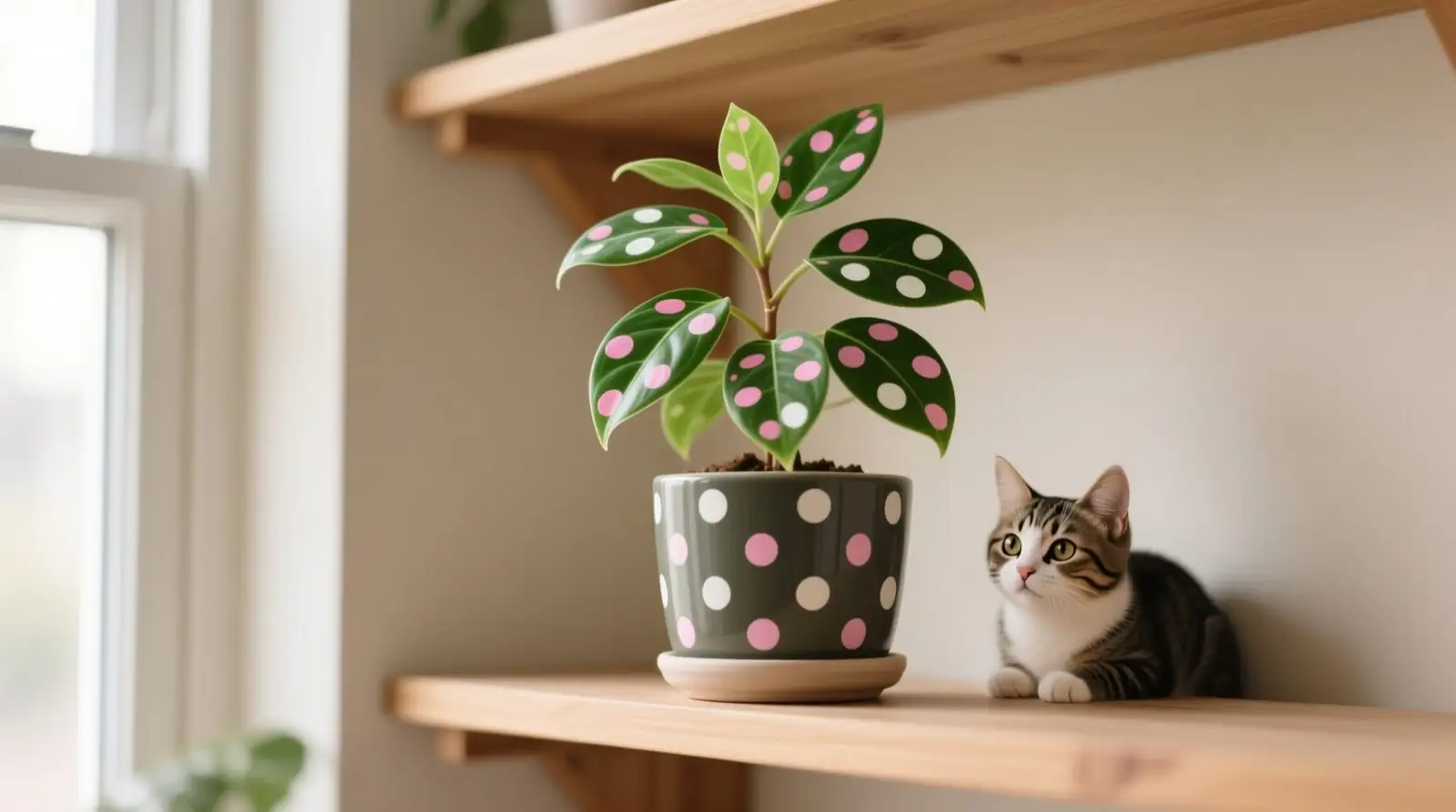
It’s hard to be grumpy in a room sprinkled with confetti—and that’s exactly the effect Hypoestes phyllostachya (aka Polka Dot Plant, Freckle Face Plant) brings to a home. Those heart-to-oval leaves dappled in pink, red, or creamy white turn any corner into a happy vignette. Even better news for pet parents: this color-splashed cutie is generally considered non-toxic to cats and dogs. Chewing may still cause mild stomach upset, but it’s not a plant that’s known to be dangerous. So let’s decorate boldly—and safely.
Meet the Polka Dot Plant: Tiny, punchy, and totally pet-inclusive
- Identity: Hypoestes phyllostachya, in the Acanthaceae family; native to Madagascar and adored worldwide.
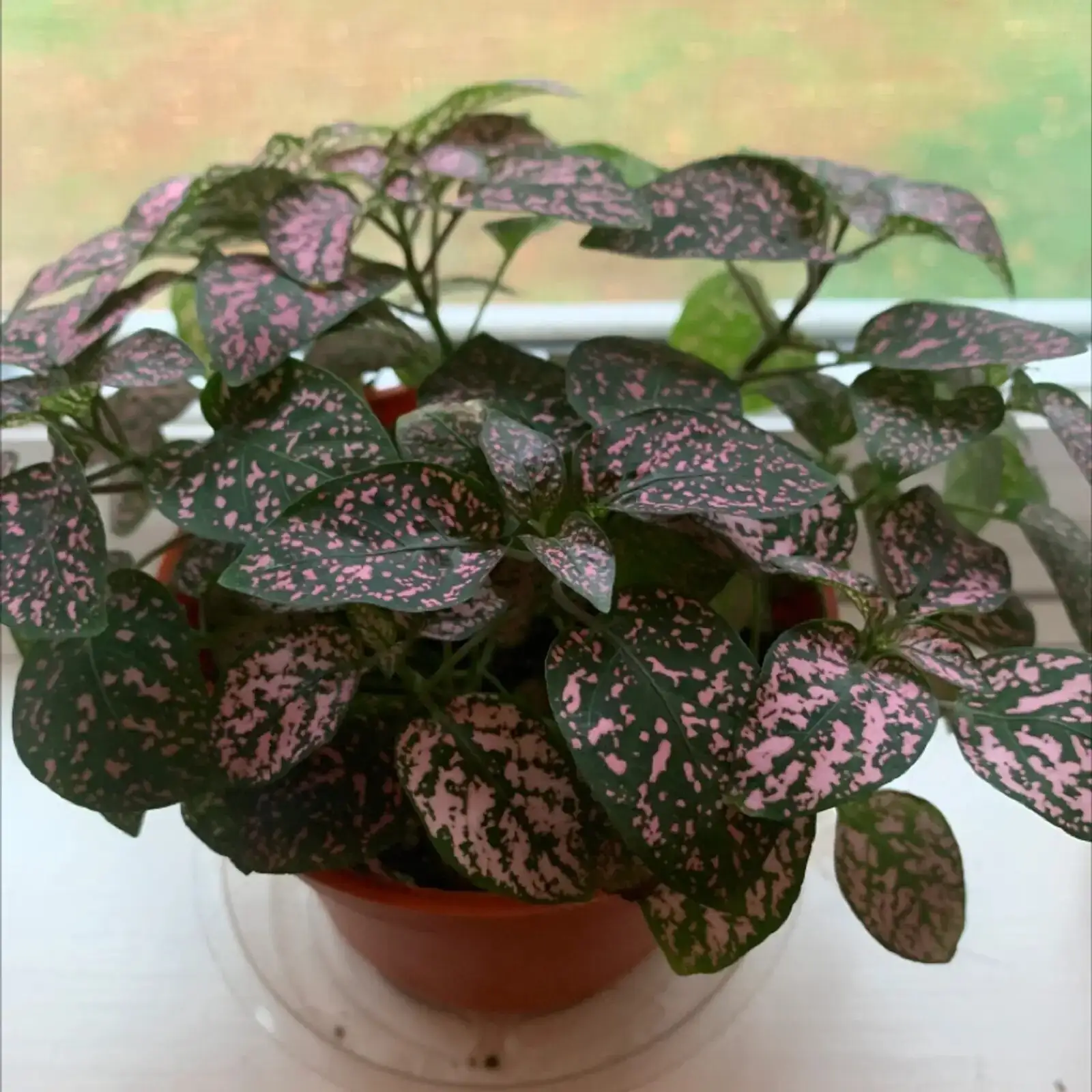
- Look: Compact and bushy, typically around 25 × 25 cm (10 × 10 in). Leaves are green with painterly blushes of pink, red, or cream—often more splashes than dots.
- Blooms: In warm, bright conditions, summer brings small magenta-to-purple flowers. Many growers pinch them off to keep the foliage showy.
- Light = color: Brighter, filtered light deepens the speckles. In low light, plants stretch and turn greener.
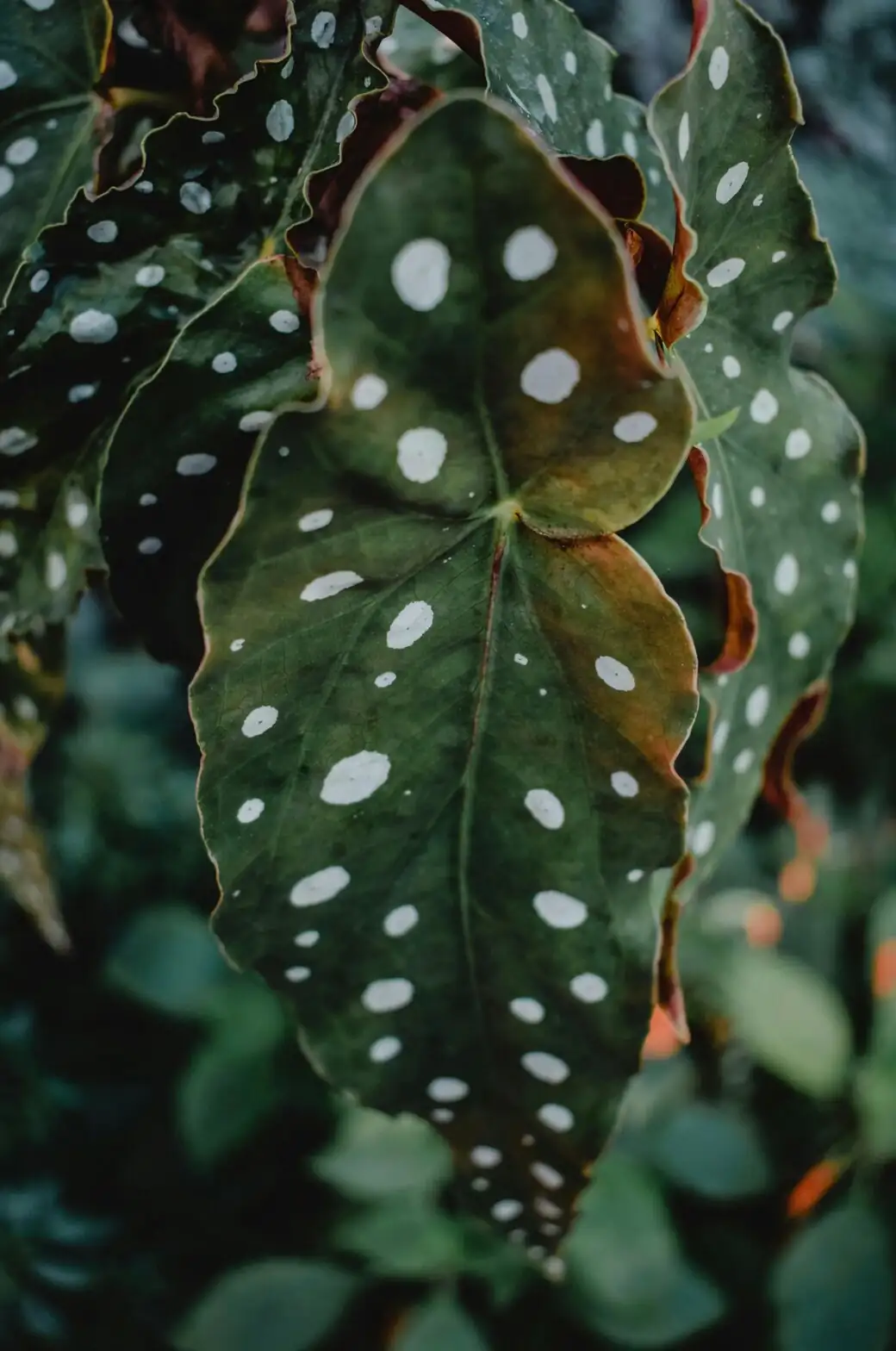
A quick note on names: you may see it labeled Flamingo Plant or Measles Plant in some shops. Don’t confuse it with the “flamingo flower” (Anthurium), which is a different plant with different safety considerations.
Pet-safe bona fides (and sensible caveats)
- Non-toxic to cats and dogs: A solid pick for pet-forward homes.
- Nibbling happens: Any plant material can still trigger mild GI upset. If your pet overindulges and you’re concerned, call your veterinarian or the ASPCA Animal Poison Control Center at (888) 426-4435.
Where to place it so both plant and pets thrive
Think bright, gentle light and a little extra humidity—then pick placements that discourage snacking.
Light sweet spots
- Near an east-facing window for morning sun.
- A bright north window.
- A few feet back from a sunny south or west window to dodge harsh midday rays.
Humidity nooks
- Bathrooms and kitchens are Polka Dot Plant paradises thanks to naturally higher humidity.
- Terrariums and glass cloches (with a bit of airflow) keep leaves lush and speckled.
Pet-smart styling ideas
- Terrarium on a console table or bookshelf: visually irresistible for you, less accessible for curious paws.
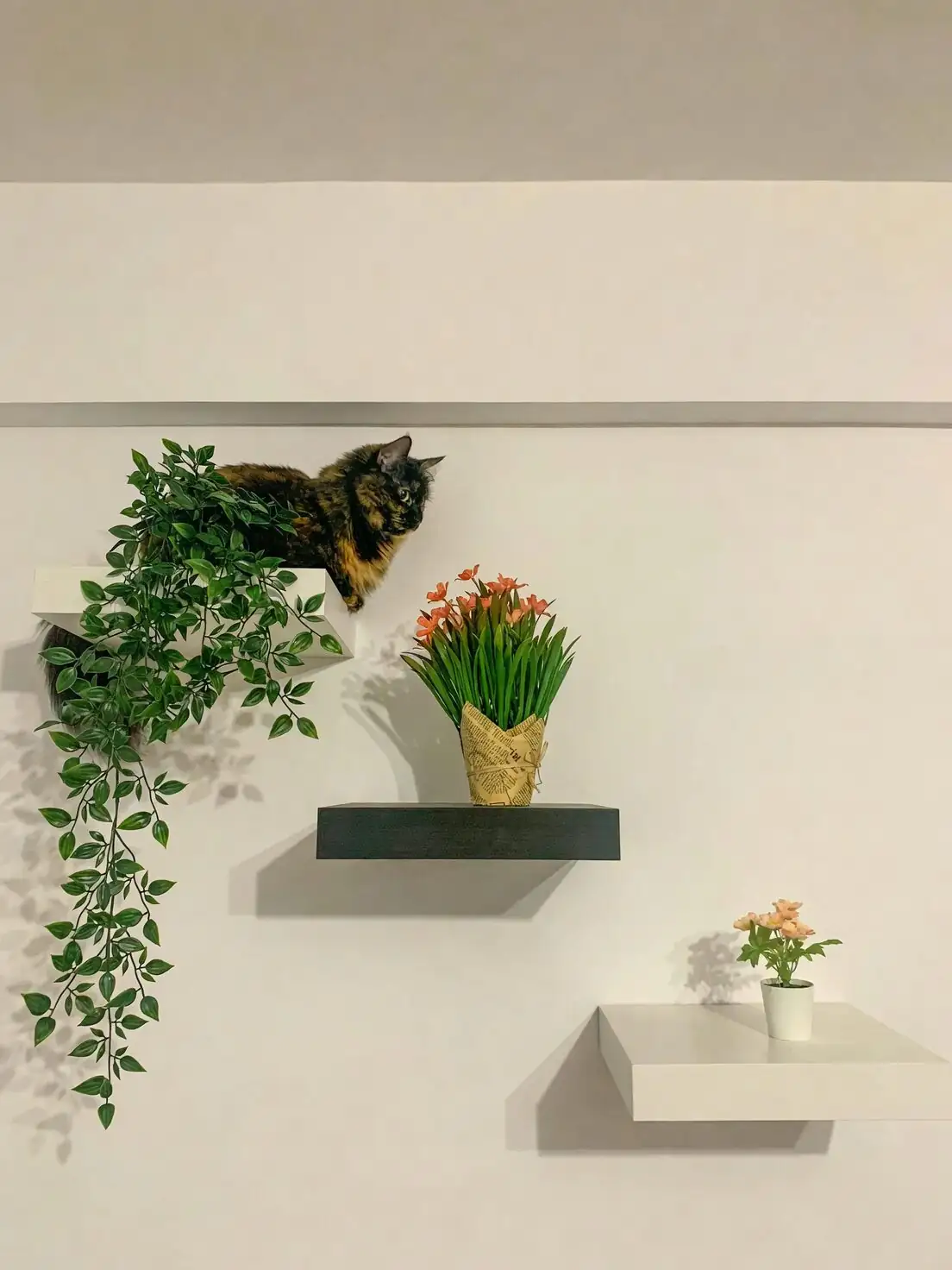
- Wall-mounted shelves with lip edges: elevate plants and safeguard them from adventurous tails.
- Weighted plant stands with museum putty under pots: stability without sacrificing style.
- Macramé hangers at eye level (yours, not your cat’s climber zone): great for filtered light, just check soil moisture more often.
Color-maxing, pet-friendly plant pairings
Build little “color stories” with other animal-friendly plants to make Hypoestes pop.
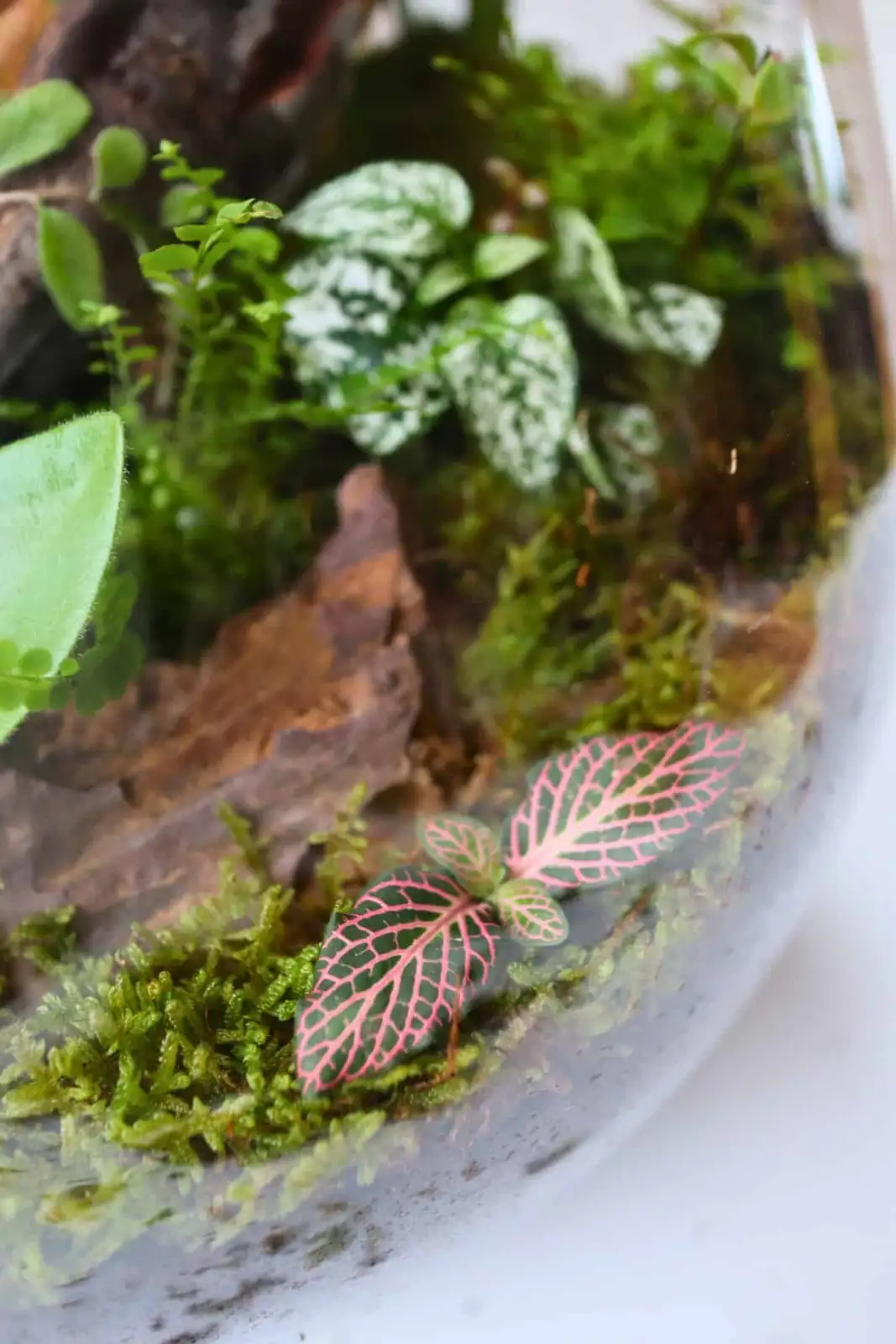
1) Jewel-box terrarium
- Hypoestes (pink or red form) for confetti color.
- Fittonia (nerve plant) in white or lime veining to echo the speckles.
- Baby’s tears (Soleirolia soleirolii) as a soft, mossy carpet.
- Dwarf Boston fern (Nephrolepis ‘Duffii’) for frilly texture.
Why it works: Everyone appreciates consistent moisture and higher humidity. The result is a lush micro-landscape with dazzling contrast.
2) Spa-day bathroom shelf
- Hypoestes ‘Pink Splash’ for blush.
- Prayer plant (Maranta leuconeura ‘Lemon Lime’) for chartreuse stripes.
- Calathea/Goeppertia (such as ‘Dottie’ or rosy-variegated forms) for dramatic purple-green leaves.
Why it works: Warm, steamy air keeps foliage pristine; all are non-toxic and humidity-loving. Keep Polka Dot Plant in the brightest spot of the trio for best color.
3) Cheerful desk combo
- A compact Hypoestes in a 10–12 cm (4–5 in) pot.
- Pilea peperomioides (Chinese money plant) for round, glossy dots that echo the “polka” theme.
- Peperomia (e.g., ‘Ginny’ or watermelon peperomia) for playful variegation and small-scale leaves.
Why it works: Modest size, tidy habits, and pet-friendliness meet easy-care desk vibes.
4) East-window rainbow
- Hypoestes (red or white).
- Spider plant (Chlorophytum comosum) as a bright, arcing fountain of variegation.
- African violet (Saintpaulia) for velvety leaves and seasonal blooms.
Why it works: Morning sun, bright indirect afterward, and a trio that loves consistent, gentle light. Plus, all are pet-safe.
5) Tropical entryway welcome
- Hypoestes ‘White Splash’ to lighten and brighten.
- Bromeliad (Guzmania or Neoregelia) for a bold, long-lasting color rosette.
- Areca palm (Dypsis lutescens) for soft, feathery fronds.
Why it works: Big-leaf drama meets small-scale speckles. Keep Hypoestes front-and-center where light is brightest, and the palm slightly back.
Quick care cheat sheet (designed for busy, pet-loving homes)
- Light: Bright, filtered light or partial sun; avoid harsh midday beams.
- Water: Spring–autumn, water when the top 1–2 cm (0.4–0.8 in) of mix is dry, then drench and drain. In winter, keep just lightly moist.
- Humidity: Aim for 50%+. Pebble trays (pot above waterline) or naturally humid rooms help.
- Temperature: 18–27°C (64–81°F). Don’t chill below ~13°C (55°F).
- Soil: A loose, well-draining houseplant mix with added perlite.
- Feeding: Every 2 weeks at half-strength from spring through autumn; taper off in winter.
- Size & shape: Regular tip-pinching prevents legginess and encourages a mounded, compact habit.
- Flowers: Summer magenta-purple blooms may appear; remove if you want maximum leaf show.
- Propagation: Easy from 5–10 cm (2–4 in) stem tips—root in water or moist mix.
- Repotting: Refresh into a 12.5–15 cm (5–6 in) pot as needed; typically every 2–3 years.
Styling tips that keep plants gorgeous and pets uninterested
- Create “plant zones”: A dedicated plant shelf or console helps pets learn what’s off-limits.
- Give pets their own greens: Offer a pot of cat grass to curb leaf-sampling urges.
- Stabilize displays: Use heavy ceramic pots and add museum putty; avoid wobbly stands.
- Hide the splash zone: Place delicate plants a few steps away from zoomie runways and wagging-tail height.
- Water wisely: Keep saucers neat; avoid standing water that can tempt drinking or pawing.
Troubleshooting for color and compactness
- Faded speckles or lanky stems? Increase bright, indirect light and pinch tips to branch.
- Crispy edges? Air may be too dry or watering irregular. Add humidity and adopt a steady watering rhythm.
- Pests in dry air (spider mites, aphids, mealybugs, whiteflies)? Treat early with insecticidal soap or horticultural oil, and nudge humidity up with a pebble tray or humidifier. Improve airflow around plants.
Outdoor notes (warm climates only)
- In USDA Zones 10–11, Hypoestes can thrive outdoors year-round. Everywhere else, it’s a houseplant or a warm-season annual. Protect from direct midday sun and cold snaps.
A thoughtful word on “flower language”
While some plant lovers attribute symbolic meanings to Polka Dot Plant—often cheerfulness, playfulness, or creative energy—these associations are modern, decorative interpretations rather than deep-rooted folklore. Hypoestes rose to fame as a charming foliage houseplant, so its “language” is really written by décor: it sparks joy in small spaces and celebrates color without overwhelming a room—or your pets.
The happy ending: Color for you, calm for your companions
Hypoestes phyllostachya proves you don’t have to choose between a pet-safe home and high-impact color. Place it where the light is kind, keep humidity cozy, pair it with other non-toxic showstoppers, and pinch it regularly for a compact, confetti-bright cushion of leaves.
If a curious companion ever snacks more than you’d like and seems unwell, contact your veterinarian or the ASPCA Animal Poison Control Center at (888) 426-4435. Otherwise, relax and enjoy the speckles—your pet-approved palette is just getting started.