

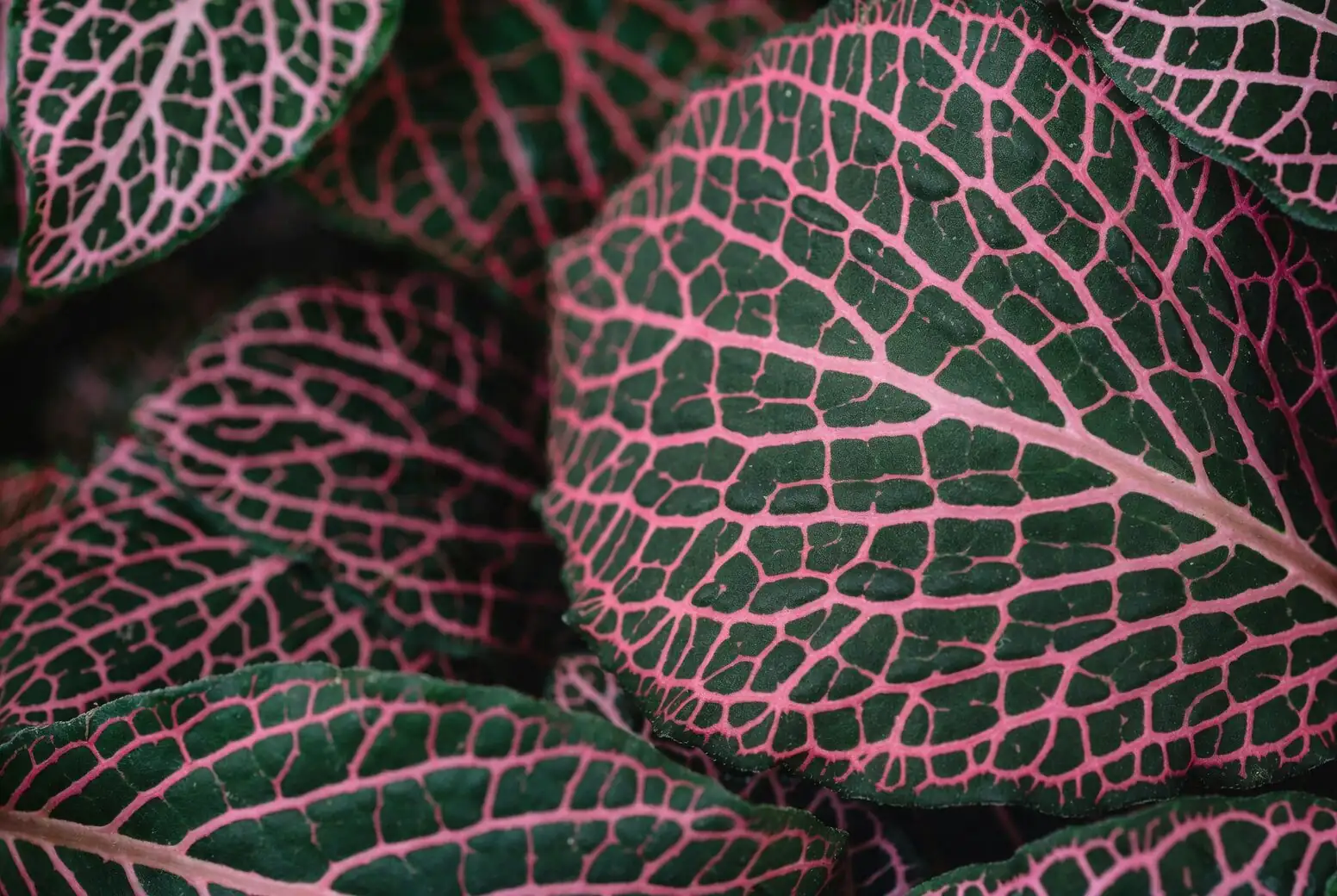
Meet the Nerve Plant (Fittonia albivenis): a petite, lush tapestry of green leaves traced with vivid pink, white, or red “nerves.” Think of it as living wallpaper for your small spaces—compact on a shelf, dramatic in a hanging pot, and an absolute star in humidity-rich rooms like bathrooms and kitchens. Give it filtered light, warmth, and steady moisture, and it rewards you with foliage so crisp and painted-looking you’ll swear it came from a design studio.
Here’s how to style it beautifully—and keep every leaf pristine—without turning your home into a greenhouse.
Meet Fittonia, Your Small-Space Scene-Stealer
- Botanical name: Fittonia albivenis (aka Nerve Plant, Mosaic Plant, Pink Nerve Plant)
- Family: Acanthaceae; native to tropical rainforests of western South America (especially Peru; also Colombia, Ecuador, Bolivia)
- Habit and size: Low, creeping, and compact—about 10–20 cm (4–8 in) tall, spreading to ~20 cm (8 in); with age (and less pinching), it can trail 30–60 cm (12–24 in)
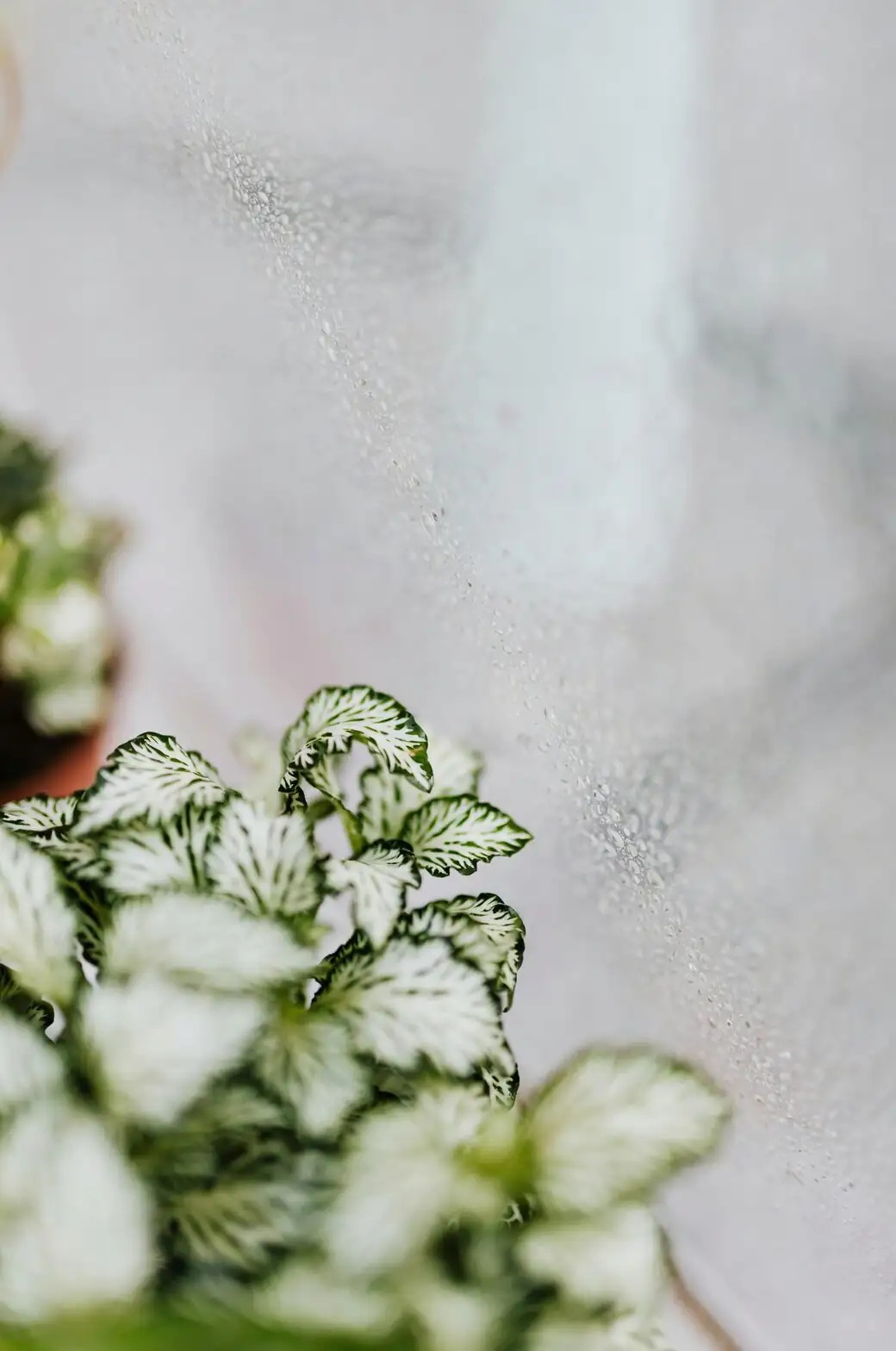
- Foliage: Soft, oval leaves with bold, netted veins—most often pink, but sometimes white or red. Handle gently; leaves bruise and crease easily.
- Personality: The famous “fainting plant”—it can dramatically wilt when dry, then perk up hours after a thorough drink
Why Bathrooms and Kitchens Love It (and Vice Versa)
Fittonia thrives on steady humidity (aim for 60%+), warm temperatures, and soft light—conditions many bathrooms and kitchens already provide.
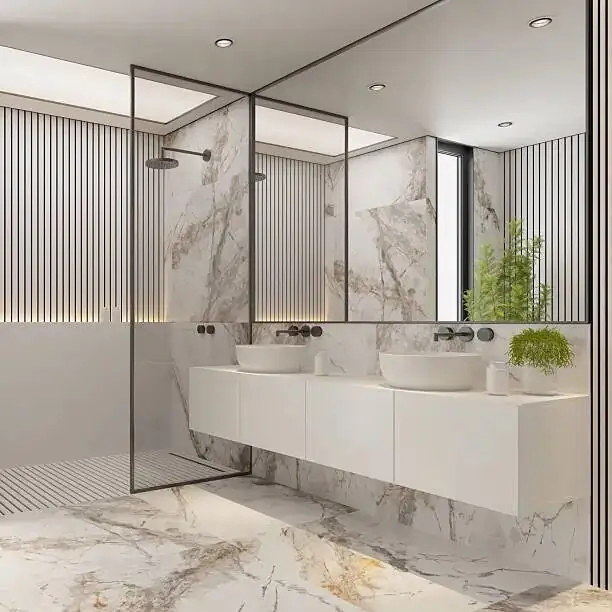
- Bathrooms
- Place it by an east-facing window or on a bright vanity ledge with filtered light.
- Use a shallow ceramic cachepot or a glass cloche/mini-terrarium for a jewel-box moment.
- A pebble tray under the nursery pot boosts humidity while keeping roots out of standing water.
- Kitchens
- Tuck it on a bright shelf set back from harsh south/west windows; morning light from an east window is ideal.
- Keep it away from stove blasts and cold drafts from doors or AC.
- A slim trough planter with 3–5 small Fittonias makes a lush, stripey “herb-style” row (but this one’s for the eyes, not the plate).
Shelves and Hanging Pots: Design-Forward Playbook
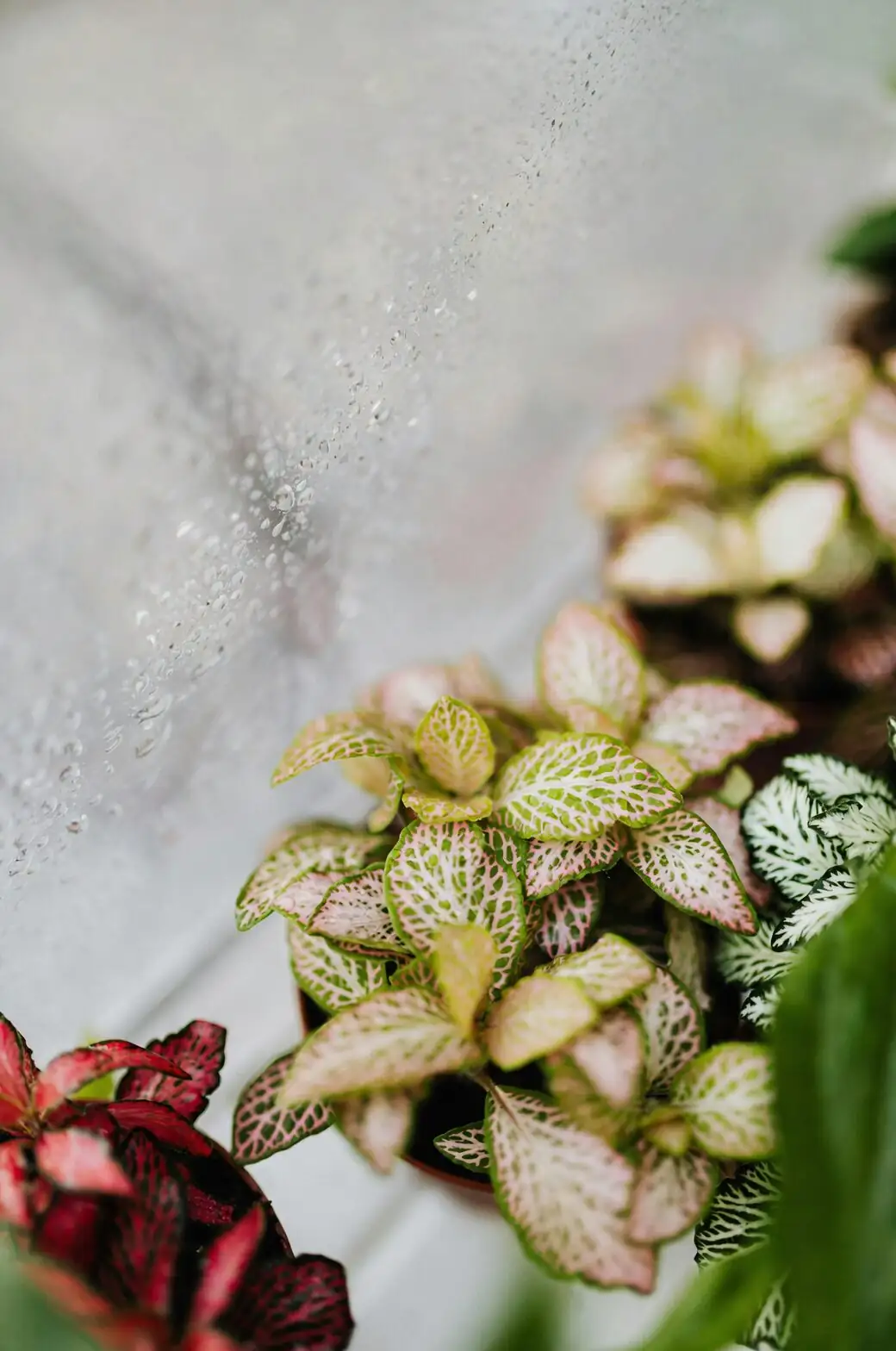
- On shelves
- Go for a low, wide planter to showcase its mat-forming habit.
- Pair with matte white or charcoal ceramic to make the vein color pop.
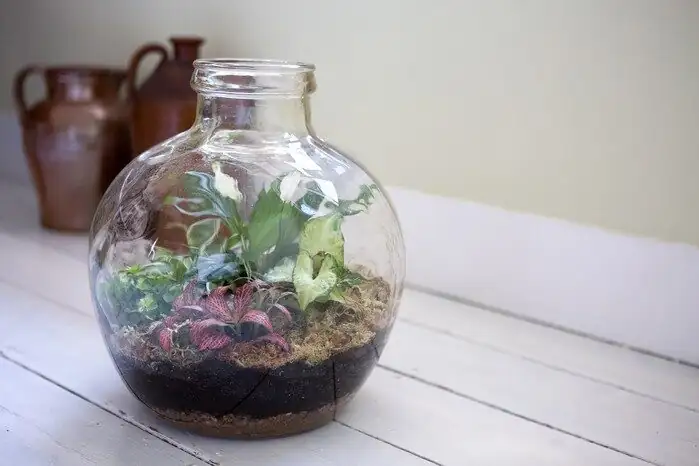
- Slip it into a glass cylinder or open-top jar for a terrarium-lite look.
- In hanging planters
- Choose a 12–15 cm (4.7–5.9 in) pot and plant 3–5 small Fittonias for an instant, full cascade.
- Hang near an east or bright north window; avoid hot midday sun that can scorch leaves and fade veining.
- Pinch growing tips regularly to encourage a dense, tumbling skirt of foliage.
- Terrarium magic
- Fittonia is a terrarium icon—warmth + steady humidity = pristine leaves.
- Use a well-draining mix and water sparingly to avoid waterlogging closed vessels.
Pet-Friendly Notes
Good news for animal lovers: Fittonia is generally regarded as non-toxic to cats and dogs. That said, any plant nibbling can cause mild stomach upset. Design with pets in mind:
- Use wall shelves, high plant ledges, or hanging planters out of swatting range.
- Terrariums (especially those with lids) are both chic and cat-proof.
- Provide pet grass elsewhere to divert curious chewers.
Keep Every Leaf Pristine (Small-Space Edition)
- Humidity sweet spot: 60%+ keeps leaves crisp. Use a pebble tray or small humidifier; grouping plants helps. Avoid leaving foliage wet overnight.
- Gentle watering: Water when the top 1–2 cm (0.4–0.8 in) of mix feels slightly dry. Thoroughly moisten, then drain. Use room‑temperature water to avoid cold shock.
- Light that flatters: Bright, indirect light or partial shade. Protect from strong direct sun; it scorches and fades the color.
- Airy, moisture-holding soil: A peat/coco-based mix with perlite (and a little coarse sand if you like) keeps roots happy.
- Handle with care: Those soft leaves bruise. Water at soil level, rotate the pot by the rim, and dust with a soft brush or air blower—no leaf-shine products.
- Warm and steady: Ideal 18–25°C (64–77°F). Keep above 15°C (59°F) and away from heaters or AC drafts.
- Pinch and primp: Regularly pinch tips for fullness; remove tired leaves promptly. Many growers also remove the small, pale flowers to direct energy into foliage.
- Pest watch: Dry air invites spider mites. Check leaf undersides and treat early with insecticidal soap or horticultural oil; boost humidity and improve gentle airflow.
Pro tip for the “fainting act”: If your Fittonia flops, soak the rootball thoroughly, drain well, raise humidity, and give it a calm, bright spot. It often revives within hours.
Water Culture: A Minimal, Modern Display
Fittonia can be grown in water—perfect for a sleek bathroom shelf.
- Rinse soil from roots (or start with water-rooted cuttings).
- Keep in bright, indirect light; change water every 7–10 days.
- During propagation, add very diluted hydroponic nutrients about every 2 weeks.
- Keep solution off the leaves, avoid direct sun and stuffy heat, and provide light ventilation in summer.
Care, Simplified
- Light: Bright, indirect to partial shade; avoid harsh midday sun.
- Water: Keep evenly moist, never soggy. Water when the top 1–2 cm (0.4–0.8 in) dries slightly.
- Humidity: Loves 60%+; terrariums are perfect.
- Temperature: 17–26°C (63–79°F), ideally 18–25°C (64–77°F); never below ~15°C (59°F).
- Soil: Moisture-retentive yet airy (peat/coco + perlite).
- Feeding: Spring–autumn, balanced liquid fertilizer at half strength every 2–4 weeks; ease up in winter if growth slows.
- Pruning: Pinch tips for bushiness; remove blooms if you prefer leafier growth.
- Repotting: Every 1–3 years in spring; just one pot size up to prevent sogginess.
- Propagation: Tip cuttings (5–10 cm / 2–4 in) root easily in water or moist mix in ~2–3 weeks; or layer a stem so nodes root, then cut and pot.
Quick Troubleshooting
- Yellowing leaves: Often from overwatering, cold stress, or poor drainage. Let the top layer dry slightly between waterings, keep warm, ensure drainage.
- Sudden wilt: Classic Fittonia thirst signal. Water thoroughly and raise humidity.
- Crispy edges/faded veins: Usually too much sun or low humidity; move to filtered light and increase moisture in the air.
- Fungus gnats: A sign of overly wet soil. Let the top layer dry a bit more and improve aeration.
Symbolism and “Flower Language”
Fittonia is often linked with vitality and living artwork—an homage to its vivid, hand-painted-looking veins. In modern houseplant culture, its “flower language” isn’t an old folklore tradition so much as a contemporary interpretation: a small, steady pulse of life that enlivens quiet corners. Its sudden “faint and revive” routine even reads like a metaphor for resilience—bounce back with a little care and the right environment.
Room-by-Room Styling Recap
- Bathroom: East window, pebble tray, or mini-terrarium for museum-quality foliage.
- Kitchen: Bright shelf out of heat/draft zones; group a few colors (pink, white, red veining) for a curated palette.
- Shelves: Low bowls or glass vessels to highlight the mosaic canopy; rotate weekly for even growth.
- Hanging: A compact basket near filtered light; pinch to create a dense, cascading fringe.
Give Fittonia albivenis consistent moisture, a soft bath of light, and humid air, and it will repay you with leaves so graphic they could be silk-screened—an ever-fresh accent for the most design-savvy corners of your home.