
Think of Persian buttercups as spring’s couture ruffles—layers of satin petals that turn tiny spaces into galleries of light and color. With a little color theory and the right cultivars, Ranunculus asiaticus can lift balconies and windowsills into mood-boards made real, and transform dining tables into scenes that feel softly cinematic.
Meet the Persian Buttercup, your cool-season showstopper
- Botanical name: Ranunculus asiaticus (family Ranunculaceae), also known as Persian Buttercup, Florist’s Ranunculus
- Habit: A tuberous perennial with claw-like tubers, usually grown as a cool-season annual
- Size: Typically 20–45 cm tall with a 15–30 cm spread; compact plants under 30 cm are perfect for neat pots and window boxes
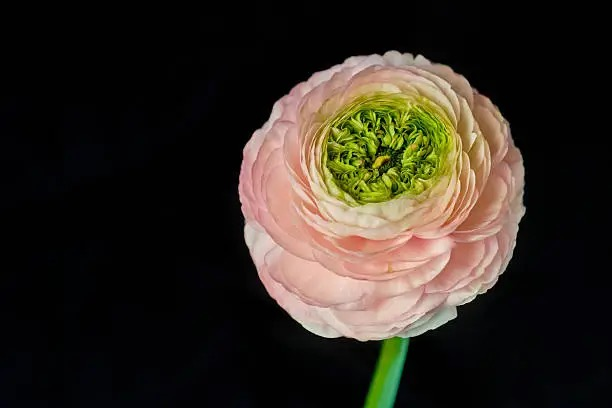
- Flowers: Densely layered, rose- or peony-like doubles in white, yellow, pink, red, orange, purple, and bicolors, often with a satin sheen—made for close viewing and cutting
- Seasonality: Blooms in cool weather (late spring to early summer; earlier in mild-winter climates). As temperatures rise, foliage yellows and the plant slips into summer dormancy—a normal part of its life cycle
Design note: Treat Persian buttercups like a cool-season “capsule collection.” They shine in bright, cool air with excellent drainage—on sunny balconies and bright windowsills, right when the year’s light begins to soften.
The color playbook: palettes that make small spaces look intentional
The secret to elevated ranunculus displays is palette discipline. Choose one story and let everything—blooms, containers, foliage, linens—support it.
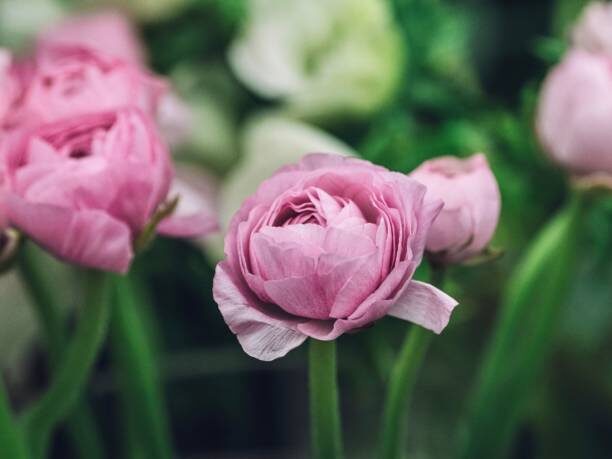
1) Pastel Serenity (romantic, airy, photogenic)
- Palette: Ivory + blush + a whisper of warm gold
- Color ratio: 60% ivory, 30% blush, 10% gold accents (flatware, pot rims, napkin rings)
- Cultivar cues: Soft-blush doubles and creamy whites from series such as ‘Amandine’, ‘La Belle’, or ‘Tecolote’ pastel mixes
- Companions: Dusty miller, variegated ivy, pale violas
- Containers & materials: Whitewashed terracotta, matte cream ceramics, linen-textured pot covers
Why it works: Pastels invite the eye to rest. This is that “romantic spring” mood-board look trending in early spring—gentle, luminous, and timeless.
2) Citrus Pop (bold, sunlit, balcony-friendly)
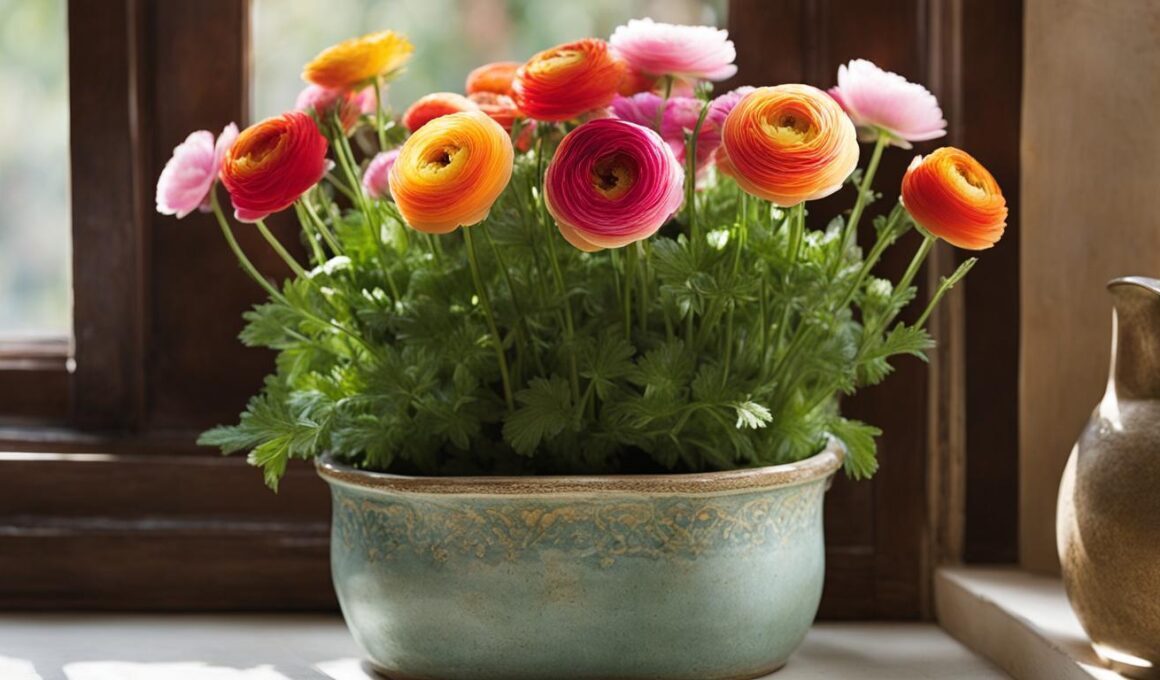
- Palette: Tangerine + coral + lemon, grounded by fresh green foliage
- Cultivar cues: Orange and coral ranunculus paired with butter-yellow forms; look for bright “mandarin” and “sunrise” tones across mixed series
- Companions: Gold pansies, lemon nemesia, creeping thyme
- Containers: Glazed citrus-toned pots or straw-colored baskets with plastic liners
Why it works: Analogous oranges and yellows glow in morning light and bring energy to small outdoor spaces.
3) Red Velvet + Plum (moody, modern, sculptural)
- Palette: Deep red + plum + charcoal neutrals
- Cultivar cues: Wine-red doubles, cherry-crimson bicolors
- Companions: Heuchera with burgundy leaves, dark purple violas
- Containers: Graphite or black matte planters to sharpen contrast
Why it works: Saturated blooms read like velvet in cool light—perfect for architectural balconies and dramatic entry steps.
4) Porcelain Bicolors (graphic, editorial)
- Palette: Porcelain white + inky accents + a crisp green line
- Cultivar cues: White ranunculus and crisp-edged bicolors
- Companions: White alyssum, silvery herbs
- Containers: Minimalist white or black cylinders, slim windowsill troughs
Why it works: High contrast makes petals look extra-sculptural in close quarters.
5) Meadow Mix (joyful, tablescape-ready)
- Palette: Triadic brights (pink + yellow + purple), balanced by green
- Cultivar cues: Mixed-color ranunculus with perky, mid-sized heads
- Companions: Low violas, baby blue lobelia, ferns for airy texture
- Containers: A row of low bowls or a long window box near the dining area
Why it works: Polychrome, but disciplined. Keep the foliage unified so the flowers can play.
Container recipes that always look curated
Use fast-draining, rich mix (loam-based potting mix + compost/leaf mold + coarse sand or perlite). Ensure strong drainage.
Windowsill Trio (30–40 cm long)
- Planting: 3–5 compact ranunculus (under 30 cm tall) + trailing variegated ivy
- Depth: Set tubers 2–3 cm deep; if using tubers, space them so flower stems won’t crowd the glass
- Finish: Smooth ceramic trough; top-dress with fine gravel for a gallery finish
Balcony Pot (25–30 cm diameter)
- Planting: 5–7 tubers, claws pointing downward, staggered; tuck in dusty miller or lemon thyme
- Position: Bright light to full sun; in warm regions, offer midday shade to extend bloom time
- Note: A 12 cm pot fits about 3 tubers—group multiples for rhythm
Slim Window Box (60 cm)
- Planting: 9 ranunculus tubers, mixed palette or tonal gradient from left to right
- Edge Plants: Violas or alyssum for a cloud-soft border
- Pro tip: Repeat one foliage plant every 20 cm to unify the composition
Set the spring table: floral styling that feels effortless
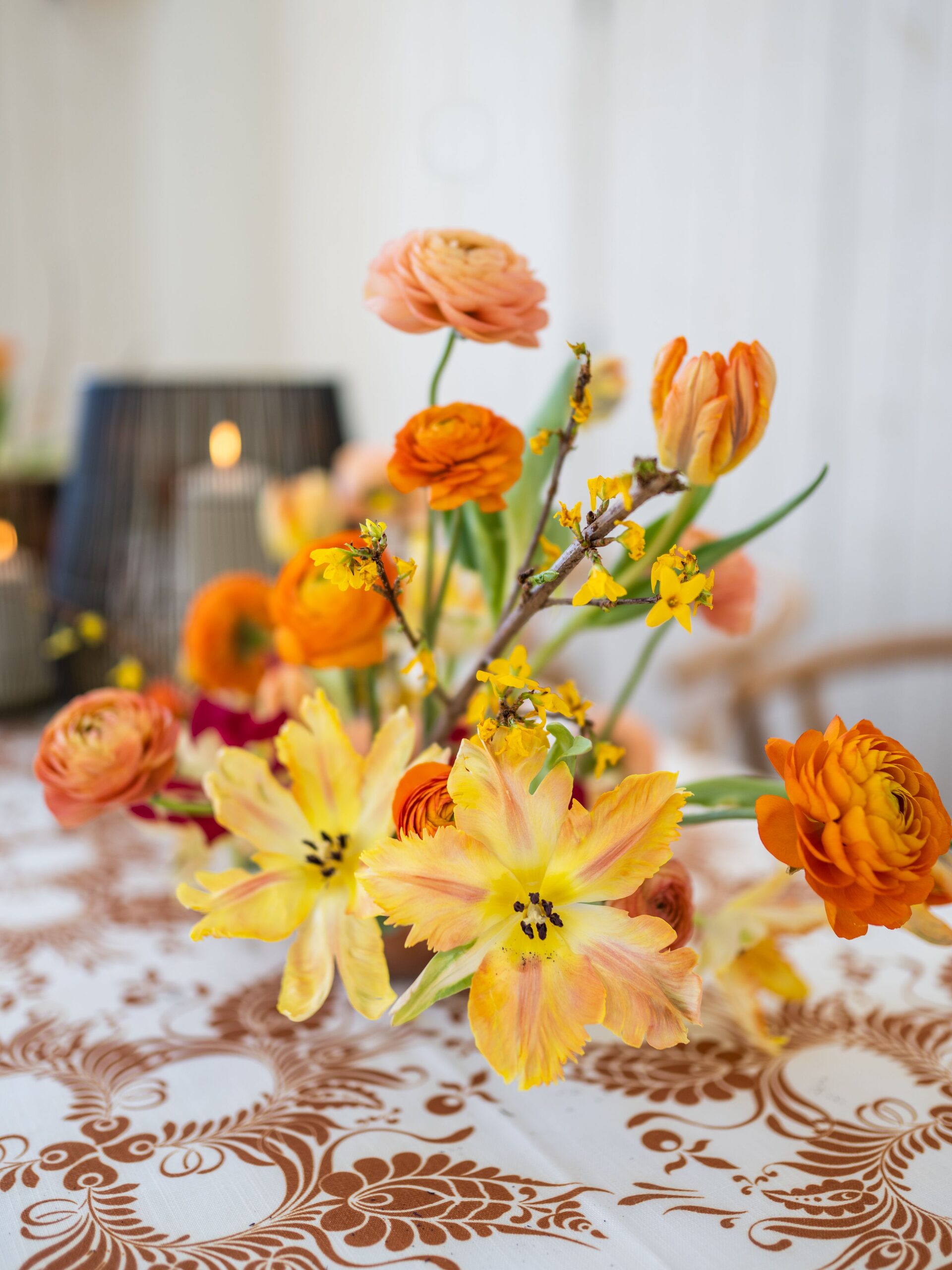
Ranunculus is a premium cut flower—long stems, layered blooms that open gradually, and exceptional vase presence.
Two foolproof centerpiece formats
- The low bowl (conversation-friendly)
- Mechanics: A pin frog or floral grid
- Palette: Choose one of the palettes above; keep foliage minimal for a modern feel
- Accents: Rattan chargers or pale linens underline the spring mood without competing
- The bud-vase runner (airy and modular)
- Line 7–11 mismatched bud vases down the center, each holding 1–3 stems
- Add tiny pansy sprigs or herbs between vases; scatter a few citrus or stone fruits for color echoes
Tabletop ratios that flatter ranunculus:
- Color: 60% neutral linens, 30% floral color, 10% metallic or wood accent
- Height: Keep most stems below eye level; let 2–3 stems arc taller for movement
Stem care for longevity:
- Cut when buds are showing color and feel slightly soft (not tight) for a long “unfurling” show
- Recut stems on a sharp angle, place in cool, clean water; change water regularly and avoid heat and drafts
Design-led care: the beautiful constraints that make them thrive
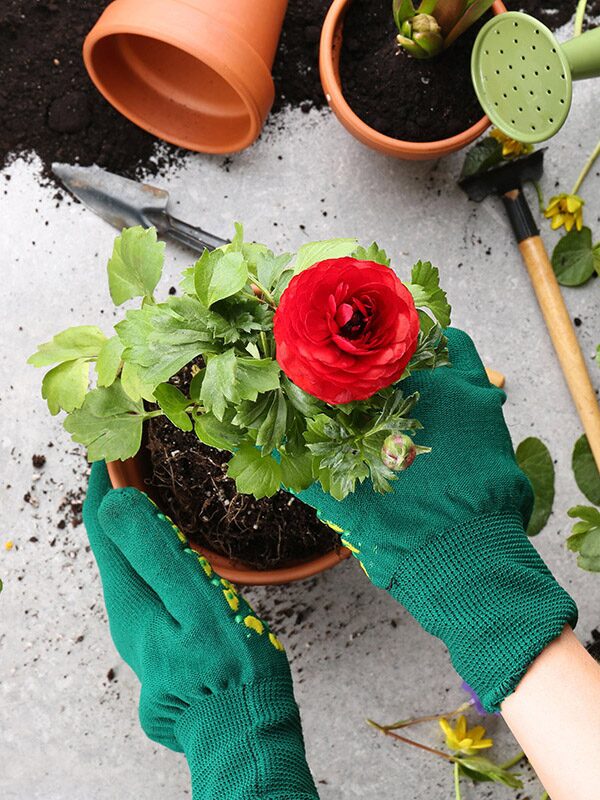
- Light: Bright light to full sun; indoors, an east- or south-facing window is ideal. In warm climates, shield from harsh midday sun to prolong bloom.
- Temperature: Sweet spot is cool—about 15–20°C days and 7–10°C nights. Brief dips to around -5°C may be tolerated if sheltered and well-drained; protect from hard freezes and winter-wet.
- Water: Keep evenly moist in active growth—never bone-dry, never soggy. Ensure swift drainage after rain.
- Soil: Rich, fast-draining mix; avoid heavy, water-retentive soil. Plant tubers 2–3 cm deep—don’t bury too deeply.
- Feeding: Light, regular feeding—once or twice before flowering, once after. Choose a balanced-to-bloom formula (for example, higher in potassium such as 15-15-30) or well-diluted organic feeds. A pinch of slow-release fertilizer at planting helps.
- Grooming: Deadhead to keep displays pristine and to channel energy to the tubers. On very double, heavy bloomers, thinning to 2–3 strong buds per plant can improve flower size.
- Season shift: As weather warms and foliage yellows, taper then stop watering. Allow summer dormancy. In colder regions, lift and store tubers; in mild zones (roughly USDA 8–10), keep them dry and protected.
Common issues (and elegant fixes):
- Gray mold (Botrytis): Improve airflow, avoid wet foliage late in the day, remove affected parts promptly.
- Aphids: Rinse off or use insecticidal soap; check buds and undersides of leaves.
- Slugs/snails: Barriers, traps, and tidy, dry pot rims deter grazing.
Choosing plants, tubers, or seed (and what to look for)
- Potted plants: Pick compact, sturdy plants (≤30 cm), thick stems, bright green leaves, and buds just showing color.
- Tubers: Select firm, plump “claws,” about 7 cm circumference or larger for strong performance. Disinfect with an appropriate fungicide if rot has been an issue in the past.
- Planting counts: About 3 tubers per 12 cm pot; group multiples for impact.
- Seed: Sow fresh seed in autumn at around 10–18°C; germination in about 2–3 weeks. Prick out at 2–5 true leaves; most flower the following spring. Double and bicolor strains are especially showy.
Safety and practicality for home and table
- Mildly toxic if ingested; sap may irritate sensitive skin. Keep away from pets and small children; wear gloves if needed.
- Ventilation matters: cool, fresh air keeps table arrangements and potted plants pristine and discourages mold.
Flower language, thoughtfully considered
Victorian floriography often assigned ranunculus the meaning “you are radiant with charms”—an elegant nod to its luminous, many-petaled blooms. Today, the flower’s symbolism leans toward charm, radiant beauty, and joyful celebration, making it a favorite for spring gifting and weddings. While “flower language” is a cultural construct rather than botany, it’s a delightful frame for design: choose ranunculus when you want your space—or your table—to say joy, tenderness, and a certain quiet confidence.
Quick design cheat sheet
- Tiny windowsill: 3 blush-and-ivory ranunculus + variegated ivy in a matte cream trough; soft linen runner nearby
- Sunny balcony: Citrus palette (orange, coral, lemon) in straw-toned baskets; morning sun, midday shade
- Dramatic entry: Deep red ranunculus in black planters with burgundy heuchera; minimal foliage, maximum mood
- Spring table: Low bowl of mixed pastels with rattan chargers; 60/30/10 color balance, unscented candles at low height
- Window box near dining nook: Triadic meadow mix (pink/yellow/purple) with violas; repeat one foliage plant to unify
Ranunculus asiaticus thrives where fashion meets function: bright, cool air, impeccable drainage, and a curated palette. Build your color story, stage the light, and let those satin petals do what they do best—cast an effortless glow across every balcony, windowsill, and table you love.