

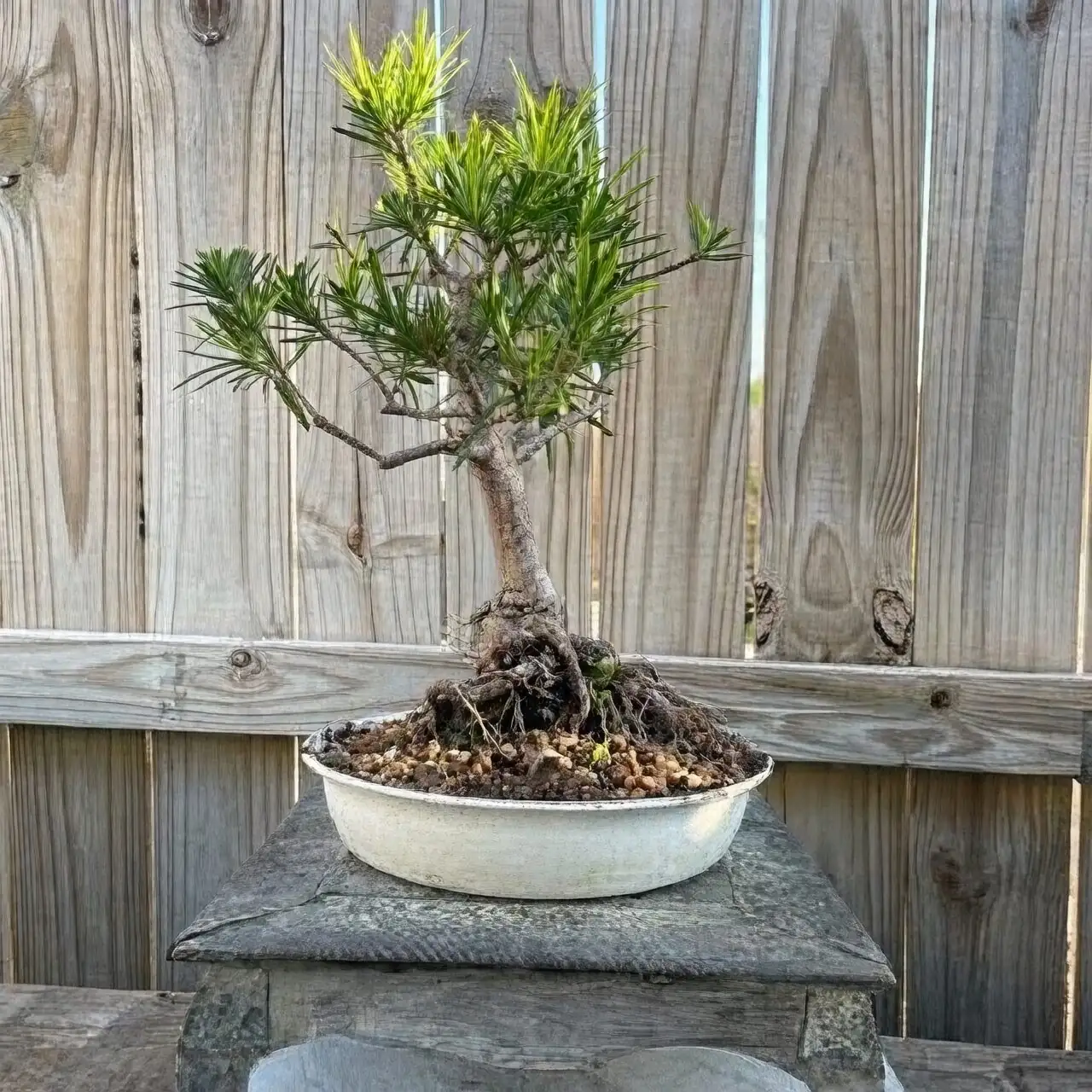
Meet the Buddhist pine (Podocarpus macrophyllus): the evergreen that wears a bonsai tuxedo, throws subtle spring “blooms,” and serves up faux-berries for birds—all while looking like a centuries-old temple guardian long before it actually is.
Meet Podocarpus macrophyllus (aka Buddhist Pine, 罗汉松)
- Origin: China and Japan.
- Family: Podocarpaceae (a conifer clan with deep, ancient roots).
- Vibe: Evergreen, dignified, and famously bonsai-friendly. It takes wiring and pruning like a pro, building those elegant, layered “cloud-pad” canopies.
- In the nursery: Often sold as a compact mini potted tree—perfect for training into refined bonsai or keeping as a tidy container ornamental.
Snackable botany: dioecious drama and faux-berries
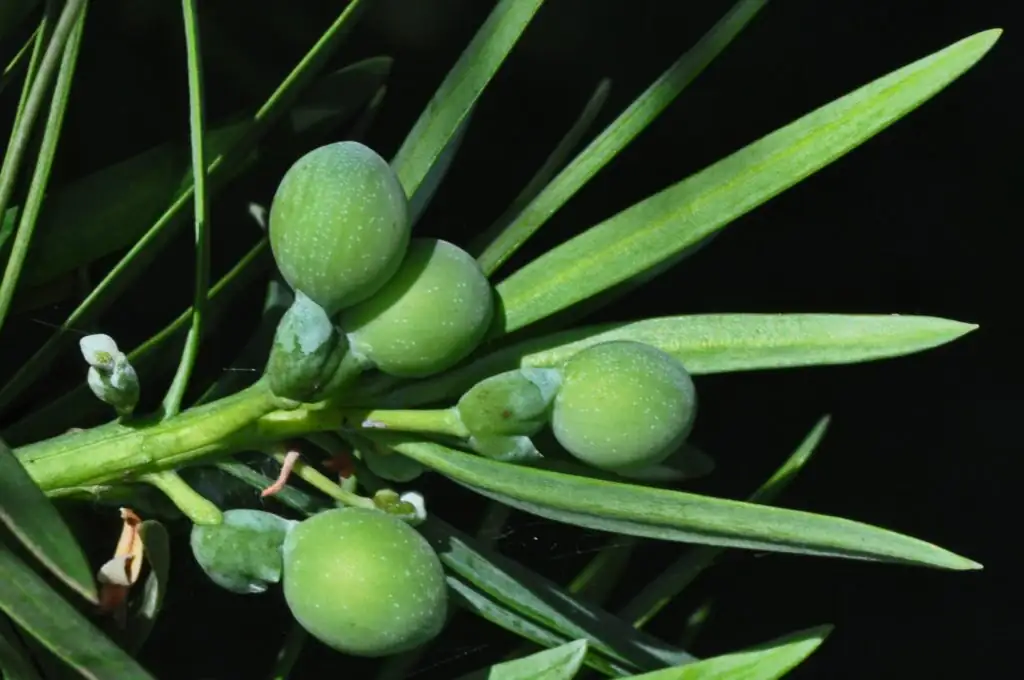
- Separate sexes, please: Plants are typically male or female (dioecious). In spring, their flowers are tiny and inconspicuous—but the plot thickens if you have both sexes nearby.
- The great conifer trick: On pollinated female plants, fleshy, colorful structures swell beneath the seeds. They look like berries, but they’re actually part of the cone’s receptacle—classic Podocarpus sleight of hand that tempts birds to disperse the seeds.
- Not your grandma’s “pine cone”: These are gymnosperms, so think discreet cones and seed receptacles, not showy petals.
Leaf miniaturization hacks for crisp, cloud-pad bonsai
Podocarpus leaves are naturally narrow and leathery deep green—already elegant. Want those pads extra neat and compact? Try these bonsai-safe moves:
- Time your water: During spring growth flushes, slightly reduce watering to encourage shorter leaves. Then resume your normal rhythm.
- Light it right: Bright light to partial shade keeps internodes shorter and pads tight; avoid harsh, scorching midday summer sun.
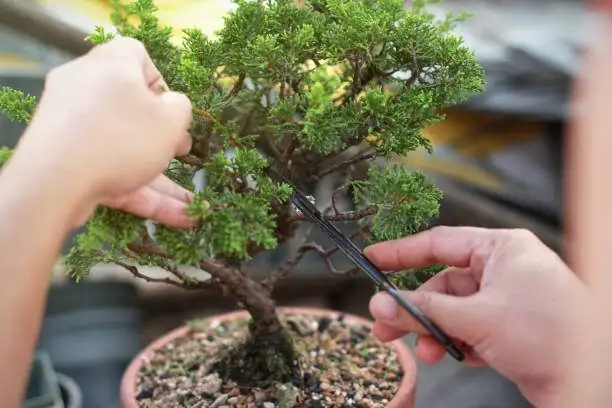
- Pinch and shape: In spring, pinch/prune shoot tips to control extension growth. Maintain the silhouette with routine trimming.
- Feed with finesse: For containers and bonsai, feed about monthly in the growing season; stop in winter. Overfeeding can bloat growth.
- Airy roots, airy crown: Use a well-drained, gritty mix and pots about 20–40 cm deep to support stable root development without waterlogging. Good airflow above the pot helps prevent leaf diseases and keeps pads tidy.
- Summer spa: In hot weather, occasional misting keeps foliage fresh and richly green.
Why it looks ancient decades before it truly is
A lineage with deep time swagger
Podocarpus belongs to an old conifer line—think “classic, pre-flower-plant era” energy. The species we grow today inherits that serene, timeworn look.
Design cues that telegraph age (fast)
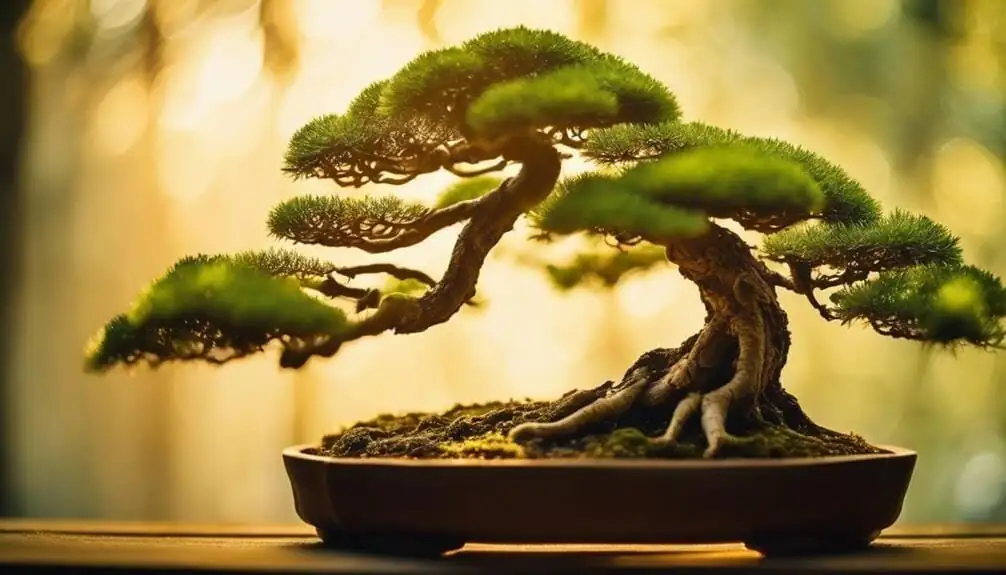
- Cloud pads and negative space: Layered, horizontal foliage pads with open gaps suggest mature branching and time-earned refinement.
- Trunk taper and movement: Wiring young branches and guiding the trunk early yields graceful curves and convincing taper.
- Nebari (surface roots): Stable, radiating roots at the soil line instantly add gravitas. Repot every 2–3 years to refine root spread.
- Subtle bark and fine ramification: Ongoing pinching increases twig density; even modest texturing on bark reads as age when the silhouette is orderly.
- The right pot: Deep, understated containers ground the composition and amplify that “old soul” mood.
Care, made easy (but not soggy)
- Light: Bright light to partial shade; shield from scorching midday summer sun. Indoors, pick your brightest window with good airflow; outdoors, an east-facing balcony/patio is ideal.
- Temperature: Best at 15–25°C (59–77°F). Brief dips to about -5°C (23°F) are tolerable; protect from hard freezes.
- Humidity: Moderate to high. Summer misting helps foliage stay vivid.
- Soil: Free-draining and airy—think fertile loam + leaf mold/compost + coarse sand/grit. Avoid heavy, water-retentive mixes.
- Watering: Water thoroughly in active growth, then wait until the top of the mix is nearly dry before watering again. Roughly twice weekly in the growing season—adjust for heat, pot size, and soil. Never leave roots sitting wet.
- Feeding:
- In-ground: Feed in spring and autumn with well-rotted organic fertilizer tea.
- Containers/bonsai: Feed about monthly in the growing season; stop in winter. You can mix in a small amount of organic fertilizer at repot.
- Pruning & styling: Spring is prime time to pinch/prune tips and wire branches to build layered cloud pads. Maintain with fine trimming through the season.
- Repotting: Every 2–3 years, typically in deeper bonsai pots (20–40 cm). Refresh the free-draining mix and refine roots.
Propagation and your season-by-season game plan
- Seeds: Sow fresh seed in summer, or store in moist sand and sow in spring. Under good conditions, germination can be around two weeks.
- Cuttings: Take dormant wood cuttings in spring or semi-ripe tip cuttings in summer; rooting often takes 8–12 weeks.
Seasonal checklist:
- Spring: Pinch/prune tips; sow stored seed; resume regular watering and monthly feeding for pots; in-ground plants can be fed once. Slightly reduce water during the spring flush to miniaturize new leaves.
- Summer: Provide shade from harsh sun; mist foliage during hot spells; take semi-ripe cuttings (root in ~8–12 weeks); collect seed to sow fresh or store.
- Autumn: Feed in-ground plants once; begin to reduce watering; keep drainage sharp.
- Winter: Stop fertilizing; protect from hard freezes; repot on a 2–3 year cycle as needed.
Troubleshooting and safety
- Leaf spot/anthracnose: Most common in wet, stagnant conditions. Boost airflow, avoid keeping foliage constantly wet, and remove affected leaves.
- Pests: Scale insects, spider mites, and thrips—inspect leaf undersides and treat early with horticultural soap/oil or locally appropriate controls.
- Safety note: Toxicity specifics aren’t established here. As a precaution, prevent pets and children from chewing or ingesting any parts, and consult a professional if ingestion is suspected.
Quick-fire bonsai facts
- Not just a mini: Buddhist pine can become a full-sized evergreen tree when planted in the landscape.
- Training material: Both seed-grown and cutting-grown plants are used; young branches bend readily, making early wiring easy.
- Signature style: That iconic “cloud-pad” silhouette is built through repeated fine pruning and careful branch training.
- Leaf size control: Some growers deliberately manage watering during the spring flush to encourage shorter, denser new leaves.
Buying cheat sheet (and day-one placement)

- Choose plants with:
- Balanced crowns and sturdy, compact branching
- Deep, uniform green leaves without yellowing, dieback, or pests
- For bonsai, short, dense pads and a trunk/branch structure that suits your pot and style
- After purchase:
- Place in bright, well-ventilated light; shield from harsh summer sun
- Mist occasionally in hot weather
- Water only when the top of the mix starts to dry—avoid waterlogging
Ready to style your own tiny temple guardian? With bright light, a gritty mix, and disciplined pinching, Podocarpus macrophyllus will reward you with cloud pads, ancient poise, and year-round evergreen calm.