

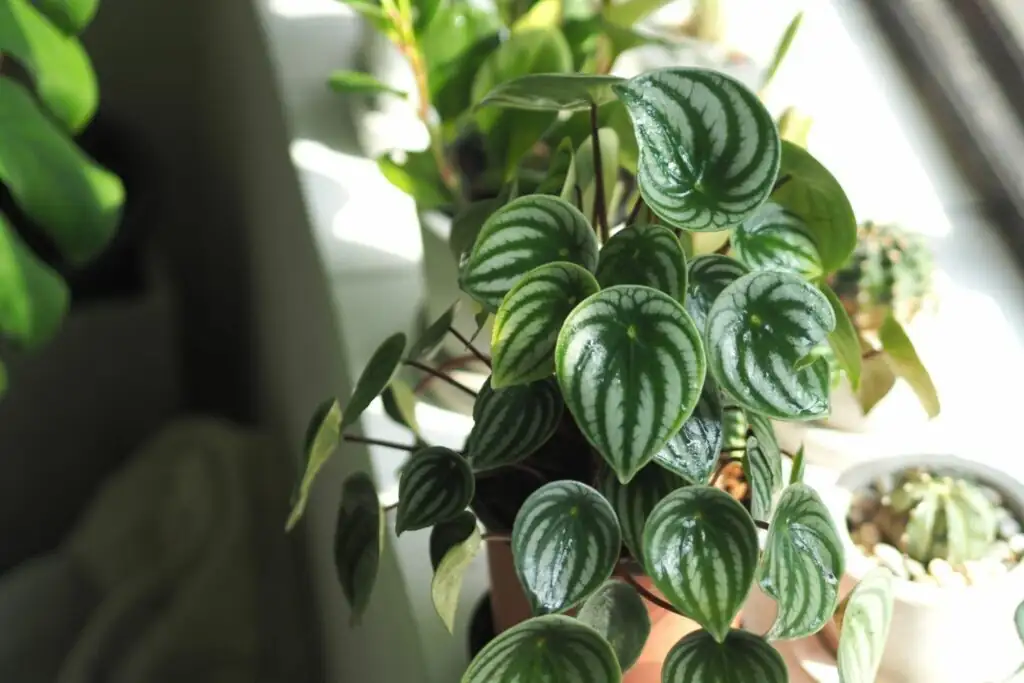
If you’ve ever watched a Watermelon Peperomia glow in perfect light, you know the magic: crisp silver bands, deep green veins, and that tidy, sculptural poise. Nail the lighting—and you’ll lock in the high-contrast “watermelon” look while steering clear of scorch and fade. Here’s a practical, room-by-room guide to get it just right, with a special focus on east vs. north windows, smart use of sheers, and seasonal repositioning.
Meet the plant, meet its light sweet spot
Watermelon Peperomia (Peperomia argyreia) is a compact, warm‑loving foliage plant from northern South America. The round to oval, slightly succulent leaves are banded with silvery-green over darker green veins and held aloft on slender, often reddish petioles.
- Ideal light: bright, indirect light to partial shade
- What to avoid: harsh direct sun (scorch, bleaching) and very deep shade (slow growth, dull striping)
- Temperature comfort zone: 15–24°C (59–75°F); keep above ~10°C (50°F)
- Bonus: generally pet-safe
Think of the perfect light as skylight, not spotlight: luminous, filtered, and gentle.
Why light makes or breaks the watermelon pattern
- Too much direct sun: silver bands wash out, edges crisp or freckle, leaves can cup or droop from stress.
- Too little light: petioles stretch, leaves get smaller, and the “watermelon” striping looks muted.
- Bright, filtered light: maintains firm, glossy leaves and maximizes that silver-green contrast.
Pro tip: Heavy nitrogen feeding can also soften growth and reduce pattern contrast. Feed lightly in active growth; ease off in winter.
East vs. North windows: which is best for contrast without scorch?
Both can work beautifully—choose based on your climate, season, and room brightness.
East-facing windows (morning sun, gentler intensity)
- The goal: bright, filtered morning light. Use a sheer curtain in late spring through summer to knock back the rays.
- Summer setup:
- Place 1–3 feet (30–90 cm) from the glass if unfiltered, or closer if behind a sheer (about 40–50% shade).
- Keep the plant off hot glass and away from A/C blasts.
- Autumn to spring:
- Move closer to the window for maximum brightness, still filtering any strong direct sun at midday if it reaches the pane.
- Why it works: Morning light is typically softer, so color contrast stays crisp without frying the silver.

North-facing windows (cool light, minimal risk of scorch)
- The goal: the brightest north exposure you have; this is scorch-safe, especially in summer.
- Summer setup:
- Right on the sill or within 6–18 inches (15–45 cm) of the window for the best brightness.
- Winter setup:
- Keep it on the sill with curtains open during the day. If growth slows and the pattern dulls, move temporarily to your brightest east window or augment with reflection (see below).
- Why it works: North light preserves leaves from harsh sun, but in darker homes or short winter days, add brightness to prevent pattern fade.
What about south or west windows?
- Use bright shade only:
- Set the plant well back from the glass (5+ feet/1.5+ m), or
- Hang to the side of the window, or
- Filter with a sheer (aim for about 40–50% shade).
- Never park it in strong, direct midday or afternoon sun—this is prime scorch territory.
The sheer curtain playbook
A single sheer can transform a risky window into a peperomia paradise.
- Choose a medium-weave sheer that softens the sun. Shadow test: your hand should cast a soft-edged shadow on the leaf, not a crisp outline.
- Layer options: sheer + blinds for west/south exposures; tilt blinds to bounce light up to the ceiling.
- Window film: a frosted or light-diffusing film is a tidy, permanent alternative in hot windows.
Seasonal repositioning: keep the contrast year-round
Your plant’s perfect spot shifts with the seasons. Use this simple rotation to protect color and texture.
Spring
- Days lengthen—great! Keep bright, filtered light.
- If you’re near a strong south/west window, introduce or thicken the sheer before the first heatwave.
Summer
- Pull back from hot glass; prioritize east or bright north exposures.
- Maintain even moisture (never soggy) and gentle airflow to reduce leaf stress and pests.
Autumn
- As sun relaxes, nudge the plant closer to east or north windows to maintain brightness.
- Reduce feeding and hold to bright-indirect light.
Winter
- Move to the brightest safe spot: an east windowsill with filtered light or the brightest north window.
- Keep off icy panes and out of cold drafts; avoid strong direct midday sun.
- Water more sparingly as growth slows, letting the top of the mix dry between drinks.
Small but mighty boosts:
- Clean window glass and wipe leaves with a soft, damp cloth to improve light capture.
- Place near white walls or a light surface to bounce light back onto foliage.
Troubleshooting the look: what the leaves are telling you
- Signs of too much light:
- Faded silver bands or overall paling
- Crispy or tan patches, especially at edges or tips
- Leaf cupping/rolling toward the light
- Remedy: add/upgrade a sheer, move back 1–3 feet (30–90 cm), or shift to a north/east exposure.
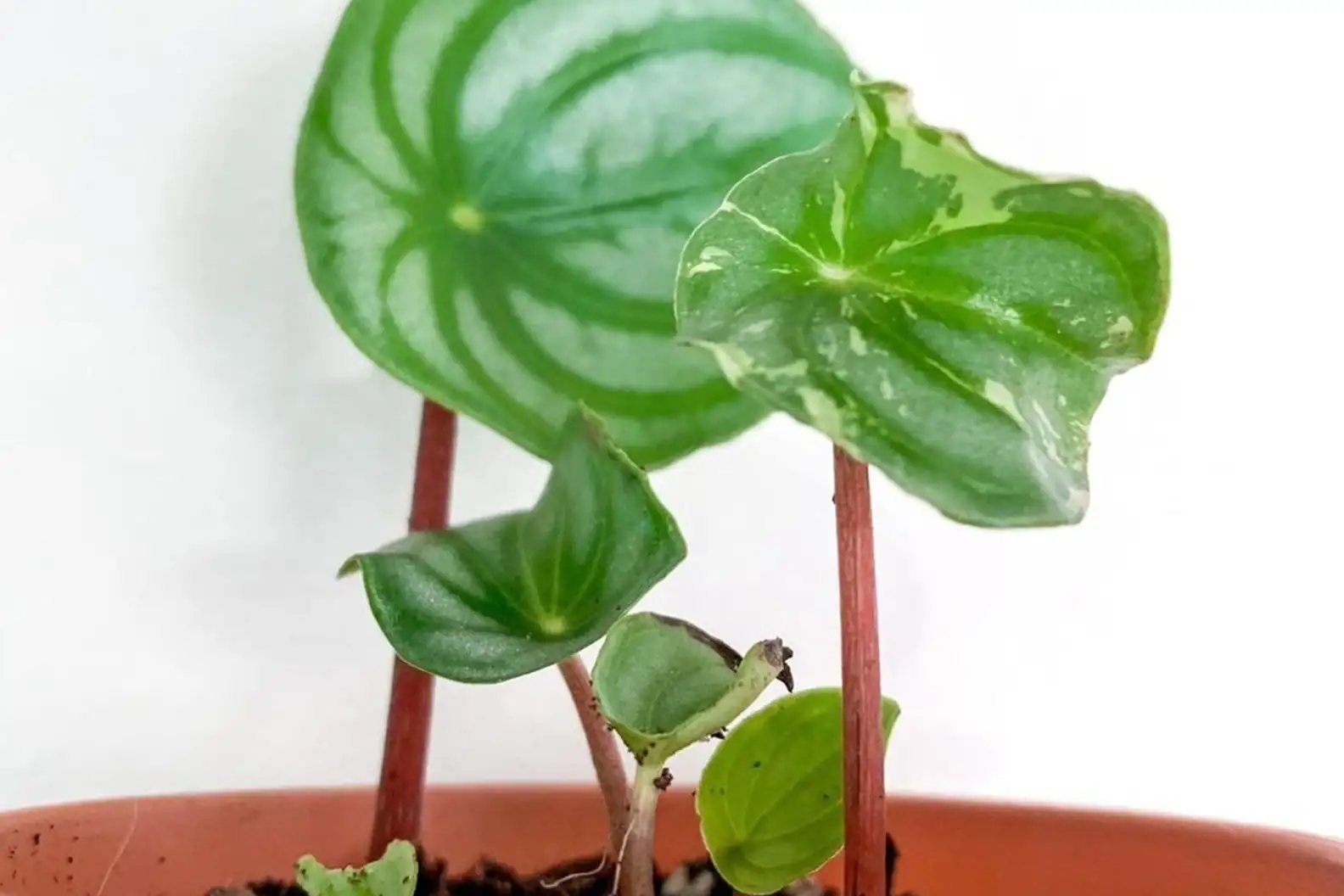
- Signs of too little light:
- Long, reaching petioles; smaller, sparser leaves
- Muted, dull striping
- Slow to no new growth in peak season
- Remedy: move closer to the window, choose a brighter east spot, or improve reflectivity. Rotate the pot weekly so it grows evenly.
Light, watering, and soil work as a team
- Brighter light + warmth = slightly faster drying. Water thoroughly, then let the top portion of the mix dry before watering again.
- In summer: evenly moist but never soggy; never let it sit in a saucer of water.
- In winter: water sparingly; often every ~2 weeks depending on your home’s light and heat.
- Use a loose, well-draining mix (quality houseplant base with perlite/coarse sand) and a pot with drainage. Soggy soil + low light = root rot risk.
Placement cheat sheet
- Bright east window, filtered: best for high contrast without scorch.
- Bright north window: safest in summer; in winter, push right to the sill or switch to the brightest east spot.
- South/west window: only with sheer + distance or off to the side in bright shade.
Quick care complements for color
- Temperature: 15–24°C (59–75°F); protect from cold drafts. Avoid below ~13°C (55°F); never below ~10°C (50°F).
- Humidity: adapts to average indoor levels; pebble tray or light misting is fine if air is very dry (ensure gentle airflow).
- Feeding: during active growth, go light—monthly at half-strength or more diluted but a bit more frequent in peak season. Ease off in winter. Avoid heavy nitrogen to preserve crisp patterning.
- Pruning & shaping: thin crowded leaves for airflow; pinch leggy stems. Rotate the pot weekly for symmetry.
Common light Q&A
- Can it handle low light? It tolerates lower light, but expect slower growth and softer striping. For the iconic “watermelon” look, keep it in bright, indirect light.
- Is any direct sun okay? Aim for filtered light. Unfiltered, harsh sun can scorch and fade the leaves, especially at south/west windows.
Safety, pests, and peace of mind
- Generally considered non-toxic to cats, dogs, and people.
- Watch for mealybugs, scale, mites, or whitefly—especially in warm, dry conditions. Treat early with insecticidal soap or horticultural oil and improve airflow.
A note on symbolism (flower language)
Watermelon Peperomia is often linked with freshness and playfulness—more a modern houseplant sentiment than a traditional flower language with deep folklore. The cheerful “watermelon rind” pattern and compact habit symbolize a splash of everyday joy: small plant, big vibe.
—
Dial in the light first—choose a bright east or north window, add a simple sheer, and shift the plant a bit as the seasons change. Do that, and your Peperomia argyreia will repay you with glossy, plump leaves and that high-definition silver-green contrast all year long.