


Salt in the air, winter sun on your shoulders, and a breeze that never quite sits still—that’s the coastal Mediterranean stage where Anemone coronaria learned its lines. Today we call it poppy anemone, crown anemone, windflower—all nods to its papery, poppy-like blooms that seem to wake at the touch of air. But the real plot twist is ecological: this species perfected cool-season growth on breezy, free-draining shores, then slipped into summer dormancy to dodge the heat. Understand that backstory, and you’ll know exactly how to make it sing in modern gardens and on sunny balconies.
From shorelines to spring borders: an origin story
Picture winter along the Mediterranean: mild days, slanting light, periodic rain, and porous soils peppered with shell grit and sand. That’s where Anemone coronaria roots in:
- Winter and early spring are the “green” months—perfect for leafy growth and flower production.
- Summer turns hot and dry, so the plant retreats to a tight, dark tuber underground.
- Coastal breezes keep foliage crisp, while drainage is relentless. Standing water is rare on those airy slopes.
This rhythm—grow in the cool, rest through the heat—still directs how the plant behaves in our pots and beds. Get the seasons right and the drainage sharp, and your windflowers will perform like they’re back on the shore.
Anatomy of a cool-season strategist
- Tuberous engine: Hard, compact tubers store energy, then fuel a fast burst of leaves and upright stems in cool, bright conditions.
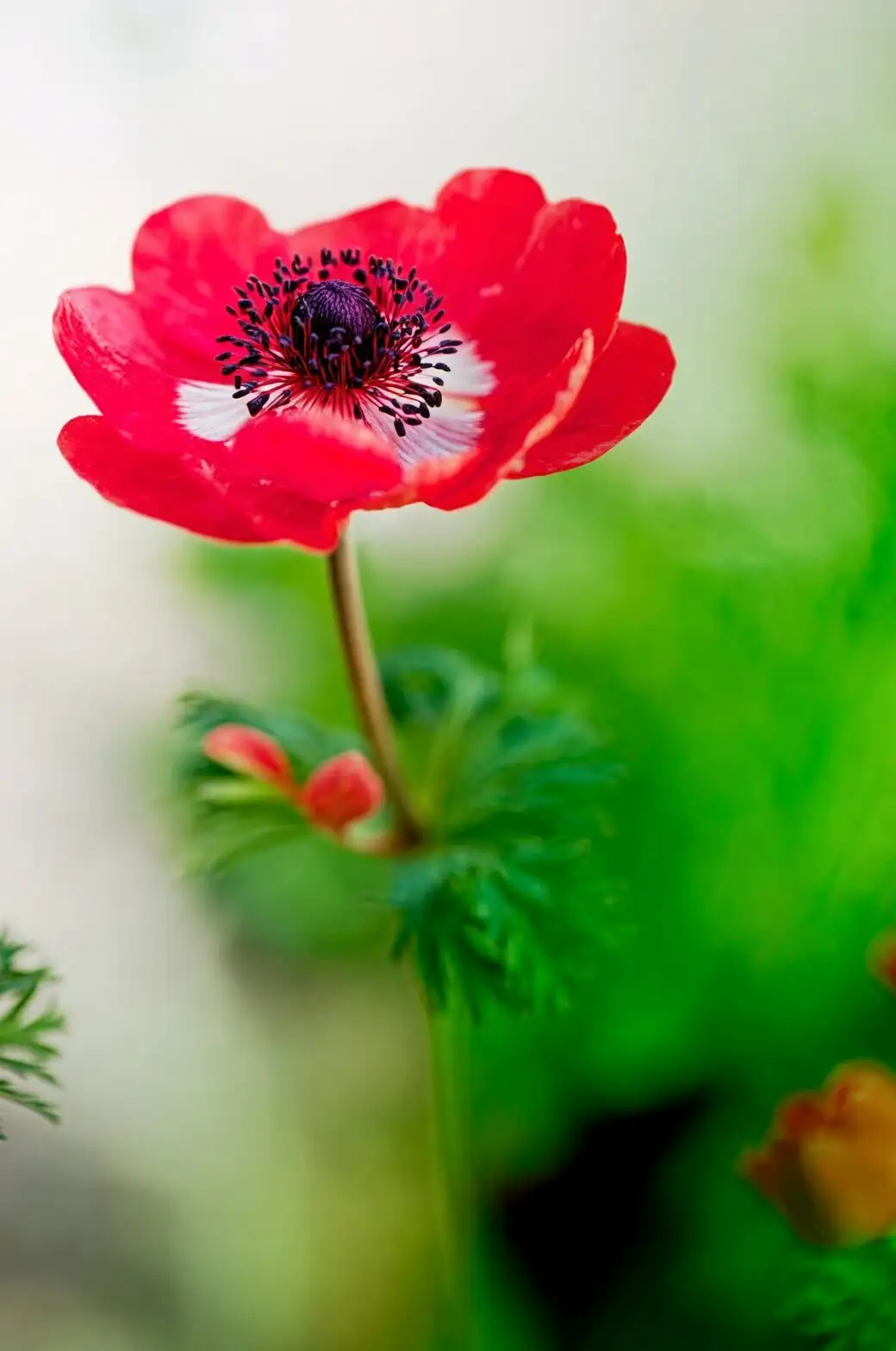
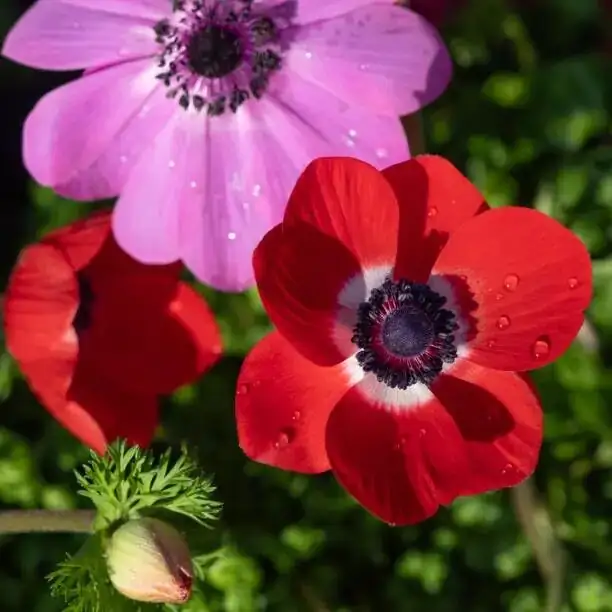
- Papery brilliance: Flowers in saturated reds, blues, pinks, purples, and whites, with a clean, graphic eye—perfect for cutting.
- Timing: Spring is showtime. As days warm toward summer (or if winters are very cold), foliage naturally fades and tubers rest.
Typical size in containers is compact, often under 30 cm (12 in) tall—ideal for tabletops and small patios.
How heritage shapes best practices today
Soil: build a coastal “sieve”
- Use rich yet free-draining mixes—think fertile loam blended with compost or leaf mold plus coarse sand.
- Avoid heavy, waterlogged ground; a single soggy spell can rot tubers.
- In gardens, raised beds and sloped sites echo the plant’s native drainage.
Light and temperature: crisp and bright, not blazing
- Sun to bright light is best; part shade is fine.
- Peak growth and flowering happen at 15–20°C (59–68°F).
- In hot weather, offer 50–60% shade to prevent stress and prolong bloom.
Watering: like winter rain, not monsoon season
- During active growth, keep soil evenly moist but never sodden. Water when the surface dries.
- After a storm, check that pots and beds drain freely.
- In dormancy (summer heat or very cold winter spells), keep nearly dry.
Feeding: steady, then a bloom nudge
- Feed monthly during growth with a dilute balanced fertilizer or a gentle organic liquid feed.
- When buds appear, give one bloom-leaning dose higher in phosphorus and potassium (e.g., around 15-15-30) to support flowers and tuber development.
Planting and the art of timing
Tuber prep: mimic the first autumn rains
- Before planting in fall (often October–November), pre-soak tubers in water or damp sand to rehydrate and promote even sprouting.
- Plant with the pointed end down—don’t invert.
Depth and spacing
- Containers: Use a 12–15 cm (4.7–5.9 in) pot; set 3 tubers about 1.5 cm (0.6 in) deep.
- Garden beds: Plant 5–7 cm (2–2.8 in) deep in fertile, fast-draining soil.
- Water lightly after planting; increase gradually as growth begins.
Late planting can delay or reduce flowering, so aim to finish by late November. Under good conditions outdoors, new leaves may appear in about 20 days.
Containers vs. garden beds
- Containers
- Pros: Precise control of drainage and shade; easy to move out of heat.
- Recipe: A coarse, fertile mix; shallow planting; three tubers per pot for a full look.
- Garden beds
- Pros: Natural temperature swings encourage sturdy stems and abundant bloom.
- Strategy: Raised beds, grit for drainage, and bright light with midday shade in warm regions.
Cut-flower savvy (and one vital kitchen warning)
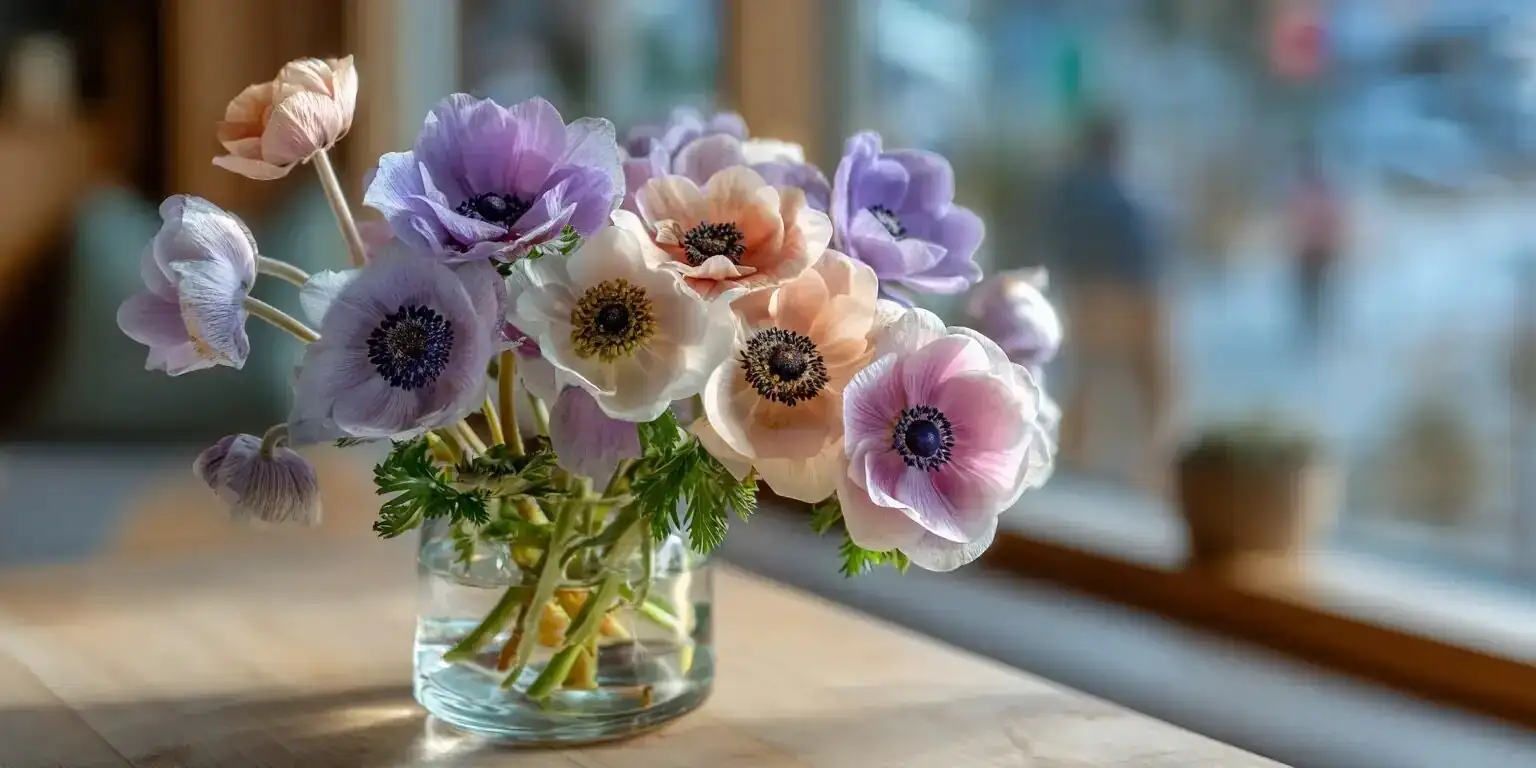
- Harvest when petals just begin lifting from the center for the longest vase life.
- Keep cut stems and blooming plants away from ripening fruit—ethylene gas shortens vase life.
- Don’t mix with freshly cut daffodils in the same vase; daffodil sap can soften anemone stems.
What to expect across the seasons
- Cool months: Leafy rosettes, straight flower stems, continuous bud production.
- Spring: Peak bloom in jewel tones.
- Summer heat (and sometimes very cold winters): Natural dormancy; foliage dies back; reduce watering and keep tubers dry to prevent rot.
Troubleshooting the coastal way
- Weak, leggy growth, few flowers: Likely too little light or too much warmth. Move to a brighter, cooler spot.
- Yellowing leaves: Can signal stress from overwatering, poor drainage, or low light.
- No sprouting from new tubers: Often due to soaking the pot right after planting. Water lightly at first; increase as shoots emerge.
Pests and diseases
- Watch for rust, gray mold (Botrytis), and Sclerotinia in damp, stagnant air.
- Prevention: Clean tubers, sharp drainage, excellent airflow, and water at the soil level.
- Aphids may cluster on stems and buds.
- Response: Early intervention with a gentle water spray or appropriate controls per local guidance.
Safety note
Like many buttercup relatives (Ranunculaceae), Anemone coronaria can irritate skin and is harmful if eaten. Keep away from children and pets; wear gloves if you have sensitive skin.
Propagation and rest: lifting, storing, repeating
- After foliage dies back around early summer, lift tubers and store dry (e.g., in dry sand) in a cool, shaded place with airflow.
- Rehydrate before replanting in fall, then repeat the cool-season cycle.
Choosing plants and tubers
- For potted plants: Pick compact forms under 30 cm with crisp, deep green foliage and undamaged buds.
- For cuts: Choose stems at first-open stage (petals just lifting).
- For tubers: Select firm, healthy pieces free of mold; pre-soak before planting for even sprouting.
Color crush: a few beloved selections
- Mr. Fokker: Intense blue.
- Hollandia: Vivid red.
- Sylphide: Rosy pink-lilac.
Mix colors for a confetti-style spring display, just as coastal populations paint wild hillsides in waves.
Flower language and meaning
Often associated with anticipation and hopeful expectation, the windflower’s symbolism makes sense for a plant that holds its breath through the dry summer, then erupts into color when cool rains return. Classical myths—from breezes awakening blossoms to tales of love and loss—layered meanings of transience and renewal onto the anemone. While these stories don’t dictate how the plant grows, they beautifully echo its life strategy: wait patiently, seize the season, fade gracefully, and return.
Quick-grow checklist
- Light: Full sun to bright light; part shade tolerated.
- Temperature: Best at 15–20°C (59–68°F); struggles in hot, humid conditions.
- Water: Even moisture in growth; keep dryish in dormancy.
- Soil: Fertile but fast-draining; never waterlogged.
- Shade in heat: 50–60% to prevent stress.
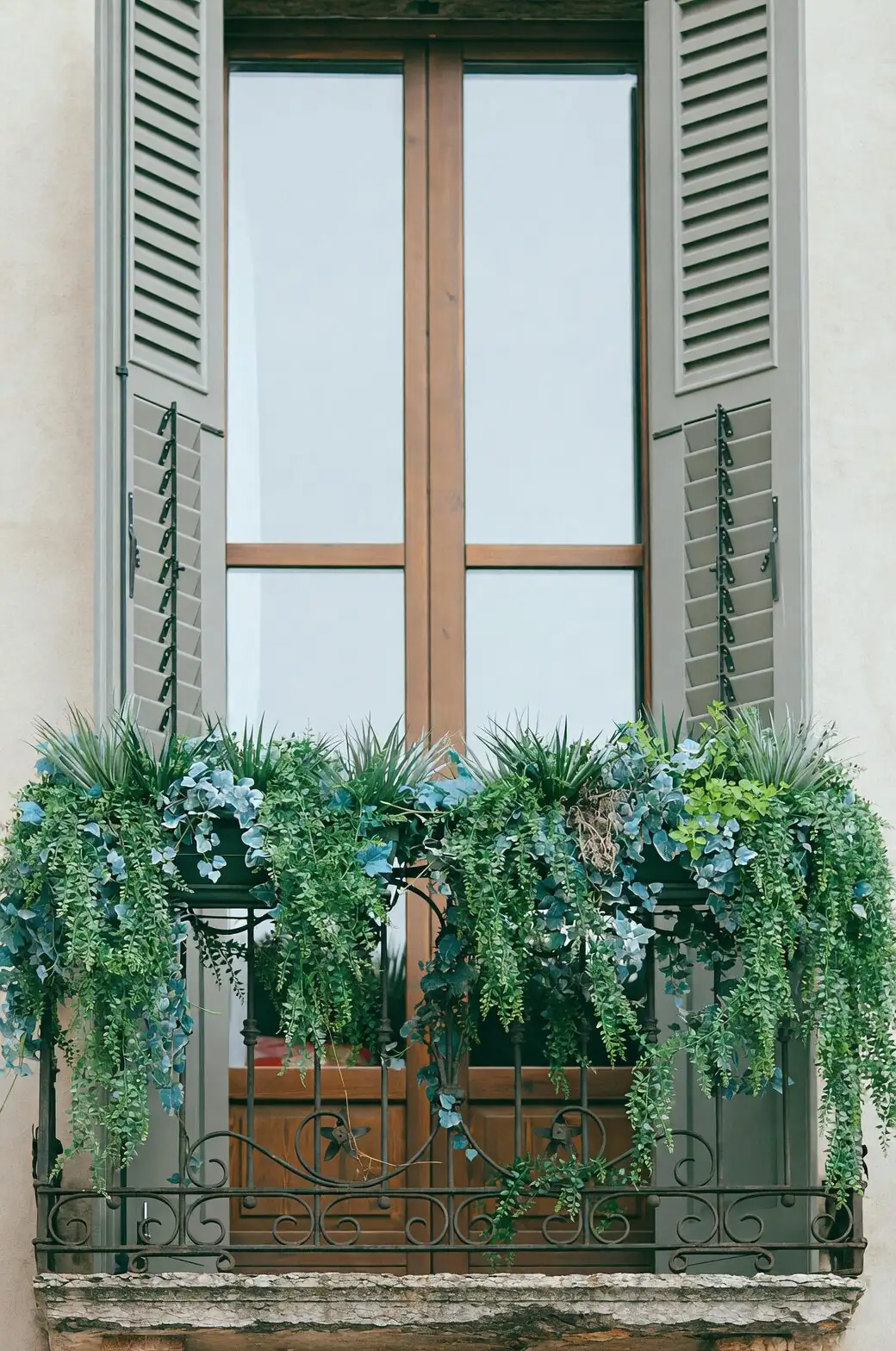
- Placement: Sunny balcony, bright patio, or a raised, well-drained bed.
- Hardiness: Not reliably frost-hardy in severe winters; excellent drainage is critical.
Bring the coast home: give Anemone coronaria cool air, bright light, and soil that sheds water like a beach does a wave. Do that, and you’ll have a spring performance that feels fresh as a sea breeze—year after year.