
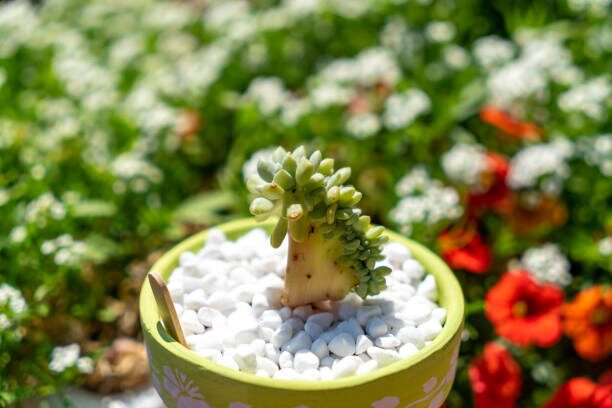
Bright, bouncy, and blissfully low-fuss, Sedum rubrotinctum (aka Jelly Bean Plant) is the little succulent that plays big in interior design. Think glossy “beans” that blush coppery red in strong sun, tumbling over the lip of a bowl like candy. Style it right and you’ll get those saturated reds, tight compact mounds, and graceful spill-over without the lanky stretch.
Here’s how to make this sun-lover steal the show on your sill, shelf, or coffee table.
Light-first styling: where to place it for color and compactness
Sedum rubrotinctum is all about light. Strong sun tightens its form and coaxes that signature red blush.
- Best spot indoors: the brightest window you have—typically south- or west-facing. A few hours of direct sun keeps internodes short (no stretching) and amps up color.
- Acclimate gradually: if it’s been in shade, step up sun exposure over 1–2 weeks to prevent sunburn, especially behind glass.
- In very hot midsummer: give light midday shade to avoid heat stress through windows.
- Cool nights, warmer days = deeper reds: if your home has a gentle day–night temperature swing, you’ll see more color.
- Grow-light assist: if your window isn’t intense, a slim full-spectrum LED bar placed close above (8–12 inches) for 10–12 hours can hold compact form and color.
Designer cue: rotate the pot a quarter turn each week for even, mounded growth.
Pots that make the blush sing
Think low, wide, and textural—shapes and finishes that frame a spill-over silhouette and set the red tips aglow.
Shape and proportions
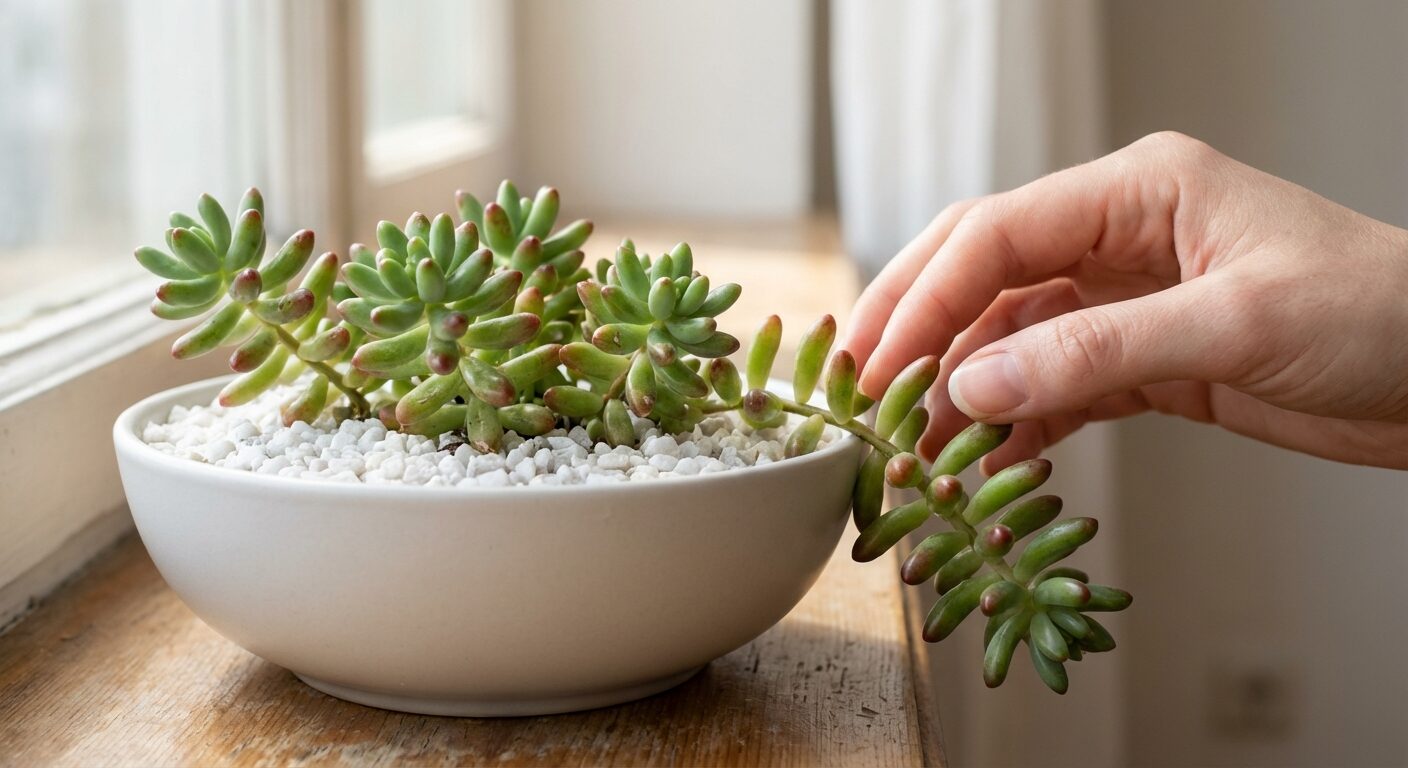
- Shallow bowls (20–30 cm wide, 6–10 cm deep): encourage a low mound that gently cascades.
- Footed planters and pedestal bowls: lift stems to spill cleanly over the rim.
- Narrow troughs for windowsills: create a ribbon of color that reads modern and architectural.
- Always choose drainage holes; use a saucer or a cachepot outside the planter for styling.
Material and finish
- Raw terracotta: warm, breathable, and classic with desert-inspired textures.
- Charcoal concrete or matte black ceramic: high-contrast backdrop that makes coppery reds pop.
- Satin white or cream glazes: gallery-clean and bright, amplifying the plant’s glossy greens and reds.
- Speckled stoneware, terrazzo, or lightly textured clay: add quiet pattern without stealing the show.
Top-dress like a stylist
- White granite or marble chips: crisp contrast for dramatic red tips.
- Black lava rock: moody, modern, and heat-absorbing (great in cool rooms).
- Crushed terracotta or warm tan gravel: cozy, earthy palette that ties to terracotta pots.
- Pro tip: Slope the top-dressing slightly down toward the rim so stems can drape naturally.
Color palettes that amplify the red blush
- High-contrast modern: charcoal pot + white gravel + Sedum’s red-tipped foliage = instant statement.
- Warm Mediterranean: terracotta pot + tan gravel + cream textiles + brass accents make the coppery tones glow.
- Coastal cool: satin white pot + pale gray gravel + navy or teal accents for a crisp, sunlit vibe.
- Soft botanical: sand-beige pot + sage textiles + pale wood for gentle harmony when the plant is greener in winter.
Layout recipes for compact, spill-over displays (no stretching)
These layouts court sunlight and air while keeping the plant tight, tidy, and ready to cascade.
Windowsill ribbon (sleek and architectural)
- Use a narrow ceramic trough with drainage and a slim saucer.
- Plant 3–5 tip cuttings close together for a dense start; as they mature, stems will drape.
- Stagger heights by mounding the mix slightly at the back—front stems spill, back stems read fuller.
The low-bowl coffee table piece
- A wide, shallow bowl styled as a micro-landscape.
- Place your Sedum as both “filler and spiller”; let it own the rim on one quadrant.
- Add one sculptural accent (a smooth river stone or a small driftwood shard) for negative-space drama.
- Keep it near a bright window; pull it into direct sun for a few hours daily if your table sits deeper in the room.
Picture-ledge cascade
- Mount a picture ledge near a bright window; line up three small footed pots.
- Angle the front edges toward the light to encourage even, forward spill.
- Rotate pots weekly to prevent lean and keep that compact, mounded silhouette.
Tiny trio for a desk or shelf
- Group three 8–12 cm pots: one charcoal, one white, one raw clay.
- Top-dress each differently (lava, white gravel, terracotta chips) for curated variety.
- Place the set where it receives at least some direct sun daily.
Compact by design: handling, pruning, and branch-building
- Handle gently: leaves pop off with the slightest bump—great for propagation, less great for your rug. Place away from high-traffic edges.
- Pinch and replant: snip a 5–7 cm tip to trigger branching; let cuts callus, then tuck cuttings along the rim to thicken your spill.
- Plant full from day one: 3–5 cuttings in a 12–15 cm bowl give instant density without future crowding.
The stylist’s care snapshot (fast and foolproof)
- Light: bright light to full sun; acclimate to direct sun. In extreme heat behind glass, offer light midday shade.
- Soil: very fast-draining succulent mix—about 1:1 potting soil to coarse sand/grit/perlite/pumice.
- Watering rhythm (always let soil dry well first):
- Spring: roughly every 2 weeks.
- Summer: much drier; water only after a full dry-out.
- Autumn: about every 2 weeks; strong light deepens red color.
- Winter: about monthly or less indoors—keep on the dry side.
- Temperature: thrives around 13–18°C (55–64°F); protect from cold and keep above ~5°C (41°F).
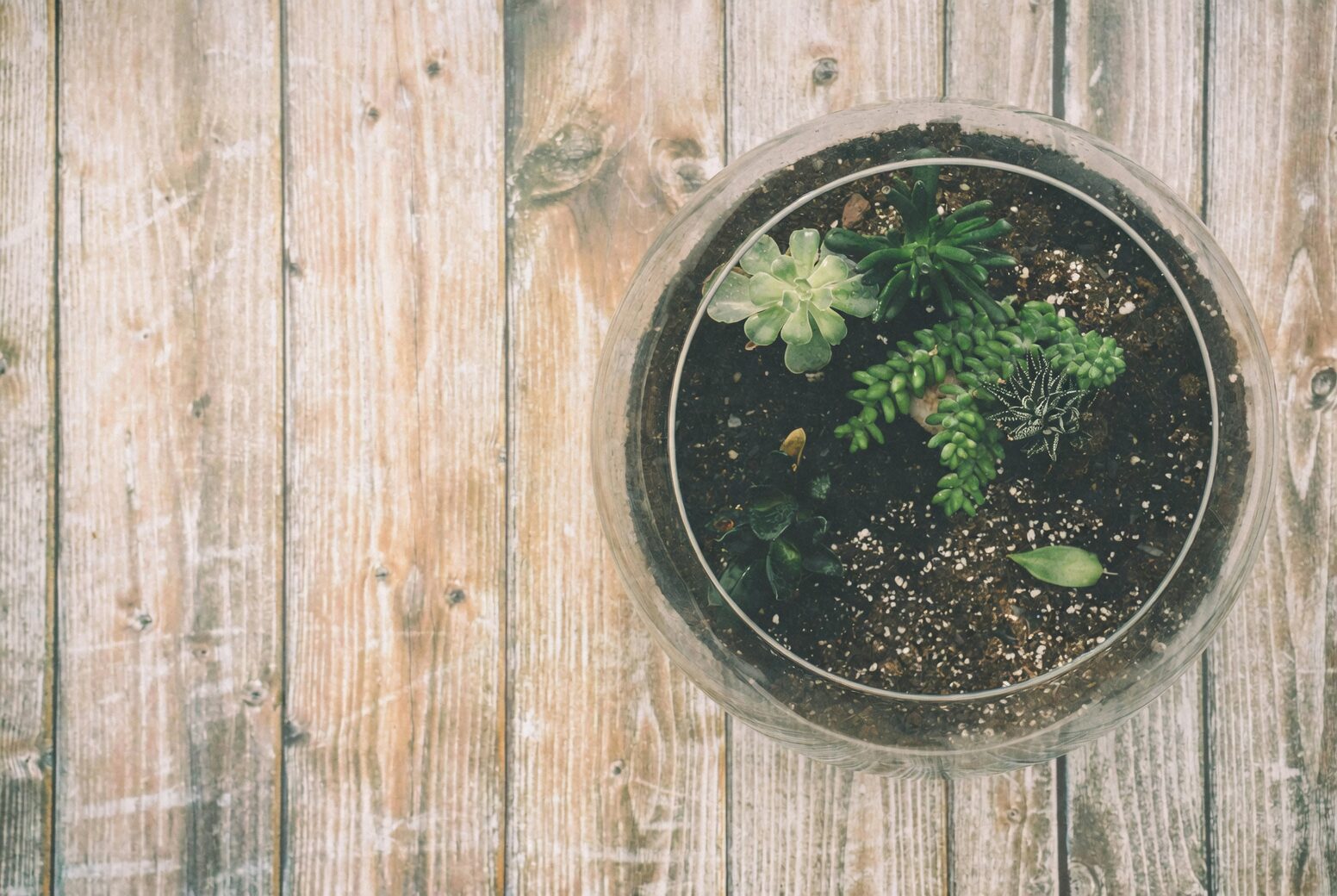
- Air: prefers dry air and good ventilation—avoid steamy bathrooms and enclosed terrariums.
- Feeding: monthly, lightly, spring to early autumn; low-nitrogen or diluted balanced fertilizer.
- Repotting: every 1–3 years in spring; refresh the gritty mix for crisp drainage.
Seasonal styling notes
- Autumn color show: move it to the brightest window; cooler nights plus strong light create the richest coppery-reds—pair with charcoal planters and white gravel for maximum pop.
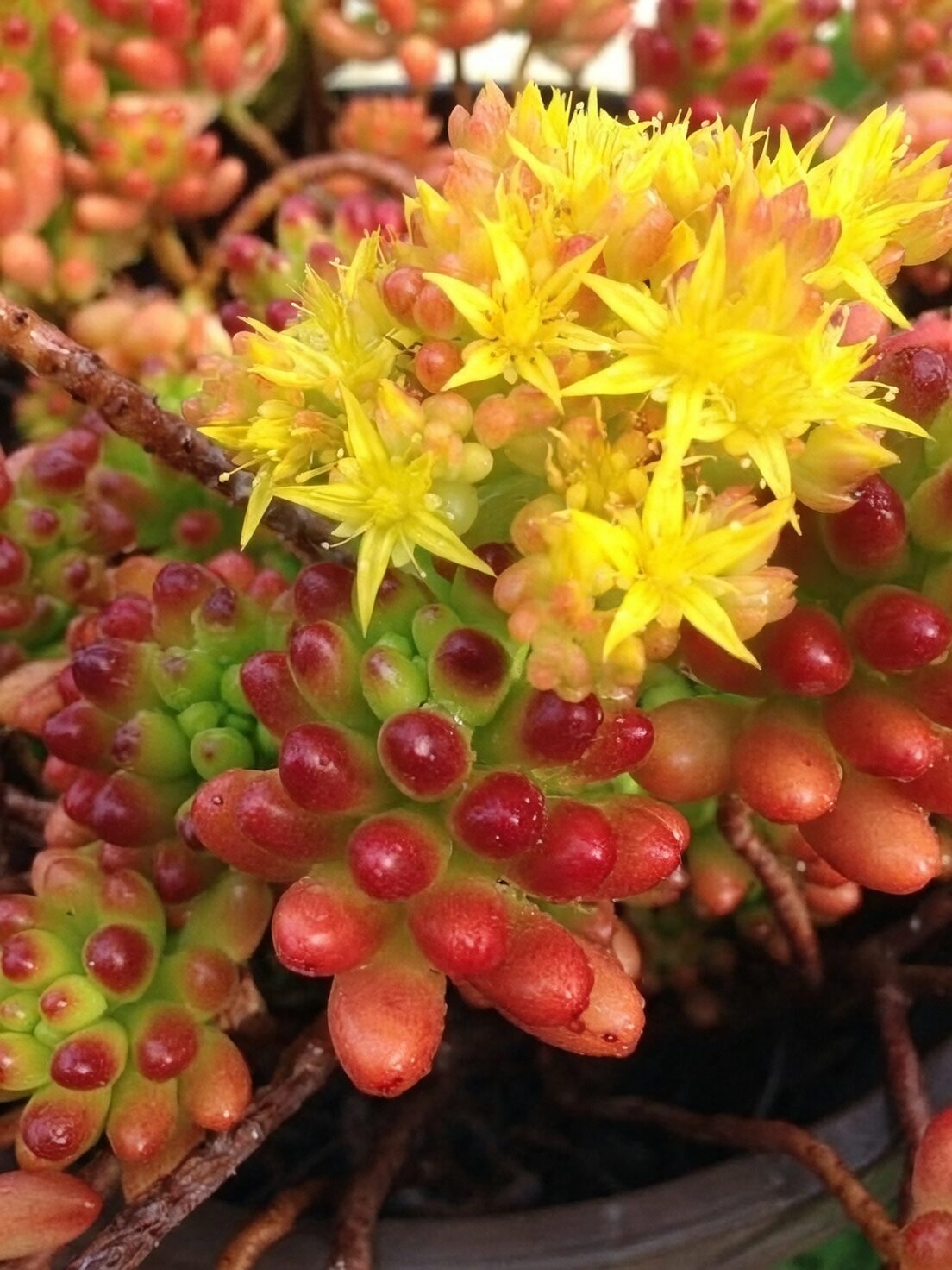
- Winter-to-spring blooms: look for small, starry yellow flowers at stem tips. They’re subtle and modern; lean into minimalism—keep accessories quiet to let the stars sparkle.
Safety, pests, and practical polish
- Safety: toxicity isn’t consistently documented; treat as potentially mildly irritating if chewed. Keep away from pets and small children.
- Pests: aphids and scale can show up—spot-check while dusting. Treat early with insecticidal soap or horticultural oil.
- Overwatering alert: frequent leaf drop with wrinkling plus a soft base often means rot. Unpot, remove rot, let cuts callus, and replant in a grittier mix. Then water less.
Flower language and the deeper meaning
Jelly Bean Plant often symbolizes resilience and enduring affection—fitting for a plant that regrows from a single dropped leaf and forms close-knit clumps. In living spaces, it’s a charming metaphor for devotion and “hearts in sync”: small parts supporting a vibrant whole. When gifting, tuck a note that celebrates bounce-back spirit and steady companionship—especially meaningful in autumn when the plant blushes red.
Troubleshooting (designer’s quick guide)
- Green and stretchy, leaning toward the window: it needs more direct sun or closer grow-light placement. Rotate weekly.
- Lots of leaf drop after watering: likely too frequent watering or dense mix—let it dry more thoroughly, and switch to a grittier medium.
- Dull color: increase light gradually; gentle day–night temperature swings help.
- Bare, leggy stems: snip and replant tips for a fuller, spill-over edge.
Design it for the light it loves, and Sedum rubrotinctum will reward you with a tidy mound of glossy “beans” that drape elegantly and blush brilliantly—like jewelry for your windowsill.