Arrowhead vine is a natural shapeshifter—compact and arrow-leaved as a youngster, then eager to trail or climb as it matures. That adaptability also makes Syngonium podophyllum a star in semi-hydro and full hydro setups. If you’ve ever dreamed of a clean, soil-free plant shelf or wanted a fuss-free way to root cuttings fast, this is your plant. Below, we’ll explore jars versus LECA, exactly how to feed with dilute nutrients, water-change rhythms, algae control, root pruning, light placement, and when to move back into a classic aroid mix.
Meet the plant, briefly
- Name: Syngonium podophyllum (Arrowhead Vine, Arrowhead Plant, Goosefoot Plant)
- Origins and habit: A tropical aroid from Mexico to Bolivia and the West Indies; starts compact, then trails or climbs with age. Indoors it’s easygoing and fast.
- Light and climate: Bright, indirect light is ideal (variegated forms prefer the brighter end of indirect). Comfortable around 15–23°C/59–73°F; keep above about 12°C/54°F.
- Humidity: Prefers moderate to high humidity but adapts well indoors.
- Safety: Toxic if chewed; sap can irritate skin and eyes. Keep away from kids and pets.
Hydro pathways: jars versus LECA
Both options work beautifully for Syngonium. Choose what suits your space and maintenance style.
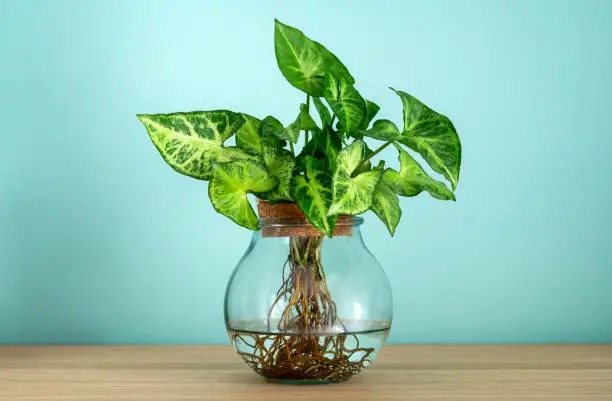
Jars (full water culture)
- Why you’ll love it
- Minimal gear; gorgeous roots on display.
- Fast rooting of cuttings; easy to monitor health.
- Trade-offs
- Algae can bloom where light hits water.
- You’ll change/refresh water more often.
- Best for
- Propagations, simple displays, compact vining specimens.
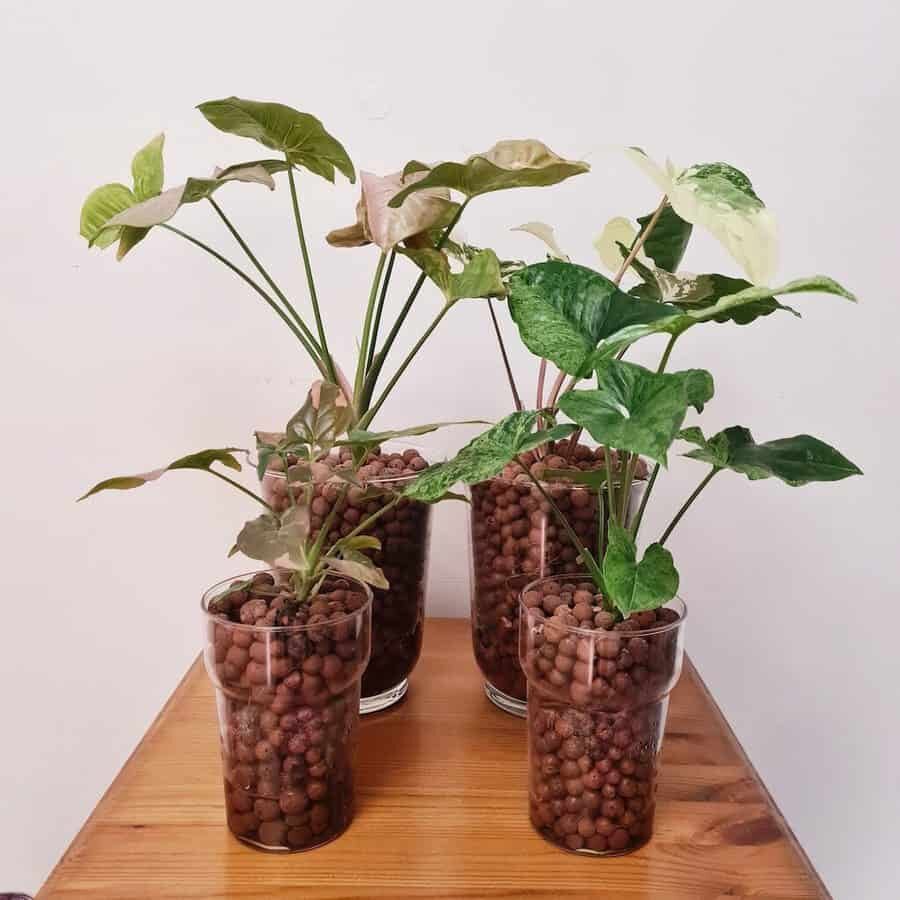
LECA (semi-hydro with a reservoir)
- Why you’ll love it
- Cleaner look over time; less algae (media blocks light).
- Roots enjoy a humid, oxygen-rich zone above the waterline.
- Great for bigger, climbing plants and steadier hydration.
- Trade-offs
- Slightly more setup (rinsing/soaking LECA, choosing pots with inner net pots or wicks).
- You’ll learn a waterline and flushing rhythm.
- Best for
- Long-term houseplanting, larger specimens, travel-friendly care.
Getting started: from soil to water
1) Choose healthy material
- Pick a sturdy plant or tip cuttings with 2–3 nodes. If the stem already has aerial roots, even better.
2) Clean the roots
- Gently tease away potting mix under lukewarm water.
- Trim off any mushy/brown roots with sterile scissors.
3) Decide your route
- For jars: Use a clean glass or opaque vase. Place the plant so nodes and leaves stay above water—only roots should soak.
- For LECA: Rinse and soak LECA thoroughly to remove dust. Pot the plant in a net pot or slotted inner pot; set in a cache pot with a small reservoir. Start with the waterline just touching the bottom 1–2 cm (about 0.5 in) of LECA so moisture wicks upward without drowning new roots.
Feeding in water: gentle and steady wins
Syngonium grows fast, but in hydro it prefers low, consistent nutrition.
- What to use
- A complete hydroponic fertilizer (includes micronutrients). If your tap water is soft, a formula with some calcium and magnesium helps.
- Jar culture: Extremely dilute feed works best. Think 1/8–1/4 the soil label rate. Many growers aim for roughly 300–600 µS/cm (0.3–0.6 mS/cm) EC in the growing season.
- LECA semi-hydro: Slightly stronger is tolerated, but “low and frequent” still outperforms “strong and rare.”
- How often
- Spring–summer: Feed lightly every time you top up the reservoir or refresh jar water.
- Autumn–winter: Reduce or pause feeding as growth slows and light drops.
- Practical shortcuts
- No meter? Mix to about 1/4 the label’s liquid feeding rate for hydro, observe for 3–4 weeks, and adjust. Pale new growth can hint at too little feed; burnt tips can hint at too much.
- Drop-dose fertilizers can work in a pinch for jars (a few drops per liter/gallon), but confirm they’re suitable for hydro use and don’t overdo it.
Water-change cadence and flushing
- Jars (full water culture)
- Top up as water drops, keeping only roots submerged.
- Full change and rinse every 1–2 weeks in warm, bright seasons; every 2–3 weeks in cooler, lower light.
- Rinse the container and swish roots to remove biofilm; trim any mushy bits.
- LECA (semi-hydro)
- Top up to your set waterline as needed; don’t let the reservoir cover more than the bottom layer of LECA.
- Flush the LECA and pot with plain water monthly to wash out salts. Then refill with fresh dilute nutrients.
- If you see salt crusting or leaf tip burn, add an extra flush between feeds.
Algae control without the drama
- Block the light: Use dark or opaque vessels, or wrap the lower part of a clear jar. In LECA, a top-dressing layer helps shade the waterline.
- Placement: Avoid beams of direct sun on jars—they supercharge algae and can overheat roots.
- Hygiene: Rinse jars during changes; a bottle brush removes film. In LECA, monthly flushes keep things clean.
- Optional helpers: A pinch of activated charcoal in the reservoir can help with odors; replace periodically.
Root pruning and management
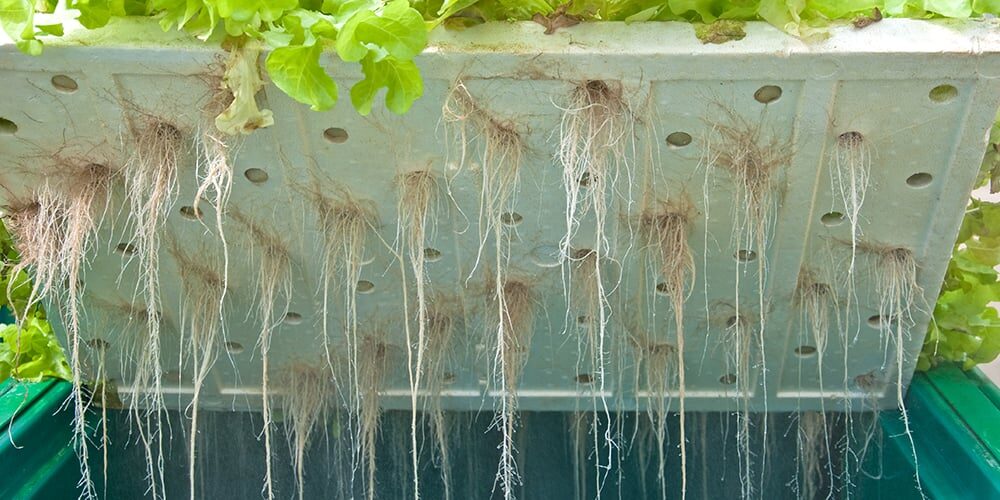
Water-grown roots are different from soil roots: they’re often pale, smooth, and very efficient in water.
- When to prune
- Roots coil excessively, clogging the jar or net pot.
- You spot browning, mushy sections, or a sour smell.
- How to prune
- Use sterile scissors. Remove dead/mushy roots fully; for length control, trim up to 15–20% of healthy roots at a time.
- After pruning, refresh with clean, lightly fertilized water; keep light bright but indirect for a week while the plant rebounds.
- Bonus tip
- Pruning can stimulate branching in the root system, improving stability in LECA and jar culture.
Light placement for lush leaves (and fewer algae)
- Natural light
- Aim for bright, indirect light: near an east window; just back from a bright south/west window with a sheer curtain; or close to a bright north window.
- Variegated cultivars need a bit more brightness (still indirect) to hold pattern.
- Grow lights
- Keep LEDs roughly 25–40 cm (10–16 in) above foliage for 10–12 hours daily.
- Angle lights so the reservoir isn’t lit directly (especially for jars), which reduces algae flare-ups.
When to transition back to a potting mix
Sometimes you’ll want that classic, fuller, upright look—especially if you’re training the plant up a moss pole.
- Good times to switch
- Early to mid-spring for quickest recovery.
- You want larger leaves via climbing support, or hydro maintenance isn’t your thing.
- Recurrent algae or limited space for jars/LECA.
- How to do it
1) Build the right mix: An airy aroid blend—peat or coco base plus perlite and/or bark; a touch of compost or leaf mold for richness. Slightly acidic and well-draining is the goal.
2) Pot size: Don’t oversize. Typical indoor Syngonium thrive in 10–15 cm (4–6 in) pots when small; 15–20 cm (6–8 in) for fuller plants.
3) Planting: Move the hydro plant into the pre-moistened mix. Water in to settle; then keep the top layer just slightly drying between waterings.
4) Aftercare: Bright, indirect light; steady warmth above about 12°C/54°F; hold fertilizer for 2–3 weeks, then resume a half-strength feed every 2 weeks in the growing season. Increase humidity to ease the shift.
Troubleshooting in hydro and semi-hydro
- Yellowing leaves, general drop
- Common causes: low light, overfeeding/salt buildup, cold drafts, or old age of the leaf. Improve light, flush with plain water, keep plant warm, and remove spent leaves.
- Pale new growth, slow momentum
- Slight nutrient shortfall or too little light. Increase brightness (indirect) or raise feed slightly.
- Crispy edges
- Low humidity or underwatering in LECA (reservoir too low for too long). Top up and consider a humidity boost.
- Mushy roots, sour smell
- Stagnant water, lack of oxygen, or too-deep waterline. Trim mushy roots, refresh water, lower the waterline, and maintain regular flushes.
- Algae
- Normal in small amounts; combat with shade, hygiene, and reduced direct light on the reservoir.
Styling and support
- Let it trail from a shelf or basket, keep it bushy with regular pinching, or set up a moss pole for a tidy, upright look and often larger leaves. In jars, gentle ties help guide the vines; in LECA, a pole easily tucks into the pot.
A note on symbolism (flower language)
Arrowhead vine is widely associated with growth, adaptability, and fresh beginnings—a fitting metaphor for a plant that changes leaf shape as it matures and takes well to both soil and water. While “flower language” traditions vary by culture and aren’t botanical science, the sentiment resonates in modern houseplant lore: this is a forgiving, fast-growing companion for new chapters and new plant parents alike.
Quick safety and seasonal cues
- Keep above about 12°C/54°F; protect from drafts.
- Reduce feeding and watering frequency in winter.
- Toxic if ingested; sap may irritate—use care during pruning and repotting.
Final take
Whether you choose a crystal-clear jar that spotlights those pearly roots or the tidy, low-maintenance rhythm of LECA, Syngonium podophyllum adapts with gusto. Give it bright, indirect light; feed lightly but consistently; rinse and refresh on schedule; and don’t be afraid to snip and shape. When you’re ready for soil again, it will transition just as gracefully—true to its reputation for flexibility and fresh starts.