

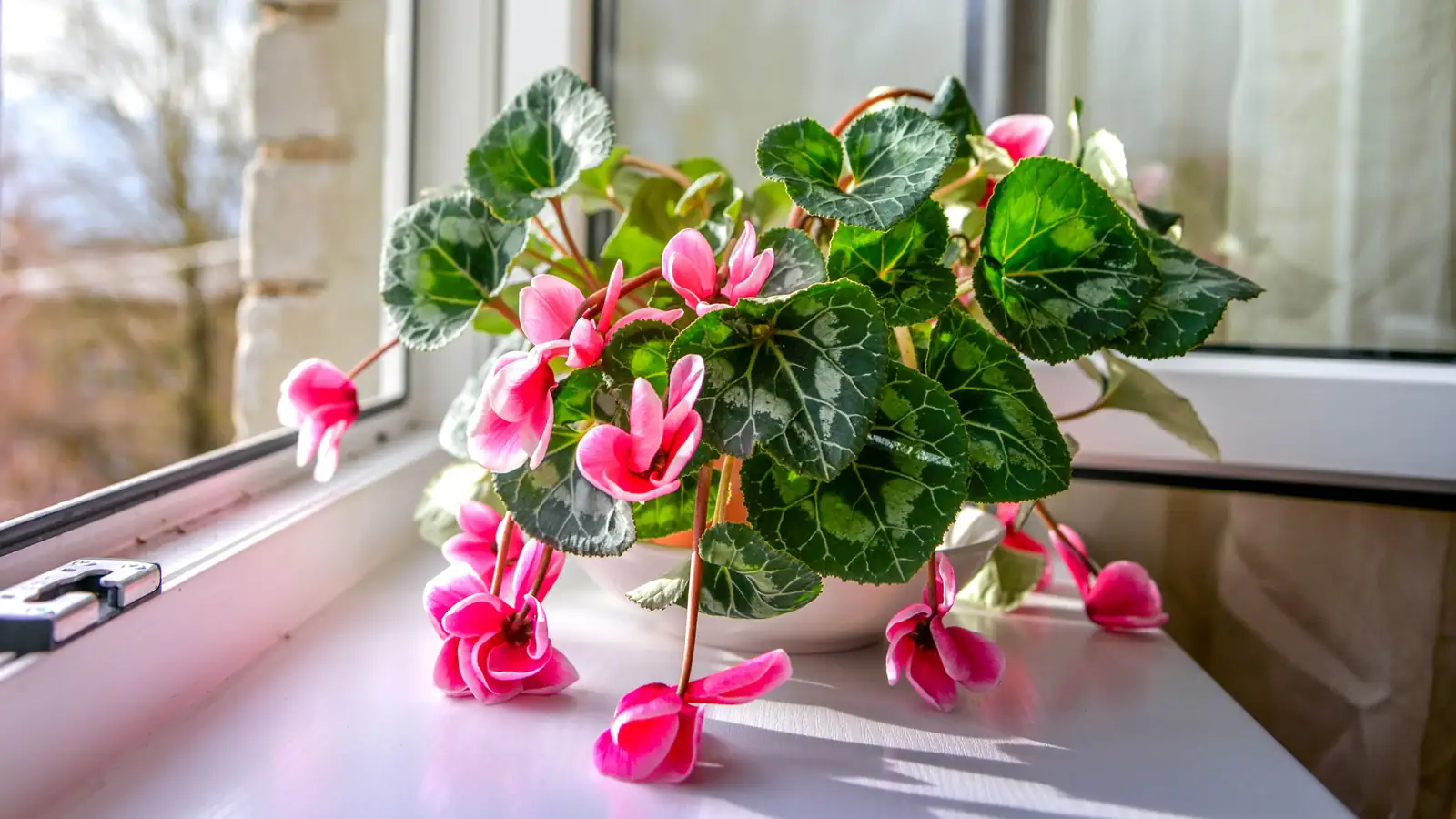
Walk past a winter windowsill and there it is: a tidy mound of marbled hearts lifting a little flock of flowers that have decided hats are best worn backward. Cyclamen persicum—florist’s cyclamen, Persian cyclamen, Persian violet, or, delightfully, “Sowbread”—is a cool-season charmer that turns plant physics into performance art. Let’s take a playful tour of its greatest hits—reflexed petals, silver-sketched leaves, coiling seed stalks, and that porcine nickname—and peek at the science behind each quirk.
Meet Cyclamen persicum at a glance
- Family: Primulaceae (the primrose family)
- Native range: Mediterranean fringes—Greece, Syria, Lebanon, and surrounding areas
- Habit: Compact, tuberous perennial houseplant that shines in the cool season
- Size: About 15–23 cm (6–9 in) tall and wide
- Flowers: Elegant, butterfly-like blooms with swept-back petals in white, pink, red, or purple, often with a darker throat
- Foliage: Heart-shaped leaves handsomely marbled in silver
- Bloom time: Fall through spring (often November–March; peak display in winter holidays)
Party Trick #1: Reflexed petals—the backward swoop
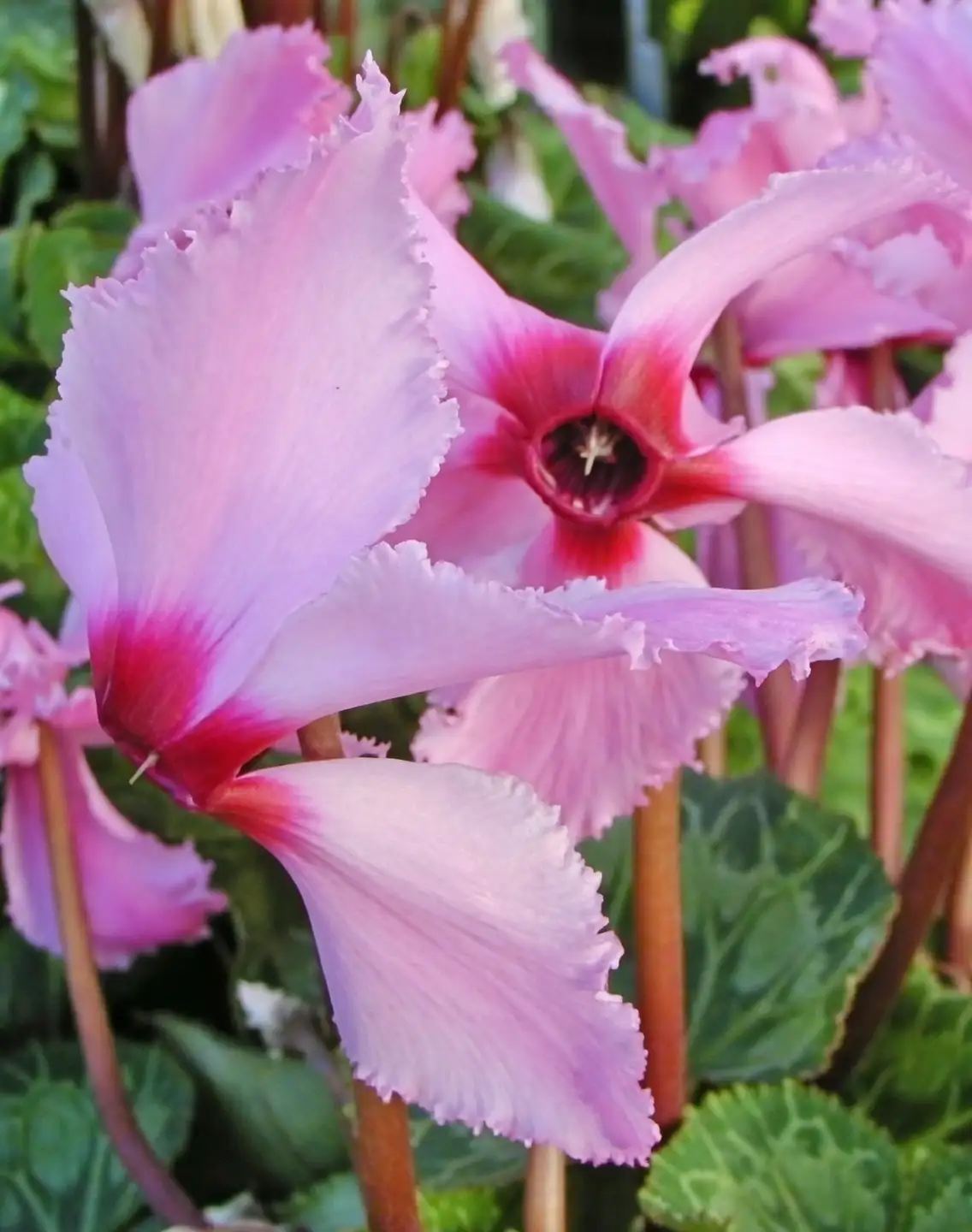
Those “rabbit-ear” petals aren’t shy; they curve decisively backward, turning a nodding flower into a spotlight for the center of the bloom.
What’s going on:
- Architecture: Flowers hang slightly downward, while the 5 petals curve back (reflex) so the central column is on display.
- Practical magic: Reflexed petals keep delicate parts clear of splashes and clutter, and they act like visual billboards—color at the petal base (the “throat”) forms a target that helps guide pollinators.
- Result: Airy elegance with excellent stagecraft—each flower seems to hover, light and untouchable, above the foliage.
Color palette:
- Crisp white to blush pink, candy reds to regal purples, often with a richer, darker throat that intensifies the “look here” signal.
Party Trick #2: Marbled hearts—leaves that sketch in silver
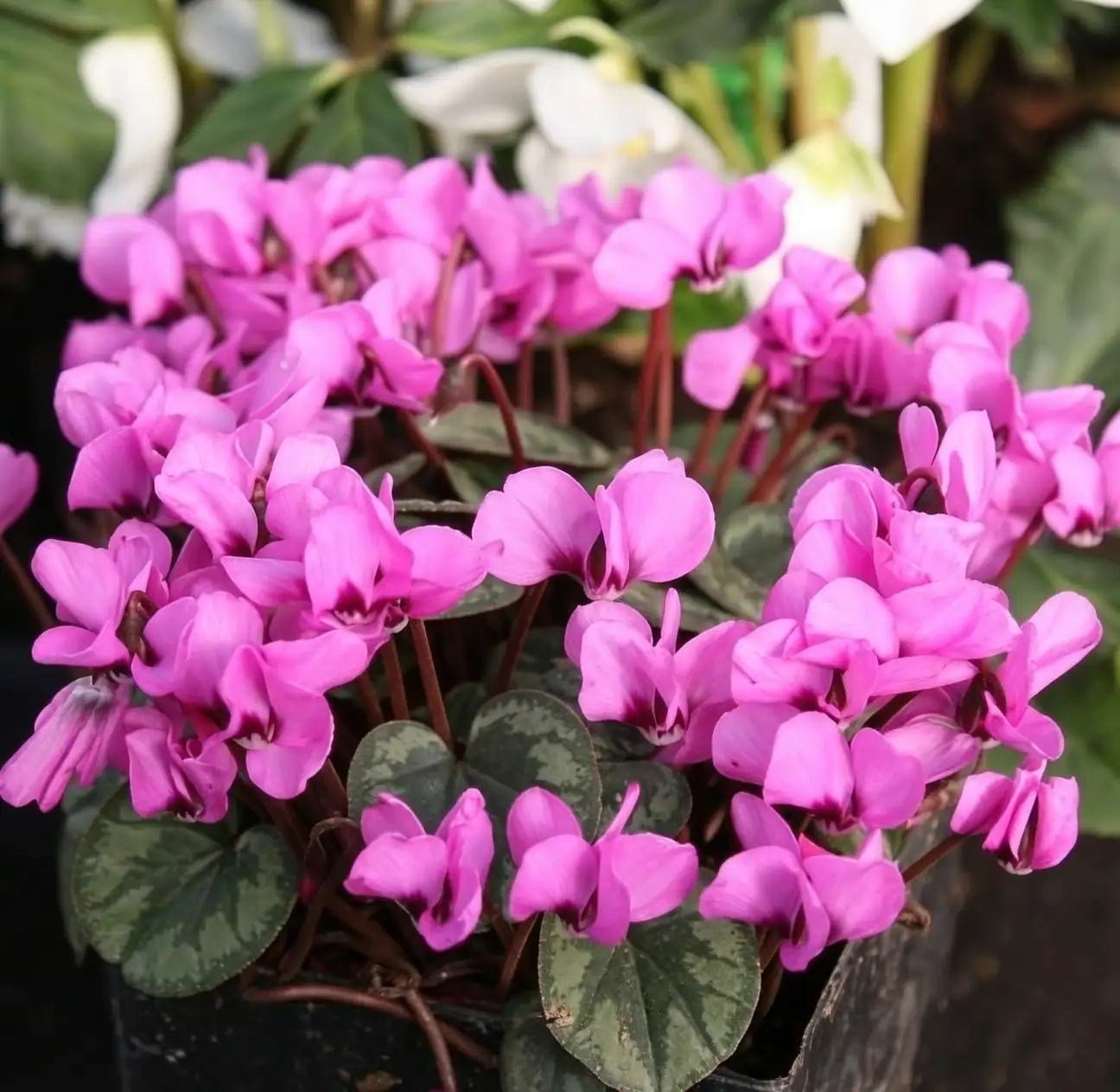
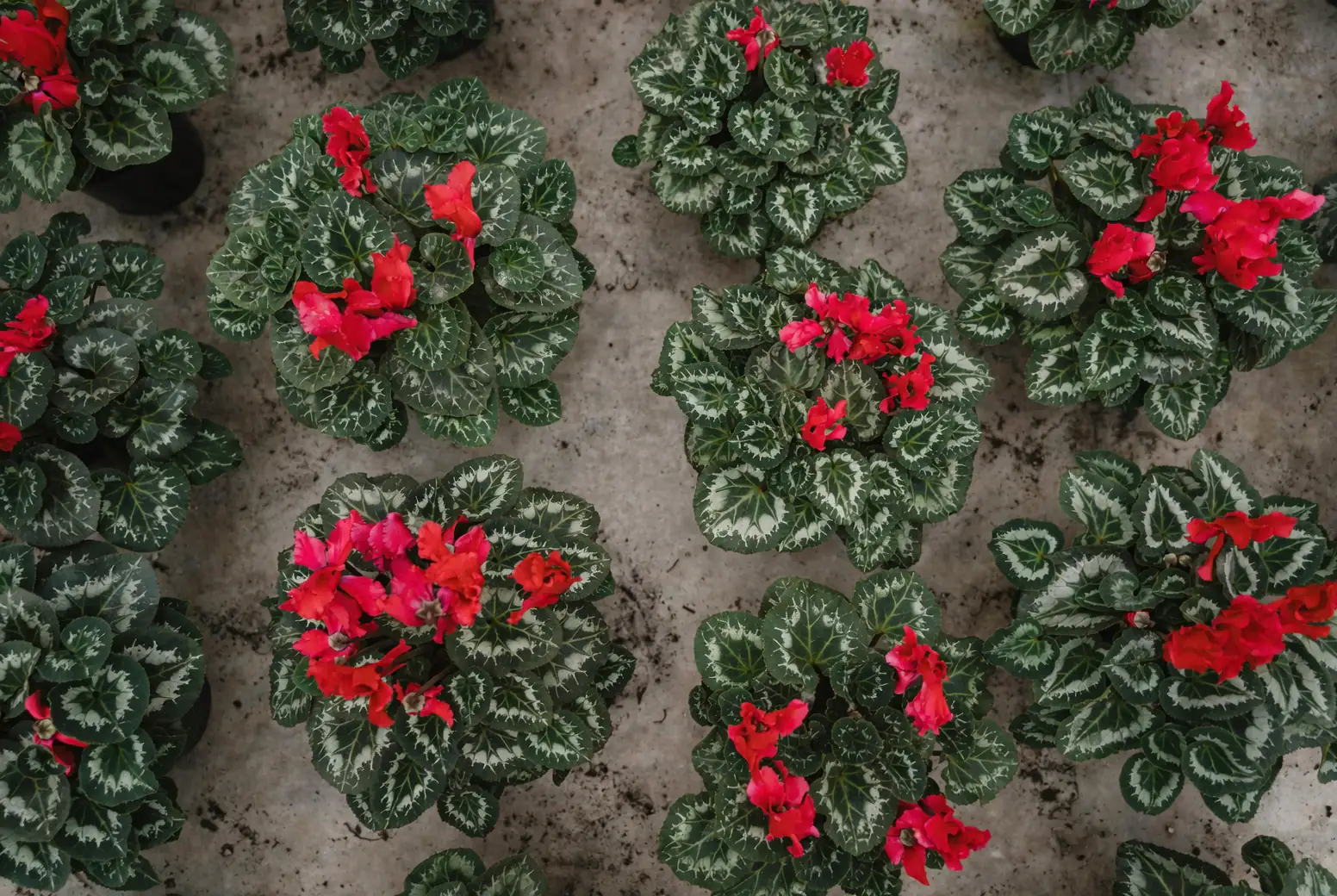
Cyclamen leaves look hand-painted: hearts inscribed with silver and sagey greens, sometimes in intricate mosaics.
The science in the shimmer:
- Variegation 101: Those pale motifs usually have fewer chloroplasts (the green pigment factories) than the darker zones. The visual effect is silvery marbling where light reflects differently from the leaf’s tissues.
- Why it might help: Leaf patterning can diffuse light across the blade and may help manage cool-season sun in bright, indirect exposures. Meanwhile, marbling also makes a fabulous foil—like a tuxedo—for the winter blooms.
Leaf details:
- Slightly thick, finely toothed edges, and long petioles that all rise from the top of the tuber—neat, symmetrical, and photo-ready.
Party Trick #3: Coiling seed stalks—the slow-motion corkscrew
After the confetti of petals falls, the flower stem begins a quiet acrobatic routine: it twists and tugs the developing seed capsule down toward the soil surface.
The mechanics and meaning:
- How: As the fruit matures, differential growth in the flower stem can create a tight spiral, like a botanical spring, that shortens the stem and lowers the pod.
- Why: Parking the capsule near the soil tucks seeds into a safer, moister microclimate and positions them for local dispersal. In many cyclamens, this is prime real estate for seed release right where seedlings stand a chance.
It’s a small movement with big intention—an elegant endnote to the bloom’s ballet.
Party Trick #4: The tuber—bread for sows, battery for blooms
Cyclamen grows from a flattened, rounded tuber with corky brown skin—nature’s pantry and power bank.
A few tuber truths:
- Structure: About 4–5 cm (1.6–2.0 in) across in typical houseplants; leaves and flower stems emerge from the top, roots from the underside.
- Rhythm: Cyclamen is a cool-season performer. After its winter crescendo, it naturally eases into summer rest (dormancy). Respect that nap and you’ll get encores for years.
About “Sowbread”:
- The name harks back to lore of wild pigs eating the tubers. Charming nickname, but do note: cyclamen tubers contain irritating terpenoid saponins and are toxic to humans and pets. This bread is strictly metaphorical.
How to keep your cyclamen thrilled (and throwing flowers)
Think “cool, bright, and even”—like a crisp morning in a Mediterranean courtyard.
Light and placement
- Bright, indirect light is perfect; avoid hot direct sun that can scorch those handsome leaves.
- Great spots: cool windowsills, bright offices, tabletops away from heaters and drying vents.
Temperature
- Day: 15–21°C (60–70°F)
- Night: 4–10°C (40–50°F)
- Brief dips to around 0°C (32°F) are tolerated, but sustained warmth (especially above ~20°C/68°F) will make it sulk.
Watering (the golden rule: bottom up)
- During growth/flowering: Water when the top 2–3 cm (about 1 in) of mix feels dry.
- Bottom-watering is strongly recommended: set the pot in water, let it drink, then drain thoroughly. Keeping the crown and top of the tuber dry reduces rot.
- During dormancy: Water sparingly—just enough to keep the tuber from shriveling.

Humidity and airflow
- Moderate to high humidity (aim for >50%) with good air movement. A pebble tray or humidifier helps in winter-dry rooms.
Soil and potting
- Rich but sharply draining, slightly acidic potting mix; a loamy, peat-based blend with added aeration is ideal.
- Keep the top third of the tuber slightly above the soil line to lower rot risk.
Feeding
- During active leafy growth: a diluted liquid fertilizer every 2–3 weeks, often with a low-nitrogen formula.
- Pause feeding during peak bloom and through dormancy; resume when fresh growth returns in fall.
Grooming (twist, don’t snip)
- Remove spent flowers and yellowing leaves by gently twisting and pulling from the base. This helps prevent rot and encourages continued bloom.
Repotting
- Every ~2 years, during summer dormancy. Size up only a little (2.5–5 cm / 1–2 in wider) and refresh with free-draining mix.
Annual rhythm (quick calendar)
- Spring (Mar–May): Blooms taper; gradually reduce watering as leaves yellow.
- Summer (Jun–Aug): Rest—cooler, airy, mostly dry.
- Fall (Sep–Nov): New growth; resume watering and light feeding; buds form.
- Winter (Dec–Feb): Peak flowering—keep cool, bright (indirect), and evenly moist (never soggy).
Buying guide
- Choose firm tubers, crisp leaves, and lots of unopened buds for a longer show.
- Avoid yellowing foliage, wilt, or any mushy crown/tuber—red flags for rot.
Outdoors or in?
- Best as a houseplant. Outdoors it suits mild climates roughly USDA Zones 9–11, with protection from prolonged freezing and hot sun.
- Gardeners in colder regions can try hardier Cyclamen species (like Cyclamen hederifolium) for outdoor plantings; keep C. persicum indoors for winter brilliance.
Health, pests, and safety
- Common pests: cyclamen mites, aphids, vine weevils, spider mites.
- Diseases: botrytis (gray mold), root rot, bacterial soft rot.
- Prevention: cool conditions, good airflow, avoid wetting the crown, and remove spent material promptly.
- Toxicity: Keep away from pets and children—especially the tuber. Ingestion can cause drooling, vomiting, and diarrhea; larger amounts may be dangerous for animals.
Flower language, symbolism, and the deeper story
Cyclamen has long been woven into Mediterranean culture. Its heart-shaped leaves and tender blooms have been associated with sincere affection, devotion, and lasting love. In some Christian symbolism, the leaves echo a compassionate heart, and the flowers suggest sorrow or gentle goodbyes.
About “flower language”:
- Much of today’s color lore (red for love, white for purity, pink for enduring affection) grew from Victorian-era floriography and regional traditions rather than hard history. Still, the sentiments persist because they fit the plant’s character: it gives beauty in the year’s quiet months, a faithful companion through winter.
Use, then and now:
- Primarily a winter-blooming ornamental that can flower for up to about 8 weeks per season. While some Cyclamen species appear in old medicinal tales, using them medicinally isn’t advised due to toxicity.
Quick FAQ
- Why are my leaves turning yellow?
- Most often overwatering; also warmth, underwatering, natural dormancy, or pests/disease. Check moisture, cool the plant down, remove yellow leaves.
- How do I get it to rebloom next year?
- Let it rest after flowering, keep it cool and mostly dry in summer, repot if needed, then resume watering in fall as new leaves appear.
- Can I grow it from seed?
- Yes. Seed is common; sow in late summer and provide darkness for germination. Patience and even moisture are key.
- Can I divide the tuber?
- Possible but tricky. Each piece must include a viable growth eye, and cut surfaces invite rot. Many growers stick with seed—or leave division to experts.
Fun facts to share with your guests
- “Cyclamen” comes from the Greek “kyklos,” meaning circle—a nod to its rounded tuber and those delightfully coiling fruit stalks.
- A content, mature plant can carry dozens of flowers in one season—an indoor winter fireworks show.
- There are over 20 species of Cyclamen, but C. persicum is the superstar of indoor winter color.
In the end, Cyclamen persicum is equal parts poise and physics: petals that swoop, leaves that glimmer, stems that spiral, and a tuber that times it all to the cool months. Give it bright, indirect light, a chill in the air, and water from below, and it will reward you with the most elegant little circus of winter.


