

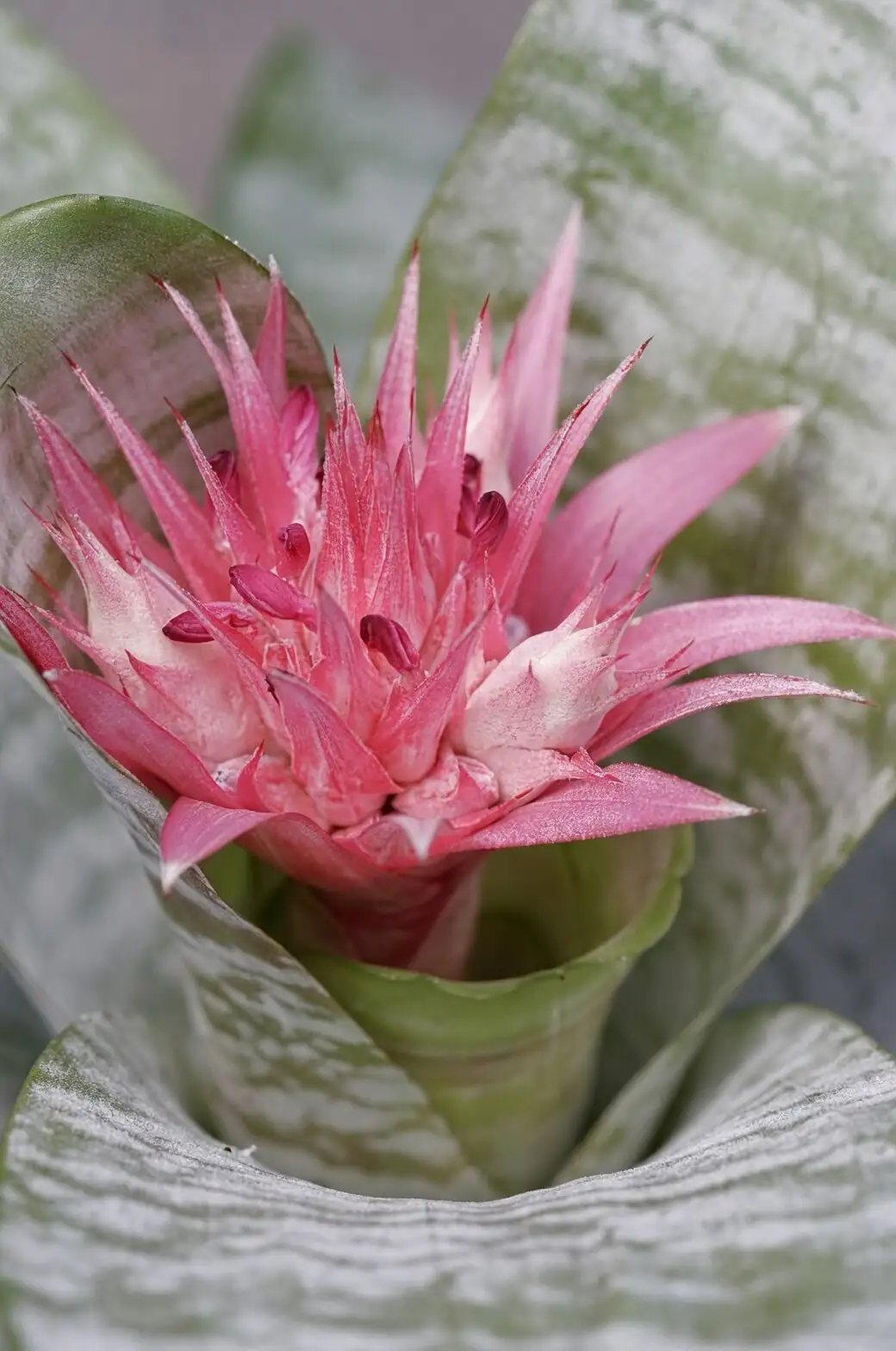
If your Dragonfly Bromeliad (Aechmea fendleri) is looking a bit off—webbing on leaves, cottony tufts at the leaf bases, a funky smell from the “cup,” or a base that feels wobbly—you don’t need a chemistry set to fix it. You need clean water, good airflow, and a few safe, repeatable moves. This troubleshooting guide cuts straight to quick wins that work for bromeliads: preventing spider mites in dry air, treating mealybugs/scale without harming the rosette, keeping the central cup hygienic, boosting airflow, and stopping root/crown rot early.
Before we dive in: A quick snapshot of this species
- Identity: Aechmea fendleri (Dragonfly Bromeliad), a rosette-forming epiphyte from tropical forests of northern South America.
- Look: Silver‑green, arching leaves forming a vase-like rosette with a central water-holding “cup”; summer spikes with pink bracts and small purple flowers.
- Size: About 60 × 60 cm (24 × 24 in).
- Preferred conditions: Bright, filtered light (no harsh midday sun), 15–27°C (59–81°F), moderate humidity with extra in heat.
- Watering style: Keep the central rosette “cup” filled with rainwater or distilled water; refresh/top up every 4–8 weeks. Keep the mix lightly moist in warm months; drier in winter. Never waterlog.
- Potting mix: Airy, fast-draining epiphyte blend (e.g., orchid bark + perlite + coconut coir).
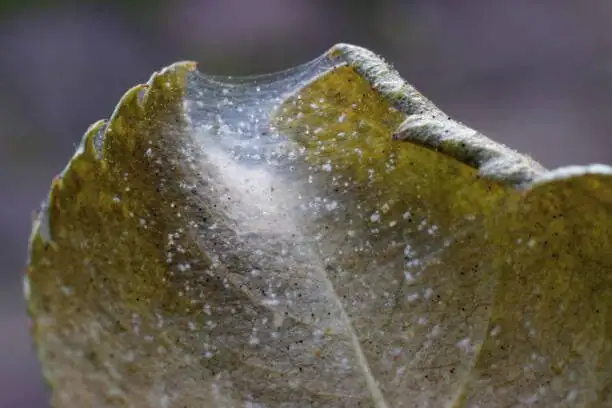
H2: Symptom: Fine speckling, dull leaves, or wispy webbing (spider mites)
Dry indoor air is their best friend. Dragonfly bromeliads tolerate average humidity but will attract mites when air is hot and dry.
Quick wins
- Raise humidity, not wetness: Aim for moderate humidity and daily or every-other-day misting in hot weather. Pair misting with gentle airflow so water doesn’t sit in leaf axils overnight.
- Keep dust off: Wipe leaves and especially undersides weekly with a soft, damp cloth. Spider mites thrive on dusty foliage.
- Rinse routine: Take the plant to the sink/shower and spray the undersides of leaves with a firm (not blasting) stream weekly for three weeks. Mites hate repeated disruption.
- Relocate from vents: Move away from heater/AC blasts and sun-baked windowsills. Use bright, filtered light near an east window or a sheer-curtained south/west window.
- Gentle fan: Run a small fan on low nearby for a few hours daily. Moving air discourages mites and improves cup hygiene.
If you already see mites
- Soap spray: Use insecticidal soap (ready-to-use or 2% solution) on leaf undersides. Avoid filling the central cup with soap; if any gets in, flush the cup thoroughly with clean rain/distilled water after treatment. Repeat every 5–7 days for 3–4 cycles.
- Predatory mites: If you grow a collection and can keep moderate humidity, releasing predatory mites (indoors or greenhouse) can mop up outbreaks without chemicals.
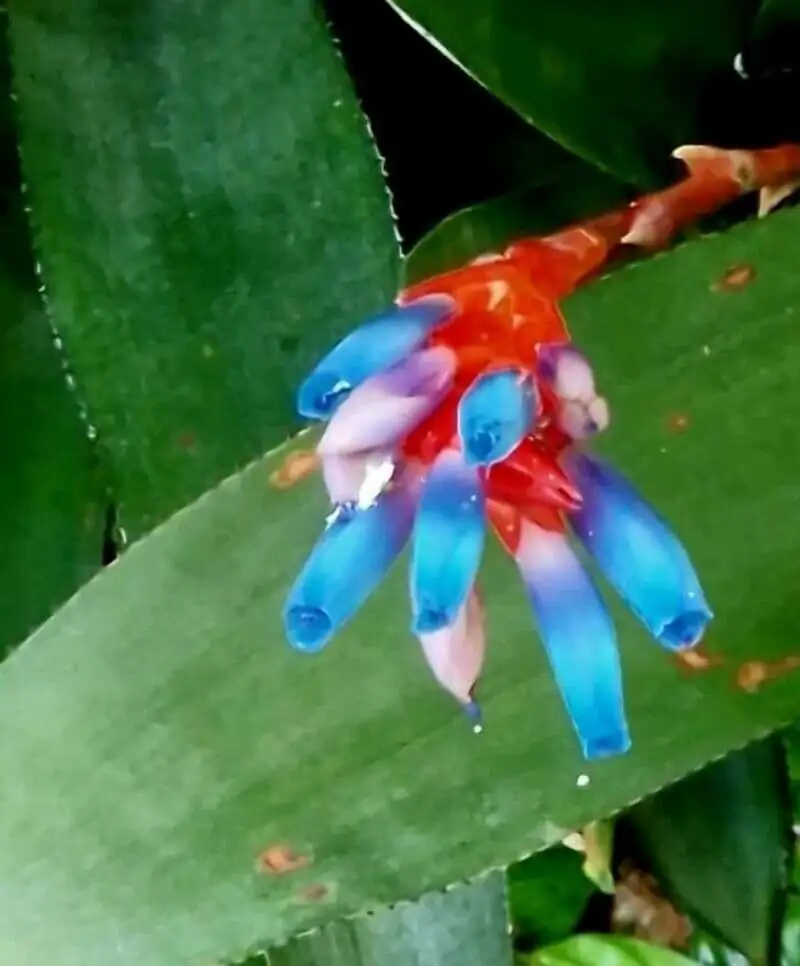
H2: Symptom: Cottony clumps, sticky honeydew, tiny crusty discs (mealybugs and scale)
Mealybugs appear like white lint tucked in leaf axils and along the rosette base; scale looks like small, round/oval armor stuck to leaves.
Quick wins (safe, plant-friendly)
- Isolate first: Move the plant away from others and inspect where leaves meet the rosette and the undersides of leaves.
- Targeted alcohol swabs: Dab mealybugs and scale with 70% isopropyl alcohol on cotton swabs, then wipe off. Avoid drenching the central cup with alcohol.
- Soft brush detail: For scale, a soft toothbrush lightly moistened with alcohol dislodges shells without gouging leaf tissue.
- Soap, then flush: Follow up with an insecticidal soap spray on affected areas. If any runs into the cup, drain and refill it with clean water afterward.
- Repeat rhythm: Treat every 7–10 days for 3–4 rounds to catch hatchlings.
Extra tips that matter with bromeliads
- Keep sprays off the cup and bracts: The rosette cup is a reservoir for clean water. After any treatment, flush the cup with rain/distilled water.
- Go easy with oils: Horticultural oils can mar the silver-green leaf finish. If you choose oil, patch-test on one leaf, use a very light rate, and keep it away from the cup and flowers/bracts.
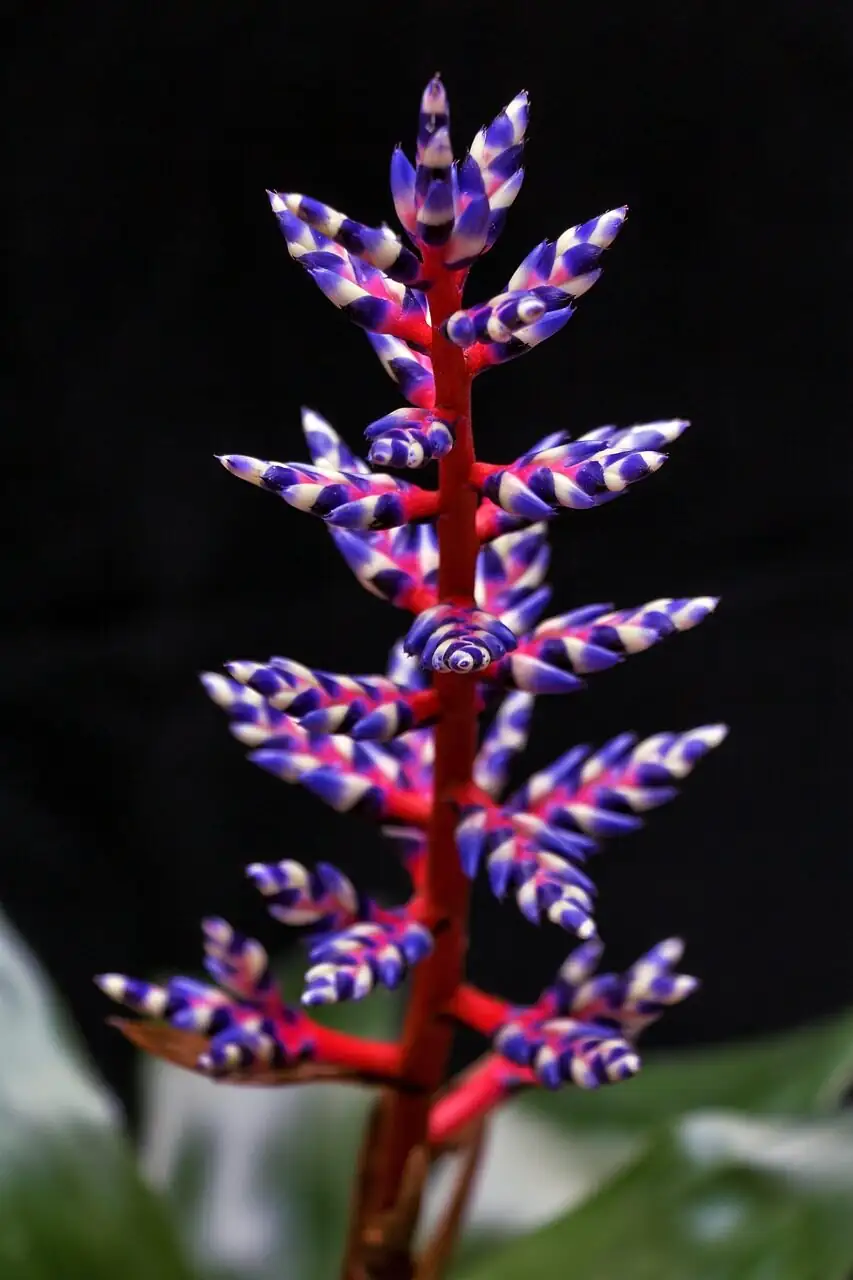
H2: Symptom: Funky-smelling cup, debris, algae slicks, or tiny swimmers (cup hygiene)
That vase-shaped rosette is designed to hold water—but it must be clean.
Cup-care essentials
- Use soft water: Rainwater or distilled water prevents mineral crusts and keeps the cup fresher.
- Refresh/top up: Replace or top up every 4–8 weeks in normal conditions. In hot, dusty, or pest-treatment periods, flush more often: tip the plant to drain the cup completely, then refill with fresh water.
- Remove debris: Fish out dead leaves/insects with tongs or rinse them out in the sink. Decomposing material encourages odor and rot.
- Fertilize lightly: From spring to late summer, you can feed at half strength every two weeks into the cup or as a foliar spray. Flush the cup occasionally with plain water to prevent salt buildup.
Good airflow supercharges cup hygiene, slowing algae and discouraging gnats or mosquitoes if you grow outdoors in warm, frost-free zones.
H2: Symptom: Plant wobbles at the base, leaf bases turn black, or the crown feels mushy (root/crown rot)
Rot happens when the potting mix stays wet and airless or when water stagnates around the crown in cool, still air.
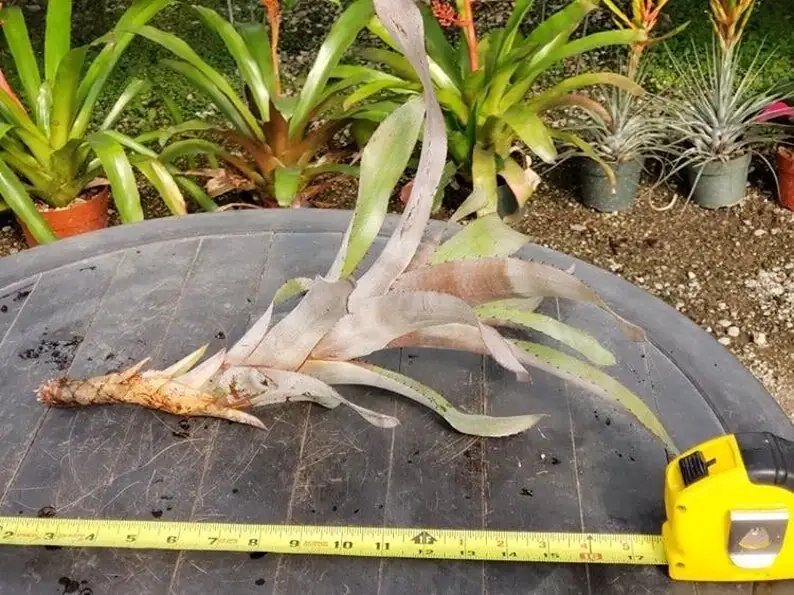
Stop it early—fast protocol
1) Check the base: Gently rock the plant. If it wiggles, act now.
2) Drain the cup: Tip out the cup water temporarily while you assess; you’ll refill with clean water later.
3) Unpot and inspect roots: Healthy roots are firm and tan; mushy, foul-smelling roots must go.
4) Trim and lighten: Sterilize scissors; remove all black/mushy tissue. Dust cuts lightly with ground cinnamon if you like, then let the plant air-dry for an hour.
5) Repot airy: Use a fast-draining epiphyte mix—equal parts orchid bark, perlite, and coconut coir (or a 1:1 orchid bark:potting mix). Choose a snug pot with great drainage (5–6 in is common). Oversized pots stay too wet.
6) Reset watering: Keep the mix just lightly moist in warm months; in winter, allow it to dry before watering again. Avoid waterlogging at all times.
7) Refill the cup with clean water: Once repotted and stable, add fresh rain/distilled water to the cup. Maintain gentle airflow.
Early-warning signs to learn
- Sour smell at the base or from the cup
- Yellowing from the innermost leaves outward
- Brown/black streaking at leaf bases
- Mix that stays cold and soggy days after watering
Prevention you can feel in your hands
- Lighter pot after watering within 2–3 days = good drainage
- Crisp, arching leaves = sufficient light and airflow
- No sloshing in the cachepot = no hidden standing water
H2: Airflow fixes that cure a lot of ills
- Low, steady fan: A small fan on the gentlest setting nearby (not directly blasting) keeps leaf axils dry and deters mites and rot.
- Smarter placement: Bright bathroom or kitchen windows with periodic air movement are ideal. Avoid tight corners and stagnant shelves.
- Sheer-curtain light: East or bright north windows are perfect; step back from south/west windows or use a sheer to prevent scorch.
H2: Your 5-minute weekly health check
- Leaf underside look: Any stippling, webbing, cotton, or crusty discs? Wipe and treat early.
- Cup reset: Peek, pluck debris, and top up with clean water if needed.
- Pot weight: If it still feels heavy and cold four days after watering, improve drainage and airflow.
- Wipe-down: Dust leaves—clean leaves photosynthesize better and dodge mites.
- Sniff test: Funky? Investigate the crown and roots.
Bonus monthly: Give the plant a lukewarm shower to rinse dust and pests off, then drain the cup and refill with fresh water.
H2: Pro-level prevention with almost no effort
- Quarantine newcomers: Park new plants away from your collection for 3–4 weeks and inspect leaf axils, undersides, and where leaves meet the base.
- Fertilize thoughtfully: Spring–late summer, half-strength every 2 weeks. Flush with plain water now and then to reduce salts.
- Right-size home: Use a snug pot. Repot up one size only when crowded; Aechmea fendleri likes to clump.
- Humidity with a breeze: Moderate humidity plus airflow beats mites without inviting rot.
- Water quality: Rain or distilled water in the cup keeps minerals from building up on those elegant silver‑green leaves.
H2: When the show is over: pups and pruning
- After blooming: Remove the spent flower spike.
- Pups: Separate when 1/3–1/2 the size of the mother and rooted. Pot into the same airy mix; keep the cup water clean and the mix lightly moist while they establish.
H2: A little heart: meaning and origin
In many homes, bromeliads symbolize hospitality and resilience—apt for a plant that literally offers a little “cup” of water and keeps its pink bracts showy long after the true flowers fade. Aechmea fendleri hails from tropical forests in northern South America, where it often perches as an epiphyte, soaking up bright, filtered light and constant breezes—exactly the vibe you’re recreating indoors.
H2: Fast reference: conditions it loves
- Light: Bright, filtered; no harsh midday sun.
- Temperature: 15–27°C (59–81°F); keep above 10°C (50°F).
- Humidity: Moderate; add more in hot weather. Dry air encourages spider mites.
- Mix: Airy, fast-draining (orchid bark + perlite + coconut coir).
- Water: Clean water in the cup; lightly moist mix in warm months, drier in winter.
Closing confidence boost
Most problems with Dragonfly Bromeliad unravel once you pair clean cup water with moving air and a drainage-happy mix. Catch pests early, flush the cup after any treatment, and resist the urge to overwater the pot. Do that, and your Aechmea fendleri will keep its sculptural poise—and those pink bracts and purple flowers—front and center.