

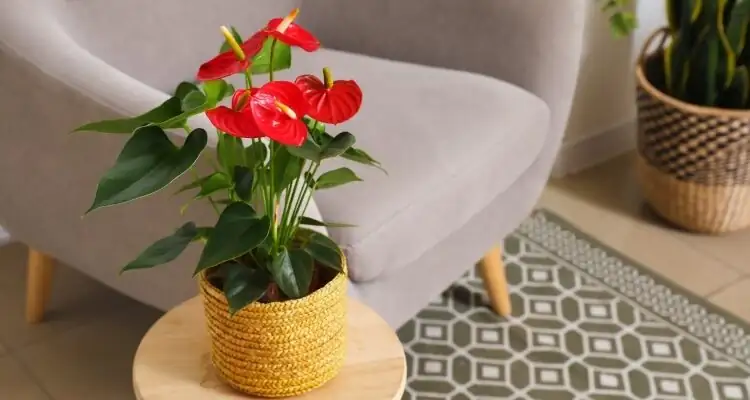
Tropical, glossy, and stubbornly cheerful, Anthurium andraeanum (aka Flamingo Flower, Laceleaf, Painter’s Palette) has earned a reputation for being “fussy.” Truth: it’s just particular. Once you dial in four levers—light, watering rhythm, warmth, and humidity—it will throw out those waxy, heart-shaped spathes on and off all year. Let’s bust the biggest myths and set you up for bloom-after-bloom success.
Meet Anthurium andraeanum at a glance
- What you see: Deep-green, glossy, heart‑ to arrow‑shaped leaves; long-lasting, colorful spathes (red, pink, white, burgundy, green, or bicolors) encircling a finger-like spadix.
- Size indoors: Typically 30–60 cm (12–24 in) tall and wide; many houseplants hover around 45 × 30 cm (18 × 12 in), depending on cultivar and pot.
- Habit: Clump-forming, upright, evergreen perennial with a short stem over time; may produce aerial roots.
- Year-round color indoors: With bright, filtered light, steady warmth, and good humidity, plants often rebloom repeatedly.
Myth-busting the four essentials
1) Light: “It’s a shade plant.” Not quite.
- Myth: “It likes low light.” Reality: It tolerates lower light but flowers poorly there.
- Myth: “Full sun makes it bloom more.” Reality: Harsh sun scorches leaves and stalls buds.
What to do instead
- Aim for bright, indirect light to light shade. Think 6+ hours of filtered brightness.
- Best spots:
- East-facing window (morning sun, then bright ambient light).
- Bright north window.
- South or west window set back a few feet, or use a sheer curtain.
- Telltale signs:
- Too little light: Few or no blooms, longer spaces between leaves, dark-green leaves with a dull finish.
- Too much light: Yellow patches, crispy edges, faded spathes.
- Winter tip: Pull it closer to the window or add a sheer‑diffused grow light to keep blooms coming.
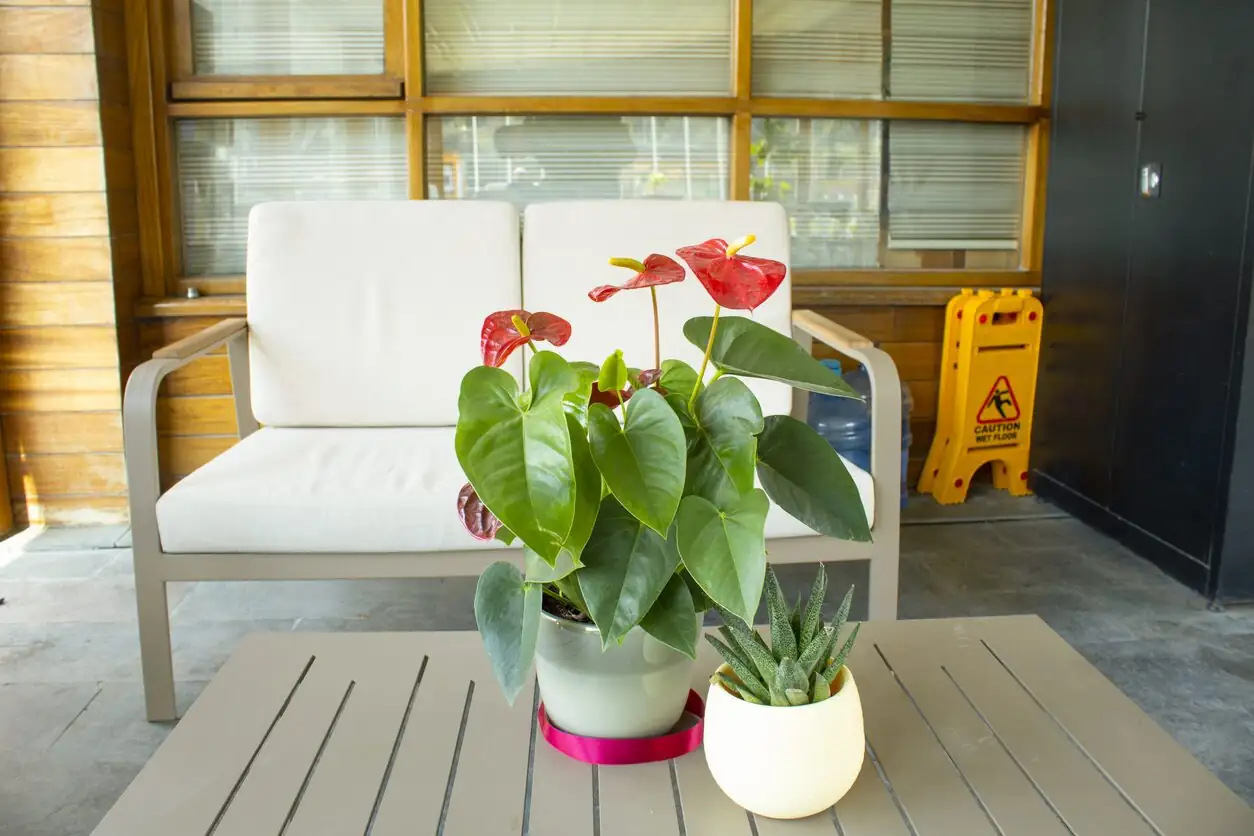
2) Watering rhythm: “Keep it constantly wet.” Please don’t.
- Myth: “It’s tropical, so it wants soggy soil.” Reality: Soggy roots = rot and yellowing leaves.
- Myth: “Water on a fixed day.” Reality: Frequency changes with season, pot, and mix.
- Myth: “Ice cubes are safer.” Reality: Cold shocks roots and slows flowering.
What to do instead
- Goal: Evenly moist, never waterlogged.
- Check: Water when the top 2–3 cm (about 1 in) feels just dry.
- Method:
- Water thoroughly until water drains; empty saucer.
- In warm, fast-drying conditions this can be every few days (often 2–3 days in hot spells); in winter, less often.
- Water during the warmer part of the day (about 9 a.m.–4 p.m.) to reduce cold stress.
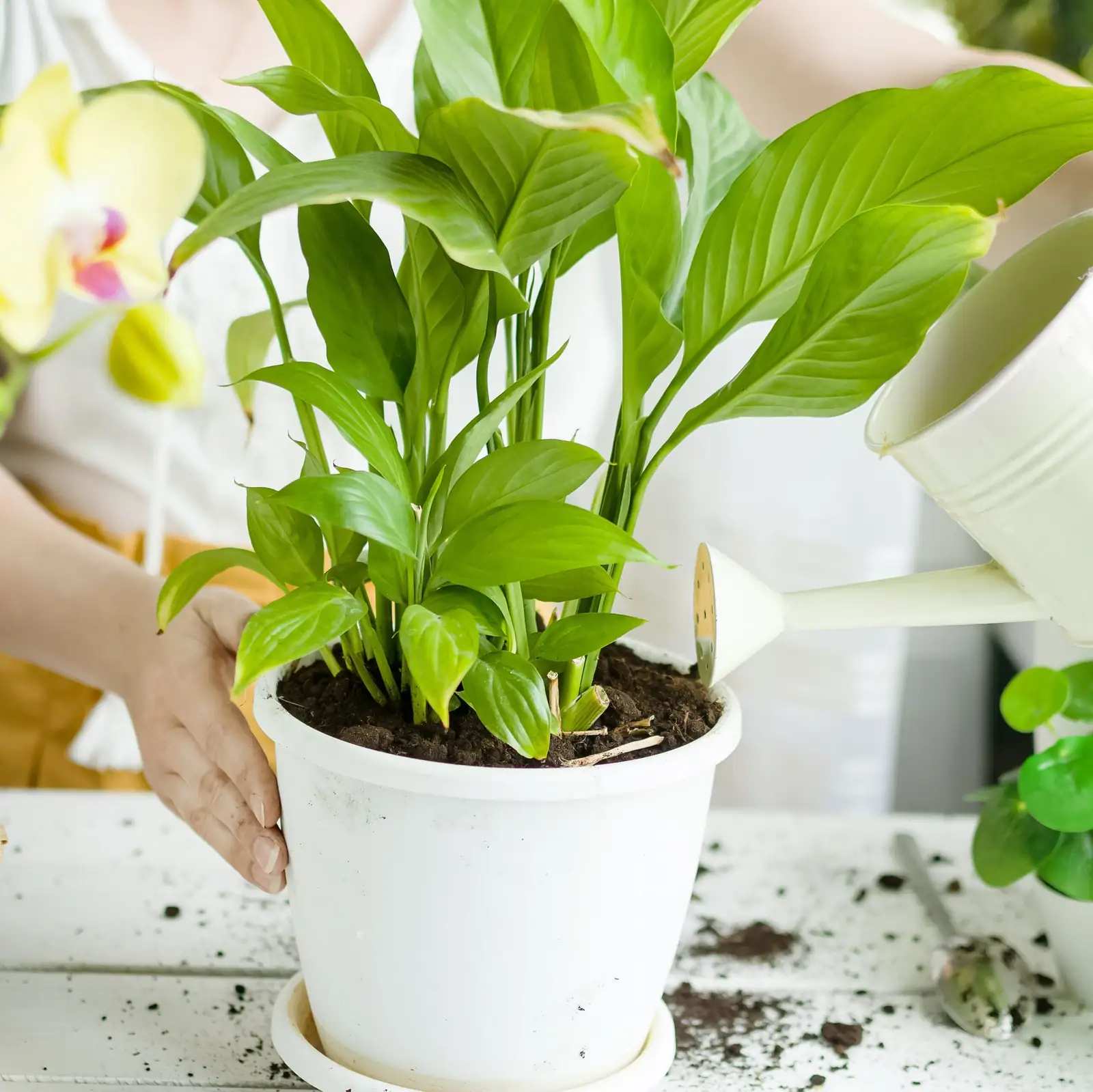
- Mix matters (air around roots is everything):
- Use a loose, chunky aroid blend: bark + coco coir/peat + perlite, or a 1:1 houseplant mix with orchid/bark mix.
- Clues you’re off:
- Overwatering/poor drainage: Yellowing leaves, limp stems, sour smell from the pot.
- Underwatering: Curling, papery tips, stalled buds.
3) Warmth: “Room temp is fine year-round.” Warmer is better.
- Sweet spot: Thrives around 20–30°C (68–86°F); also grows well at 16–24°C (61–75°F).
- Keep above: 15°C (59°F) in winter; below ~13°C (55°F) can cause chilling injury and stall flowering.
- Draft watch: Avoid AC blasts, chilly windowsills, and heater vents.
- Microclimate win: A cozy bathroom with a window often gives you perfect warm humidity.
4) Humidity: “Just mist it.” Not the whole story.
- Myth: “Daily misting solves humidity.” Reality: Brief misting raises humidity for minutes and can invite disease if leaves stay wet overnight.
- Target: Moderate to high humidity—ideally 50–60%+, with gentle airflow.
- How to get it:
- Humidifier (low-maintenance and reliable).
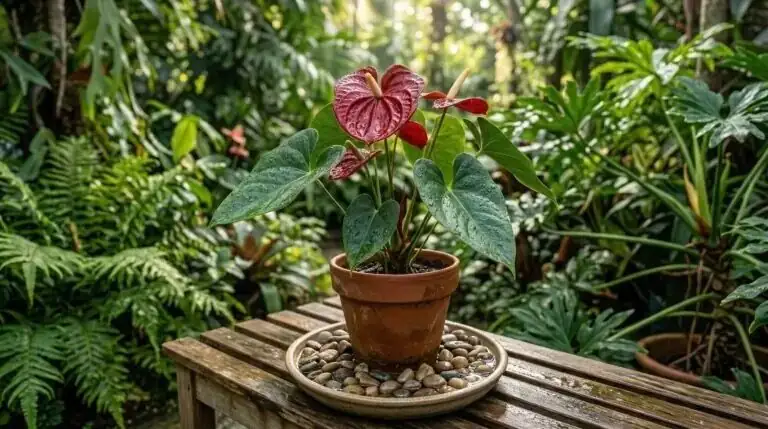
- Pebble tray with water below the pot’s base.
- Group plants together.
- Light, daytime misting only if you like, using non-chlorinated water—but avoid wet foliage at night and ensure airflow.
The bloom engine: How to keep color cycling
- Light: Bright, filtered light fuels spathes.
- Warmth + humidity: Steady warmth and >50% humidity keep buds forming and spathes glossy.
- Feeding: During spring–summer, feed about every 2 weeks with a diluted liquid fertilizer at half strength. A balanced-to-bloom-leaning formula with higher potassium (e.g., 20‑8‑20) supports flowering. Reduce feeding in autumn–winter.
- Grooming: Snip spent spathes and yellowing or crowded leaves at the base with clean scissors to redirect energy to new growth.
- Pot and mix:
- Repot only when root‑bound (about every 2–3 years). Typical pot sizes: 12.5–20 cm (5–8 in); larger specimens may use 15–25 cm (6–10 in).
- Keep the crown at or slightly above the surface; top-dress exposed aerial roots with a little moss if desired.
- Provide a small stake if your plant leans or produces aerial roots that like support.
- Expectation setting: With good conditions, it can flower year‑round indoors, with strongest flushes from spring to summer.
Quick setup recipes (pick your scene)
Bright east window
- Sheer curtain optional; plant 0–60 cm (0–2 ft) from the glass.
- Humidity: Pebble tray or humidifier nearby.
- Water: Top 2–3 cm dry, then drench and drain.
South or west window
- Use a sheer curtain or place the plant 1–2 m (3–6 ft) back to avoid midday scorch.
- Rotate the pot weekly for even growth.
Bright bathroom with a window
- Often “set-and-bloom” conditions: warm, humid, bright but softened light.
Office or winter setup
- Add a small, diffused grow light for 10–12 hours daily.
- Keep away from vents; place a small fan on low for gentle air movement.
Two-week tune-up plan for new plants
- Day 1: Pot in a chunky aroid mix; place in bright, filtered light. Water thoroughly, drain well.
- Days 2–7: Let the top 2–3 cm dry before watering again. Monitor leaf sheen and turgor.
- Day 7: Add a pebble tray or humidifier if RH <50%.
- Day 10–14: Begin light feeding (half-strength). Adjust distance from window if tips brown (too bright) or blooms stall (too dim).
Troubleshooting, fast
- Yellowing leaves
- Most common: Overwatering or poor drainage. Let the top 2–3 cm dry between waterings; ensure a chunky mix and free‑draining pot.
- Brown, crispy tips or edges
- Low humidity or underwatering; raise RH to 50–60%+ and recheck watering rhythm.
- No blooms
- Not enough light, or it’s too cool. Move to brighter, indirect light and maintain warmth above 15°C (59°F), ideally 16–24°C (61–75°F)+.
- Spathes fade quickly
- Light too harsh or humidity too low; filter sun and improve RH.
- Pests
- Watch for spider mites, mealybugs, scale, and thrips. Treat early with insecticidal soap or horticultural oil; maintain airflow and avoid wet foliage at night.
- Fungal spots/rot
- Improve drainage, increase airflow, and water earlier in the day. Use fungicides only if necessary and always follow label directions.
Can you grow it in water?
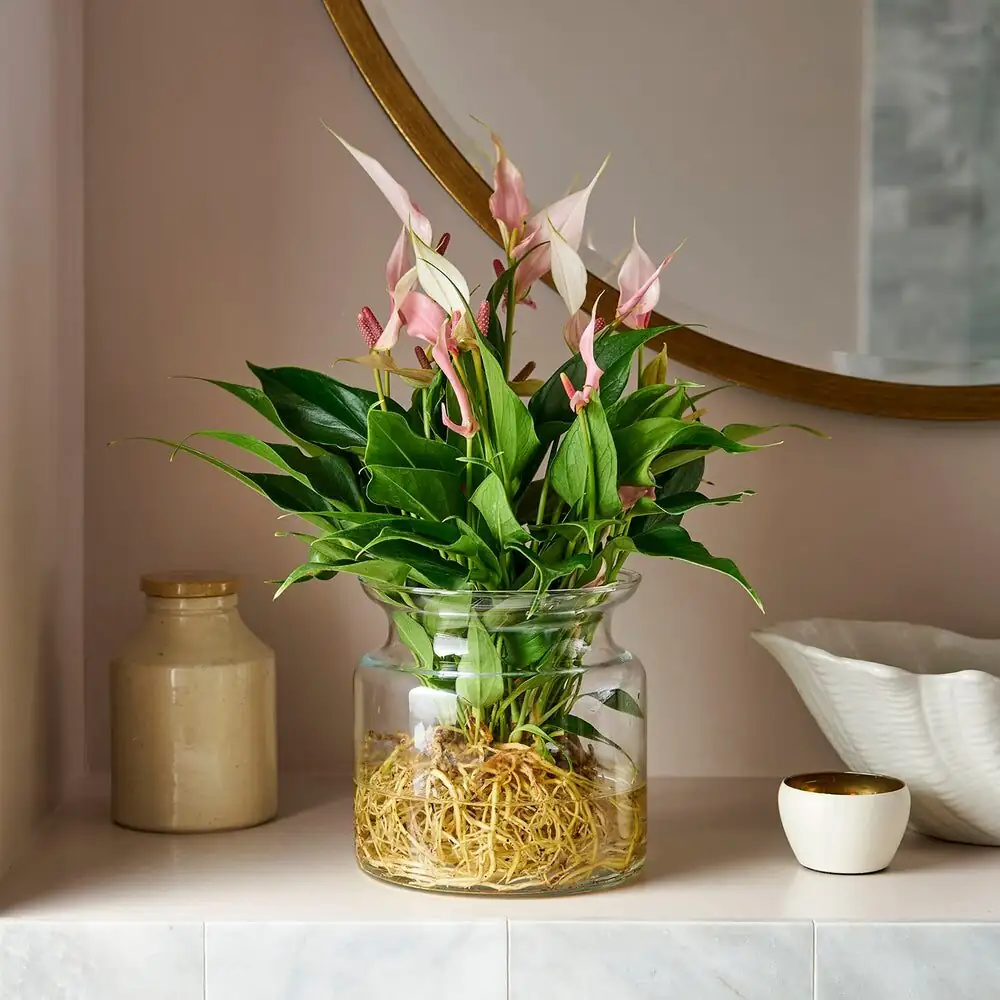
Yes. Flamingo Flower can be grown hydroponically.
- Rinse potting mix from roots gently.
- Submerge only the lower portion of the roots—keep the crown above water.
- Change water weekly; add a light hydroponic nutrient.
- Keep warm (20–30°C / 68–86°F).
- Trim any rotting roots promptly.
Propagation and repotting, simply
- Best method: Division during repotting.
- Separate an offset with its own roots and at least ~3 leaves.
- Pot in a small, airy mix; keep warm and lightly moist.
- New roots typically form in about 20–30 days; then step up to a 15–20 cm (6–8 in) pot.
- Advanced option: Root stem sections with nodes and aerial roots in moist sphagnum or a chunky mix; pot on after rooting.
A gentle care calendar
- Year-round: Bright filtered light, steady warmth, 50–60%+ humidity. Protect from harsh sun, cold drafts, drought, and soggy soil.
- Spring–summer: Water more frequently as mix dries; feed every 2 weeks (dilute, higher‑K works well).
- Autumn–winter: Keep above 15°C (59°F). Reduce feeding; water less often but don’t let it fully dry out. Move to brighter light to prevent a winter bloom slump.
Safety first
- Toxic if chewed (insoluble calcium oxalate crystals). Keep away from pets and children. Sap may irritate skin; wear gloves when pruning.
Symbolism, flower language, and what it really means
The Flamingo Flower is widely gifted as a symbol of hospitality, warmth, confidence, and lasting love—fitting for a plant whose “blooms” stay beautiful for weeks. Much of today’s “flower language” traces back to Victorian floriography and modern marketing around cut flowers. In practice, Anthurium’s open, heart-shaped spathe and long-lasting color made it a natural emblem of welcome and enduring affection, especially in lobbies, living rooms, and celebratory arrangements. If you’re embracing “花语,” think less secret code and more shared cultural shorthand: a bright, steadfast presence that says, “Come in and stay a while.”
Fun to know
- The colorful “flower” is a spathe (a modified leaf); the true flowers are tiny and packed along the spadix.
- With stable warmth, humidity, and bright indirect light, Anthurium can bloom repeatedly indoors for much of the year.
- It’s one of the world’s most important tropical cut flowers—its spathes can look pristine for weeks in a vase.
Dial in light, watering rhythm, warmth, and humidity, and your Anthurium andraeanum will reward you with glossy leaves and a parade of spathes—proof that “fussy” is just another word for “knows what it likes.”