

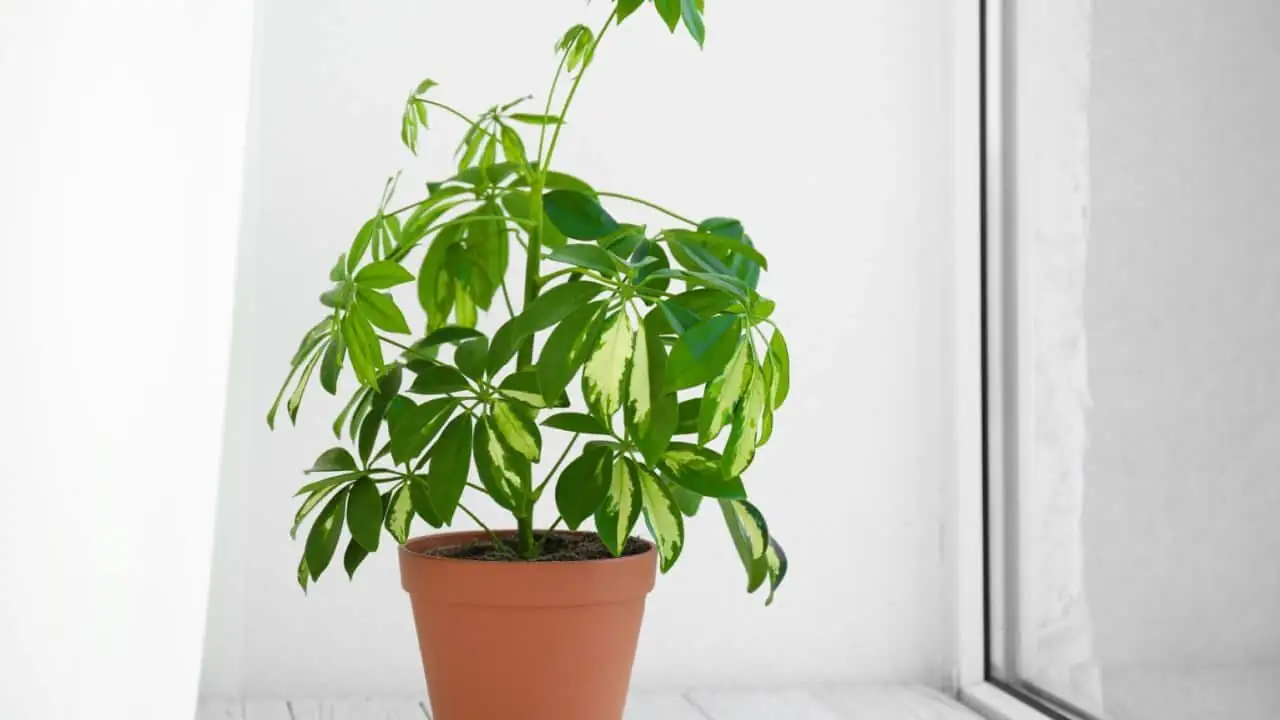
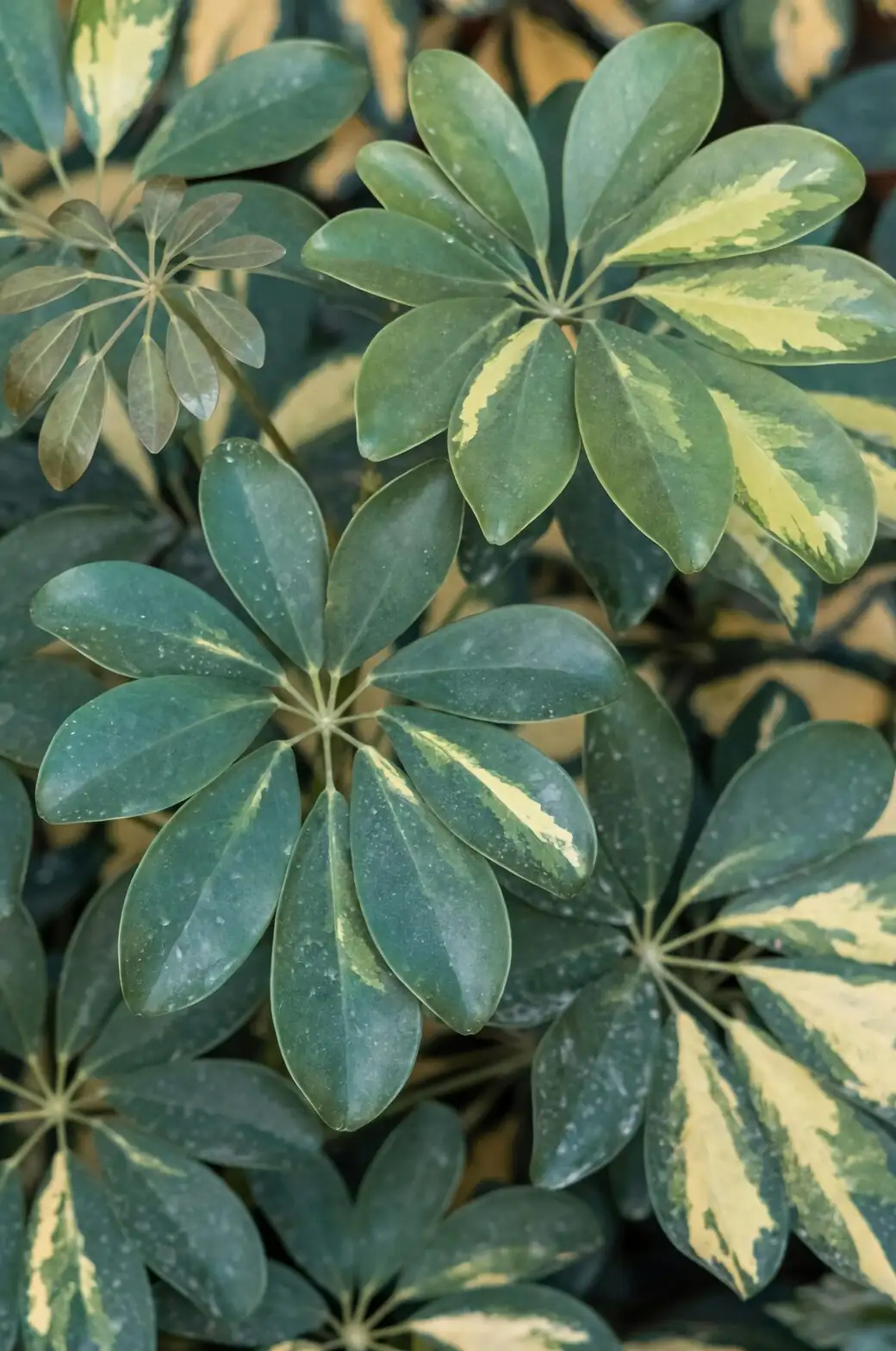
Meet the dwarf umbrella tree you can actually count on. Heptapleurum arboricola (aka Dwarf Schefflera, Hawaiian Schefflera) is a glossy, fast-growing evergreen that thrives on bright, indirect light, a steady watering rhythm, and quick-draining soil. Get those three right and you’ll dodge the big headaches—leaf drop and lanky, stretched stems—while enjoying consistent, beginner-friendly growth all year.
Dial in the light: bright, indirect, and steady
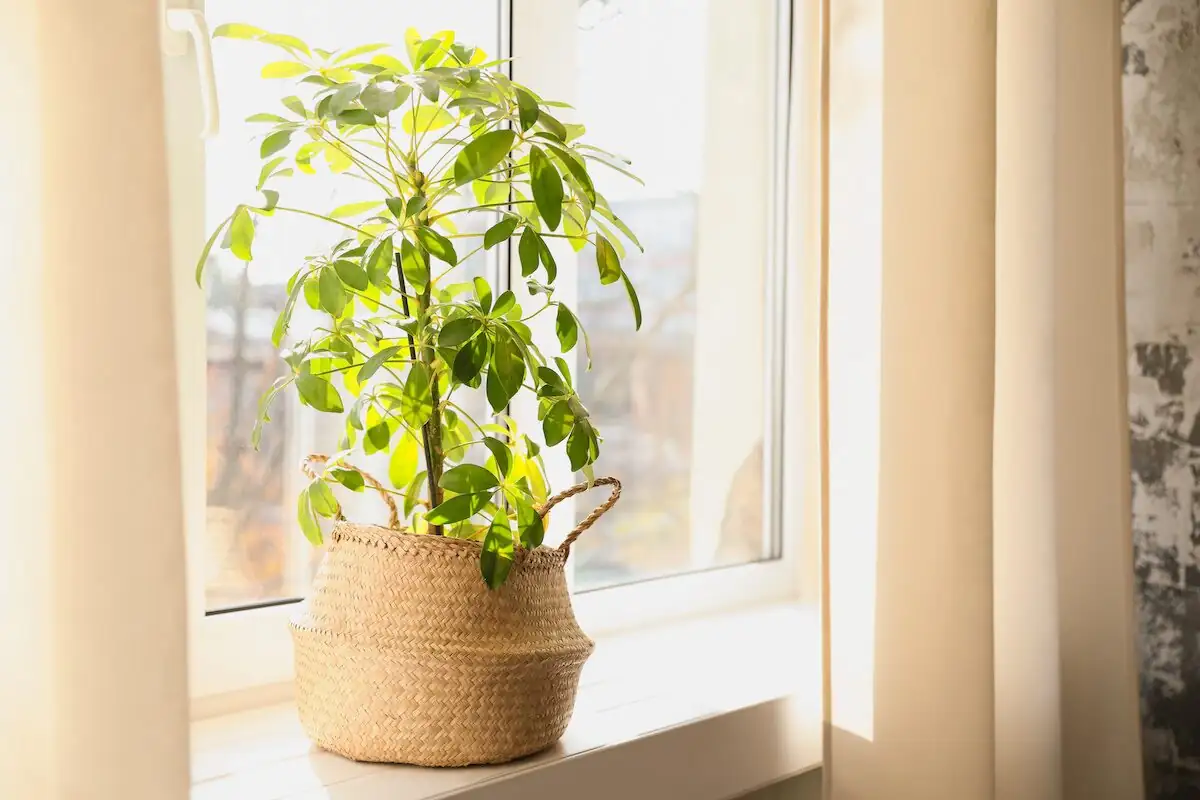
Think “bright room, softened rays.” Aim for:
- An east-facing window, or a south window with a sheer curtain
- A bright spot set back from a west window (no burning midday beams)
- For variegated forms, nudge even brighter filtered light to keep cream/yellow patterns crisp
Rotate the pot a quarter turn weekly to prevent leaning and uneven growth. If stems stretch and the spaces between leaves widen, it’s asking for more light.
Watering rhythm that prevents leaf drop
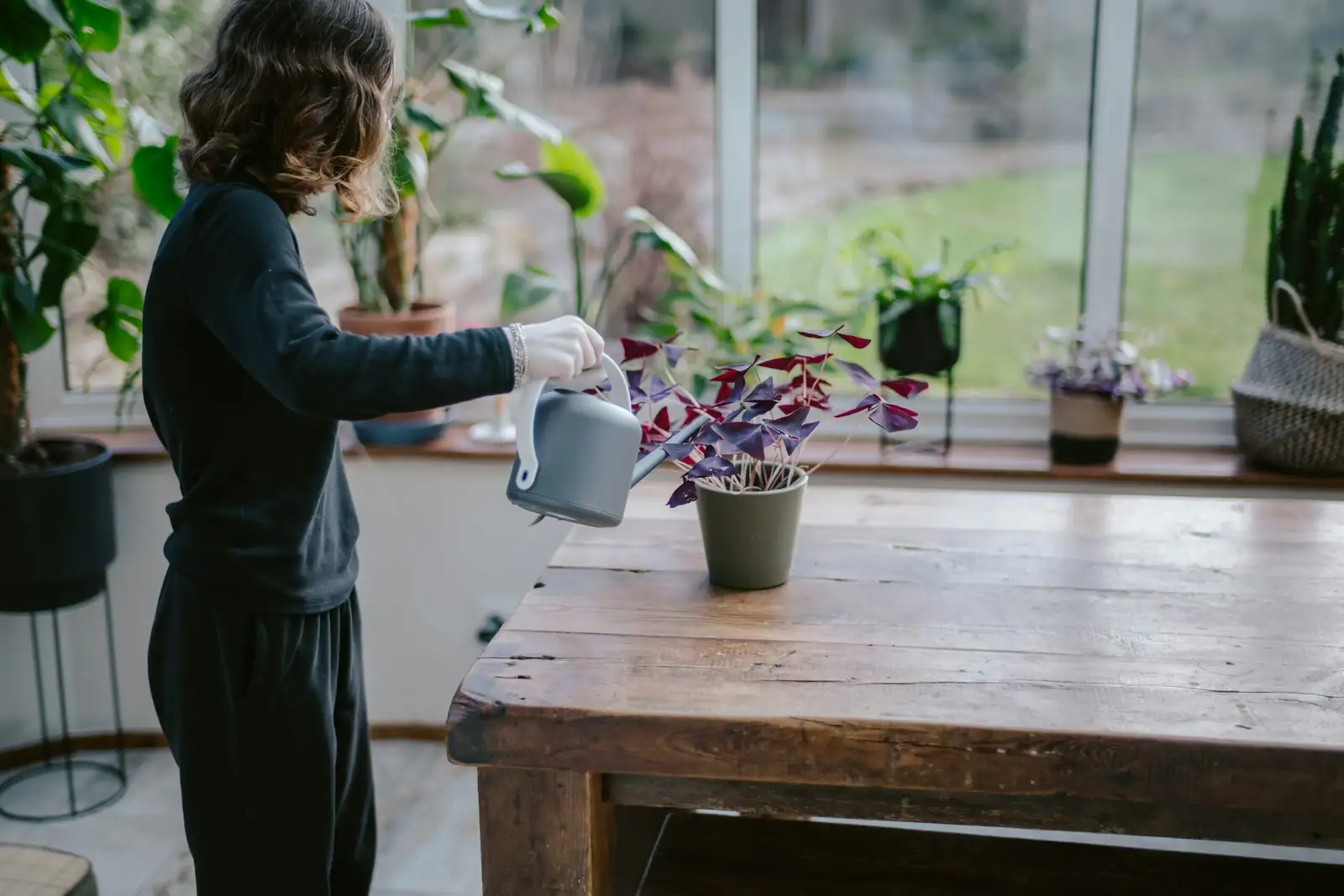
This plant hates extremes—no “desert dry” followed by “monsoon soak.”
- Spring through autumn: Water when the top 2–3 cm (about 1 inch) of mix is dry. Then drench thoroughly and let every drop drain. Never leave it standing in a saucer.
- Winter: Cut way back. In many homes, watering about once a month (or only when the pot is mostly dry) is right.
- Red flags:
- Overwatered: Yellowing leaves, soft stems, persistent wetness, sour smell
- Underwatered: Droopy, crispy tips, pot feels feather-light
Pro tip: Learn the pot’s “weight” when it’s dry vs. freshly watered—it’s a reliable cue.
Drainage and soil: your anti-soggy insurance
Great drainage = happier roots = fewer dropped leaves.
- Mix recipe (simple): 2 parts quality potting mix + 1 part perlite or coarse sand
- Or go airy: bark/leaf mold + coco coir/peat + perlite
- Pot choice: always with a drainage hole; a sturdy, heavier pot helps prevent tipping as it grows
- Empty saucers after watering; avoid self-watering setups until you’ve mastered its drying cycle
- Step up just one pot size at repot time to avoid waterlogged voids
The season-by-season care blueprint
Spring: Build the framework
- Light: Bright, indirect. Days are lengthening—perfect time to push growth.
- Water: Resume a regular rhythm—top 2–3 cm dry, then soak and drain.
- Feed: Start monthly with a balanced liquid fertilizer at half strength. If growth is racing and you’re confident with watering, you can go every 2 weeks at label strength.
- Prune for shape (May–July is prime): Cut back long stems by about a third just above a node to trigger branching.
- Repot if needed: Young plants often appreciate yearly spring repotting; step up one size and keep the mix airy.
Summer: Keep it lush, not scorched
- Light: Bright, filtered light. Shield from harsh midday sun to prevent leaf scorch.
- Water: Consistent—don’t pendulum between bone-dry and soaked.
- Humidity: Adaptable, but it glows at ~60%. Pebble tray or humidifier helps in dry rooms; ensure good airflow.
- Support: Stake or use a moss pole to guide upright, tidy growth.
- Feed: Continue monthly at half strength (or every 2 weeks at label strength if it’s thriving).
- Pest watch: Spider mites love dry air; also scout for scale and mealybugs. Treat early with horticultural oil or insecticidal soap and repeat as directed.
Autumn: Ease off, keep things even
- Light: Scoot it closer to the window as days shorten (still filtered if it’s a hot exposure).
- Water: Begin to space out waterings as growth slows.
- Feed: Taper fertilization; you can stop by late autumn.
- Air: Heating dries homes—watch for crispy tips and boost humidity if needed.
Winter: Low and slow
- Light: Brightest spot you have, ideally an east window or sunny exposure softened by a sheer.
- Water: Sparing—often about monthly, only when the pot is mostly dry.
- Feed: Pause fertilizing.
- Temperature: Keep warm and draft-free. Best at 15–30°C (59–86°F). Avoid prolonged chill below ~10°C (50°F); near 5°C (41°F) risks injury.
- Misting: Go easy in winter—focus on stable warmth and gentle airflow instead.
Shape without legginess: prune smart, train tall
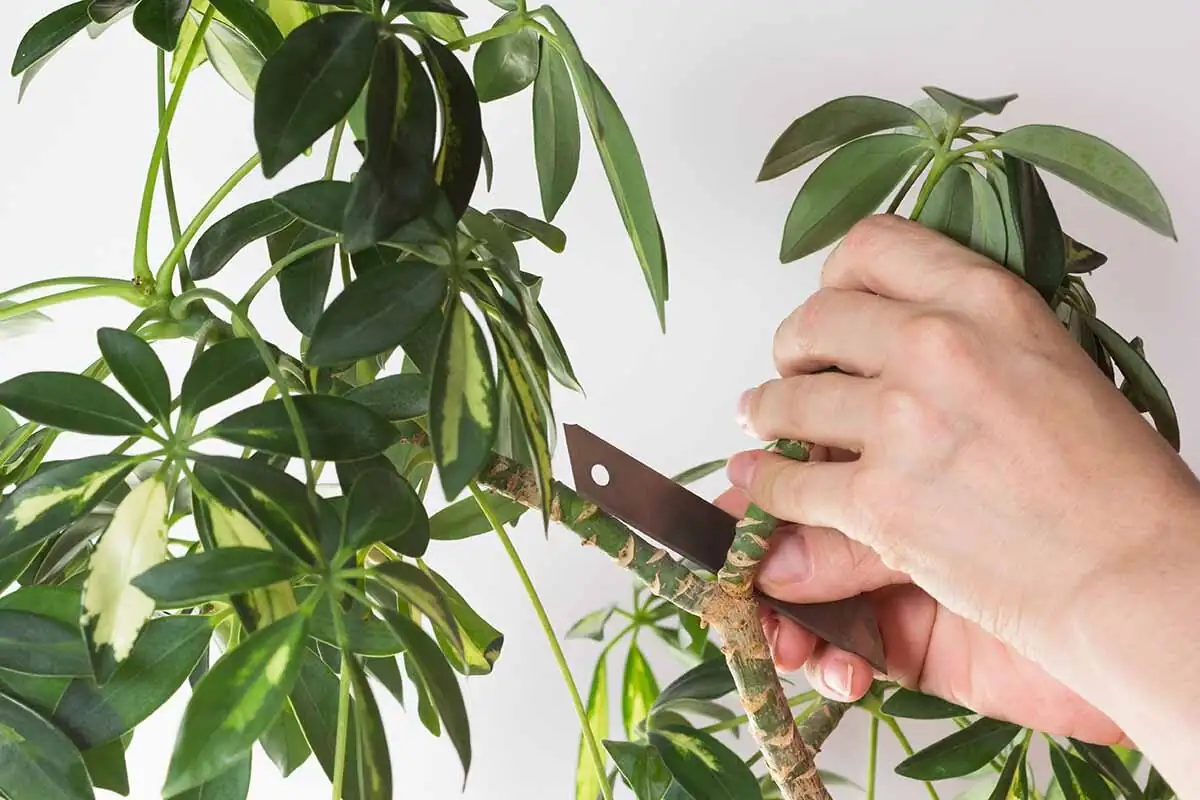
- Timing: Spring into early/midsummer (about May–July) is the sweet spot.
- Method: Cut back long stems by ~1/3 just above a node. New shoots will pop below the cut, building a fuller canopy.
- Repeat: Light shaping 2–3 times over the growing season makes a noticeable difference.
- Ongoing: Regularly remove weak, stretched shoots. Rotate weekly. Consider a stake or moss pole for neat, upright form.
Feeding for steady, not spiky, growth
- Growing season: Monthly at half strength is a safe baseline.
- Vigor option: Every 2 weeks at label strength if you have bright light and consistent watering.
- Winter: Stop or greatly reduce feeding.
Temperature and humidity: comfort equals consistency
- Temperature: Warm and steady is best—roughly 15–30°C (59–86°F). Avoid cold drafts and sudden dips.
- Humidity: Handles typical home air, but looks best around 60%. Use a pebble tray, humidifier, or group plants; combine with gentle airflow to prevent leaf spot.
Buy and acclimate like a pro
- Choose well: Look for firm stems, dense, glossy leaves, and clean foliage—no sticky residue, webbing, scale bumps, or sour-smelling soil.
- After bringing it home: Park it in bright shade with good airflow. Keep the mix lightly moist (not wet). When you see fresh new growth, move it to its long-term bright spot.
Repotting and support
- When: Spring. Young, fast growers may enjoy yearly updates; larger, established plants often every 2 years or when rootbound.
- How: Step up one pot size, keep the mix free-draining, and consider a heavier pot for tall, top-heavy plants.
- Support: Train upright on a stake or moss pole for tidy, architectural lines.
Propagation, the easy way
- Stem cuttings (April–September): Take 10–12 cm (4–5 in) tips or semi-ripe pieces, remove lower leaves, and root in moist perlite/sand or a very airy mix. Warmth around 25°C (77°F) and high humidity speed things up; rooting often takes ~1 month.
- Water propagation: Works too—pot up once roots are a few centimeters long.
- From seed: Sow in spring; germination typically 3–4 weeks at 19–24°C (66–75°F). Pot up seedlings at ~10 cm (4 in).
Troubleshooting: fast fixes
- Sudden leaf drop:
- Most common causes: overwatering, cold drafts/temperature drops, or too little light.
- Fix: Let the mix dry more, move to brighter indirect light, and keep it warm and draft-free.
- Leggy growth:
- Cause: Insufficient light.
- Fix: Brighter indirect light, rotate weekly, prune above a node to branch, and consider a support.
- Leaf spot:
- Cause: Stale, humid air.
- Fix: Remove affected leaves, improve airflow; use fungicide only if necessary.
- Pests:
- Spider mites, scale, mealybugs—wipe leaves and treat early with horticultural oil or insecticidal soap; repeat as directed.
Safety check
Toxic if ingested; the sap may irritate skin and mouth. Keep away from pets and children, and wash hands after pruning.
A little backstory and symbolism
- Roots and range: Native to southern China (including Hainan) and Taiwan; now a worldwide houseplant favorite.
- Why “umbrella”? Each leaf is a glossy hand of oval leaflets—like a tiny umbrella or goose foot.
- Symbolism: Often linked with protection, resilience, and good fortune. This is more cultural than botanical—its sheltering “canopy” evokes safety and abundance, themes often echoed in feng-shui-inspired decor.
- Taxonomy twist: Many plants once sold as “Schefflera” are now placed in Heptapleurum, including this species.
Quick care recap
- Light: Bright, indirect; filter harsh sun.
- Water: Spring–autumn when top 2–3 cm are dry; winter much less—often monthly.
- Soil: Free-draining; pot with drainage; avoid standing water.
- Feeding: Monthly at half strength in growth season; pause in winter.
- Temp/Humidity: 15–30°C; avoid cold drafts; normal home air is fine, ~60% is ideal.
- Pruning: May–July to prevent legginess and build density; repeat light shaping.
- Repot: Spring—yearly when young; every ~2 years when established.
Follow this blueprint and your Heptapleurum arboricola will reward you with strong, compact growth, glossy leaves, and the tidy, umbrella-shaped silhouette that made it a classic.