


English ivy has a reputation for wandering—draping from shelves, spiraling up trellises, and carpeting shady corners. Give it the right light, a reliable watering rhythm, and a little humidity savvy, and Hedera helix will stay dense, glossy, and gorgeously compact instead of stringy or mite-prone. Here’s your step-by-step, season-proof playbook for both indoor and outdoor success.
Meet Hedera helix at a glance
- Identity: Hedera helix L. (English Ivy, Common Ivy), family Araliaceae, genus Hedera
- Native range: Europe, from Scandinavia east to Russia, and North Africa
- Habit: Evergreen, woody vine that climbs with tiny aerial rootlets or sprawls as a dense groundcover
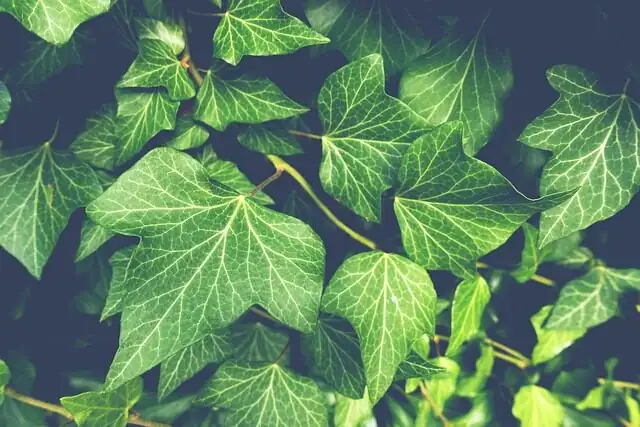
- Foliage: Juvenile stems carry glossy, 3–5 lobed leaves; mature flowering shoots shift to more oval, unlobed leaves. Variegated cultivars sport cream, white, or yellow markings (they need brighter light to hold color).
- Size: Outdoors, up to ~24 m (80 ft). Indoors, typically trained or trailed to 0.9–1.8 m (3–6 ft).
Light that prevents legginess
Legginess = long gaps between leaves and floppy growth. The cure is consistent, bright, filtered light with smart placement.
Indoors: find the sweet spot
- Best window positions: Bright, indirect light near an east- or north-facing window. A few feet back from a bright south/west exposure also works if the plant is shielded from hot afternoon sun.
- Rotate weekly: Quarter-turn the pot to keep growth even and reduce stretching toward one side.
- Trellis and pinch: Train stems onto a small trellis or hoop and pinch soft tips to encourage branching and a fuller silhouette.
- Variegated cultivars: Give them a touch more brightness (still filtered) to keep their patterns crisp and prevent reversion to green.
- Grow lights: If rooms are dim, supplement with LED grow lights on a gentle setting for ~10–12 hours/day; keep the fixture high enough to avoid heat stress.
Signs to watch:
- Too little light: Fast stretching, sparse leaves, pale green color.
- Too much direct sun: Scorched, crispy patches—especially in afternoon sun.
Outdoors: shade with finesse
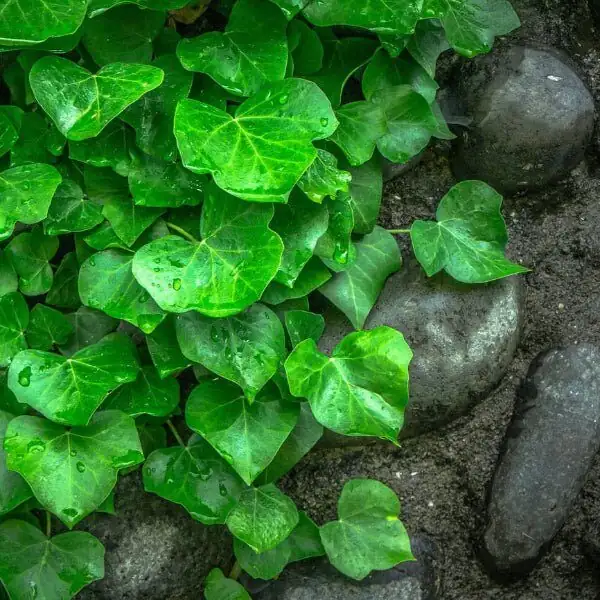
- Aim for partial to full shade. Morning sun is fine in many climates; avoid hot afternoon sun and reflective heat (e.g., against bright walls).
- In heat waves, consider temporary shade cloth to prevent scorch on tender or variegated leaves.
A foolproof watering rhythm
Ivy likes evenly moist—not soggy—soil. Erratic soaking and drying invites stress and pests, while constant wetness risks rot.
Indoors: the 1-inch/soak-and-drain method
1) Check: Let the top ~2.5 cm (1 in) of potting mix dry before watering again.
2) Water: Give a thorough soak until water runs from the drainage holes.
3) Drain: Empty saucers; never let the pot sit in water.
4) Learn your plant’s pace: Lift the pot after watering and again when dry—pot “weight” quickly becomes a reliable cue.
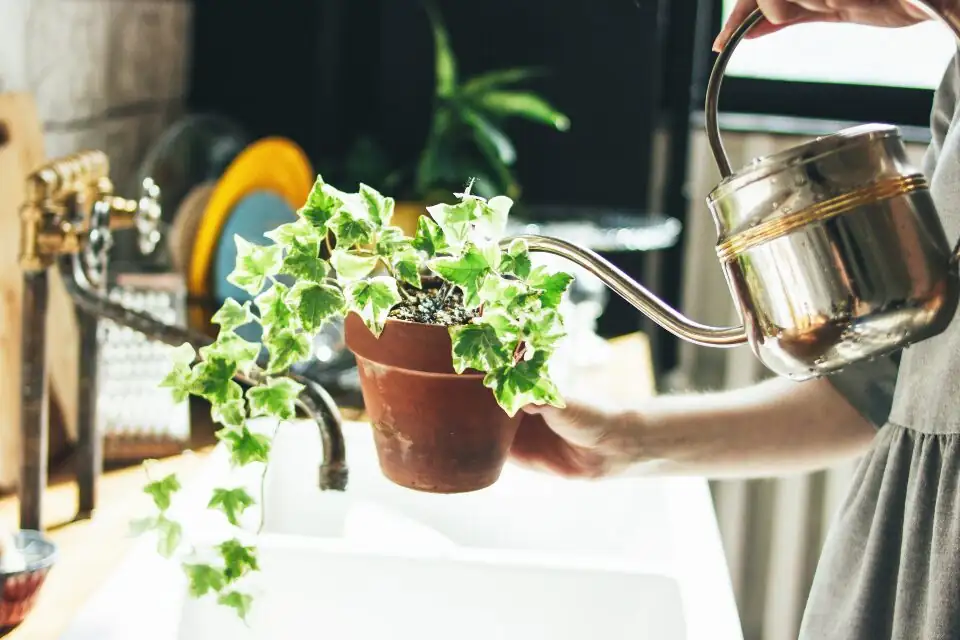
- Typical cadence: Roughly twice per week during active growth indoors; reduce in winter.
- Potting mix and pot: Use a loose, well-draining mix and a pot with drainage. Dense, compacted soil + overwatering = root/stem rot.
- Red flags:
- Overwatered: Yellowing leaves, mushy stems, sour soil smell—check roots and improve drainage.
- Underwatered/dry air: Crispy edges, droop, and higher risk of spider mites.
Outdoors: keep the carpet green
- Target: About 1.3–2.5 cm (0.5–1 in) of water per week (rainfall + irrigation), more in heat or on fresh plantings.
- Tools that help: A basic rain gauge or even a tuna can set in the bed tells you when you’ve hit an inch.
- Mulch: A thin organic mulch helps retain moisture, but keep it just off the vine bases to discourage rot.
Humidity hacks to dodge spider mites
Low humidity is the spider mite’s best friend. Keep the air comfortably moist and the foliage clean.

- Aim for medium to high humidity indoors. Group plants, run a humidifier, or use a pebble tray. Occasional morning misting is fine, but avoid keeping leaves constantly wet.
- Rinse and refresh: Give ivy a gentle, lukewarm shower or sink rinse monthly to knock off dust and mites. Let it drain well.
- Airflow matters: Provide gentle ventilation—stale air fosters pests and disease.
- Smart placement: Keep away from heat vents and blasting AC that desiccate leaves.
- Early detection: Tap a stem over white paper; tiny moving dots signal mites. Treat promptly with insecticidal soap or neem oil, repeating weekly for several rounds. Boost humidity and rinse foliage to make conditions hostile to mites.
Common companions to watch for: aphids, scale, and mealybugs. Rinse first, then treat. Improve airflow, and avoid overfertilizing, which can attract sap-suckers.
Soil, pots, and feeding
- Soil: Fertile, moisture-retentive but well-drained; average loams around pH 6.0–7.5 work well. Indoors, choose a loose, well-draining potting mix.
- Repotting: Small plants about yearly; larger plants every two years (or when drying out very fast, becoming root-bound, or top-heavy). Step up just one pot size, refresh mix, then keep lightly shaded and evenly moist while roots re-establish.
- Feeding: Spring and summer, feed every 2 weeks with a balanced fertilizer (e.g., 20-20-20, or organic 2-2-2). Pause feeding in winter and during stress (very hot, very cold, or very dry spells). Flush pots occasionally to prevent salt buildup.
Shape it up: pruning, training, and easy propagation
- Pruning: Spring is the big tidy—reduce length, thin congested stems, and pinch tips for bushiness. You can trim stray runners anytime. Remove dead or damaged leaves for airflow.
- Training: Ivy naturally clings with aerial rootlets. Guide stems onto a mini trellis, hoop, or topiary frame with soft ties for tidy, architectural lines.
- Propagation (foolproof!):
1) Take a 10–13 cm (4–5 in) stem cutting below a node; remove lower leaves.
2) Root in water or a moist propagation mix; cover lightly for humidity if using soil.
3) Roots appear in ~2–4 weeks. Pot up and keep evenly moist until established.
4) Or try layering—pin a stem to soil and it will usually root on its own.
- Best seasons: Spring and fall.
Seasonal checklists
Indoors
- Spring
- Repot if needed, prune for shape, and start regular feeding.
- Refresh light: move nearer bright, filtered light as days lengthen.
- Propagate new plants while growth is peppy.
- Summer
- Shield from hot afternoon sun; watch water needs (usually higher).
- Boost humidity and airflow; pause fertilizer during heat waves.
- Inspect weekly for spider mites.
- Fall
- Keep care steady; great second window for propagation.
- Clean leaves and adjust placement as natural light declines.
- Winter
- Reduce watering; stop fertilizing.
- Keep above 10°C (50°F), away from cold drafts and hot, dry air.
- Provide bright, indirect light and maintain moderate humidity.
Outdoors
- Spring
- Check local guidance—English ivy can be invasive in many regions. Contain it, and avoid letting it climb trees.
- Heavy trim or mow on the highest setting to neaten groundcover. Mulch lightly.
- Plant or transplant; ensure good drainage.
- Summer
- Provide ~0.5–1 in water weekly; more in heat.
- Protect from hot afternoon sun, especially variegated types.
- Improve airflow; watch for fungal leaf spots and treat promptly.
- Fall
- Another easy propagation window; keep moisture steady.
- Mature patches may flower in fall; remember berries are toxic to people.
- Remove vines from trees and structures; bag clippings where invasive.
- Winter
- Once established, hardy in many climates (USDA Zones 4–13 vary by cultivar and conditions).
- Little care needed; avoid de-icing salt splash. Inspect that vines aren’t girdling young trees.
Temperature, placement, and hardiness
- Temperature: Grows best around 21–32°C (70–90°F) and appreciates cooler nights indoors. Protect from freezing and drafts; prolonged heat above 32°C (90°F) can slow growth and stress the plant.
- Placement:
- Indoors: bright, filtered light near east/north windows; excellent for shelves, hanging baskets, or a small trellis.
- Outdoors: partial to full shade on shaded walls or as a groundcover—containment recommended.
- Hardiness: Commonly grown across USDA Zones 4–13 (varies by cultivar and local conditions). Indoors, keep above 10°C (50°F).
Troubleshooting quick hits
- Leggy, sparse vines: Increase bright, indirect light; rotate weekly; pinch tips.
- Brown, crispy edges: Underwatering or low humidity; water more steadily and raise humidity.
- Yellowing leaves, mushy stems, sour soil: Overwatering/poor drainage; check roots and refresh mix.
- Scorch/bleaching: Too much direct, hot sun; move to filtered light.
- Variegation fading: Light too low; brighten without giving hot sun.
- Sooty mold/sticky leaves: Sap-sucking pests (aphids/scale); rinse, then treat.
Safety, invasiveness, and good stewardship
- Toxicity: Leaves, berries, and sap are toxic to humans and pets; sap can irritate skin. Keep out of reach and wear gloves when pruning if you’re sensitive.
- Invasiveness: In many regions outside its native range, English ivy can spread aggressively and smother native plants. Contain it, never dump garden waste into natural areas, and consider non-invasive alternatives if that’s a local concern.
A note on ivy’s symbolism
Across centuries, ivy came to symbolize fidelity, friendship, and enduring love—partly because it clings tenaciously and stays green year-round. In Greek and Roman traditions it was sacred to Dionysus/Bacchus; in Victorian floriography (the “language of flowers”), gifting ivy hinted at constancy and marriage. These meanings aren’t botany, of course, but cultural stories that mirror how the plant behaves in nature: steadfast, persistent, and bound to what it embraces.
—
With steady, filtered light, a simple soak-and-drain rhythm, and humidity that keeps mites at bay, Hedera helix will reward you with lush, tailored greenery—on a shelf, a trellis, or cascading from a basket. Keep the seasonal checklist handy, and your ivy will look like it has a personal gardener year-round.