

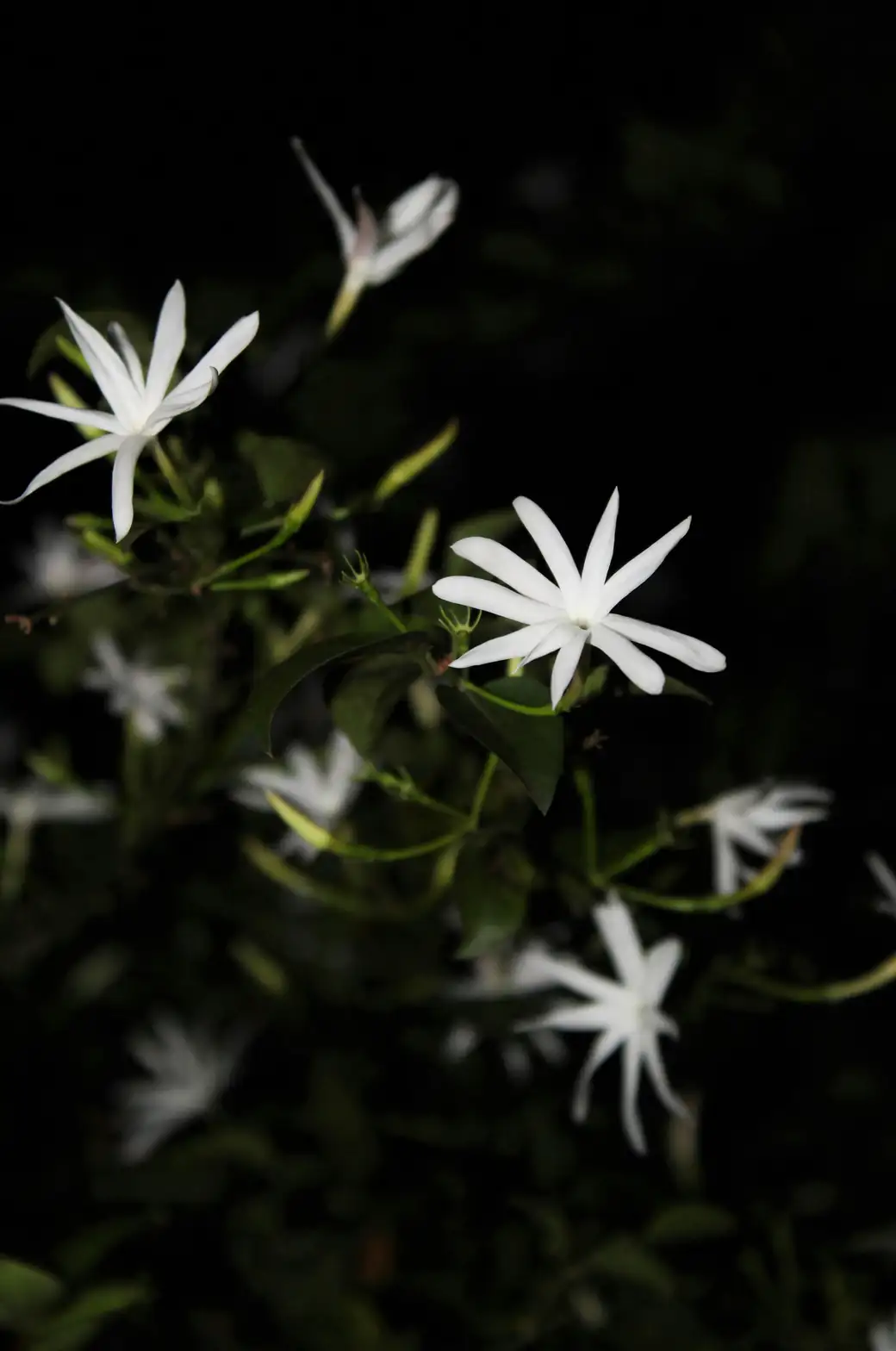
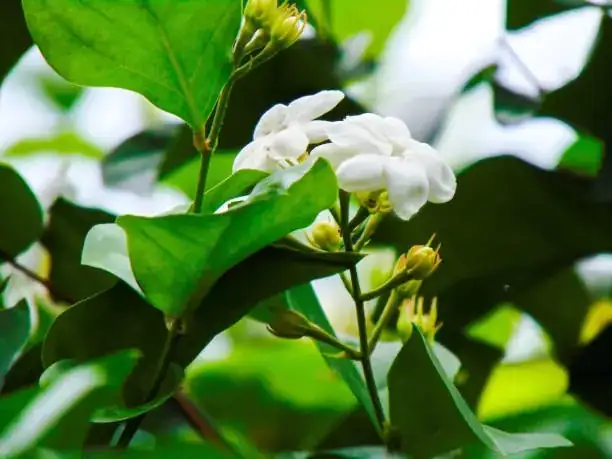
Warm evening air, glossy leaves, and a single white bloom that seems to switch on its perfume at dusk—Arabian jasmine (Jasminum sambac) is the flower behind the most beloved jasmine teas on earth. Here’s the surprise: real jasmine tea isn’t tea with petals stirred in. It’s tea that has spent several nights “living” with fresh sambac blossoms—absorbing their scent in carefully timed rounds known as charges. Below, we’ll demystify that traditional craft, show you a tiny, safe way to try it at home with pesticide-free flowers, and peek into how perfumers capture sambac’s heady, night-blooming note.
Meet Jasminum sambac, the night perfumer
- Also known as Arabian Jasmine, Mogra, Pikake, Maid of Orleans, and Sampaguita.
- Native to tropical Asia and now grown across warm, frost-free regions worldwide.
- An evergreen to semi-evergreen shrub with waxy white flowers that open and project their fullest fragrance on warm evenings.
- Container-friendly and sun-loving: give it 6–8+ hours of direct sun and steady warmth for the most blooms and the richest scent.
Why this one for tea? Sambac’s bouquet leans sweet, fruity, and luxuriously “narcotic,” with notes from volatiles like benzyl acetate and linalool, plus a pinch of indole that turns the bloom from pretty to unforgettable. Those molecules are why the tea is so haunting—and why multiple scenting rounds matter.
What “scenting” really means (and why multiple charges matter)
Forget sprinkling petals into a canister. In the traditional craft (窨制, yìnzhì):
- Fresh sambac buds are picked late afternoon to early evening, just before they unfurl.
- Tea—most often a spring green tea, sometimes a lightly oxidized oolong or even white tea—is layered with opening blossoms at night.
- Over hours, the tea soaks up aromatic volatiles while producers regulate temperature, humidity, and airflow.
- Spent flowers are removed, the tea is gently “refreshed” (air-dried and lightly warmed to drive off moisture), and the cycle repeats.
- Premium teas may see 5–9 scenting rounds, each deepening complexity. Think of it as layering a fragrance: the first charge gives brightness, later charges add depth and glow.
This isn’t about making the tea smell “strong.” It’s about proportion, polish, and permanence—so the aroma blooms from the cup yet feels woven into the leaf, not sprayed on.
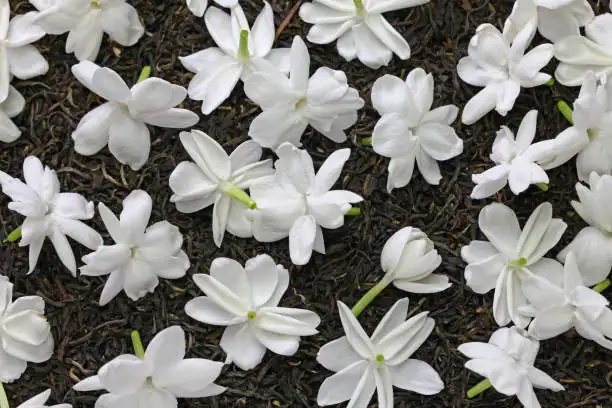
A safe mini home trial (with pesticide‑free blooms only)
Want to witness scent transfer on a micro scale? Try this tiny, careful experiment. If you can’t guarantee edible-grade flowers, do the scenting as a learning exercise—and don’t drink the tea.
First, safety and sourcing
- Use only pesticide-free, edible-grade flowers. Best is to grow your own without systemic pesticides, or buy from a trusted edible-flower grower.
- Avoid floristry blooms (often treated with sprays) and garden plants recently treated with insecticides or fungicides.
- If you’re unsure about your flowers’ safety, consider the trial non-edible and discard afterward.
What you’ll need
- 8–12 g high-quality tea: a fresh green (delicate, spongy, very receptive) or a lightly oxidized oolong (more forgiving to brief gentle warming).
- 6–10 g freshly picked Jasminum sambac blossoms per charge (stems trimmed; petals clean and dry).
- A wide glass or ceramic container, breathable cover (clean cloth), and a baking tray or mesh for drying.
- Optional: dehydrator or oven with a very low setting (40–50°C / 104–122°F), a kitchen scale, paper towels.
Timing the flowers
- Pick at dusk when buds show white tips and will open that night. Let them rest 30–60 minutes indoors to begin unfurling.
- If needed, give a very quick, gentle rinse and pat completely dry—excess moisture is the enemy.
Charge 1 (Night One)
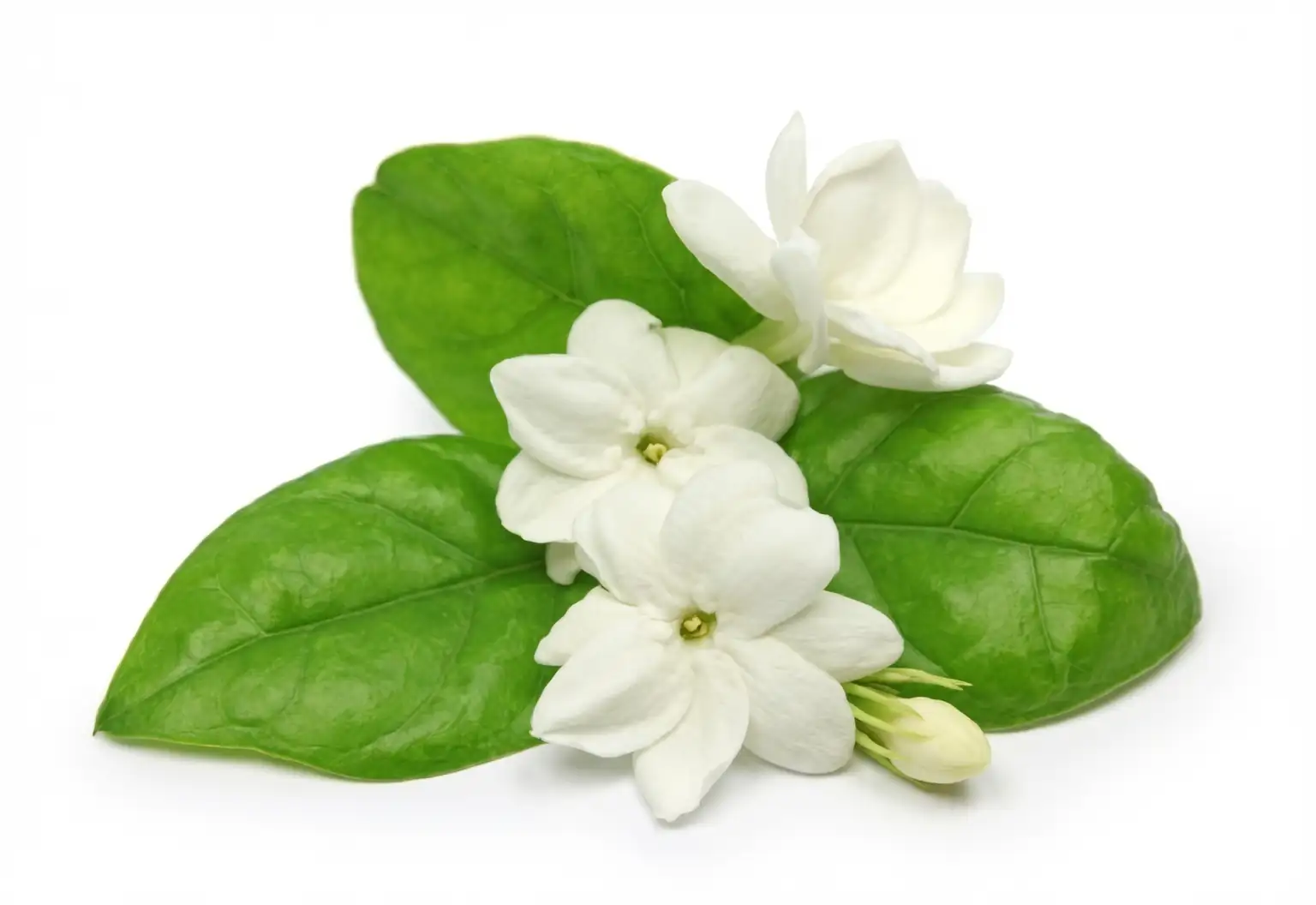
- Pre-dry the tea for 10 minutes at room temperature to remove surface humidity.
- In a shallow layer (2–3 cm/1 in deep), spread tea in your container. Scatter freshly opening blossoms across the surface at about 0.6–1.0:1 blossom-to-tea by weight (or a loose, even layer by sight).
- Cover with breathable cloth (not airtight). Keep in a cool room (around 22–28°C / 72–82°F), away from direct sun. Leave 6–8 hours overnight.
- By morning, remove and discard the spent blossoms. Spread the tea thinly on a tray to air for 2–3 hours.
- Finish with a gentle, brief dry: 20–30 minutes at 40–50°C (104–122°F), just enough to drive off moisture without cooking green tea. Cool fully.
Charges 2–3 (Night Two and Three)
- Repeat the overnight blossom charge, morning removal, air rest, and gentle drying.
- Two to three nights will show a clear difference; stop if the leaf ever feels damp or smells off.
Rest and brew
- After the final dry, let the tea rest in a loosely lidded jar for 3–7 days to harmonize.
- Brew test: green tea at ~80°C (176°F), oolong at ~90°C (194°F). Notice how the aroma rises from the liquor rather than shouting from the leaf.
Troubleshooting and safety checks
- If you see condensation, spread the tea thinner and reduce blossom mass next time.
- Any hint of mustiness? Discard. True jasmine should smell clean, sweet, and heady.
- If your flower source wasn’t guaranteed edible, don’t drink the result—enjoy the scent as an educational exercise.
Choosing the right base tea
- Green tea: most common for classic jasmine; its tender spring leaf is highly absorbent and keeps the profile bright and dewy.
- Light oolong: adds body and a silkier mouthfeel; more tolerant of brief low-warmth drying between charges.
- Pearls vs. loose: In traditional practice, rolling into pearls typically happens after scenting (or between late rounds), helping “lock in” aroma.
Grow your own sambac for safe, scent-rich blossoms
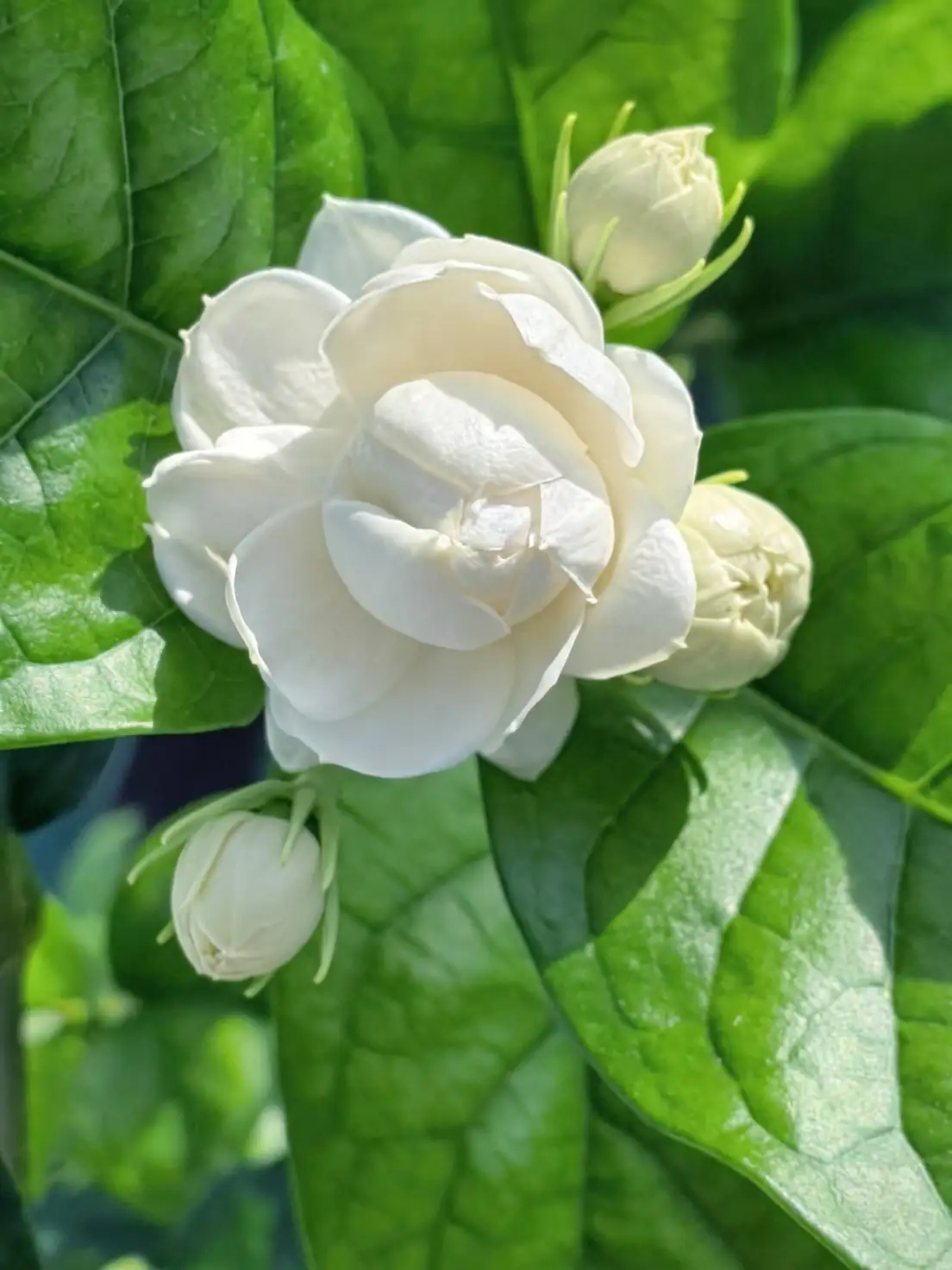
- Light: 6–8+ hours of direct sun for best bud set and strong perfume.
- Warmth: thrives in 25–35°C (77–95°F); protect from cold and bring indoors before nights dip below 10°C (50°F).
- Water: keep potting mix evenly moist (never waterlogged). Drought swings reduce buds and scent.
- Soil: rich but free-draining; slightly acidic to near-neutral (pH ~6.5–7.5).
- Pruning: pinch and prune after bloom flushes to stimulate new flowering shoots—where the next round of buds forms.
- Pests: watch for aphids, mites, whiteflies, scale, thrips. Use good airflow and, if needed, insecticidal soap or horticultural oil. If you intend to scent tea, avoid systemic pesticides altogether.
Note on safety: True jasmines (Jasminum species) are generally considered low-toxicity, and sambac flowers are widely used to scent tea. Still, any plant material can upset sensitive stomachs, and traditional sources caution against ingesting the root. Avoid medicinal/internal use without qualified guidance.
From garden to bottle: how perfumers capture sambac
Perfumers chase the same twilight magic—but bottles don’t get filled by squeezing petals.
- Jasmine absolute (the workhorse):
- Fresh flowers are gently solvent-extracted to make a concrete (wax + aroma), then washed with ethanol to yield the absolute—a dense, golden-brown liquid that smells unmistakably of living sambac.
- Why not steam-distill? Sambac’s most important volatiles don’t survive or don’t come over well in steam; true “jasmine essential oil” is essentially a myth on the market.
- Enfleurage (the old romance):
- Cold fat is spread thin and “charged” nightly with fresh blossoms, much like tea scenting. After many rounds, the perfumed fat (pomade) is washed with alcohol to free the aroma.
- It’s mesmerizing but laborious and now rare; some artisan houses keep it alive for its creamy, petal-real nuance.
- Headspace and reconstruction (modern wizardry):
- Perfumers trap the living flower’s air-borne volatiles without picking it, then analyze and rebuild the profile using naturals and isolates (think linalool, benzyl acetate, indole, methyl anthranilate, and friends).
- These methods help capture the “glow” of freshly opening sambac on a warm night with impressive fidelity.
Practical note: Absolutes are potent and intended for perfumery; never ingest and always dilute appropriately for skin.
Why multiple charges create better jasmine tea—and better perfume
- Volatile balance: Early charges contribute lift and freshness; later ones reinforce deeper, fruitier, and indolic facets that anchor the aroma in the leaf.
- Moisture management: Each round introduces humidity from flowers; careful re-drying resets the tea so the next charge adds fragrance, not mildew.
- Integration over intensity: The goal is a seamless, lived-in perfume rather than a loud top note—mirroring how perfumers layer and fix florals in a composition.
Flower language, symbolism, and the sambac paradox
Arabian jasmine is widely linked with love, purity, and gentle devotion—hence its role in weddings across South and Southeast Asia and its status as the national flower of the Philippines. Victorian “flower language” popularized tidy moral meanings for blooms, but sambac dodges simple labels. Its perfume pairs angelic creaminess with a thrilling, animalic hum (thanks in part to indole), so it reads both innocent and sensual. That tension—halo and heartbeat—is exactly why it captivates.
Quick tips for better blooms and better tea scenting
- Sun is non-negotiable. Weak light equals fewer buds and fainter scent.
- Keep moisture steady. Drought drops buds; soggy soil sulks roots.
- Prune after a bloom wave. New shoots carry the next flowers.
- For home scenting, keep batches tiny, airflow gentle, layers shallow, and temperatures low.
- If in doubt about flower safety, enjoy the experiment as a smell study—not a beverage.
With a handful of night-opening blossoms and a few grams of good tea, you can watch fragrance move—petal to leaf, evening to morning—much the way perfumers coax it into an absolute and tea masters weave it through successive charges. That’s the real magic of Jasminum sambac: not just a beautiful smell, but a craft that teaches patience, timing, and the art of restraint.


