

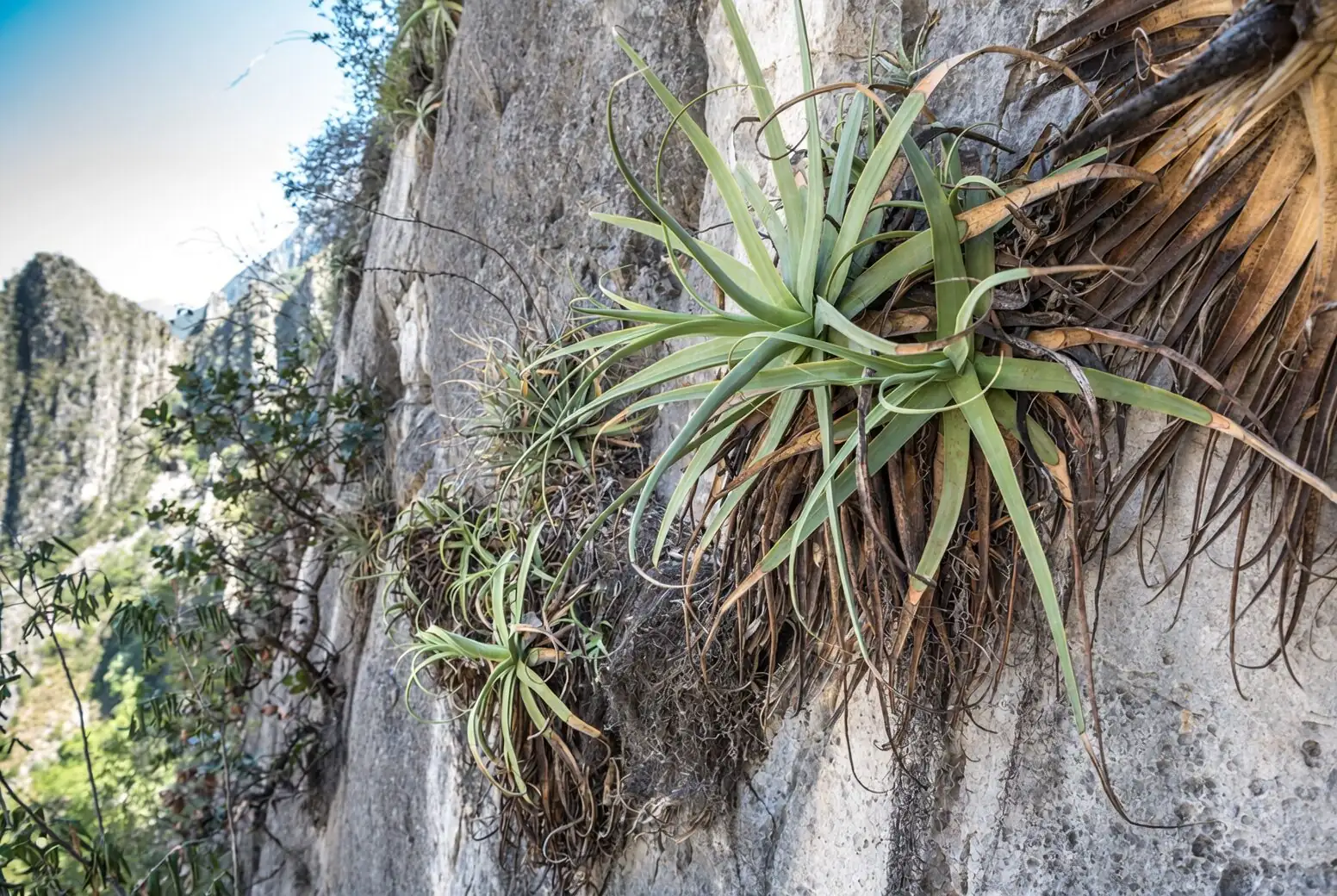
Dawn in the calcareous canyons of east‑central Mexico comes up hard and bright. On the pale, pitted limestone of Hidalgo and Veracruz, wind scrapes the slopes and the sun wastes no time. Out of this glare rise pale columns, silvered like elders in a crowd—the Old Man Cactus, Cephalocereus senilis—wearing its weather in a mane of light.
The land that made it
- Native range: Endemic to east‑central Mexico, notably Hidalgo and Veracruz
- Habitat: Arid limestone slopes and canyons, within open, xeric scrub
- Daily realities: Blazing, near-vertical sun; desiccating wind; thin, stony soils that drain as fast as a desert whisper
In places like these, survival isn’t abstract. It’s engineered, generation by generation, into form and surface. The Old Man Cactus reads like a ledger of pressures met and solved.
How the desert wrote the white hairs
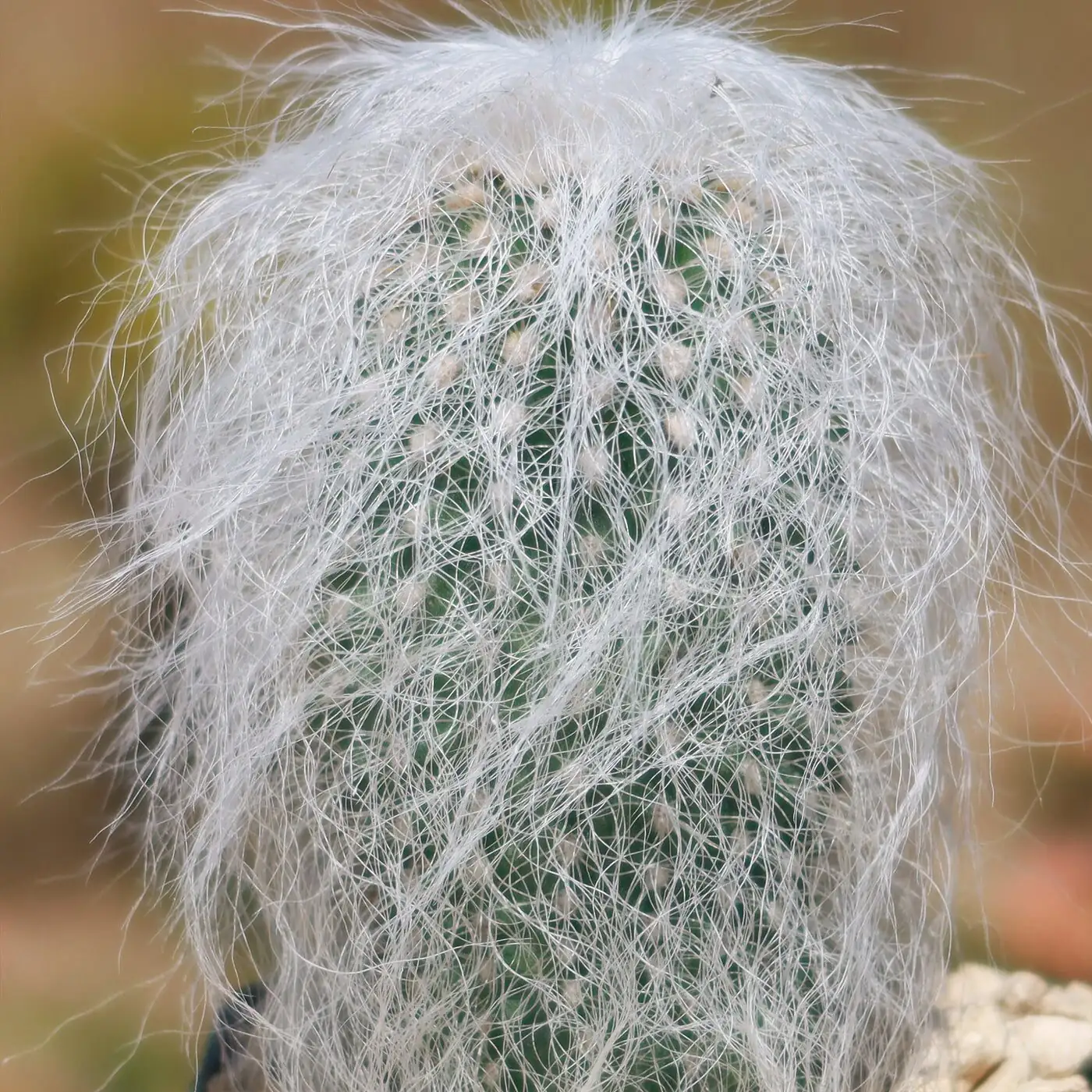
Stand close to a young column and you’ll see it: not “fur,” but long, fine, silky hairs—modified spines—streaming off each areole. They’re most luxuriant on young growth, knitting a soft-looking but purposeful veil over the green.
What that hair does:
- Sunshield: The silver-white fibers bounce a big share of incoming light, tempering scorch on the stem beneath. Think of it as a built‑in parasol that lets photosynthesis proceed without sunburn.
- Wind brake: Those hairs roughen the air just above the skin of the plant, slowing airflow over the surface and reducing moisture loss—a tiny boundary layer in a huge, dry world.
- Thermo-buffer: A pale coat heats up slower than dark skin, helping even out temperature swings on scorching afternoons and cool nights.
- Armor with a secret: Under the wool, real spines still lurk. The softness is an illusion that hides a fortress.
This is the cactus’s great sleight of hand: dress like a cloud to live in a furnace.
Shape forged by scarcity
- Habit: Upright, columnar stems, usually unbranched. With age, plants can clump from the base—like a small grove of silver poles clustered on a rock shelf.
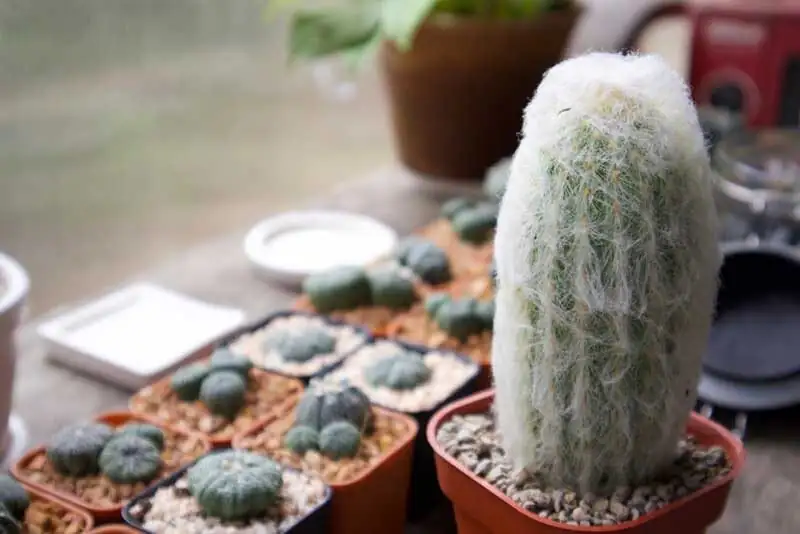
- Size: In containers, a typical plant reaches about 30 × 10 cm (12 × 4 in). With time and strong light—especially in a greenhouse or warm outdoor climate—it can become much taller.
- Hair pattern: Densest on young segments where sun and wind bite hardest; always remember that sharp spines may be tucked beneath the “wool.”
Flowers, if you’re lucky
In habitat, mature plants may push summer flowers in shades of red, yellow, or white. In pots and indoor life, they are famously reticent—blooming is uncommon, and that’s part of their mystique. The story is told mostly in line and light, not petals.
From canyon to windowsill: care that honors the origin

Light
- Full sun grows the densest, healthiest hair and firmest columns.
- In very hot summers or after moving a plant outdoors, start with bright light and give light afternoon shade for a week or two to prevent sun scorch while it acclimates.
Temperature and placement
- Ideal range: 10–32°C (50–90°F).
- Protect from frost; aim to keep above ~5°C (41°F).
- Best spots: Brightest window, sunroom, or greenhouse. You can summer it outdoors in full sun once acclimated; winter it in a cool, very bright place.
Soil and potting
- Use a very fast‑draining cactus mix. DIY: equal parts potting soil, coarse sand, and perlite or pumice.
- Start young plants in a modest pot (around 10 cm / 4 in wide). Resist “potting up” too far—excess soil stays wet and risks rot.
Watering
- Spring–summer: Water thoroughly, then wait until the top 1–2 cm (0.4–0.8 in) of mix is completely dry before watering again.
- Winter rest: Cut back drastically—just 1–2 light waterings for the entire season (or none if kept cool). Cold + wet roots is the fast lane to rot.
Humidity and airflow
- Prefers low humidity with good air movement.
- Try to keep the white hairs dry to discourage pests and fungal issues.
Feeding
- Once a month in spring and summer with a cactus fertilizer (full strength per label or slightly diluted).
- Stop feeding in fall and winter.
Repotting and grooming
- Repot young plants each spring; mature plants about every 2 years. Step up only one size at a time.
- Pruning is usually unnecessary. If you must remove damaged tissue, use a sterile blade and let cuts callus fully before watering again.
Propagation
- Most common from seed.
- Occasionally, older clumps produce basal offsets you can separate. Let cut surfaces callus, then pot into dry, gritty mix.
A year with your Old Man Cactus
- Spring: Repot young plants; restart monthly feeding. Increase watering as days lengthen.
- Summer: Give full sun; in extreme heat, provide a touch of afternoon shade if leaves show stress after a recent move. Water only when the mix dries.
- Fall: Taper watering and stop feeding.
- Winter: Keep cool and very bright; water sparingly (or not at all if kept cool).
Fieldcraft, distilled: why limestone matters
- Razor-drainage: Limestone slopes shed water fast. Mimic this with a gritty mix and a pot that breathes (unglazed terracotta is excellent).
- Mineral lean: Growth is slow and steady in habitat—don’t push with heavy fertilizer or constant moisture.
- Sun + wind partnership: Hair density responds to strong light; airflow keeps the coat fluffy and clean.
Buying and handling tips
- Choose a plant that is firm and upright with clean, dry hairs—avoid soggy or matted patches, especially near the base.
- Handle with gloves. Spines hide under the hair and can surprise you.
- For young plants, a small, heavy-bottomed pot helps prevent tip-overs in bright windows.
Health and safety
- Biggest risk: Rot from overwatering or slow-draining soil.
- Pests to watch: Mealybugs (including root mealybugs), scale, spider mites. Treat early with insecticidal soap or horticultural oil and improve airflow.
- Not known to be poisonous, but spines can injure skin and cause irritation. Keep away from curious hands and paws.
Symbolism and “flower language”
- Meanings often linked to this species: longevity, resilience, and quiet wisdom—themes the plant wears openly in its slow growth and silvered “age.”
- Origin of the idea: Modern “flower language” is more cultural than botanical—a blend of Victorian floriography and contemporary horticultural storytelling. With Old Man Cactus, the symbolism likely arose from its appearance and patience: it thrives where other plants falter, and it ages into presence rather than spectacle. Even without frequent flowers, it communicates endurance in every fiber.
Why this cactus captivates
- It looks tender but lives tough—an expert in turning glare into shelter.
- It sculpts space with a single, steadfast line.
- It brings a slice of Hidalgo’s and Veracruz’s stark beauty indoors, asking little more than sun, air, and time.
Common questions, answered
- How often should I water it?
- Water only when the top 1–2 cm (0.4–0.8 in) of soil is completely dry. In winter, cut back to just 1–2 waterings for the whole season (or none if it’s kept cool).
- How much light does it need?
- Full sun is best. In very hot summers, offer bright light with a touch of afternoon shade, especially right after moving it outdoors.
- When and how often should I fertilize?
- Feed once a month in spring and summer with a cactus fertilizer. Stop in fall and winter.
- What pot and soil should I use?
- A fast-draining cactus mix is essential; try equal parts potting soil, coarse sand, and perlite/pumice. A small pot suits young plants.
- When should I repot?
- Every spring for young plants; about every 2 years for mature ones. Increase pot size only slightly each time.
In the end, Cephalocereus senilis is a lesson in elegant problem‑solving. On a blazing limestone shoulder in Hidalgo or Veracruz, it learned to wear light itself as armor. Give it the same—bright sun, sharp drainage, spare water—and that pale, wind‑combed mane will tell the story, year after patient year.