

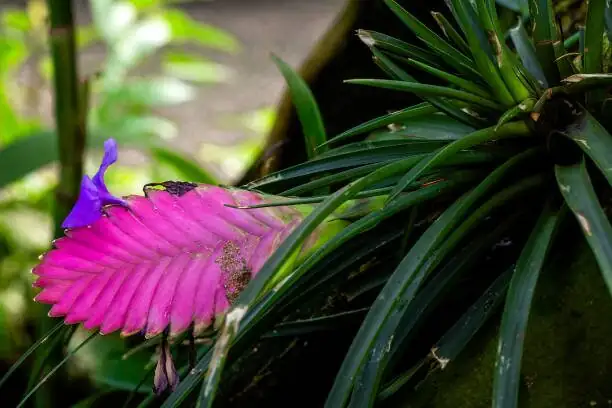
If you love a plant that performs on cue, Tillandsia juncea is your kind of air plant. Those slender, fountain-like leaves aren’t just for show—they’re the prelude to a vivid, comet-pink bloom spike with dainty purple flowers. With the right light and a smart nutrition plan, you can nudge this forgiving epiphyte into a long, colorful display and then leverage that momentum to produce a flush of pups.
Meet Tillandsia juncea (aka Juncea Air Plant)
- Habit: Clumping epiphyte with long, narrow, pointed green leaves in a tidy, fountain shape
- Size: Typically 15–30 cm (6–12 in) tall; clumps spread 15–30 cm (6–12 in) over time
- Origin: Native to Mexico and Central America
- Bloom: A bright pink, spike-like inflorescence that stays colorful for weeks; small purple tubular flowers open near the tip
- Season: Most often late spring to summer (timing varies with conditions)
- Personality: Easygoing and resilient—tolerates the occasional missed soak if it dries quickly afterward
The Bloom Trigger: Light + Nutrition, Working in Tandem
Think of bloom as a light-fueled, nutrient-assisted event. Give the plant energy with bright light, then offer just enough fuel (fertilizer) to convert that light into a spike.
The light recipe
- Aim for 5–8 hours of bright, indirect or filtered light each day.
- Gentle direct morning sun is welcome. Avoid harsh midday sun unless humidity is higher and airflow is excellent.
- Indoors: Place near a bright window with moving air (a fan on low is perfect).
- Outdoors (warm seasons): Bright shade or dappled light with consistent airflow.
What you’re watching for: Leaves should stay firm and springy, not bleached. A healthy plant in bright, indirect light will thicken and stand more upright, often the first sign it’s gearing up to bloom.
The nutrition plan
- Feed monthly in spring and summer using a bromeliad/air-plant fertilizer at 1/4 strength, or a low-copper orchid fertilizer.
- Every few waterings, rinse with plain water to prevent mineral buildup.
- Less is more: consistent, dilute feeding encourages bloom without scorching delicate leaf tips or bracts.
Hydration and airflow (the quiet catalysts)
- Soak 15–30 minutes, about 1–2 times per week in warm, dry conditions.
- In cooler or darker periods, space soaks to every 10–14 days.
- After soaking, shake out excess water and ensure the plant dries fully within 2–4 hours; never let water sit in the base.
- Pair humidity (ideally 40–70%) with strong airflow so the plant dries quickly.
Temperature sweet spot
- Comfortable range is 18–30°C (64–86°F).
- Protect from cold; avoid sustained temps below about 10°C (50°F).
- Keep conditions steady—wild swings can shorten the bloom window.
The Pink Spike: Keep It Glowing for Weeks
A healthy juncea inflorescence remains candy-pink for an impressive stretch. Treat it like a delicate paper lantern—bright light, gentle handling, and no water trapped inside.
Spike care do’s
- Keep light bright and indirect; morning sun is fine.
- Maintain your regular soak routine, with meticulous drying (tilt the plant, shake well).
- Increase airflow slightly during the bloom to prevent spotting or mildew on bracts and flowers.
Spike care don’ts
- Don’t drench the spike or let water pool in the bract; it shortens color life and invites rot.
- Don’t park it in sealed or stagnant displays (closed terrariums are a hard no).
- Don’t slide it into harsh midday sun—pink bracts can scorch faster than foliage.
When the spike finally fades, trim it cleanly near the base. This redirects energy to pup formation.
After the Show: Supercharge Pup Production
Each blooming rosette won’t bloom again, but it hands off the baton to new offsets (“pups”). Your job is to make that handoff seamless.
Pup maximizer checklist
- Trim the spent spike: Once color fades, remove it to help the plant prioritize offsets.
- Keep the light strong: Bright, indirect light accelerates pup growth.
- Feed lightly: Continue monthly 1/4-strength fertilizer in spring/summer to support new growth.
- Water on schedule, dry fast: Consistent hydration followed by rapid drying prevents base rot in the mother as she ages.
- Airflow > crowding: Good spacing around the base helps pups emerge without staying damp.
Separating pups (if you want singles)
- Timing: Wait until pups reach about 1/3–1/2 the size of the parent.
- Method: Hold the mother at the base, gently twist the pup away, or use sterile snips to cut where they join.
- Option: Leave pups attached to build a fuller, fountain-like clump—spectacular for future bloom displays.
Mounting and Placement for Performance
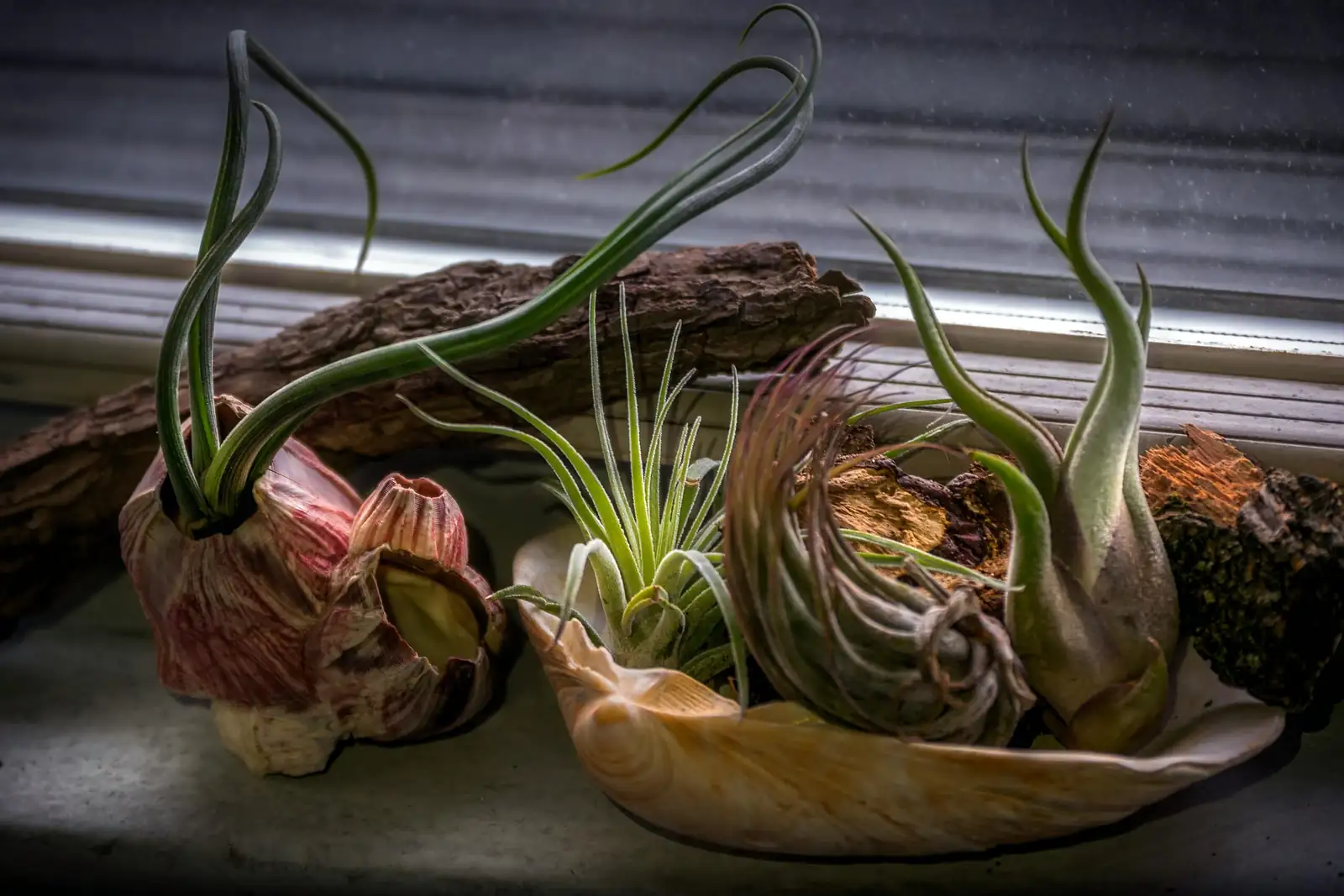
- No soil needed. Mount to cork, driftwood, or place in a mesh basket or airy holder.
- Secure gently with soft ties or waterproof glue, keeping the base uncovered so it breathes.
- Best spots: Near bright windows with moving air; bright bathrooms work if light is truly strong.
- Outdoors in warm months: Bright shade with ample airflow is perfect.
A Simple Seasonal Bloom-Chasing Routine
- Spring–summer: Maximize bright, indirect light; soak 1–2x weekly; fertilize monthly at 1/4 strength; keep airflow strong.
- Fall–winter: Water less often (about every 10–14 days); maximize light; keep above 10°C (50°F); ensure every watering dries within 2–4 hours.
Troubleshooting the Bloom Journey
- Base turning brown or mushy? Classic rot from staying wet too long or poor airflow. Soak to water, shake out thoroughly, and dry fast; never leave water in the base.
- Faded spike color too soon? Usually excess water in the bract or too little light. Increase airflow, keep water off the spike, brighten the placement.
- No bloom despite good growth? Boost light duration and consistency, then keep fertilizing monthly in the growing season. Patience—seasonal timing matters.
- Leaves curling or wrinkling? Slight dehydration—add a midweek soak (still dry fully afterward).
- Silvery “dust” on leaves? That’s normal and healthy—leaf trichomes that capture moisture and nutrients.
Pests, Safety, and Ease
- Pests: Rare but possible—mealybugs and scale. Dab with cotton swabs dipped in 70% isopropyl alcohol, isolate the plant, and improve airflow.
- Toxicity: Generally non-toxic to people and pets, but not edible. Keep away from chewing pets.
- Difficulty: Easy. Juncea is forgiving if you prioritize fast drying and ample airflow.
Buying Guide: Choose a Bloom-Ready Candidate
- Look for firm, springy leaves, a clean base, and tidy, fountain-like form.
- Avoid blackened or mushy centers (rot) and heavy, stuck-on debris.
- A light silvery sheen is a plus—it’s a sign of robust trichomes.
Flower Language and Symbolism
Tillandsia juncea is often associated with independence and resilience—fitting for a plant that anchors lightly, drinks from the air, and thrives without soil. Modern “flower language” for air plants stems less from old Victorian codes and more from the plant’s unique life strategy: a minimalist survivor that rewards attentive light and gentle nourishment with a flamboyant, pink statement. It’s a reminder that grace can be low-maintenance—and that big results come from balanced inputs.
Quick FAQs
- Does the plant die after flowering? The blooming rosette slows down after flowering, but it typically produces pups that carry the clump forward.
- Can I grow it in a closed terrarium? No. Juncea needs airflow to dry quickly. Choose open displays instead.
- What’s the best light? Bright, indirect light to gentle morning sun; avoid harsh midday sun unless humidity and airflow are excellent.
Give Tillandsia juncea bright, steady light, a monthly micro-dose of fertilizer, and swift drying after each soak. You’ll be rewarded first with a long-lasting pink spike—and then with a new generation of pups ready to repeat the show.