

Steam curling from a hot shower. Sunlight softened through a sheer curtain. And in the corner, a living pattern: long, wavy leaves painted in snakeskin greens with a surprise flash of burgundy when you walk by. That’s Goeppertia insignis—the Rattlesnake Plant—turning humid rooms into spa-like retreats while doubling as a color muse for your interiors.
Here’s how to leverage its rainforest roots, pair its wine-red undersides like a pro, and place it so every ripple and pattern earns the spotlight.
Meet the pattern-maker: Goeppertia insignis
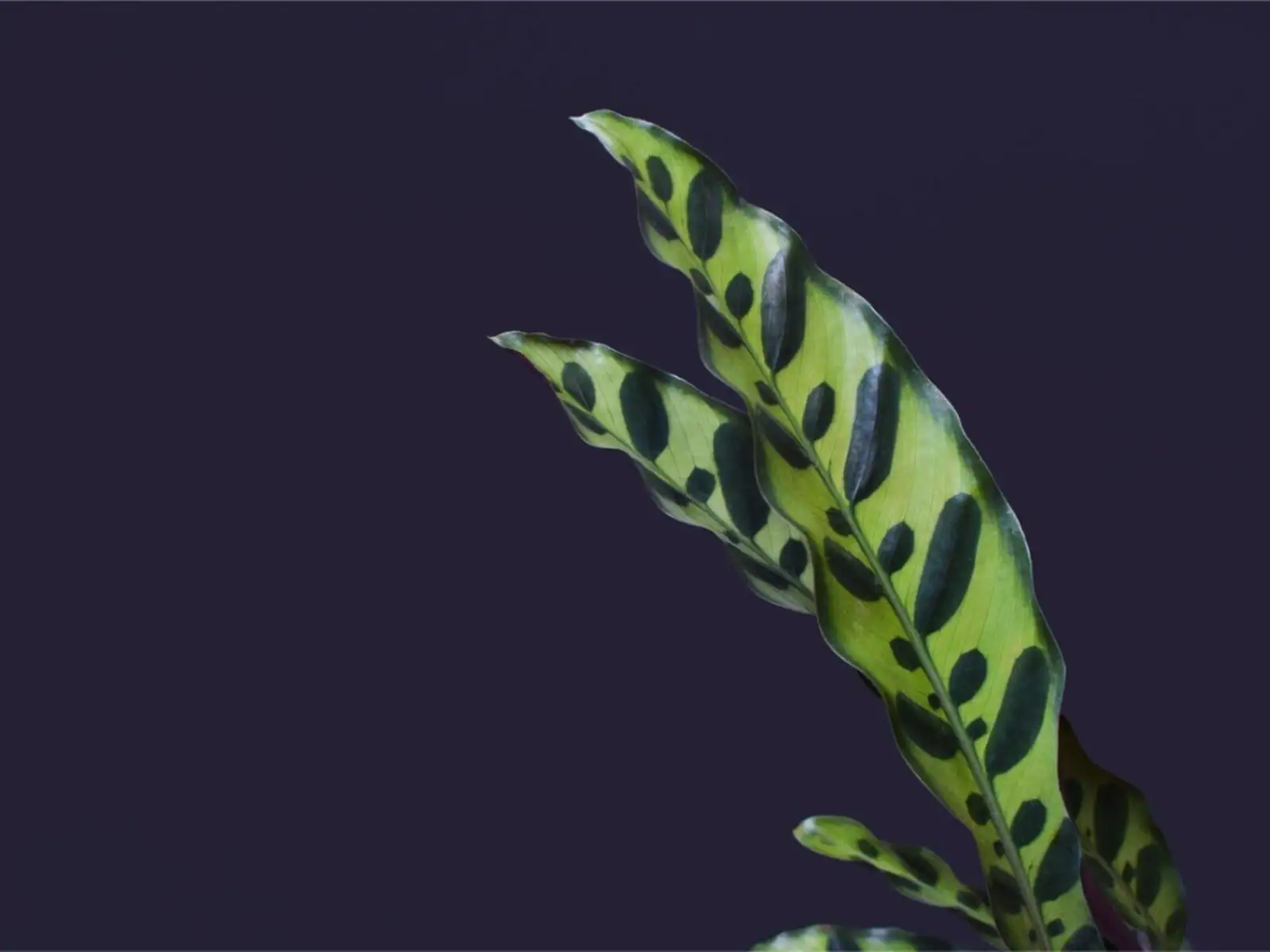
- What it looks like: Long, lance-shaped leaves with wavy edges; snakeskin-like motifs in yellow-green and deep green on top, with rich burgundy undersides.
- Vibe: Calm, restorative, and just a bit dramatic—perfect for creating a spa-like feel in everyday spaces.
- Size and habit: Clump-forming, typically reaching about 75 × 45 cm (30 × 18 in); leaves arise upright to gently arching from the base.
- Roots and relatives: Native to Brazil and part of the Marantaceae family. Still widely sold as a “calathea,” though its accepted name is Goeppertia insignis.
- Pet-friendly bonus: Generally considered non-toxic to cats and dogs.
Why humidity-rich rooms love it (and vice versa)
Bathrooms and kitchens often check every box this plant craves: steady warmth, elevated humidity, and filtered brightness. Give it those three and it’s delightfully easy-going.
Light: dappled and gentle
- Best: Bright, indirect light to light shade—think east- or north-facing windows or filtered light behind sheers.
- Avoid: Harsh direct sun (scorches and fades the patterns) and dark corners (patterns won’t pop and growth can stall).
- Designer’s trick: If a window is strong, soften it with voile or frosted film. Patterned foliage glows under softened light.
Temperature & humidity sweet spot
- Temperature: 15–24°C (59–75°F). Keep it away from cold drafts and blasts from heating/cooling vents.
- Humidity: Aim for 50%+ (higher is even better). Bathrooms and kitchens are natural fits; elsewhere, use a humidifier or a pebble tray.
The right soil and pot
- Mix: Moisture-retentive yet airy—use 2 parts houseplant potting mix to 1 part perlite (2:1).
- Drainage: Always. No soggy feet; root rot spoils the spa day fast.
Color-pairing with those burgundy undersides
The underside isn’t just a botanical quirk—it’s a built-in palette cue.
Palettes that sing
- Warm minimalism: Bone, oat, and ivory towels; brushed brass fixtures; travertine or terrazzo accents. The plant’s greens feel fresh against warm neutrals; burgundy reads as a subtle luxury note.
- Earthy retreat: Clay tile, terracotta pots, walnut or acacia accessories. Add a plum bath mat or burgundy hand towels to echo the leaf underside.
- Jewel-box calm: Forest and sage tiles with a single plum or wine-red accent wall. Matte black or smoked bronze hardware frames the plant’s pattern like gallery lighting.
- Monochrome green layers: Sage paint, olive textiles, and the leaf pattern as the focal texture. Keep burgundy accents to small hits—soap dishes, glassware, or a candle.
Materials and finishes
- High contrast shows off pattern: Soft matte ceramics, honed stone, and limewash walls let the leaves’ sheen and waves stand out.
- Keep prints calm nearby: If your plant brings snakeskin drama, choose solid-color towels and bath linens to avoid visual noise.
Placement tricks for maximum pattern and calm
You want to see the burgundy—and you want the plant to stay relaxed and lush. Here’s how to do both.
Reveal the wine-red underside
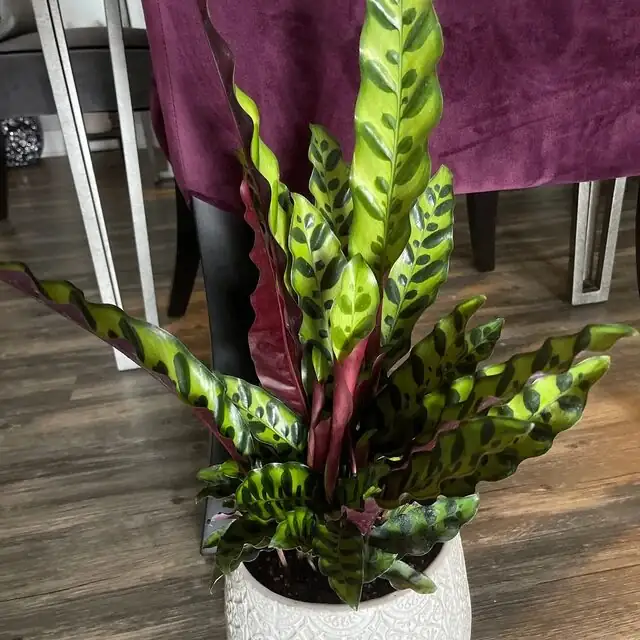
- Lower-than-eye-level perches: Bench or low shelf by the tub or vanity so the arching leaves show their undersides as you move.
- Step stands: Stagger heights to create glimpses of burgundy from different angles—gorgeous in corners.
- Hanging or wall-mounted planters: Hang just above eye level so you catch the underside when entering the room.
Harness gentle light
- Mirror magic: Place near a mirror to bounce soft light onto the leaf pattern; it adds depth without direct sun.
- Sheer shields: East/north light behind sheers is peak glow. West windows? Double up on filtering to dodge harsh rays.
- Grazing glow: A small, indirect uplight behind the pot creates evening drama on those wavy edges.
Spa-safe spacing
- Keep off the splash zone: A bit of distance from direct shower spray; the plant likes humidity, not constant drenching.
- Avoid vents and drafts: Warm, still air keeps edges from crisping; no AC or heater blasts.
- Not on a cold floor: Elevate slightly with a footed pot or stand—bonus, you’ll see more burgundy.
Pots that complete the look
- Footed or pedestal planters: Instantly more sculptural; pair matte off-white or sand with the plant’s bold pattern.
- Cachepot with a story: Slip the nursery pot (with drainage) into a stoneware cachepot. Hide a pebble tray beneath using smooth river stones for a spa finish.
Styling recipes by room
Bright bathroom sanctuary
- Place by an east-facing window with sheers; add a pebble tray under the cachepot.
- Palette: Ivory towels + brass hardware + plum cotton bath mat.
- Add a slim step stand to layer a second shade-loving plant behind it for humidity sharing.
Steamy, sun-safe kitchen
- Tuck near a north window or a bright spot with filtered light, away from hot cook zones.
- Palette: Sage backsplash, walnut cutting boards, burgundy linen napkins in a counter caddy.
- Use a narrow plant shelf near the window to catch that underside on your morning coffee run.
Living room “spa corner”
- If not naturally humid, cluster the rattlesnake plant with two other tropicals around a small humidifier disguised in a basket.
- Pair with a travertine side table, a plum throw pillow, and a brass floor lamp with a linen shade for softened, indirect light.
The calm factor: symbolism and meaning
This species is often linked with calm, renewal, and restful, spa-like spaces—likely because it thrives where we unwind: warm, humid rooms with softened light. While “flower language” (花语) traditionally assigns meanings to blooms, modern interpretations for foliage plants borrow from ambiance and use. Here, the leaf’s snakeskin pattern suggests resilience and renewal, while the burgundy underside reads as quiet confidence—an elegant accent revealed, not shouted.
Care that keeps the look (and the leaves) flawless
Watering rhythm
- Spring to autumn: Keep the mix evenly moist, never soggy. Water when the top 1–2 cm (0.4–0.8 in) begins to dry.
- Winter: Let the surface dry a bit more between drinks.
- Best water: Rainwater or distilled helps prevent brown tips from tap minerals. Misting is a quick fix; a humidifier or pebble tray is the long-term solution.
Feeding and growth
- Feed every 2 weeks in spring–autumn with a balanced liquid fertilizer at half strength.
- Pause or reduce in winter if growth slows.
Grooming
- Trim yellowing or damaged leaves at the base with clean scissors.
- You can neaten brown tips, but address the cause: low humidity, drafts, or mineral-heavy water.
- Dust leaves periodically so patterns shine.
Repotting and propagation
- Repot every 2–3 years (spring is ideal) or when root-bound, refreshing the airy mix (2:1 potting mix to perlite).
- Propagate by division during repotting; keep each section with healthy roots attached.
Pests and peace-of-mind
- Watch for spider mites, mealybugs, and scale—especially in dry air. Rinse foliage, raise humidity, and treat with insecticidal soap or horticultural oil if needed.
- Root rot happens if the soil stays wet or drainage is poor.
- Generally non-toxic to cats and dogs, though any chewing can upset tummies.
Smart shopping
- Choose crisp, well-colored leaves with minimal edge browning.
- Check undersides for mites.
- Sniff the soil; sour scents or mushy stems can hint at overwatering issues.
Quick placement do’s and don’ts
- Do: East or north windows; bright bathrooms and kitchens; away from vents.
- Do: Use sheers to diffuse sun; raise humidity to 50%+; rotate the pot monthly for even patterning.
- Don’t: Park it in harsh direct sun or in a dark corner.
- Don’t: Leave it in standing water or in a pot without drainage.
Fast answers to common questions
Why are the leaf edges turning brown?
Usually low humidity or mineral-heavy tap water. Boost humidity to 50%+, keep away from vents/drafts, and switch to rainwater or distilled.
Can it handle direct sun?
Not well. Direct sun can scorch leaves and wash out the patterns. Bright, filtered light is best.
—
Design takeaway: Treat Goeppertia insignis like the boutique robe in your bathroom—soft lighting, a little steam, and a hint of wine-red elegance. Place it to reveal its burgundy lining, pair it with warm neutrals and a single plum accent, and let the room exhale.