Imagine a vine that turns a balcony rail into a waterfall of color, keeps its roots cool while its blooms bask in the light, and thrives years in the same stylish container. That’s Clematis—the Queen of Climbers—done the container-first way. If you’ve got sun for the stems, shade for the pot, and a routine for water and feed, you’ve got everything you need for an encore of flowers from spring through fall (variety-dependent).
Here’s your playbook.
The Container-First Playbook (the short version)
- Choose compact cultivars bred for pots.
- Use a roomy container: at least 18 inches deep and wide, with great drainage and a sturdy support.
- Fill with a fertile, well-draining mix that holds moisture but never gets waterlogged.
- Keep “head in the sun, feet in the shade”—bright light for the vine, shade/coolth for the root zone.
- Water deeply when the top inch of mix dries; never let pots sit in saucers of water.
- Feed regularly through the growing season; switch to a bloom-boosting formula as buds form.
- Insulate the pot for winter; keep the rootball just barely moist.
Why Clematis loves containers
Clematis (Clematis spp., Ranunculaceae) is a remarkably versatile genus native to temperate regions of the Northern Hemisphere, with exceptional diversity in East Asia. Most garden types are deciduous or semi-woody climbers that twine using their leaf stalks, producing everything from small, bell-like blooms to huge starry saucers in whites, pinks, reds, purples, and blues. In pots, they’re easy to place for perfect light, easy to admire up close, and easy to manage with precise watering and feeding.
Pick the right plant: compact, container-ready stars
You’ll be happiest with varieties that naturally max out around 3–6 feet in containers and flower generously. Look for:
- Compact or patio/terrace lines (often 3–5 ft/0.9–1.5 m). Many modern large-flowered types were bred for containers.
- Group 2 (late spring/early summer bloom, often with a light rebloom) and Group 3 (summer-to-fall bloom on new wood) are especially container-friendly.
- Examples to search for: modern compact large-flowered selections from renowned breeders; classic moderate growers like ‘Nelly Moser’ or ‘Henryi’ can also adapt well to big pots with regular care.
Tip: Check the label for mature height and pruning group. If you’re pairing with a shrub or a small obelisk, aim for 3–6 ft. Very vigorous Group 1 types (e.g., C. montana) can overwhelm small spaces unless you have an extra-large container and support.
The container and support
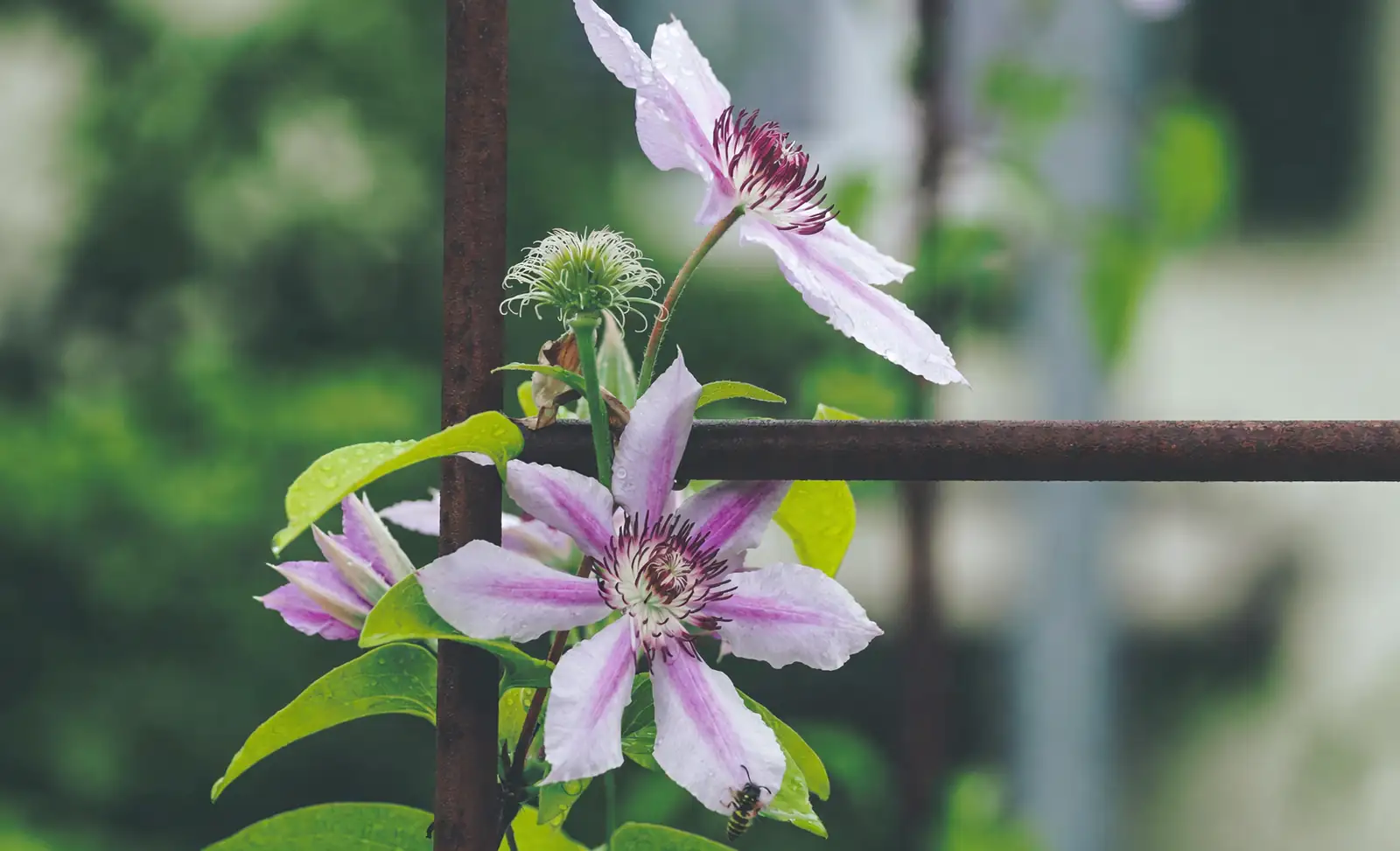
- Size: Minimum 18 inches (45 cm) deep and wide for long-term success. Young plants can start in 6–8 inch pots, but level up as roots fill out.
- Material: Thick-walled containers (glazed ceramic, wood, terracotta) help buffer heat and cold. If using plastic or thin-walled planters, sleeve them inside a larger pot or add insulation/shading.
- Drainage: Essential. Ensure generous holes; raise the pot on feet or bricks so water runs free.
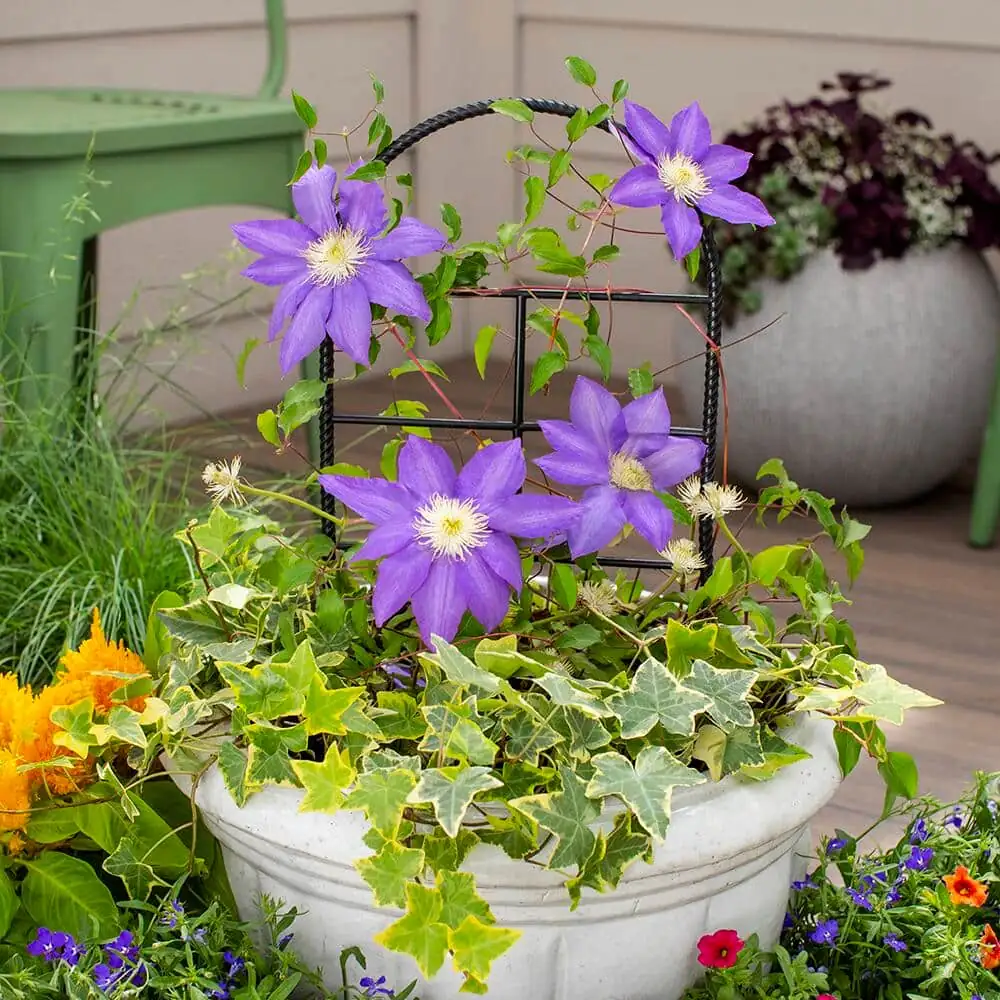
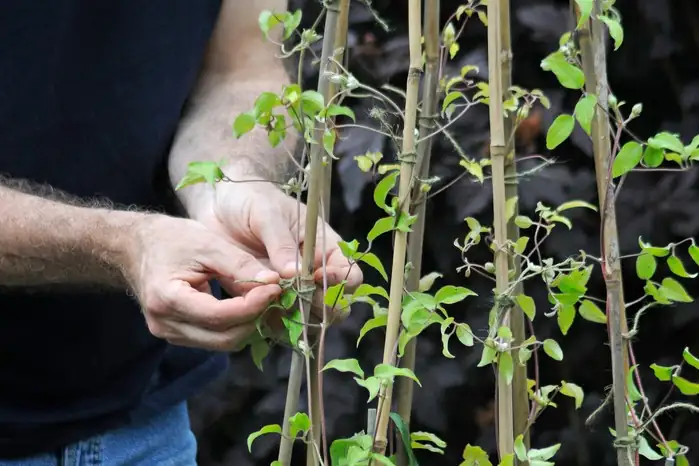
- Support: Install a sturdy trellis, obelisk, or mesh at planting. Tie stems gently—clematis shoots are famously brittle.
The potting mix (well-drained but moisture-retentive)
Aim for fertile, airy, and free-draining. A practical recipe:
- 40% high-quality compost or leaf mold
- 30% peat or coco coir for moisture retention
- 30% coarse material such as perlite/pumice or sharp sand for drainage
- Optional: a handful of slow-release fertilizer per label, plus a little garden lime if your mix skews acidic (many clematis enjoy neutral to slightly alkaline media, about pH 6.5–7.5).
Planting depth: Set the crown slightly deeper than it was in the nursery pot—cover the old soil line by about 2 inches (5 cm). This encourages strong regrowth if stems are ever damaged.
Light and placement
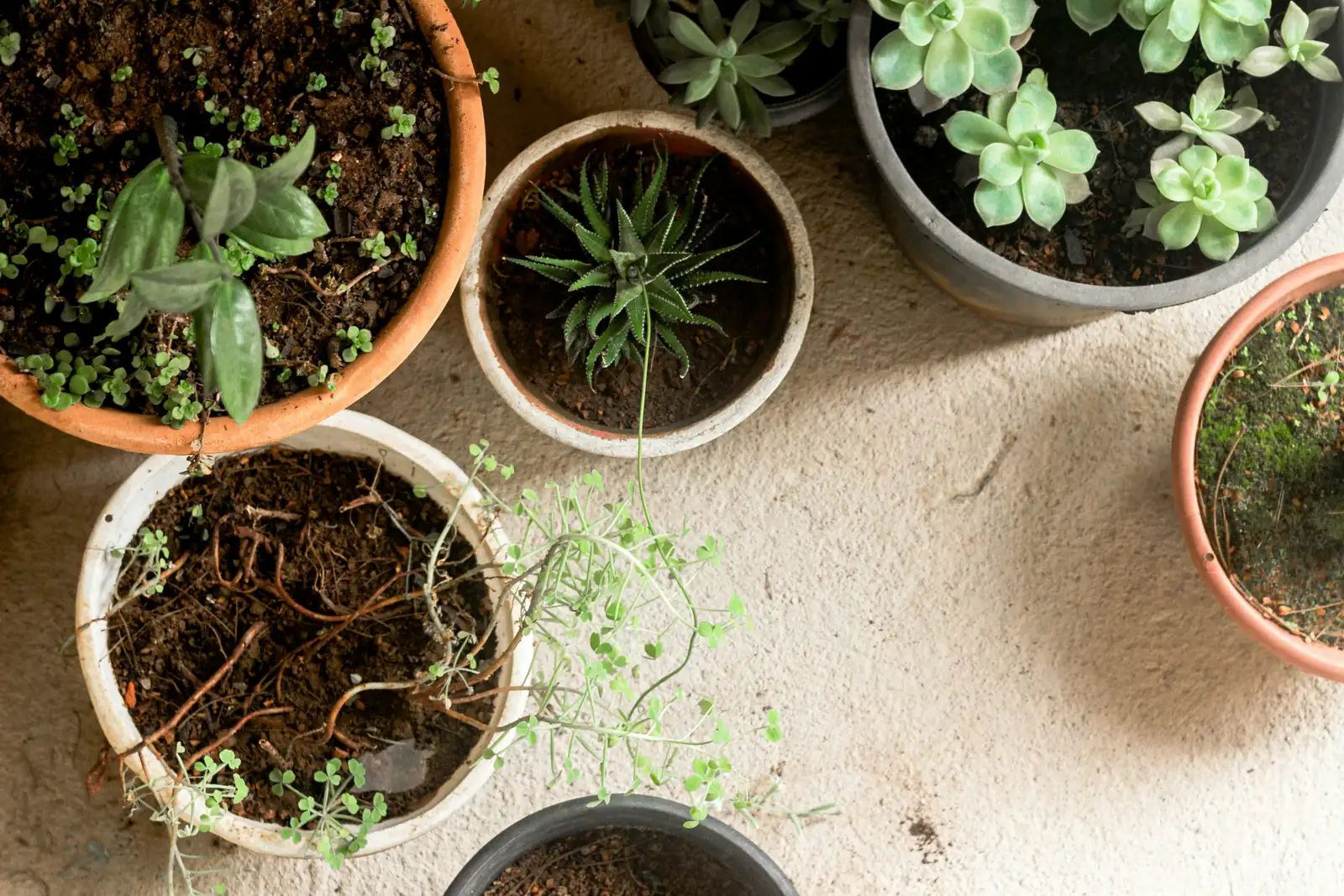
- Sunlight: Bright light to full sun brings the best flowering (often 6+ hours). In hot summers and in containers, protect from harsh midday/afternoon sun to prevent root-zone overheating and flower scorch.
- Shade the pot: Think “head in the sun, feet in the shade.” Mulch the surface with stones or bark, tuck in low, shallow-rooted companions, or shade the container itself with a cachepot.
Water like a pro
- Frequency: Water when the top inch (2.5 cm) of mix dries, then soak thoroughly until water drains from the bottom.
- Never let pots sit in water—clematis hates waterlogging.
- Summer: Increase frequency during hot spells; keep the root zone cool and evenly moist.
- Winter: Reduce watering so the rootball stays just barely moist.
Feeding for flower power
Clematis in containers are hungry.
- At planting: Mix in slow-release fertilizer or rich compost.
- Growing season: Feed every two weeks with a balanced liquid fertilizer; when buds form, favor a bloom formula with higher phosphorus/potash. Avoid excess nitrogen, which gives leaves at the expense of flowers.
Pruning—match the group, get the bloom
Prune by flowering group (always check the tag):
- Group 1 (early spring, on old wood): Minimal pruning—remove dead/damaged stems after flowering.
- Group 2 (late spring/early summer on old wood, often a light rebloom): In late winter/early spring, lightly thin weak stems and shorten to strong buds.
- Group 3 (summer–fall on new wood): Hard-prune in late winter/early spring to about 12–18 inches (30–45 cm).
Container training extras:
- After planting: Many growers cut young plants back to roughly 12 inches (30 cm) to stimulate branching.
- After the next repot on strong plants: You can leave 24–28 inch (60–70 cm) stems.
- Tie in gently throughout the season; thin congested growth yearly.
Seasonal care calendar (container edition)
- Spring: Repot or top-dress; start feeding as growth begins; prune per group; tie in new shoots.
- Summer: Peak bloom for many; water deeply and consistently; shade the pot; keep airflow up to deter mildew; continue feeding.
- Autumn: Planting is fine in mild climates; take semi-ripe cuttings; taper feeding.
- Winter: Dormant for most types; water sparingly; protect the pot and roots from hard freezes; late-winter prune Group 3.
Winter protection for pots
Container roots feel cold more than in-ground plants.
- Insulate: Wrap the container with burlap, fleece, or bubble wrap; mulch the crown.
- Shelter: Slide the pot against a bright, protected wall or into an unheated but frost-sheltered spot; keep off freezing, waterlogged ground.
- Water: Keep the mix barely moist—never sopping.
- Hardiness clue: Many garden clematis are hardy in USDA Zones 4–9, but some evergreen or tender selections need extra protection. In warm-winter container culture, steady, cool conditions around 59–72°F (15–22°C) suit most varieties, with brief dips to about 23°F (-5°C) survivable if protected and well-drained.
Troubleshooting: fast diagnostics
- Sudden stem collapse/blackening (clematis wilt): Cut affected stems back to healthy tissue, even to ground level. Deeper planting helps plants reshoot from below soil.
- Yellowing leaves in pots: Often low fertility, sour/compacted mix, waterlogging, or mix too acidic for lime-tolerant types. Refresh media, improve drainage, and feed.
- Powdery mildew or gray mold: Improve airflow, water at the base, remove infected material.
- Pests: Aphids, spider mites, slugs/snails, earwigs, and caterpillars—manage early with hand-picking, barriers, or gentle controls like insecticidal soap or horticultural oil.
Safety note: Sap can irritate skin, and ingestion may upset pets or people. Wear gloves if sensitive; keep nibblers away.
Design tricks that keep the “feet” cool
- Living shade: Underplant with shallow-rooted, sun-tolerant spillers (e.g., creeping thyme, lobelia, sweet alyssum) or compact perennials that won’t hog moisture.
- Mineral mulch: A 1–2 inch layer of light-colored gravel or decorative pebbles reflects heat and reduces evaporation.
- Double potting: Slip your growing pot inside a slightly larger cachepot; the air gap is a natural insulator.
Repotting rhythm
- Every 2–3 years (or when rootbound), refresh the mix and check drainage.
- Keep the crown slightly deeper than before.
- Use an at-least 18-inch-deep-and-wide pot for long-term vigor.
Flowering rhythm by group (what to expect)
- Group 1: Early spring show on old wood—think a curtain-raiser of bells and small flowers.
- Group 2: Late spring to early summer with potential for a lighter encores later.
- Group 3: Summer to fall headliners on new wood; many Clematis florida selections shine mainly in summer–autumn and feature distinctive central structures.
The deeper meaning: clematis “flower language”
In Victorian floriography, clematis symbolized mental beauty, ingenuity, and aspiration—apt for a climber that ascends gracefully toward the light. Some traditions cast it as purity or a “beautiful heart.” Take these as poetic metaphors, not botany: the plant’s elegant geometry and upward habit inspired the lore. Gifting clematis historically hinted at admiration for someone’s intellect—and, depending on color, layered messages like white for purity or purple for dignified respect.
Common mistakes (and easy fixes)
- Too-small pot: Step up to 18 inches deep and wide; roots run cooler and steadier, blooms improve.
- Soggy compost: Add drainage, raise the container, water only when the top inch dries.
- All leaves, few flowers: Too much nitrogen; pivot to a bloom feed as buds appear and ensure ample light.
- Wrong pruning: Know your group. When in doubt, a conservative tidy in late winter and post-bloom tweaks beat indiscriminate cuts.
Final nudge
Clematis in a container is like a well-rehearsed orchestra in a compact concert hall—tight acoustics, big performance. Give it a generous pot, an airy, fertile mix, bright light, cool feet, deep drinks, and regular meals. Secure the trellis, prune by the book, tuck it in for winter—and watch the Queen of Climbers put on a show that belies the square footage.