

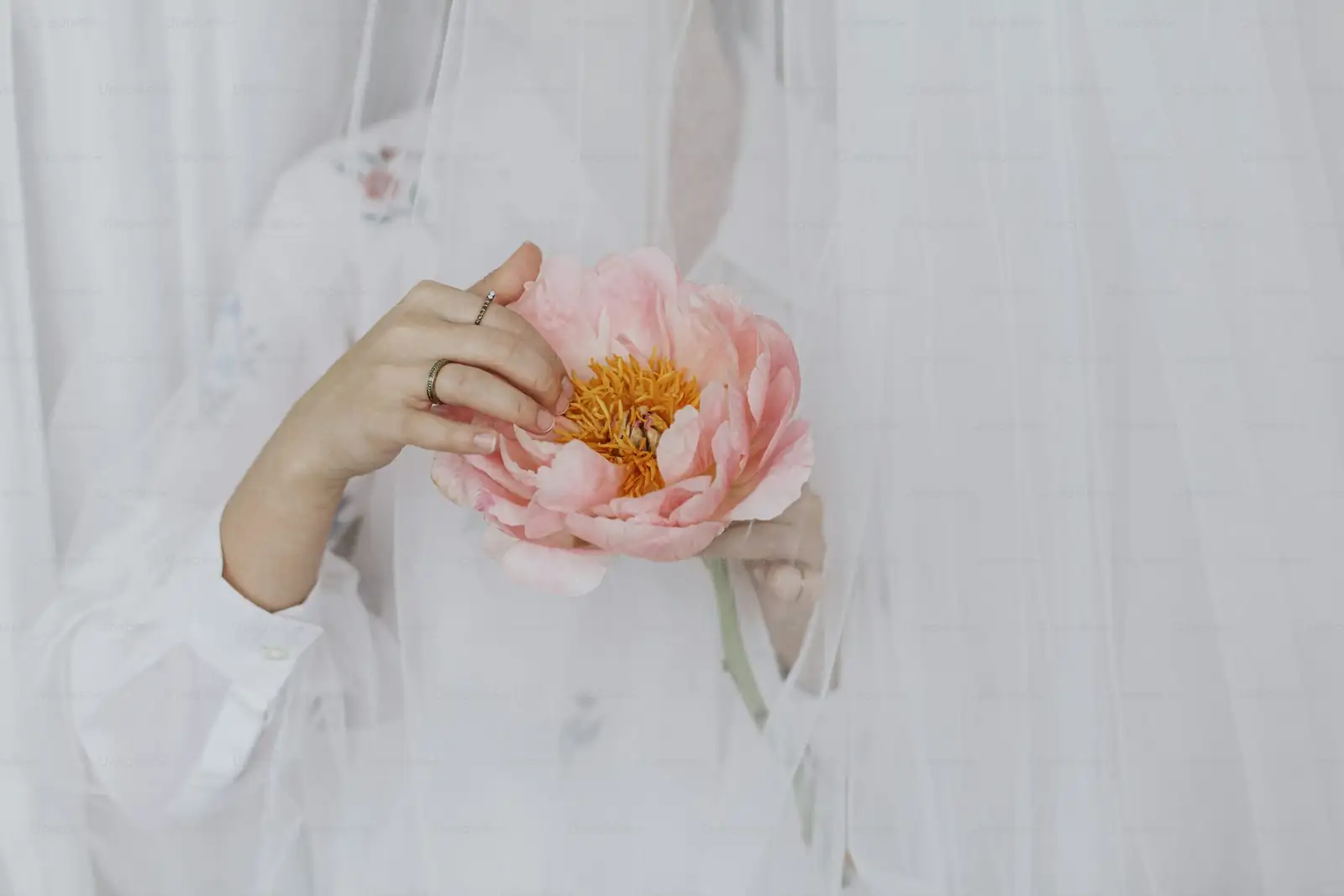
If you think Chinese peonies belong only in grand borders, your balcony is in for a treat. Paeonia lactiflora—the Chinese Peony—can thrive for years in containers, rewarding you with lush, often fragrant, rose-like blooms in late spring to early summer. Success in small spaces comes down to five essentials: a generous pot, a free‑draining mix, planting the buds at the right depth, cool‑season repotting, and moisture that’s steady but never soggy.
Meet the Chinese Peony (Paeonia lactiflora) in a pot
- Nature: Upright, clump-forming, herbaceous perennial; dies back to ground level in winter, re-sprouts from a crown with fleshy storage roots.
- Size in containers: Commonly 60–100 cm tall and 60–90 cm wide, depending on cultivar and care.
- Bloom time: Late spring to early/mid‑summer (often May–July).
- Personality: Sun-loving, long-lived, spectacular as a cut flower; happiest in cool to moderate summers.
The container formula that works
1) Pick the right pot (give those roots room)
Peonies resent tight quarters and frequent disturbance. Start them where they can stay.
- Minimum that works: 20–25 cm (8–10 in) diameter for a small division or starter plant.
- Better for urban, long-term success: 35–45 cm (14–18 in) diameter and at least as deep; 45–60 cm (18–24 in) is fantastic for mature plants. Bigger volume = better moisture buffering and fewer repots.
- Drainage is non‑negotiable: Multiple holes, pot feet or bricks to lift the base, and no standing water in saucers.
- Material: Glazed ceramic, composite, or thick plastic hold moisture a bit longer; terracotta is fine but dries faster—water more attentively if you choose it.
- Stability tip: Peony blooms are hefty. A wider, heavier pot resists wind and looks proportionate to the plant’s mature spread.
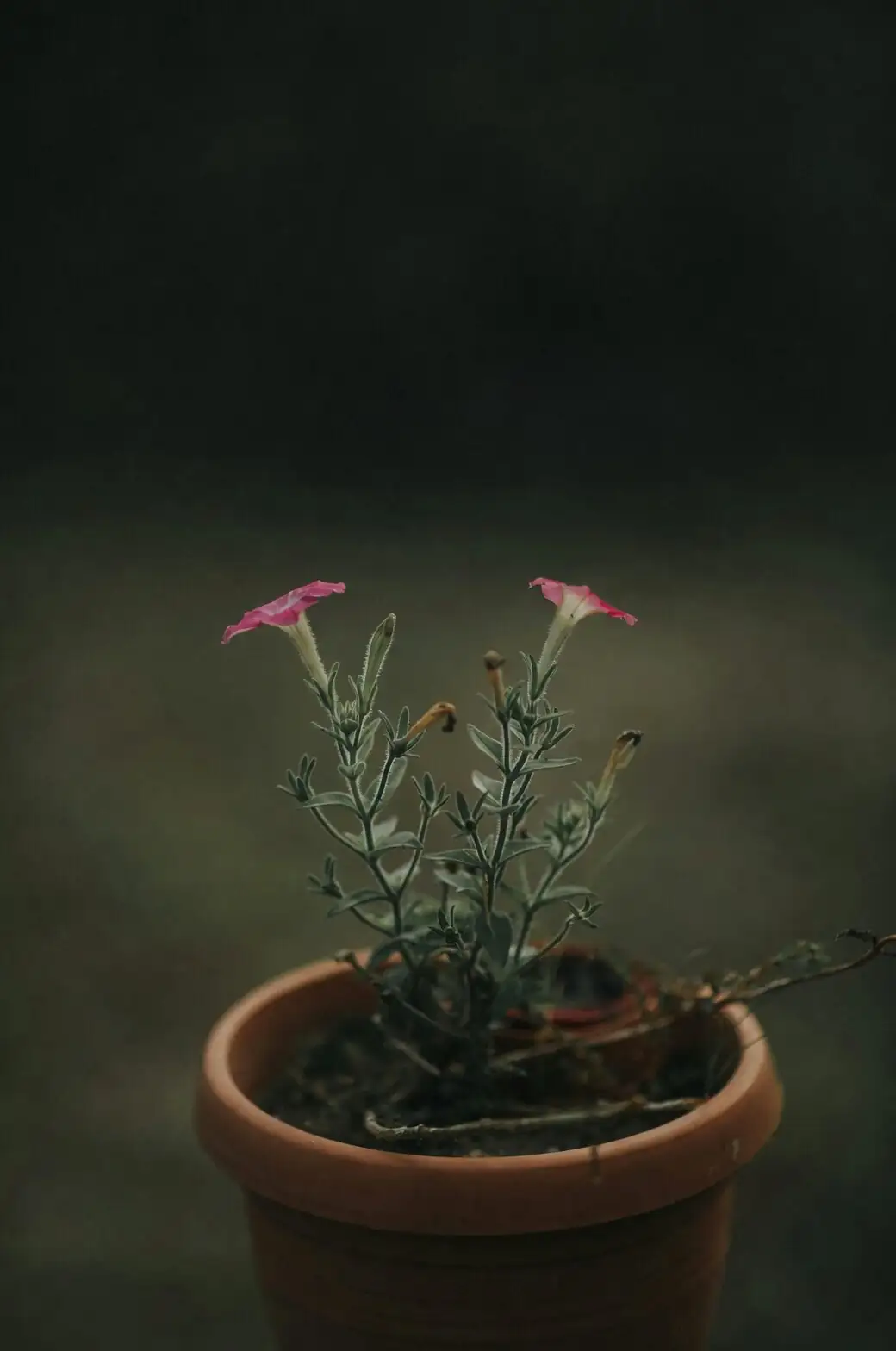
2) Use a rich, free‑draining mix
Chinese peonies want moisture-retentive yet airy soil. Heavy, waterlogged media cause rot.
- Reliable container recipe:
- 50–60% high-quality, peat‑free potting mix or loam‑based container compost
- 20–30% compost or leaf mold for fertility and structure
- 10–20% mineral drainage (pumice, coarse perlite, or 3–6 mm horticultural grit)
- Optional boosts: A small handful of slow‑release organic fertilizer blended through (keep it away from the crown).
- pH and salts: Aim for near‑neutral to slightly acidic. Avoid strongly alkaline or saline mixes.
- Pro tip: Skip “drainage layers” of pebbles; they don’t improve drainage. Instead, ensure the whole mix is uniformly free‑draining and the pot has open holes. A square of mesh over holes prevents mix loss.
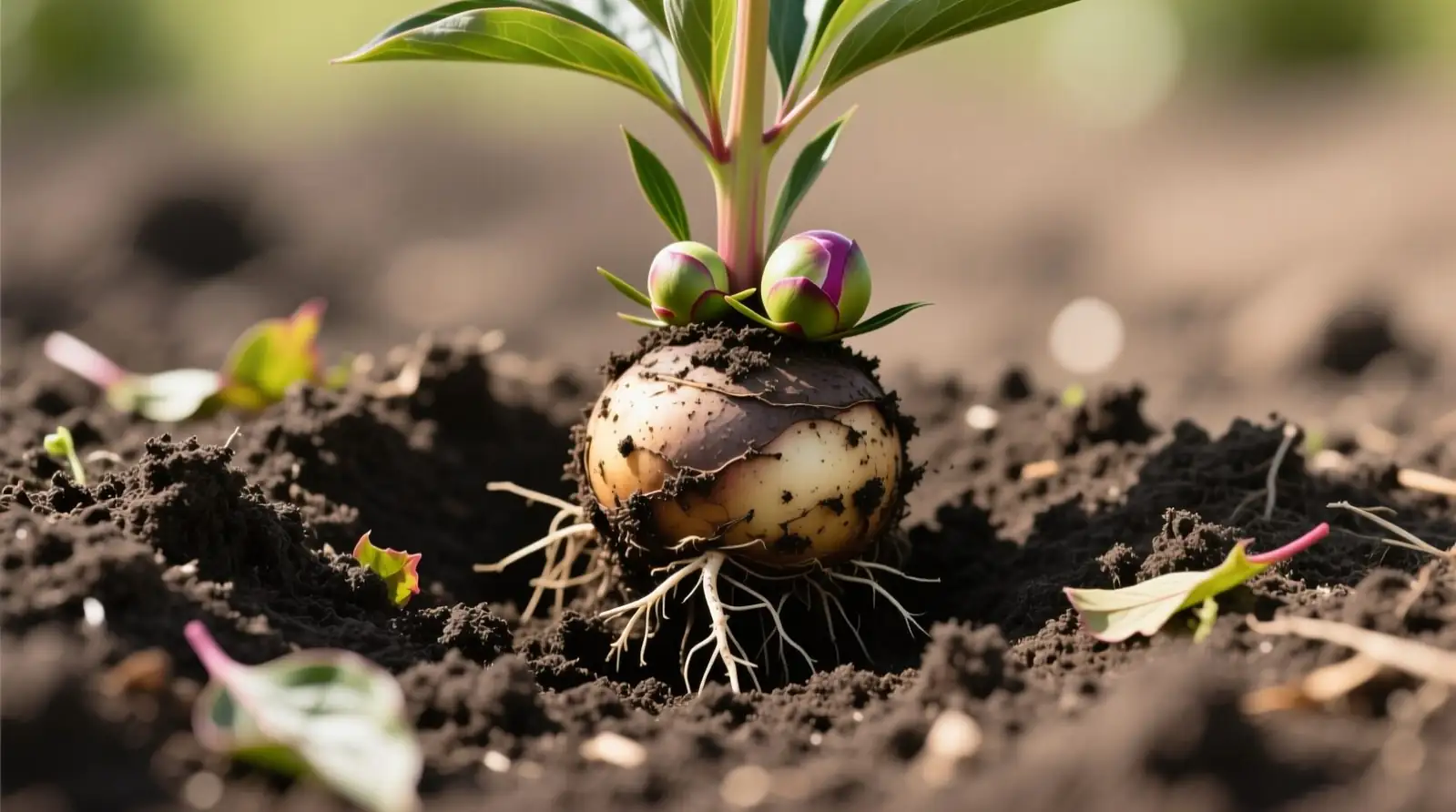
3) Planting depth: set the “eyes” at surface level
This is the peony deal‑breaker. Plant too deep and you may get leaves but no flowers.
- Find the buds (“eyes”) on the crown—pinkish to reddish points.
- Position so the eyes sit level with the final soil surface (or only slightly below in very cold climates).
- Firm gently, water to settle, then top‑dress lightly—but do not bury the crown under mulch. Keep a small “donut” gap around the eyes.
When to pot, repot, or divide (and when not to)
Peonies prefer to be moved while asleep.
- Best window: Mid‑October to mid‑February, during dormancy.
- Why it matters: Spring disturbance can delay or reduce flowering; the plant is busy pushing shoots and forming buds then.
- Dividing a potted clump (only when needed):
- Cut back stems after they yellow in late autumn.
- Ease the root mass out, rinse to see natural fissures.
- Make divisions with about 3–5 healthy eyes each; avoid slicing through buds.
- Repot divisions into fresh, free‑draining mix with eyes at the correct depth.
Moisture management without waterlogging
The golden rule: evenly moist, never soggy
- Spring to bloom: Keep steady moisture as shoots and buds develop; drought now leads to bud blast or short stems.
- Summer heat: Water at the base in the morning. In hot-summer regions, give morning sun with light afternoon shade to reduce stress and moisture loss.
- After heavy rain: Tip out saucers and check that water drains away quickly. Raise pots on feet to keep the crown off a wet base.
- Autumn: Moderate moisture helps rebuild root reserves.
- Winter (dormant): Water sparingly. Avoid saturating cold soil and never let the crown sit wet.
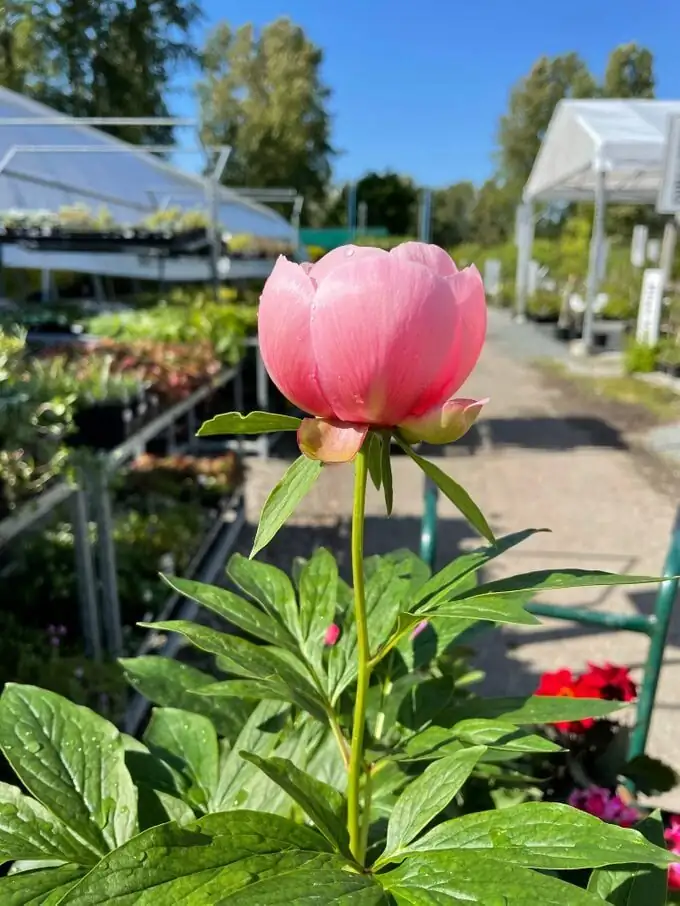
Practical checks:
- Finger test: Water when the top 3–5 cm feels dry.
- Heft test: Learn the weight of a just‑watered pot vs. a dry one.
- Mulch smartly: A thin mulch of compost or fine bark is helpful, but keep a ring clear around the crown.
Light, temperature, and balcony placement
- Sun: At least 6 hours/day for sturdy stems and abundant blooms. In hot-summer settings, aim for bright morning sun with gentle afternoon shade.
- Airflow: Good ventilation helps prevent leaf spots and crown issues—avoid cramped corners and splashy overhead watering.
- Temperature: Best performance around 10–25°C. Prolonged intense heat reduces vigor and flowering.
- Wintering pots: Dormant crowns are cold-hardy, but roots in containers feel cold more sharply. In very cold regions, group pots together, insulate with mulch around the container, and keep soil on the dry side. Where winters are mild, ensure sufficient chill by keeping pots outdoors.
Feeding, grooming, and support
- Feeding: 2–3 light feeds during active growth with well‑rotted organic fertilizer or diluted organic liquid feed. Around bud set, a bloom‑leaning feed (higher P and K) supports larger, brighter flowers. Keep fertilizer away from the crown.
- Disbudding for show blooms: Pinch off side buds so one main flower per stem grows larger.
- Deadhead promptly unless you’re saving seed; the plant will channel energy to its crown and roots.
- Cut back in late autumn once foliage yellows—down to ground level. Clear debris for a clean, disease‑smart winter.
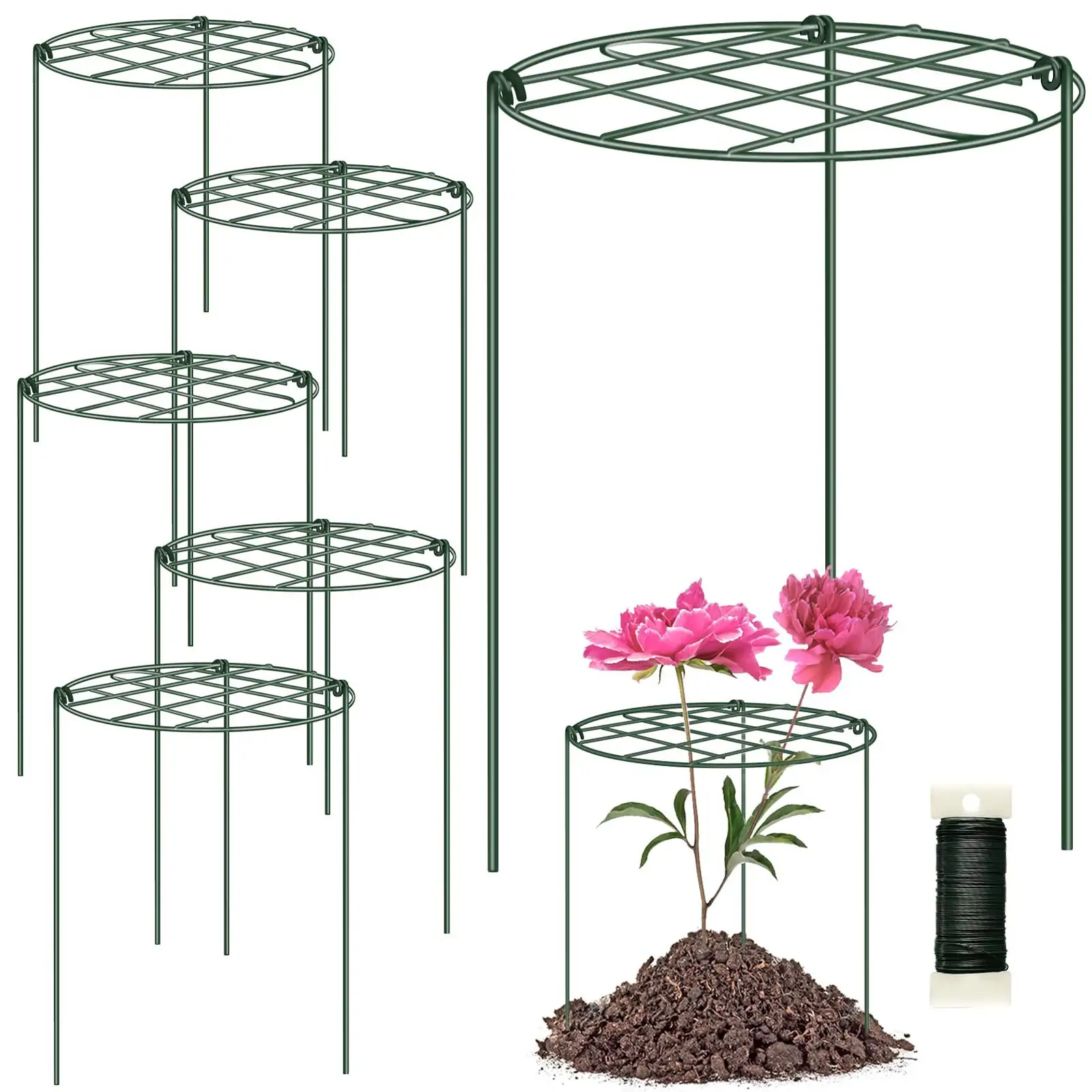
- Support: In windy balconies, add discreet hoops or a grid ring before buds swell; the weight of double blooms may otherwise topple stems.
Troubleshooting container peonies
- No flowers?
- Eyes planted too deep
- Too much shade
- Pot too small/root disturbance in spring
- Excess nitrogen at the expense of bloom
- Buds shrivel (bud blast)?
- Irregular watering or heat/drought stress during bud formation
- Wilting base or foul smell (rot)?
- Mix staying wet; improve drainage, reduce watering, and repot during dormancy into a freer‑draining medium
- Pests and diseases:
- Aphids/spider mites on new growth: rinse with a strong spray, use horticultural soap/oil if needed.
- Leaf spots and basal rots: prioritize airflow, avoid overhead watering, and remove spent foliage promptly.
Quick reference for urban growers
- Pot: Minimum 20–25 cm for starters; 35–45+ cm ideal long‑term; multiple drainage holes; pot feet; no standing water.
- Mix: Fertile, deep, and free‑draining—potting mix + compost/leaf mold + pumice/perlite/grit.
- Planting depth: Eyes level with the surface (only slightly below in very cold climates).
- Timing: Plant/repot/divide mid‑Oct to mid‑Feb while dormant; avoid spring disturbance.
- Water: Evenly moist in growth and bloom; drier in winter; never waterlogged.
A note on meaning, history, and use
In East Asian culture, the Chinese Peony symbolizes romance and affection, honor, prosperity, and a happy marriage—associations shaped by centuries of poetry, courtly art, and garden tradition rather than any botanical “rule.” Its petals have appeared in historic sweets and porridge, and the roots—especially in “white peony root” preparations—have a long record in traditional herbal practice. Today, Paeonia lactiflora remains a premier ornamental and a florist’s favorite for its sumptuous, long-lasting cut flowers. As with all ornamentals, discourage pets from nibbling, and always seek qualified guidance before any medicinal use.
Give your peony a roomy home, plant its eyes right where they can see daylight, refresh it only in the cool season, and water like a steady raincloud—not a flood. Do that, and your container-grown Chinese Peony will make the whole city feel like a garden.