

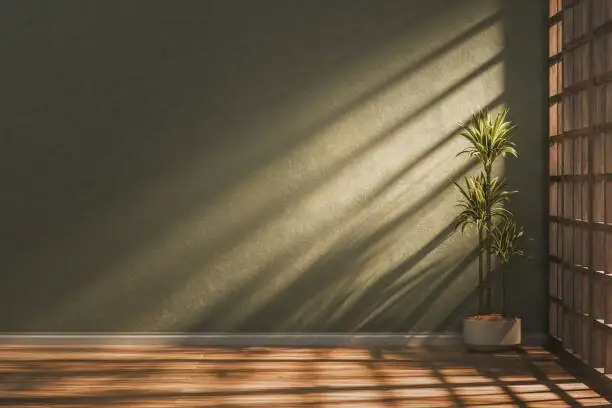
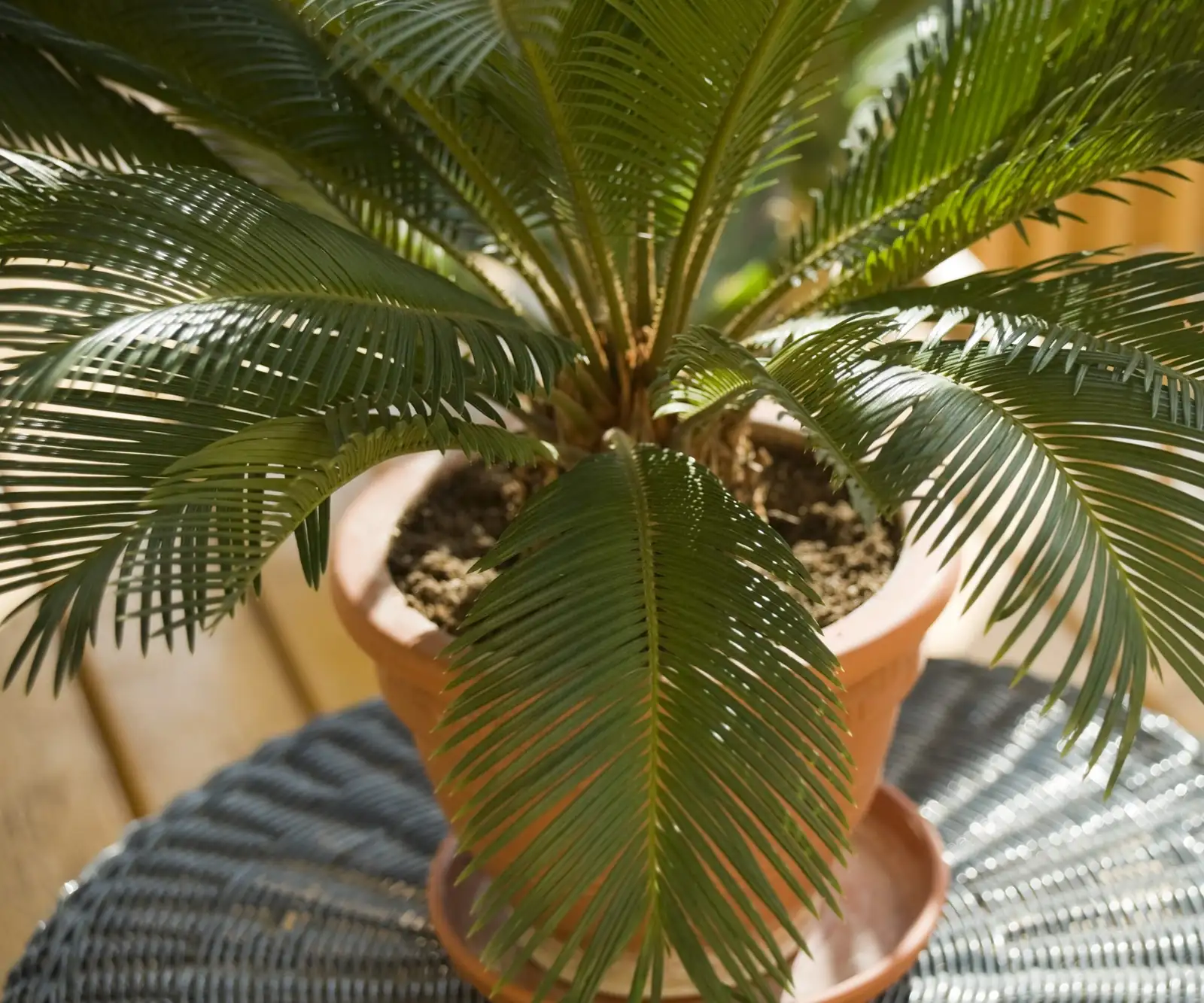
If your space is craving a sculptural statement with prehistoric poise, Cycas revoluta—the Sago Palm—delivers. Its crown of glossy, perfectly symmetrical fronds reads like a living rosette, all bold texture and architectural drama. But this is not a cuddle-plant: the leaflets are stiff and sharp, and the entire plant (especially the seeds) is highly poisonous. The design trick is to showcase the form, control the edges, and plan for safety without losing style. Here’s how to pull that off.
Light like a stylist: place it where the rosette shines
- East- or west-facing windows are prime: bright light without punishing midday rays keeps fronds deep green and crisp.
- South-facing works if you filter or set the plant a few feet back from glass to dodge harsh midday sun.
- North-facing? It may survive but expect slower growth and a stretched, less compact crown. If you see leaning, brighten the setup.
- Indoors target 13–24°C (55–75°F). Keep it away from cold drafts and winter heat blasts (radiators, vents).
Pro tip: Rotate the pot 90 degrees every few weeks for even, radial symmetry—think of it like turning a sculpture under gallery lights.
Traffic-aware layouts: beauty out of harm’s way
Picture each frond as a firm, slightly prickly arm. You want admiration, not abrasion.
- Great zones
- Focal corners where people don’t brush past (bay window alcoves, the open corner of a living room).
- Behind a sofa’s back edge (the couch becomes a soft “buffer” in front).
- Under-stair niches or at the end of a hallway, not along it.
- On patios or bright sunrooms with filtered light—pulled back from doorways.
- Avoid
- Tight corridors, door-swing zones, and the “grazing edge” of dining chairs.
- Bedside or play zones where sleepy feet and curious hands roam.
- Clearance rule of thumb
- Leave at least 30–45 cm (12–18 in) of space between the frond tips and walkways or seating edges.
- Remember: a typical container-grown plant often occupies about a 60 × 60 cm (24 × 24 in) footprint; give it breathing room to show off the rosette.
Container and stand pairings: elevate the look, ground the plant
Sago Palms love fast drainage; your pot choices should be as practical as they are pretty.
- Vessel materials
- Porous, unglazed terracotta or lightly textured ceramic helps excess moisture escape.
- Fiberstone or concrete-look planters add visual weight and stability.
- Shape and size
- For most home specimens, a 20–30 cm (8–12 in) diameter pot is right-sized.
- Slightly wider-than-tall silhouettes complement the rosette and resist tipping.
- Always use a drainage hole (non-negotiable) and a saucer; add felt pads to protect floors.
- Stands and plinths
- A low, sturdy pedestal or integrated stand lifts the foliage just above reach without making it top-heavy.
- Narrow-topped “column” planters with a modest lip subtly discourage pets from investigating.
- Top-dressing
- A 1–2 cm layer of tumbled pebbles or gravel finishes the look, limits splashing when watering, and makes the surface less tempting to dig in.
- Soil mix
- Very free-draining is essential: a 1:1 blend of soil-based mix and general-purpose potting mix with extra grit or perlite.
Shape-showcasing tricks
- Backdrop contrast: dark walls amplify that glossy rosette; pale walls push the shadow-play of the fronds.
- Sightlines: place it where you can see into the crown—from a dining chair or across a coffee table—so the spiral unfurling of new fronds reads as sculpture.
- Gentle uplight: a cool LED floor spot placed a safe distance away adds drama to the frond undersides without heat stress.
- Soften the vibe: flank the pot (in separate containers) with airy, fine-textured companions—think feathery ferns or trailing rhipsalis—to balance the Sago’s armored look while keeping each plant’s care needs separate.
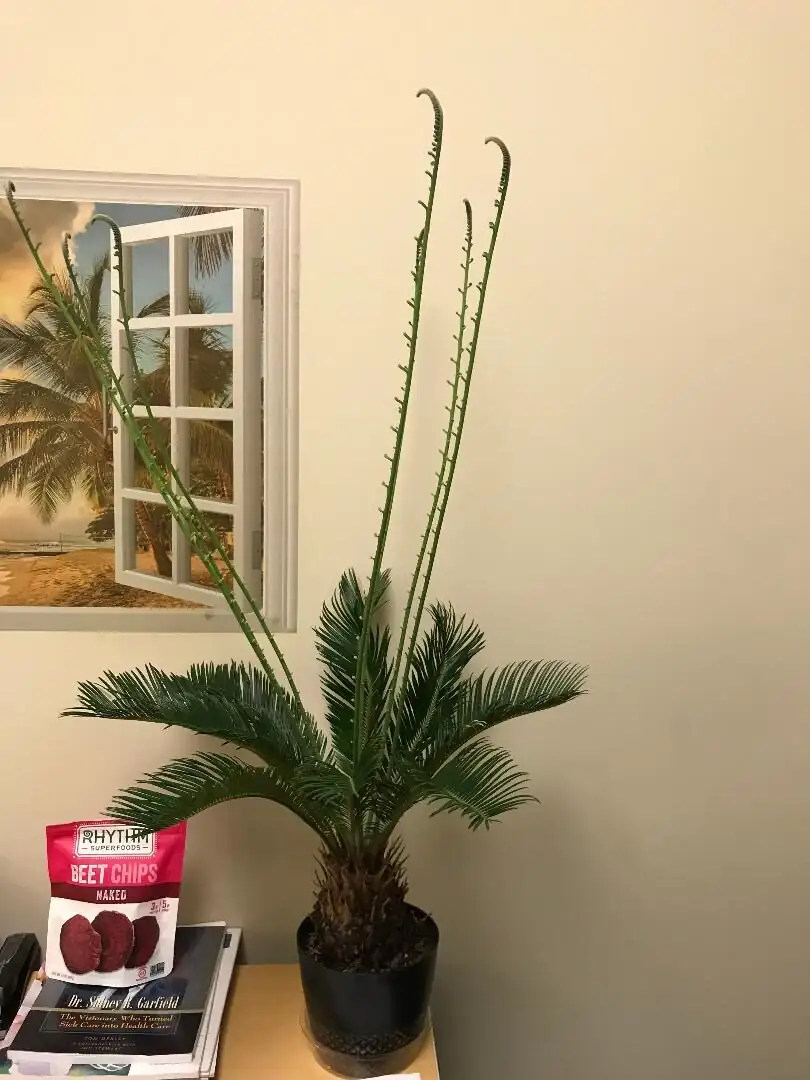
Kid- and pet-safe design hacks (that still look designer)
All parts are highly toxic, seeds especially. Build layered defenses that blend into your decor.
- Elevation and distance
- Use a low plinth or tall, stable planter to lift the rosette above curious noses.
- Position “behind a buffer”: behind a sofa, console, or within a bay window ledge flanked by side tables.
- Room control
- Place it in a bright office, sunroom, or primary bedroom—spaces with doors you can close.
- For open plans, a discreet baby gate or decorative screen can define a no-go plant zone.
- Surface deterrents
- Pebble top-dressing and a planter with a slightly inward-turned rim reduce paw access.
- Keep the soil surface tidy—no dropped leaflets or debris that might attract interest.
- Maintenance musts
- Remove any cones or seeds as soon as they appear (rare indoors, more likely on older plants). Seal and discard; never compost.
- Handle with gloves; avoid placing clippings where kids or pets can find them.
If ingestion is suspected, contact a veterinarian or medical professional immediately. Symptoms in pets can be severe.
Care that keeps the rosette perfect
- Watering
- Spring–autumn: water when the top of the mix has dried slightly. Let excess drain fully.
- Winter: keep almost dry.
- Never pour water into the central crown—this can cause crown rot.
- In hot, very dry spells, a light mist can keep foliage looking fresh.
- Feeding
- Monthly, spring through autumn, with a balanced liquid fertilizer at half strength. Go easy—this species is naturally slow.
- Pruning
- Only remove fully brown, dead fronds. Green fronds are your energy bank.
- Repotting
- Every ~3 years (or when root-bound). Disturb roots minimally; keep that fast-draining mix.
- Pests and problems
- Check for scale, mealybugs, and spider mites—especially along leaf midribs.
- Overwatering invites root or crown rot; prioritize airflow and a gritty mix.
Quick styling templates
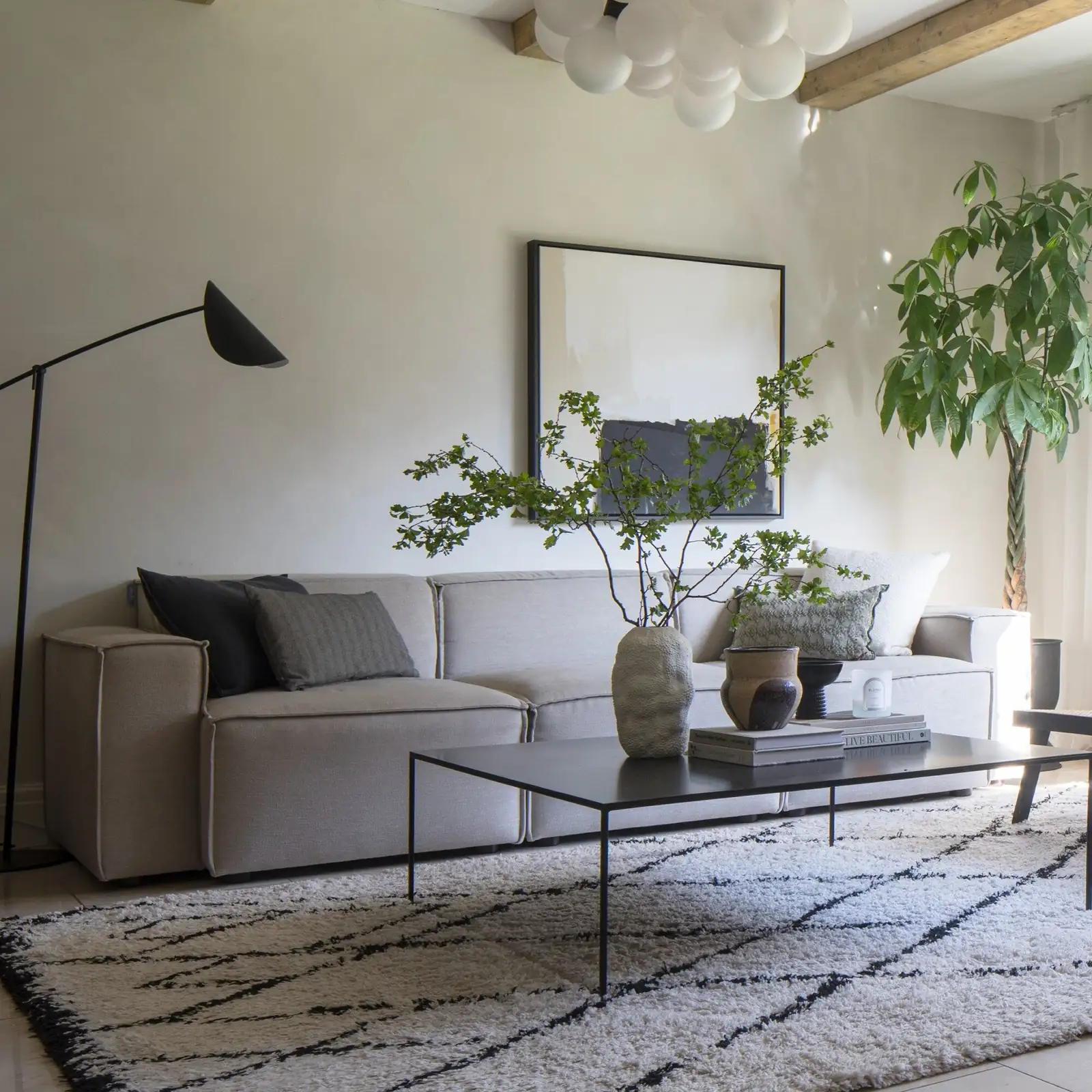
- Modern minimal living room
- Placement: south window, 1–2 m back with sheer curtain.
- Container: matte charcoal fiberstone on a low pedestal, pebble top-dress.
- Companions: one airy fern on a side table; a slim floor lamp casting soft cross-light.
- Family-friendly apartment
- Placement: east-facing bay window behind a sofa back.
- Container: wide terracotta bowl in a rolling stand with locking casters (for easy cleaning, still stable).
- Safety: baby gate defines the bay; stones as top-dress; room door closes when unattended.
- Bright office or studio
- Placement: west window with filtered light, set in a corner reading nook.
- Container: ribbed ceramic with a narrow rim; tall bookcases flank to create a visual alcove.
- Lighting: cool LED accent uplight at floor level for evening drama.
Myth checks and fast facts
- Not a palm: it’s a cycad—a living fossil with a stout trunk and symmetrical fronds.
- Size: commonly around 60 × 60 cm (24 × 24 in) in containers; larger with age outdoors in warm climates.
- “Flowers”: it doesn’t produce typical blooms. Mature plants form cones (male) or woolly seed structures (female). Indoors, this is uncommon.
- Cold: generally for USDA Zones 9–11; protect around freezing.
Symbolism and “flower language”
While it doesn’t truly flower, the Sago Palm carries a design-culture “language” of its own—longevity and resilience. That reputation comes from its ancient lineage and steadfast, slow growth. In interiors, it reads as enduring structure: a grounded, sculptural constant that outlasts trends.
—
With Cycas revoluta, think gallery, not garden: frame the rosette with light, give it space, choose containers that complement its geometry, and design-in safety from the start. You’ll get all the drama, none of the drama.