

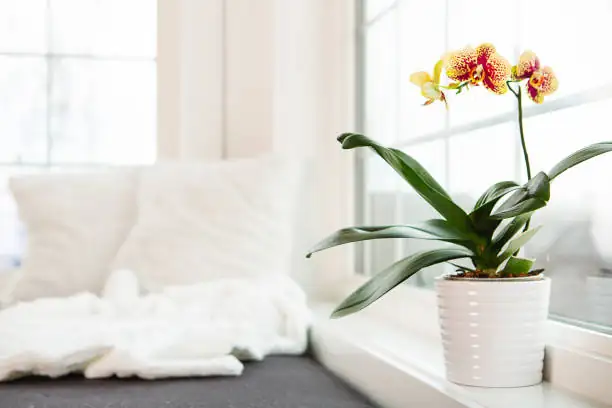
Think of Oncidium—the classic “Dancing Lady Orchid”—as a cloud you can choreograph. Those airy, branching sprays look like a flurry of golden butterflies, perfect for softening hard lines, lifting neutral rooms, and adding motion without visual clutter. With a few stylist tricks—smart potting, subtle staking, strategic window placement, and airflow awareness—you’ll keep every bloom floating safely for weeks.
Meet your design ally: Oncidium’s cloud-like spray
- Form and feel: Sympodial orchids with plump water-storing pseudobulbs and arching, strap-like leaves. Their tall, often branching flower spikes carry dozens of small, fluttery blooms—traditionally yellow with brown markings, but modern hybrids also come in white, pink, red, and bronze.
- Why they’re great indoors: They love bright filtered light, moderate humidity, and an airy orchid mix, rewarding you with long, showy displays. Many common hybrids bloom in autumn, but different cultivars can flower nearly any month of the year.
- Origin story: Native to tropical and subtropical Americas (especially Mexico, Central America, and into South America), with today’s easygoing, floriferous plants largely bred from these species.
Light like a stylist: east vs. south windows
Oncidium thrives in bright, filtered/indirect light and gentle part sun. Scorching midday rays? Hard pass.
East window playbook (the easy win)
- Morning sun is kind and bright—ideal for clean color and sturdy spikes.
- Place close to the glass, but keep leaves and blooms from touching it.
- In cooler months, this aspect helps maintain bright light without overheating.
South window strategy (dazzling, but dialed-in)
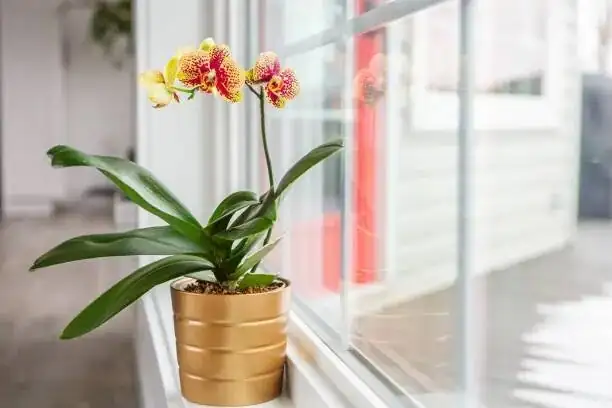
- Use a sheer curtain or light-diffusing blind to soften harsh midday sun.
- Pull the plant 12–36 inches (30–90 cm) back from the glass, or place it slightly off to the side where light is bright but indirect.
- On winter days, glass can heat up in full sun; keep flower spikes clear of hot glass to prevent bud blast.
West and bright balconies
- A lightly shaded west exposure can work; filter that late-afternoon punch with a sheer.
- Bright enclosed balconies are excellent provided there’s gentle airflow and the plant doesn’t bake.
Pro tip: Leaves should stay medium green. Pale or scorched patches signal too much sun; limp growth and reluctant blooming suggest it needs more brightness.
Pots that flatter and function
Oncidium likes “snug and airy.” Style can absolutely meet science here.
The double-pot (grower + cachepot) formula
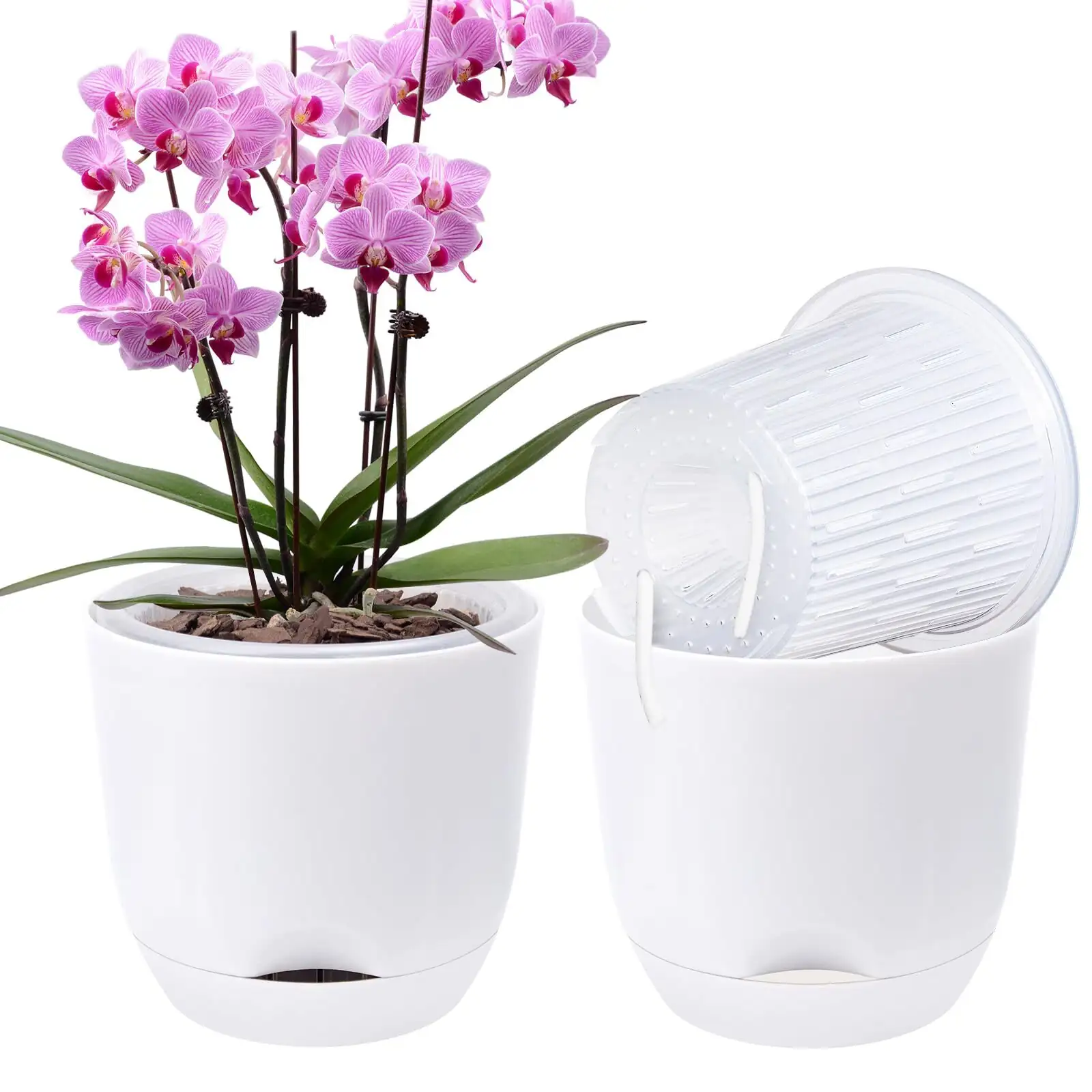
- Inner pot: Plastic or clay orchid pot with ample drainage slits, potted in a fine-to-medium bark mix with perlite/charcoal. Never use regular potting soil.
- Outer pot (cachepot): Any decorative ceramic, metal, or stone container with no hole. Add risers or pebbles so the inner pot sits above any water. This lets you water thoroughly at the sink, drain fully, then drop the plant back into its pretty shell.
- Clear vs. opaque: Either works. Many growers prefer opaque for cooler roots and less algae; designers love opaque for a cleaner look. The key is drainage and air.
Pot size and shape
- Choose a pot that just fits the root mass—typically around 5–6 inches (12.5–15 cm) wide for common home plants. Oversized pots hold too much moisture.
- Low, wide vessels are perfect for multi-plant “cloud” centerpieces; just keep each plant in its own breathable inner pot tucked into the shared bowl.
Finishing touches
- Top-dress lightly with decorative bark, orchid-safe moss, or reindeer moss to hide plastic rims. Don’t pack or smother the medium.
Shape the “cloud”: elegant stakes and ties
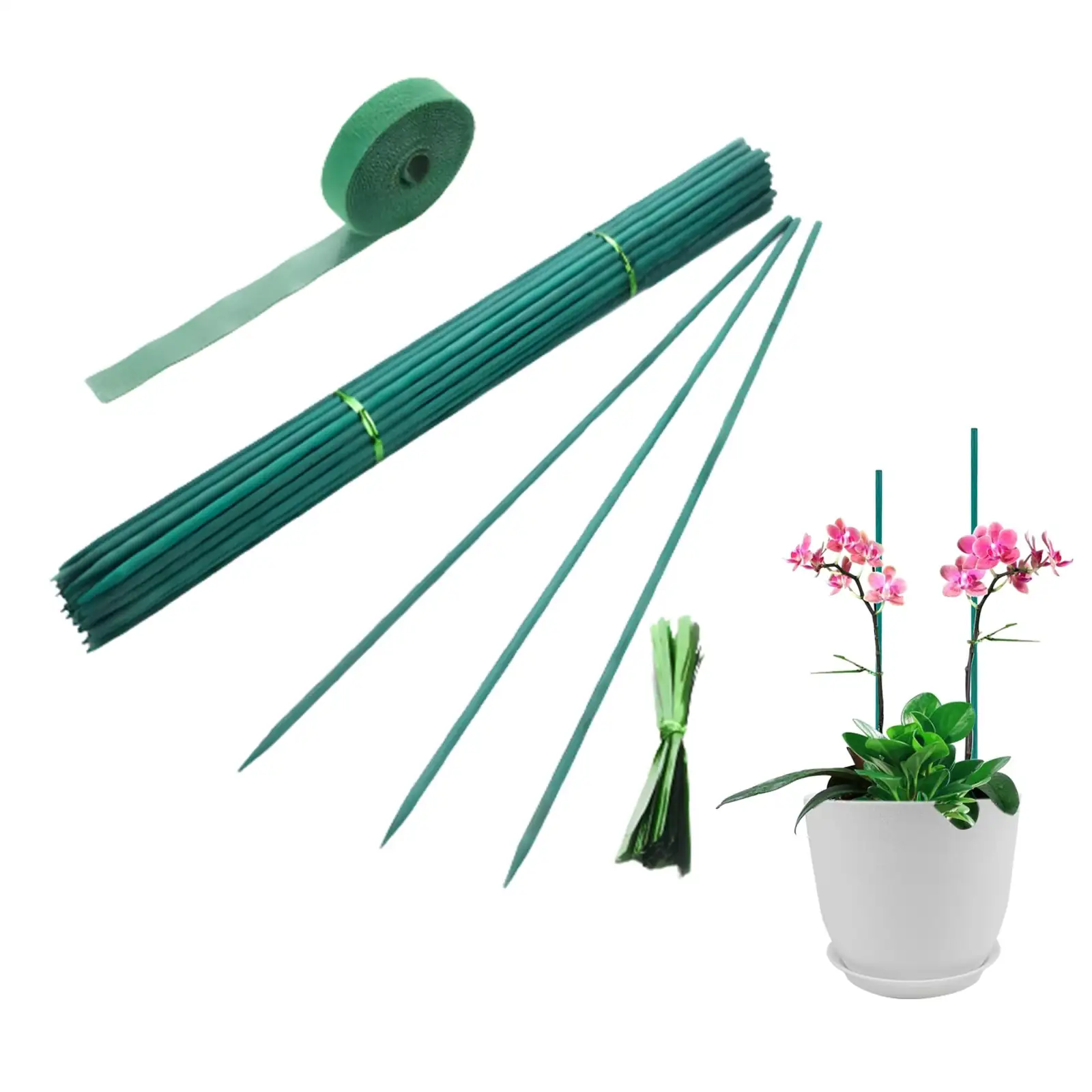
Oncidium spikes can branch and billow—support them invisibly to keep the effect light.
- When to stake: As a spike reaches 12–16 inches (30–40 cm) and begins to arch, add support to prevent snapping.
- Stake materials: Slim bamboo, matte black, or cocoa-brown stakes disappear visually. For a couture look, use two stakes and a gentle arching crossbar to create a domed “cloud.”
- Tying technique: Use soft clips, florist’s tape, or silicone ties. Make loose figure-eight loops so spikes can move and grow.
- Multi-plant magic: Combine two or three smaller plants in one decorative bowl; stake each separately, then angle spikes to mingle into a single floating canopy.
Palette pairings that sing
Oncidium’s blossoms bring motion—pair them with palettes that elevate the dance.
- Classic yellow + brown markings
- Navy or indigo chinoiserie, brass accents, walnut woods, charcoal linen: creates a timeless, gallery-ready vignette.
- Terracotta, ochre, and natural rattan: a warm, sunlit Mediterranean mood.
- White and soft pink hybrids
- Pale oak, travertine, soft gray walls, boucle upholstery: serene, sculptural minimalism.
- Red, bronze, and mixed tones
- Teal walls, smoked glass, black metal, velvet: dramatic, modern luxe.
- Mixed arrangements
- A trio of contrasting colors reads like curated art—space them so each spray has breathing room.
Arrangement ideas: airy drama, zero fuss
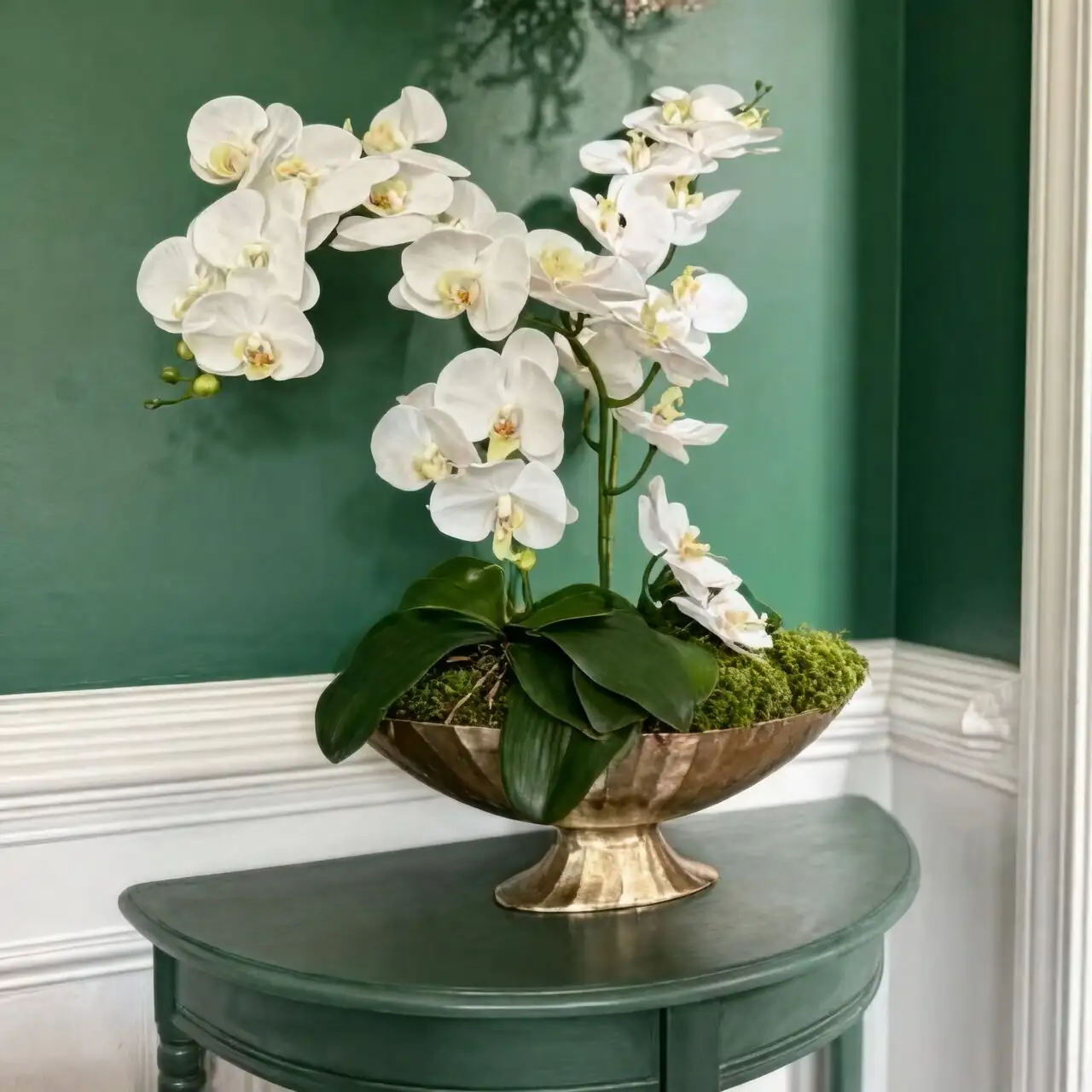
- Trio on a long surface
- Three small orchids in matching cachepots lined along a console, mantel, or island. Vary heights subtly with plant risers for a rhythmic skyline.
- Pedestal bowl centerpiece
- Tuck 2–3 plants (each in its own inner pot) into a striking pedestal bowl. Fill gaps with reindeer moss for a seamless “one-plant” cloud. Perfect for dining tables when vents and sun are controlled.
- Bathroom spa moment
- Great if your bathroom is bright. The moderate humidity is welcome, but avoid dim rooms and dripping showers. Place near a bright window with filtered light and good airflow so leaves dry within a few hours.
- Coffee table or ottoman
- Choose a weighted cachepot and low profile to prevent tipping. Keep out of the main traffic path so sprays won’t snag on sleeves.
Keep blooms safe from vents, drafts, and hot glass
- Distance from trouble
- Keep 3–6 feet (1–2 m) from heating or AC vents and away from radiators. If you can feel a draft, your buds can, too.
- Filter and buffer
- Sheers for south/west windows; a plant stand or side table to avoid glass contact. A double-pot setup adds a small air gap that reduces heat transfer.
- Humidity without wet blooms
- Aim for 40–60% with a pebble tray (pot above waterline) or a humidifier nearby. Mist lightly in the morning only, and avoid the flowers.
- Gentle airflow
- A small fan across the room keeps air fresh so leaves and media dry promptly—key for healthy roots and spotless petals.
- Rotation etiquette
- Quarter-turn weekly for even growth, but avoid big moves when buds are forming; abrupt change can cause bud drop.
Quick care cues for maximum display time
- Light: Bright, filtered/indirect light; gentle part sun is fine. Avoid harsh midday exposure.
- Water: Drench, drain fully, then water again when the medium is just approaching dryness. During buds/bloom, don’t let it go bone-dry—irregular drought causes yellowing buds and drop.
- Feeding: During active growth, feed lightly with a balanced orchid fertilizer every two weeks or at about 1/4 strength every 2–3 waterings. Pause or reduce in full bloom and in cool winter rest.
- Temperature: Comfortable room temps, roughly 54–77°F (12–25°C). Keep above about 46°F (8°C). If you dip below ~50°F (10°C), keep much drier to avoid rot.
- After the show: When the spike browns, cut it near the base. Repot every 1–2 years when media breaks down, and divide only when the clump is mature (aim for 3–4 pseudobulbs per division for quickest recovery).
- Buying tip: For the longest display, pick a plant with plump pseudobulbs and a mix of buds plus a few open flowers.
Safety and placement confidence
- Generally considered non-toxic to people and commonly listed as non-toxic to cats and dogs, but discourage nibbling.
- For stability on shelves or consoles, choose heavier cachepots and keep spikes clear of door swings and busy walkways.
Flower language and lore: why they feel so festive
Oncidium’s nickname—Dancing Lady—comes from the skirt-like petal that looks mid-twirl. Culturally, orchids have long symbolized elegance and refinement, and Oncidium in particular is often associated with joy, celebration, and lively charm. While modern “flower language” owes much to Victorian sentiment and today’s gifting traditions rather than strict botany, the association fits: those buoyant sprays read as cheerful movement. In interiors, they broadcast optimism—like confetti, but sophisticated.
Three styling recipes to try this weekend
- Blue-and-gold classic
- One yellow Oncidium in a navy chinoiserie cachepot; matte brass stake and clips; perched on a walnut console with a thin brass tray. East window, right at the edge for morning sun.
- Soft cloud centerpiece
- Two white Oncidiums nestled into a wide ivory pedestal bowl with pale reindeer moss. Place 18 inches back from a south window behind a sheer. Rotate a quarter-turn every week.
- Warm modern vignette
- A bronze-toned hybrid in a matte charcoal planter on a travertine side table. West window with a sheer; a low-profile fan across the room for airflow; pebble tray tucked below.
With the right pot-and-stake finesse and a light plan that flatters rather than fries, Oncidium’s dancing sprays become the most elegant “moving art” in your space—weightless, jubilant, and wonderfully at home.