

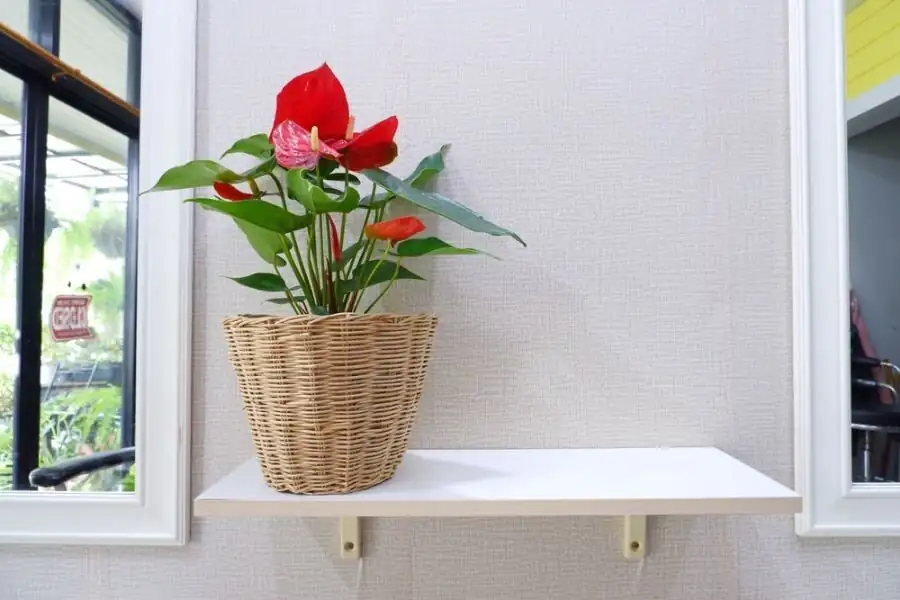
Think of Anthurium andraeanum (Flamingo Flower, Laceleaf, Painter’s Palette) as a tropical athlete in glossy green—its roots want to breathe, not bathe. If your “soil” compacts, stays cold and soggy, or starves roots of oxygen, blooms stall and leaves yellow. But with a purpose-built, airy aroid mix and a few drainage hacks, you’ll get cleaner watering, stronger roots, and wave after wave of those lacquered spathes.
Here’s how to engineer the right potting mix—down to particle sizes, ratios, and smart tweaks for your home environment.
Know Your Plant’s Roots: Built for Air
In nature, Flamingo Flower often grows in leaf litter or perches on trees, sending roots into chunky, loose, fast-draining material. Indoors it rewards:
- Bright, indirect light (avoid harsh midday sun)
- Steady warmth (about 16–24°C/61–75°F indoors; thrives up to ~30°C/86°F), never below 15°C/59°F
- Moderate to high humidity (50–60%+ with airflow)
- Even moisture without waterlogging
If you only remember one line: The key is air around the roots—never let it sit waterlogged.
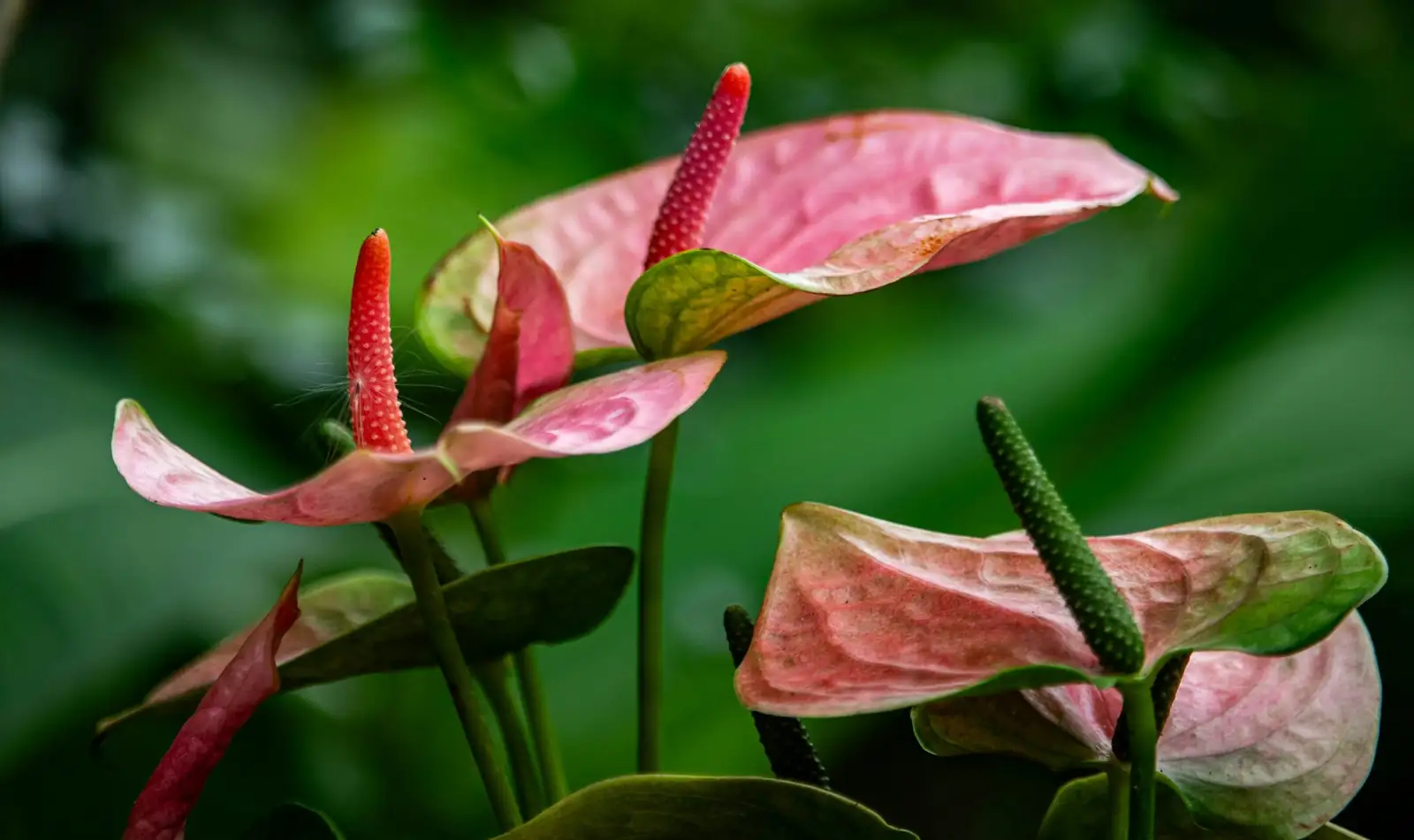
Engineering Targets for an Anthurium Mix
- Structure: Chunky, open, springy—granola, not pudding
- Drainage rate: Water should flow through quickly, with slight retention
- Air porosity: Lots of macropores for oxygen
- Moisture curve: Holds a little water between particles without clinging
- pH: Slightly acidic, roughly 5.5–6.5
- Stability: Resists compaction for 12–24 months
Ingredients, Roles, and Particle Sizes
Choose components you can source consistently, then size them to your pot diameter.
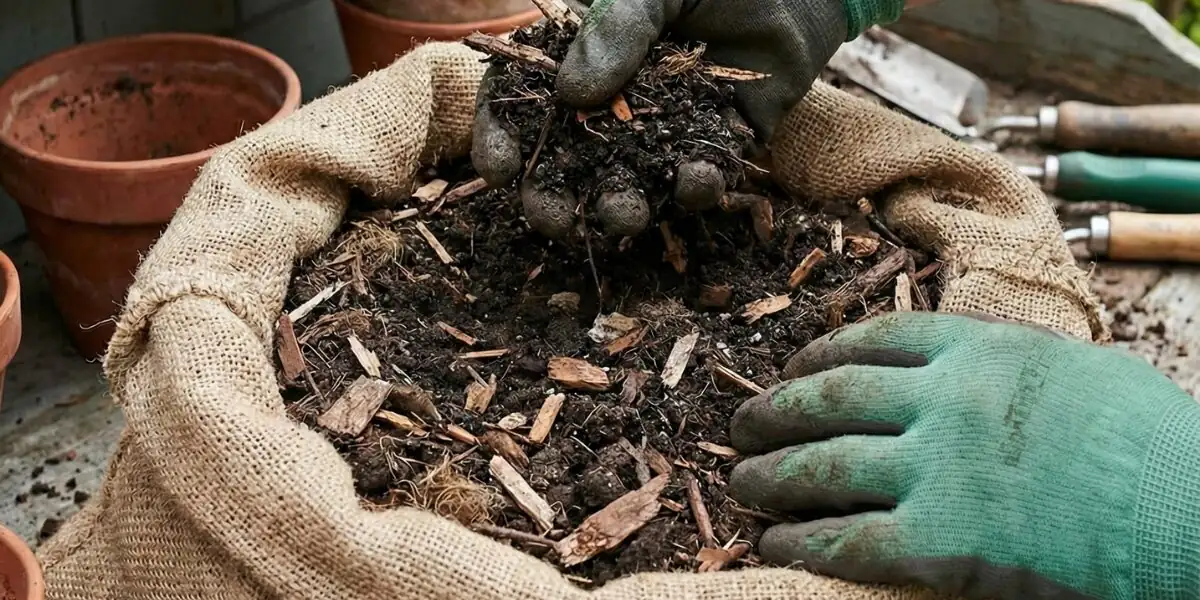
- Bark (fir/pine; the backbone)
- Role: Structure, drainage, slow nutrient release
- Size: 5–12 mm for 15–25 cm (6–10 in) pots; 3–6 mm for 8–12.5 cm (3–5 in) pots
- Coco chips and/or coco coir (or peat)
- Role: Moisture retention without smothering roots
- Size: Chips 6–12 mm; coir as fine fibers
- Tip: Rinse and pre-wet coco; squeeze out excess. If using pure coir, a light calcium-magnesium buffer helps long term.
- Perlite or pumice
- Role: Air pockets, drainage; pumice is heavier and stays put
- Size: Perlite #3–#4 (5–8 mm); pumice 3–7 mm
- Horticultural charcoal (optional)
- Role: Extra porosity; helps keep the mix sweet
- Size: 4–8 mm
- Long-fiber sphagnum moss (optional, sparingly)
- Role: Surface dressing to comfort aerial roots or temporary moisture buffer
- Worm castings (optional, very light)
- Role: Gentle nutrition; do not exceed 5–10% by volume
- Avoid: Garden soil, heavy composts, fine sand, or anything that compacts or stays cold and wet
Three Field-Tested Mixes (by Volume)
1) Classic Chunky Aroid Mix (balanced, bloom-forward)
Best for: Typical bright indoor spots; 12.5–20 cm (5–8 in) pots
- 4 parts medium orchid bark (5–10 mm)
- 2 parts coco chips (6–10 mm)
- 2 parts perlite or pumice (5–8 mm)
- 1 part coco coir (hydrated, fluffy—not soggy)
- 0.5 part horticultural charcoal (4–8 mm)
- 0.25 part worm castings (optional)
What it does: Air first, moisture second. Great root oxygen keeps growth clean and encourages frequent flowering with proper light and feeding.
2) Fine Apartment Mix (for small pots or drier homes)
Best for: Pots under 10 cm (4 in); warm, dry rooms where media dries fast
- 3 parts small bark (3–6 mm)
- 2 parts coco coir
- 1.5 parts perlite or small pumice (3–6 mm)
- 0.5 part coco chips (4–8 mm)
- 0.25 part worm castings (optional)
- Pinch of charcoal
What it does: Slightly more moisture without going dense. Great for steady hydration in smaller volumes.
3) Semi‑Hydro Lean (airy, low-rot risk; hand-watered, not standing water)
Best for: Warm homes with consistent care
- 5 parts LECA or Pon
- 3 parts medium bark (5–10 mm)
- 1 part coco chips (6–10 mm)
- 1 part small pumice (3–6 mm)
- Light top-dress of sphagnum around aerial roots (optional)
What it does: High airflow with predictable moisture. If you shift to true passive hydro, keep only the lowest roots in the reservoir, change water weekly, and use a light hydro nutrient.
Customize for Your Climate and Pot
- Humid/cool room or low light: Go chunkier (more bark/pumice), less coir/chips. Water less often but thoroughly.
- Hot/dry room or strong airflow: Add a touch more coir or coco chips; consider a finer bark fraction.
- Terracotta pot: Wicks faster—add slightly more coir/chips.
- Glazed ceramic/plastic: Holds moisture—add slightly more bark/pumice.
- Large pot: Use coarser particles to prevent a soggy center.
- Small pot: Use finer bark and smaller perlite/pumice for even moisture.
Drainage Hacks That Actually Work
- Use a slotted nursery pot inside a decorative cachepot. The slits deliver superior side aeration; the cachepot hides the nursery pot and catches runoff.
- Elevate the inner pot above the cachepot bottom with pot feet, clay shards, or a coaster so runoff never re-wets the media.
- Mesh over the drain hole keeps mix in but doesn’t slow flow.
- Wick assist: Thread a cotton/poly wick out the drain hole to guide excess water away if your cachepot sometimes collects runoff.
- Skip the gravel-at-the-bottom myth. A coarse layer doesn’t improve drainage; it raises the perched water table. If you add a thin LECA layer, treat it only as a hole guard, not a fix for heavy soil.
- Drill a few side holes high on plastic nursery pots for extra airflow (avoid weakening the rim).
Mix Prep: The “Crumbly Granola” Test
- Rinse dusty components (perlite/pumice/charcoal) outdoors.
- Pre-soak bark and chips until evenly moistened; drain well.
- Hydrate coco coir with warm water; squeeze to damp flake. No dripping.
- Combine and squeeze a fistful: It should clump lightly, then fall apart when poked. If it stays stuck together, it’s too fine or too wet—add bark/pumice.
Potting Anthurium, Step by Step
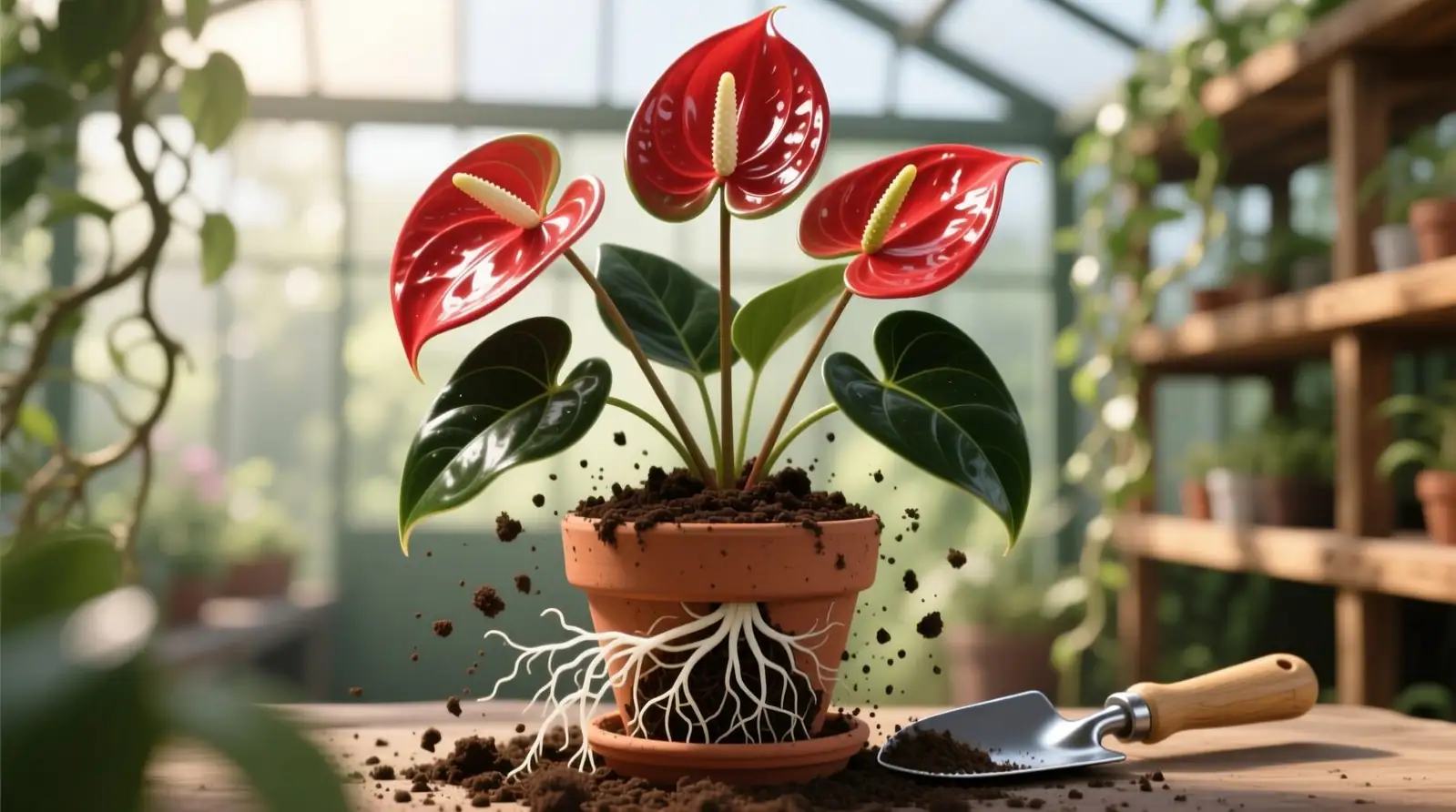
- Choose a pot only 2–3 cm (about 1 in) wider than the root ball; repot every 2–3 years or when root-bound.
- Keep the crown (where leaves emerge) at or slightly above the surface. Do not bury the crown.
- Spread roots over a mound of mix. Backfill with your airy blend, tapping the pot to settle—don’t pack tight.
- Tuck aerial roots near the surface; top-dress with a little bark or a thin collar of sphagnum if humidity is low.
- Water thoroughly to unite particles; let all excess drain. Never leave the pot sitting in water.
Watering an Airy Mix Without Soggy Mistakes
- Timing: Water when the top 2–3 cm (about 1 in) just turns dry. In heat, that might be every few days; in winter, less often.
- Method: Soak through, then drain completely. Water during the warmer part of the day (roughly 9 a.m.–4 p.m.) to reduce cold stress.
- Humidity boost: Pebble tray or humidifier. If you mist, do it lightly and not at night.
- Monthly flush: Run tepid water through for 30–60 seconds to leach salts in active growth.
- Winter: Water less often, but don’t let it bone-dry.
Feeding for Flowers (and How Mix Affects It)
In a fast-draining, airy blend, low-dose, frequent feeding works best.
- Spring–summer: Every 2 weeks at half strength with a balanced to bloom‑leaning fertilizer slightly higher in potassium (e.g., 20‑8‑20).
- Autumn–winter: Reduce frequency.
- Signs you’re close to the sweet spot: Glossy, deep-green leaves; firm roots; steady spathes in bright, filtered light.
Troubleshooting the Medium
- Yellowing leaves, limp petioles, sour smell: Overwatering or compacted mix. Repot into a chunkier blend; trim any brown, mushy roots.
- Fungus gnats: Overly wet, fine media. Dry the top 2–3 cm between waterings; add more bark/pumice; use a sand or fine bark top-dress.
- Hydrophobic bark (water rushes through): Pre-soak components; water more slowly in passes until the mix accepts moisture.
- Slow or no blooms: Not enough light or warmth. Move to bright, indirect light and keep above 15°C/59°F (ideally 16–24°C, good bloom up to ~30°C).
Why Airy Mix = More Blooms
Roots with abundant oxygen build stronger, finer root hairs, absorb water and nutrients efficiently, and resist rot. That resilience frees the plant to channel energy into repeat spathes. Combine an airy substrate with bright, indirect light and steady warmth, and you’ll see why Flamingo Flower is famed for near year‑round flowering indoors.
Quick Bloom-Boost Checklist
- Light: Bright, filtered (sheer-curtain south/west, or near east/north windows)
- Mix: Chunky aroid blend; never soggy
- Water: Evenly moist; top 2–3 cm dry before rewatering
- Temp: 16–24°C typical; thrives up to ~30°C
- Humidity: 50–60%+ with airflow
- Feed: Half-strength, higher‑K, every 2 weeks in active growth
- Groom: Remove spent spathes and yellowing leaves to improve airflow
Placement, Size, and Style Notes
- Indoors, most plants settle around 30–60 cm (12–24 in) tall and wide; many house specimens hover near 45 × 30 cm (18 × 12 in), depending on cultivar, pot, and care.
- A bright bathroom can be ideal thanks to humidity—just avoid blasting sun.
- For a modern look and easy watering, hide a slotted nursery pot inside a ceramic sleeve with room at the bottom for runoff.
Repotting and Propagation Snapshot
- Repot when root-bound, typically every 2–3 years. Common sizes: 12.5–20 cm (5–8 in); larger, mature plants may use 15–25 cm (6–10 in).
- Keep the crown at or slightly above the surface; aerial roots can sit near the top and be top-dressed with moss.
- Propagation: Division is the most reliable—separate a clump with its own roots and at least ~3 leaves. Advanced growers root stem sections with nodes and aerial roots in moist sphagnum or an airy mix; new roots often form in about 20–30 days before potting on.
Safety and Plant Health
- Toxic if chewed (insoluble calcium oxalate). Keep away from pets and children; sap may irritate skin.
- Pests: Watch for spider mites, mealybugs, scale, and thrips. Treat early with insecticidal soap or horticultural oil.
- Disease: Root rot and fungal issues thrive in wet, stagnant conditions—your airy mix and good airflow are your prevention plan.
A Note on “Flower Language”
Anthurium’s long-lasting spathes led to associations with hospitality, confidence, warmth, and enduring love. Unlike ancient floriography traditions tied to European roses or Victorian codes, these meanings grew with Anthurium’s global popularity as a cut flower famed for longevity and bold color. If you gift one, you’re really offering a symbol of welcome and staying power.
—
Build your mix like a breathable designer sneaker: structured, springy, and ventilated. Once your Flamingo Flower’s roots can inhale freely—and your pot never sits in water—the rest is easy: glossy leaves, vigorous growth, and those lacquer-red spathes that refuse to quit.