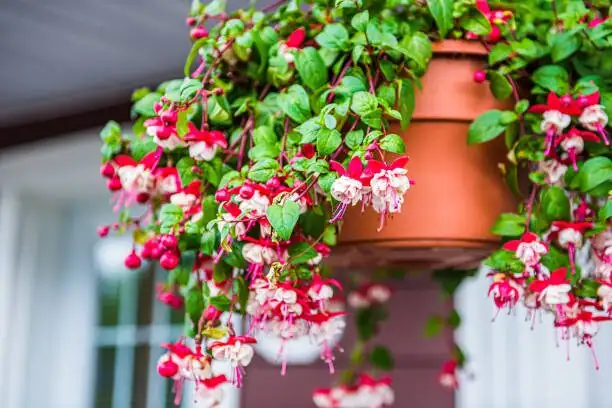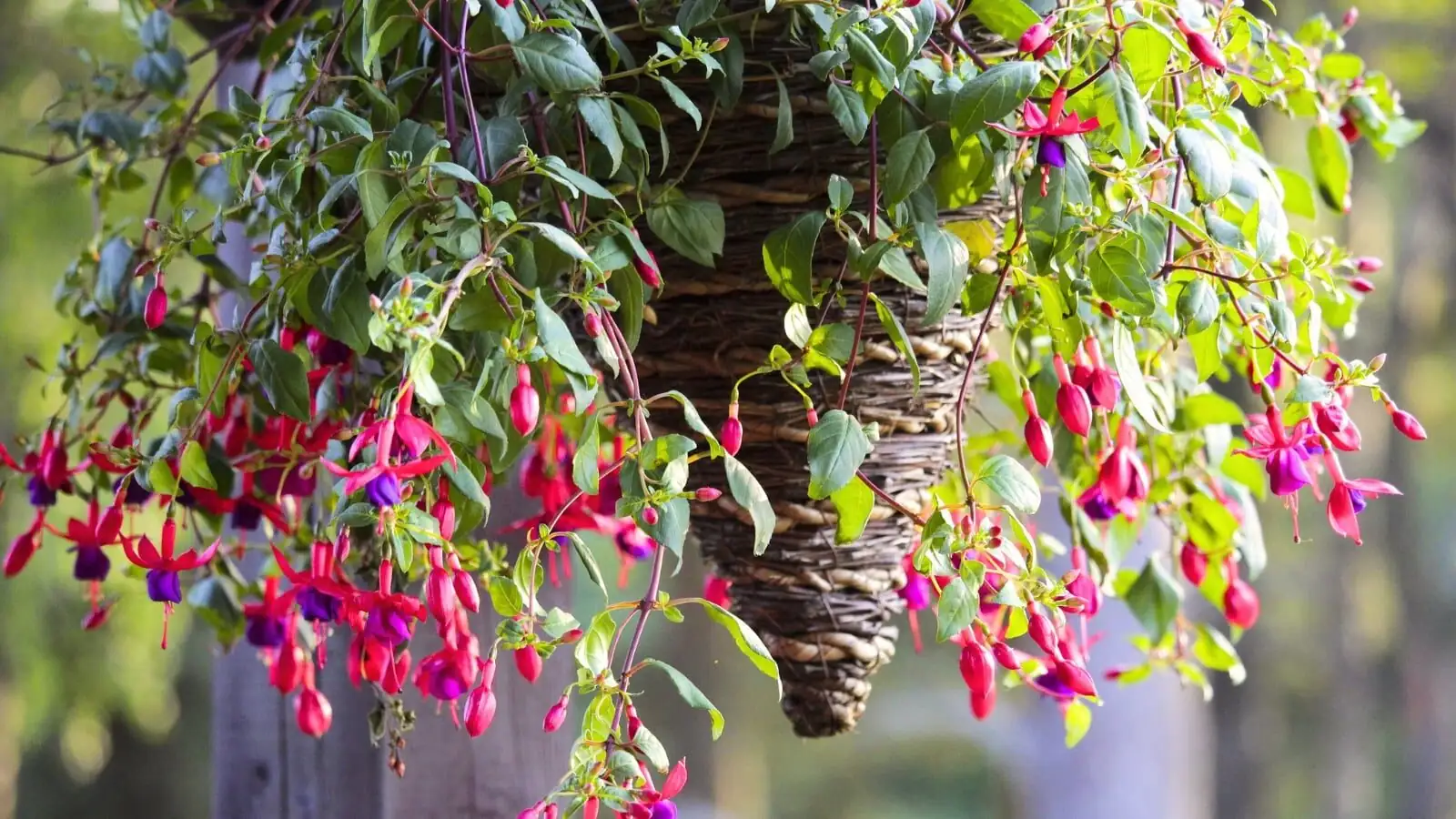
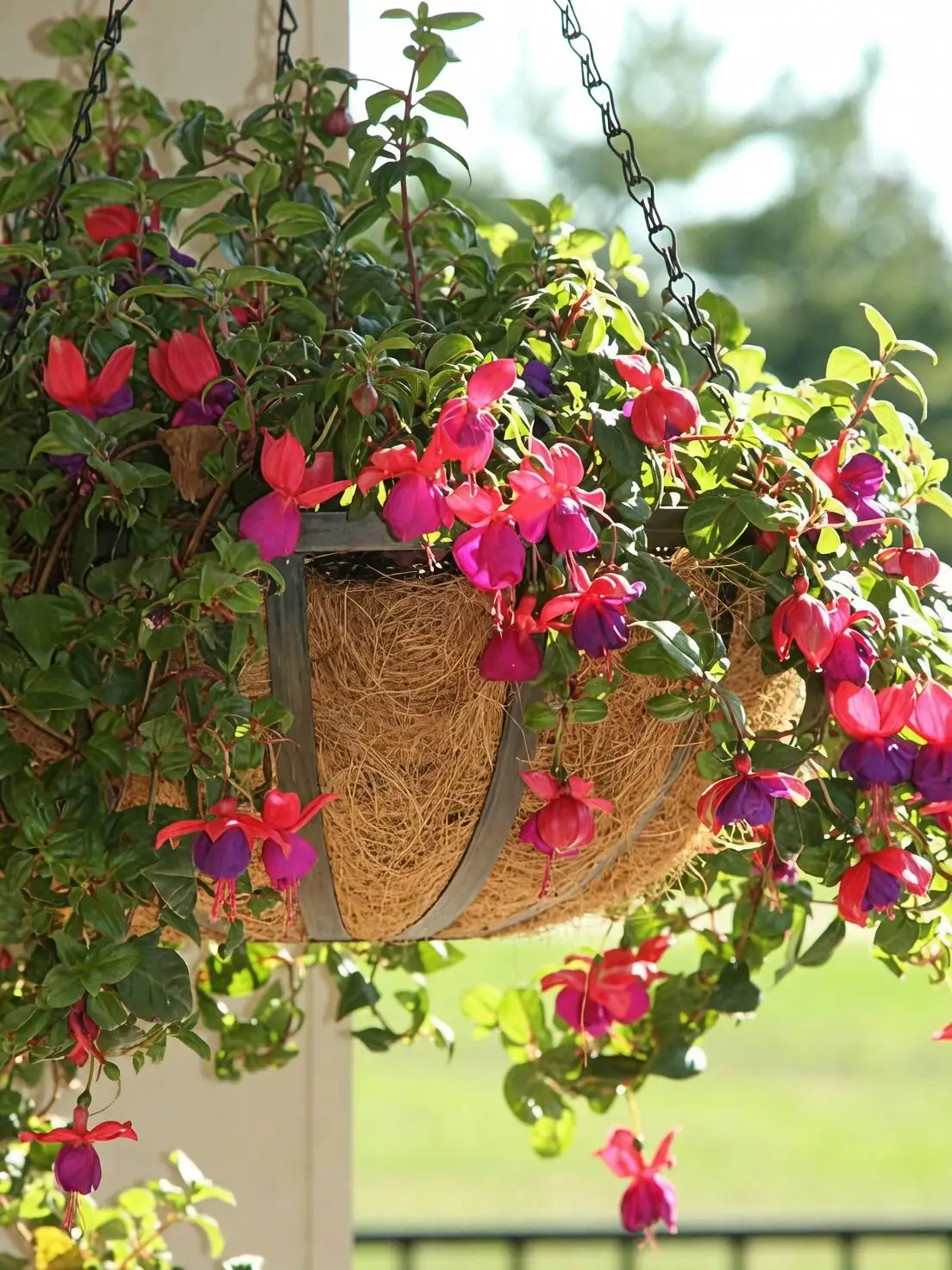
Imagine a living chandelier: tiers of lantern-like blooms tumbling in slow motion, petals flashing white, crimson, magenta, and royal purple as they sway. That’s the magic of Fuchsia × hybrida in a hanging basket—when you plant, mix, and position it for a true waterfall effect. Here’s how to design one that turns heads all season.
Start with the right fuchsias: singles, doubles, and bicolors
Choosing the bloom style and color is half the spectacle. Let the flowers do the drama while you choreograph the cascade.
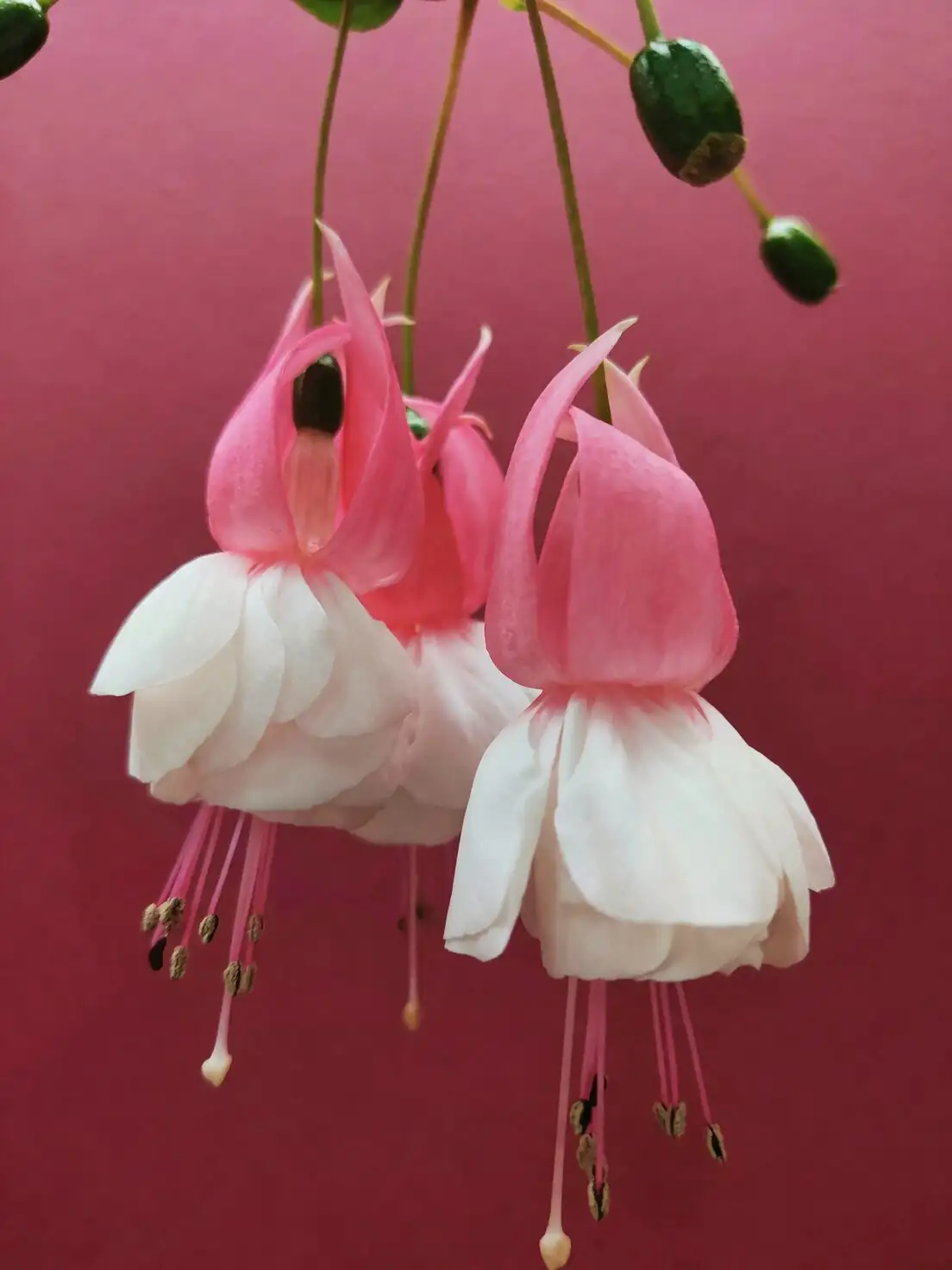
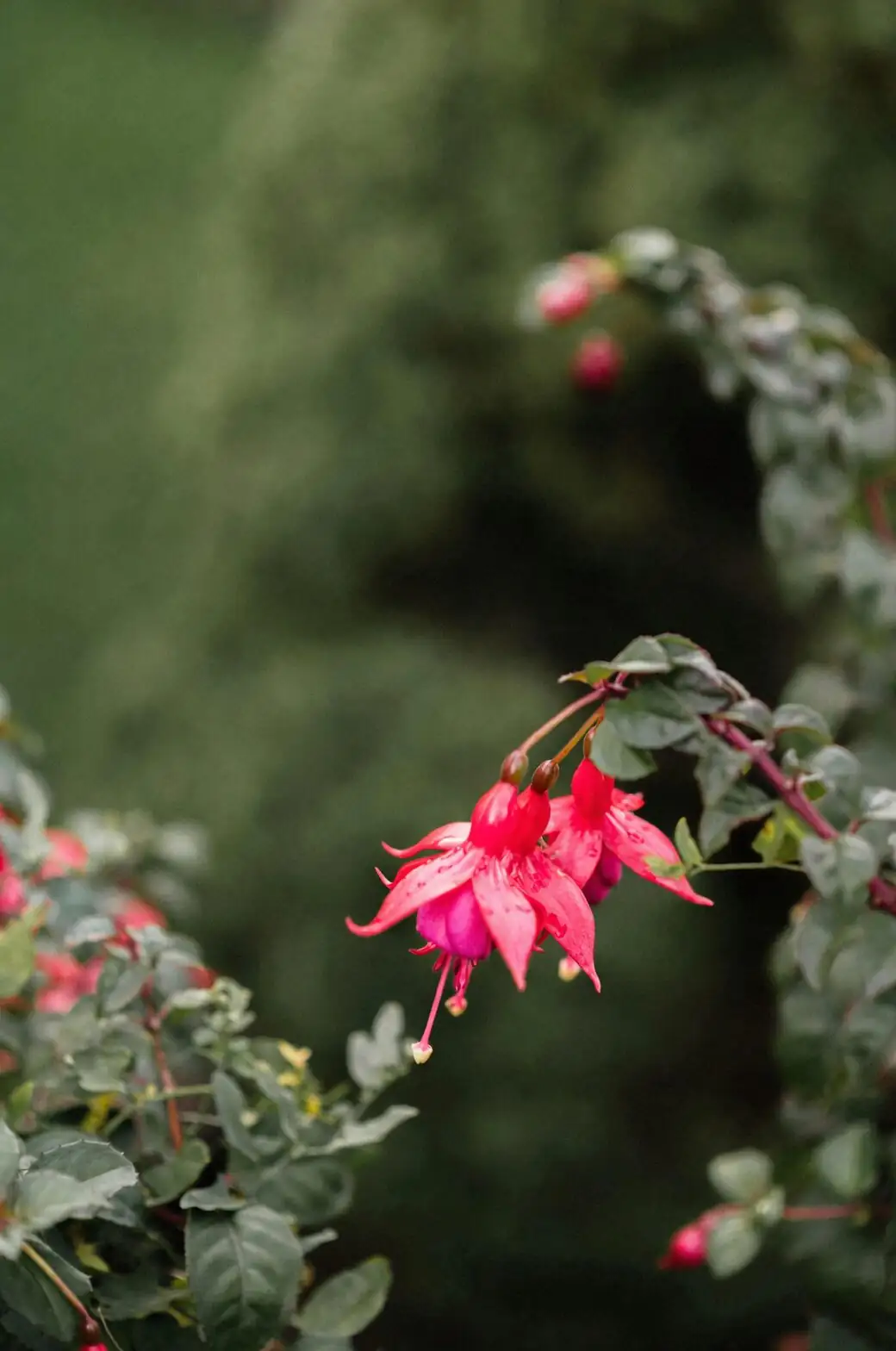
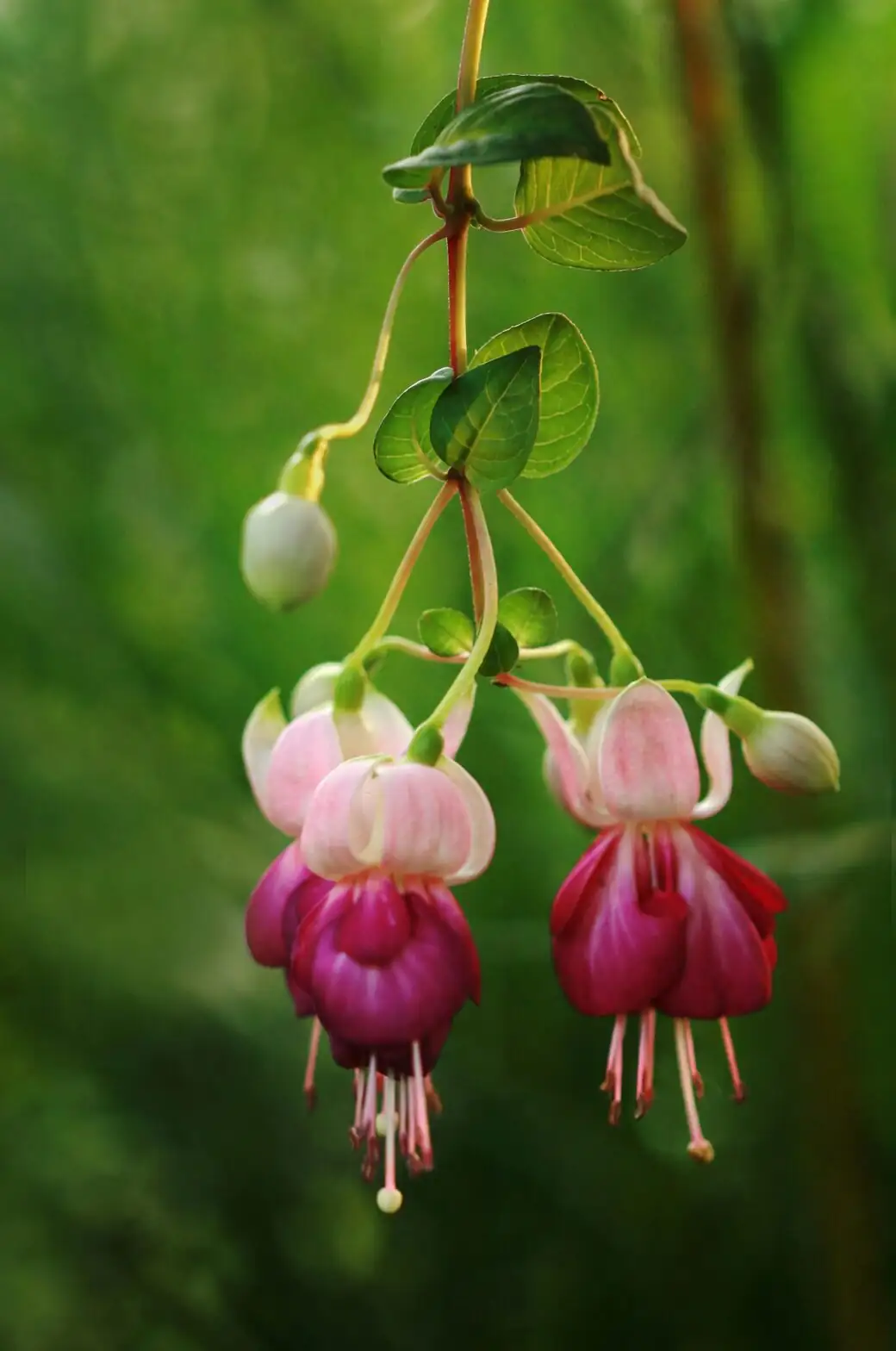
Singles: airy movement and clear silhouettes
- Petals form a single skirt beneath the flared sepals—delicate, elegant, and perfect for “motion.”
- Advantages:
- Readable color from a distance; stamens dangle and catch the light for extra sparkle.
- Shed rain and dry faster; the lighter flowers are less prone to gray mold in humid spells.
- Great for a fine, lacy waterfall that looks dynamic even in a light breeze.
Doubles: lush pom‑poms for visual weight
- Two or more rows of petals give big, frilly “earring” blooms that stop traffic.
- Design tips:
- Reserve the doubles for mid-basket and eye-level viewing—where you can admire all that ruffle from below.
- Space generously and prioritize airflow; dense petals can trap moisture (a recipe for Botrytis in still, damp air).
- Combine with singles so your basket has both movement (singles) and focal heft (doubles).
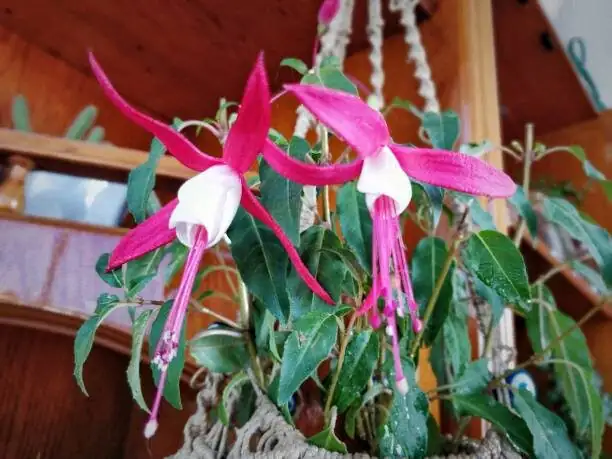
Bicolors: instant contrast without mixing varieties
- Many modern cultivars are naturally two-toned—think white sepals with a strawberry corolla, or lipstick-red over royal purple.
- Why they work:
- Built-in contrast means every bloom reads crisply against the foliage.
- Bicolors make a basket look “composed” even when you plant just one variety.
- Color strategy:
- High contrast for drama: white + magenta, cherry red + violet, blush pink + deep purple.
- Subtle romance: shell pink + soft lavender, cream + rose.
Growth habit matters: go trailing for the cascade
- Look for cultivars tagged trailing/cascading to get those long, arching stems that naturally drape.
- Upright or mounding types can still work—plant them near the center as height, then ring with trailers for the fall.
How many plants per basket? The secret to instant fullness
- The classic trick for a fuller basket: plant 2–3 young fuchsias together.
- For a 15 cm (6 in) pot: 2–3 plants create an immediate, plush start.
- For a larger hanging basket (25–30 cm / 10–12 in): 3 plants is the sweet spot for an opulent cascade without overcrowding.
- Layout for a waterfall effect:
- One slightly raised in the center (or just off-center) for height and branching.
- Two angled toward the rim at 30–45 degrees so stems immediately drape.
Tip: Keep the basket proportionate to your hanging height. If it’s high up, go a size larger so the fall of flowers is visible from below.
The perfect potting mix: airy, moisture-retentive, never soggy
Fuchsia loves steady moisture but sulks in stagnant, wet soil. Aim for a rich, springy medium that holds water while breathing.
- Mix recipe:
- 2 parts peat- or leaf-mold–based compost (or high-quality peat-free equivalent)
- 1 part perlite (or a blend of perlite and coarse sand) for drainage
- Optional: 1 part fine pine bark to add structure and extra air spaces
- Prep:
- Pre-moisten the mix so it’s evenly damp (not dripping).
- Use a basket with ample drainage; if you line with plastic, puncture extra holes around the sides’ lower third to prevent waterlogging.
- Position a saucer-free hanger or a liner that doesn’t pool water; fuchsias hate “wet feet.”
Planting for a true waterfall: step-by-step
1) Prep the basket
- Ensure strong hangers; a well-watered fuchsia basket is heavier than it looks.
- Add the mix to two-thirds full; water lightly to settle.
2) Arrange the plants
- Center plant slightly higher; rim plants tilted outward so first flush already drapes.
- Keep the crown just above the soil line; backfill and firm gently.
3) Pinch for branches (your fullness engine)
- When each plant has about three pairs of leaves, pinch back to above the second pair.
- Repeat 2–3 times as new shoots make 3–4 pairs of leaves.
- Aim to keep 5–7 strong main branches per plant; remove thin, crossing, or awkward shoots.
4) Train the fall
- As stems lengthen, gently guide them over the rim; rotate the basket weekly so all sides get bright light and even growth.
- Keep blooms hanging free so the lanterns are visible from below.
Light, temperature, and placement: where fuchsias look their best
- Light: Bright light with gentle direct sun—especially morning sun. Shield from harsh midday/afternoon rays in summer.
- Temperature: Cool is king. Best at about 15–22°C (59–72°F). Flowering and vigor dip above 25°C (77°F); severe heat around 35°C (95°F) can be fatal.
- Airflow: Essential. Breezy, bright shade in heat reduces bud drop and disease.
- Indoors: Park near a bright east- or south-facing window. Avoid dim corners (they cause leggy growth and bud drop).
- Bonus: Hang where you can admire the underside; these flowers are designed to be viewed from below.
Watering and feeding rhythm: the cascade needs fuel, not floods
- Watering rule: Keep evenly moist—never bone-dry for long, never waterlogged.
- Spring: Water when the surface dries; often every 1–2 days to about 2× weekly depending on light, warmth, pot size, and airflow.
- Summer: In heat, growth can stall. Keep lightly moist and cool the plant with good ventilation (watering may still be frequent). Bright shade is your friend.
- Autumn: As nights cool, reduce to roughly weekly—or as the surface dictates.
- Winter indoors: Cool and bright, watering about once a week; keep above 5–10°C (41–50°F).
- Feeding: Every 2 weeks in active growth with a balanced-to-blooming fertilizer (around 15-15-30 or similar). Pause or reduce during hot spells when growth slows.
Pro tip: Water thoroughly until it drains, then let excess escape—never leave the basket sitting in runoff.
Maintenance for nonstop bloom
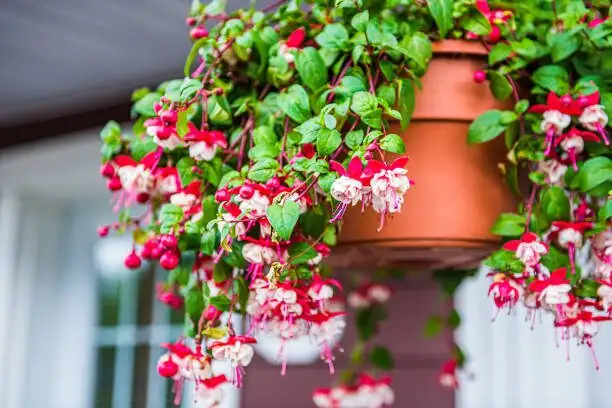
- Deadhead: Snip off spent blooms and any developing seed pods to push new buds.
- Touch-up pruning: After each big flush, shorten overly long stems to keep the silhouette cascading, not straggly.
- Summer heat reset: If plants tire in hot weather, cut back by about 1/3–1/2, keep lightly moist in bright shade, and let them rebound when temperatures dip.
- Keep blooms clean and dry: Avoid overhead wetting late in the day to reduce gray mold.
Troubleshooting: fast fixes that save the show
- Bud drop, yellowing, or leggy growth?
- Usually too little light or too much heat. Move to bright morning sun/bright shade and increase airflow.
- Sudden flower/bud fall indoors?
- Fuchsia is ethylene-sensitive—keep away from ripening fruit and stuffy rooms.
- Leaves crisping or wilting?
- Check moisture: too dry is common in baskets. Water thoroughly, then drain; adjust frequency.
- Gray mold (Botrytis) or rust spots?
- Improve ventilation, remove affected blooms/leaves, avoid splashing flowers, and space plants. Treat early if needed.
- Pests:
- Aphids, spider mites, and whiteflies are the usual suspects. Start with insecticidal soap or horticultural oil; repeat as necessary.
Overwintering and the spring reboot
- Keep above 5–10°C (41–50°F) indoors in bright light; cooler (around 12–15°C / 54–59°F) maintains better form.
- Water lightly about weekly—just enough to prevent the mix from going bone-dry.
- Late winter to early spring: Repot, refresh the mix, and give a shaping prune before resuming regular feeding and pinching.
Design recipes: three “waterfall” looks to try
- High-contrast cascade
- All bicolors with white sepals and magenta or purple corollas (singles and doubles mixed).
- Plant three: one double at center for weight, two singles on the rim for motion.
- Ruffled jewel tones
- Doubles in deep rose, raspberry, and plum.
- Use a slightly larger basket and give extra airflow; pinch hard for branching and keep blooms hanging free.
- Breezy ballet
- All singles in soft pinks and violets.
- Aim for a lighter, longer “fall.” Let stems stretch before the final pinch, then rotate weekly for even drape.
Quick care checklist (for display that lasts)
- Bright light with morning sun; protect from harsh midday/afternoon sun.
- Cool temps (ideal 15–22°C); extra airflow in summer.
- Moist but airy soil; water thoroughly, then drain. Never let sit in water.
- Feed every 2 weeks in active growth; pause in heat.
- Pinch 2–3 times early; keep 5–7 main branches per plant.
- Plant 2–3 per pot/basket for instant fullness.
- Keep away from ripening fruit (ethylene) to prevent bud drop.
A note on meaning and lore
Fuchsia is often linked with playful charm and fascination—the flowers look like tiny bells or a pair of elegant earrings mid‑twirl. In some traditions, they also hint at a gentle warning bell, a reminder to pause and pay attention. It’s a fitting metaphor for the plant itself: reward it with cool light, even moisture, and a touch of care, and it answers with a cascade so captivating you can’t help but stop and look.
With the right mix of singles and doubles, smart use of bicolors, and that simple 2–3‑plants‑per‑basket trick, your Fuchsia × hybrida won’t just hang—it will perform. Here’s to your show-stopping waterfall.