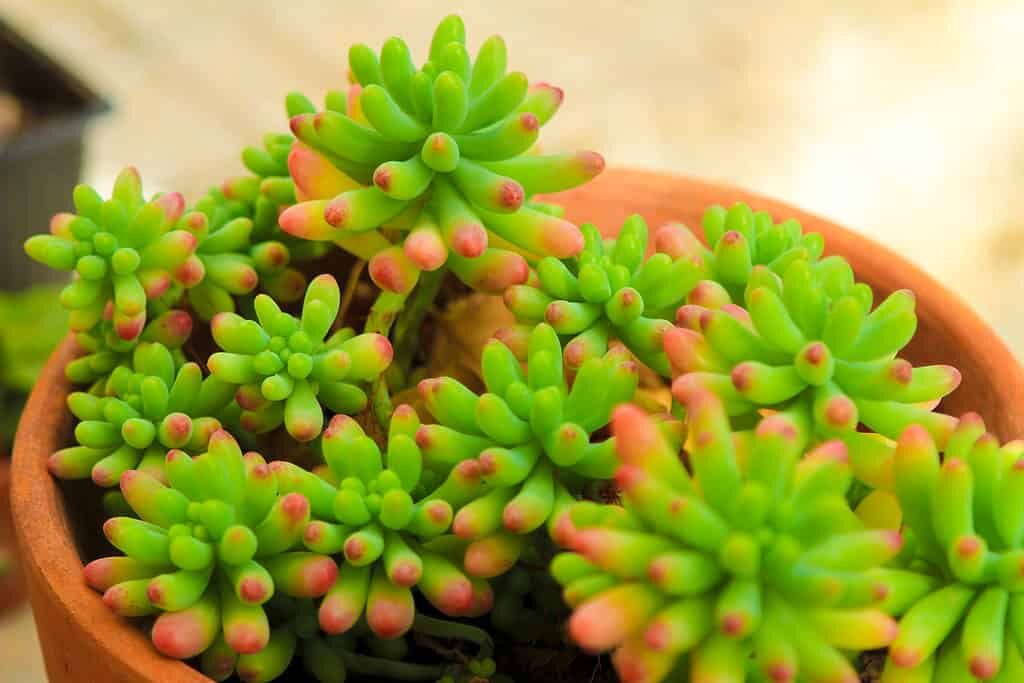
Meet the Jelly Bean Plant (Sedum rubrotinctum)—a plump-leaved, sun-kissed succulent from Mexico that blushes coppery red in strong light and cool nights. It’s famously forgiving—until you overwater it. If you’ve heard that “succulents like a weekly sip” or that “a pebble layer fixes drainage,” this guide is your myth-busting, plant-saving playbook. We’ll pin watering to real-world thresholds, tailor your potting mix to your climate, and walk through cooling-off strategies for heat waves and winter dormancy so your plant stays firm, glossy, and vibrant.
Know your plant: compact, sun-loving, and easy to propagate
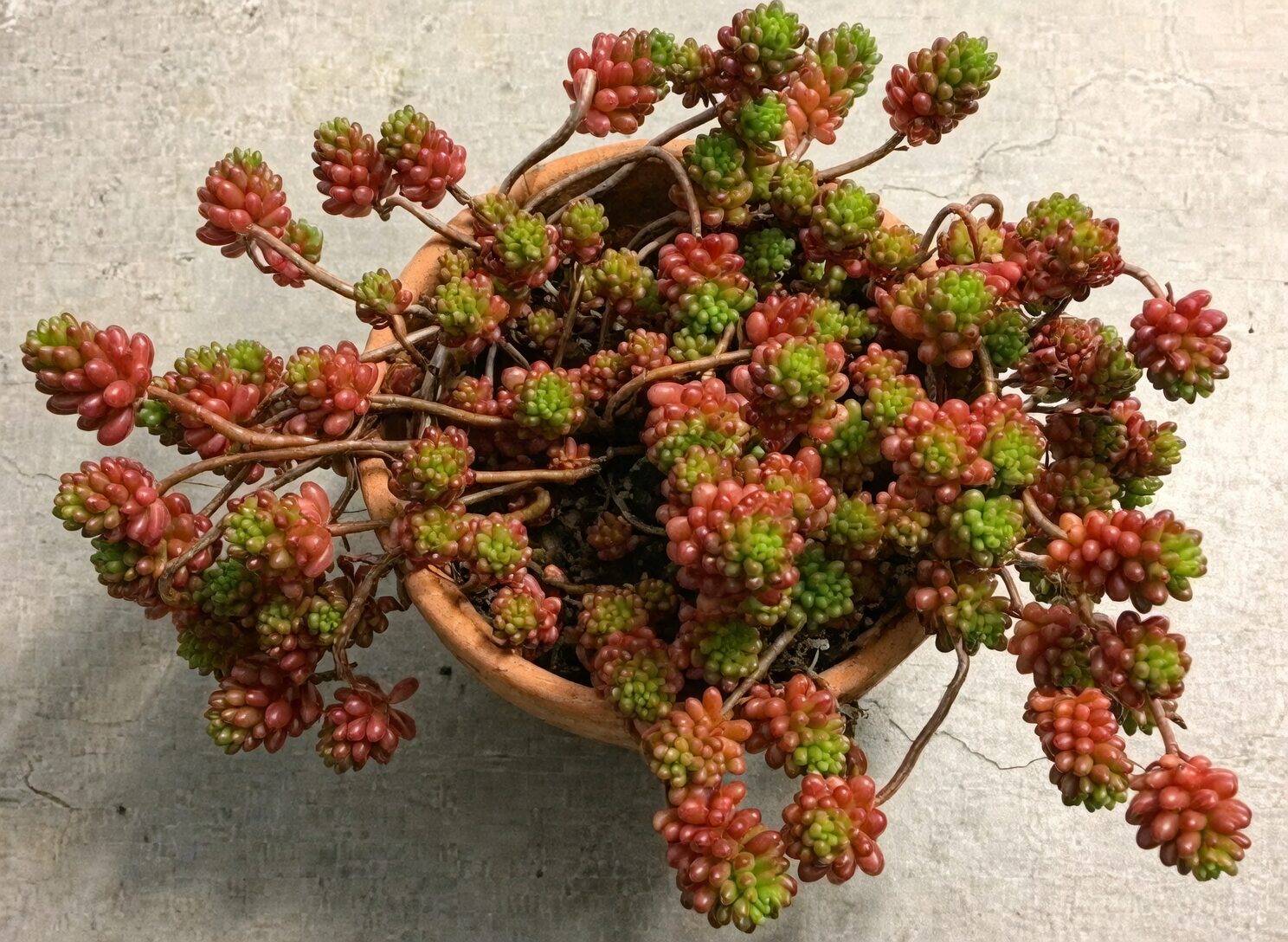
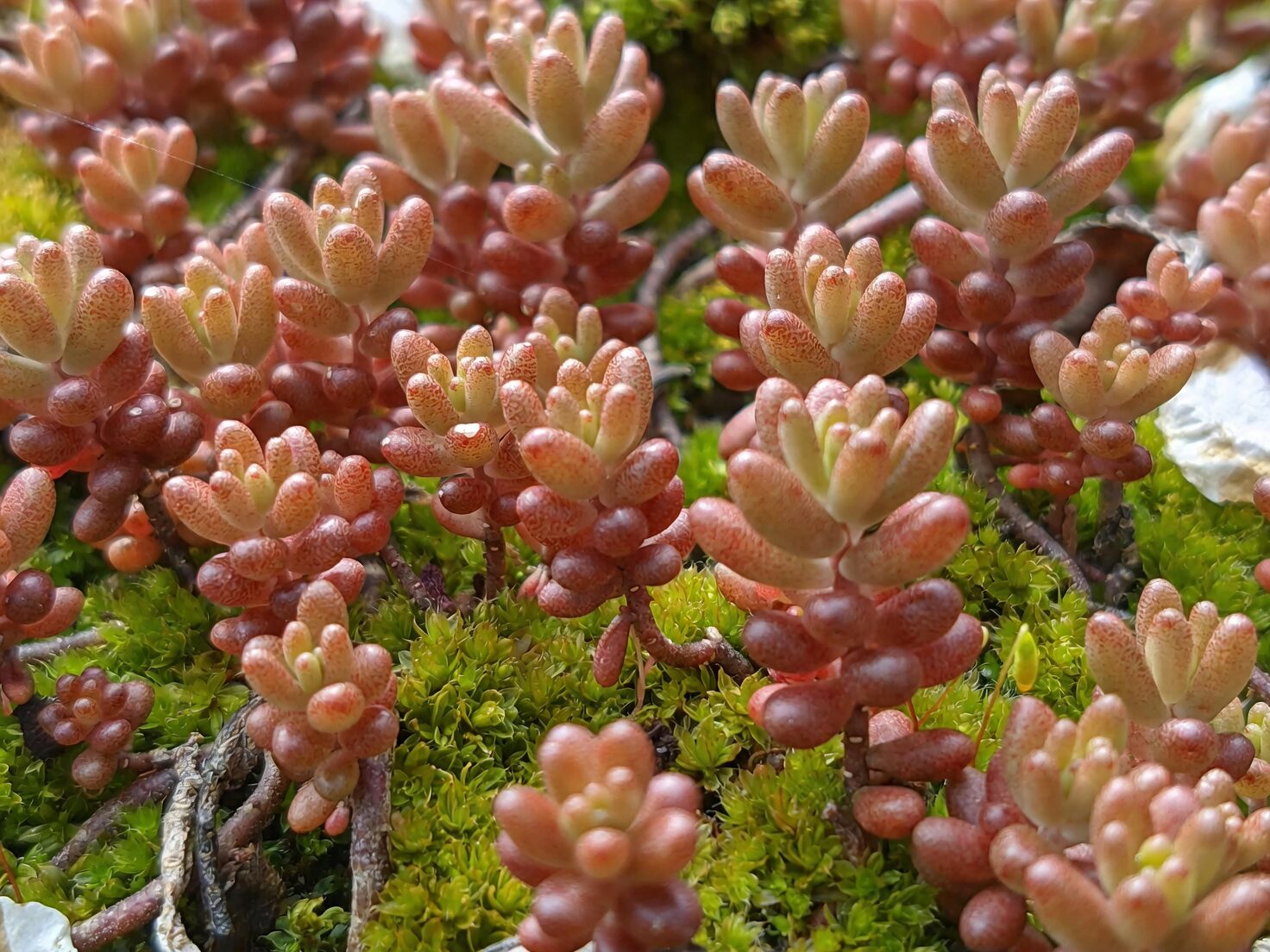
- What it looks like: Dense clusters of glossy, jelly-bean-shaped leaves on short stems. In lower light, it’s greener; with strong sun and cooler nights, tips—and often whole leaves—turn coppery red to red-brown.
- Size: Typically 10–20 cm (4–8 in) tall, spreading 20–45 cm (8–18 in) over time as stems trail.
- Blooming: Small, starry yellow flowers from winter to spring (sporadic indoors).
- Temperament: Beginner-friendly but sensitive to excess moisture. Leaves detach easily when bumped—convenient for propagation.
Watering myths, busted (with real thresholds)
Myth 1: “Succulents need water on a fixed schedule.”
- Reality: Watering is about dry-down, not dates on a calendar. In bright, warm conditions, this plant drinks faster; in low light or cold, it barely sips.
- Concrete threshold: Water only after the mix has dried out well—almost completely.
- Depth test: A wooden skewer pushed to the pot’s bottom comes out clean and dry (not cool or crumbly-damp).
- Weight test: The pot feels nearly as light as it did the day after repotting with dry mix.
- Moisture meter: Aim for 1–2 in the root zone before watering.
- Leaf feel: Leaves are still mostly firm; slight softening at the tips is okay—do not wait for full shrivel.
Myth 2: “Frequent sips are safer than deep drinks.”
- Reality: Small, frequent waterings keep the root zone persistently damp—prime conditions for rot.
- Best practice: Water thoroughly until it drains, then do not water again until the root zone is nearly bone-dry.
Myth 3: “Misting prevents dehydration.”
- Reality: This plant stores water in its leaves and prefers dry air. Wet foliage and humid, stagnant conditions invite spotting and fungal issues.
- Best practice: Skip misting. Prioritize airflow and let the soil, not the leaves, be your moisture focus.
Myth 4: “A pebble layer at the bottom improves drainage.”
- Reality: Pebbles create a perched water layer. The result? Roots sit in wetter soil for longer.
- Best practice: Use a pot with a drainage hole and a gritty, fast-draining mix throughout the potting volume.
Myth 5: “Wrinkled leaves always mean underwatering.”
- Reality: Wrinkling plus a soft stem base often signals rot from overwatering.
- Check the base: If the stem feels mushy, unpot, cut away rot, let cuts callus, and replant in fresh, gritty mix. Resume watering only after the new mix dries well.
The precision watering playbook (season by season)
Adjust for your light, pot material, and ventilation.
Spring (active growth)
- When to water: After a full dry-down; typically about every 2 weeks in bright light.
- How much: A thorough soak with full drainage.
- Tips: Resume light feeding monthly; prune and propagate freely.
Summer (keep it drier—especially in heat waves)
- When to water: Only after a complete dry-out. Hotter doesn’t mean thirstier here; stressed roots + wet soil = rot.
- Micro-strategy in extreme heat: If temps soar, see “Heat-wave cooling” below and water lightly, and less often, once the mix is fully dry.
Autumn (color season)
- When to water: Moderate, often around every 2 weeks after a full dry-down.
- Goal: Maximize bright light; cooler nights intensify the red blush.
Winter (cool, bright, and dry)
- When to water: Roughly once a month (or less indoors), keeping the mix on the dry side.
- Temperature note: Protect from cold; keep above about 5°C (41°F). Bright light and dry roots reduce rot risk and can encourage winter–spring blooms.
Potting mix that forgives mistakes
Start with a very fast-draining succulent mix. A reliable base:
- 1:1 by volume: high-quality potting soil + coarse mineral aggregate (pumice, perlite, or gritty sand).
Then tailor to your conditions:
- Humid homes, plastic or deep pots: Increase the mineral fraction to 60–70%.
- Hot, bright windows behind glass: Favor more pumice/perlite to speed dry-down.
- Indoors with limited airflow: Use larger particles (2–6 mm) for better oxygen around roots.
Extra tips:
- Always use a pot with a drainage hole. Terracotta helps wick moisture and cool the root zone.
- Typical pot: 12–15 cm (4.7–5.9 in) for a single plant; plant 3–5 cuttings together for a full look.
- Repot every 1–3 years in spring, or sooner if the mix collapses and slows drainage.
Light, temperature, and that signature red blush
- Sunlight: Bright light to full sun for several hours daily. Aim for 4–6 hours of direct sun, but acclimate gradually to avoid sunburn—especially indoors behind glass.
- Heat management: In very hot midsummer, provide light midday shade.
- Temperature sweet spot: Grows best around 13–18°C (55–64°F). Keep above 5°C (41°F) and avoid frost.
- Color cue: Strong sun plus cooler nights deepens the red tones.
Heat-wave cooling (without overwatering)
When temperatures spike and the sun is intense—especially behind glass—protect roots first, water last:
- Shift to morning sun + dappled light by midday (or use 30–40% shade cloth).
- Pull pots back from hot glass or metal railings; increase airflow with a small fan.
- Swap dark cachepots for breathable terracotta; avoid black surfaces that radiate heat.
- Water only after a full dry-down, and do it early morning so foliage and soil surface dry fast. Do not water hot, stressed roots at midday.
- Pause fertilizer until temperatures normalize.
Winter dormancy: cool, bright, and on the dry side
- Light: The brightest window you have (south or west-facing indoors).
- Temperature: Cool-to-moderate days, safe nights above 5°C (41°F).
- Water: Once a month or less—always after the mix dries thoroughly.
- Bonus: Shorter days and cool nights may coax small, starry yellow flowers in winter to spring.
Quick troubleshoot: overwatered vs. underwatered
- Underwatered:
- Leaves: Slightly soft, matte, with gentle wrinkling; stems remain firm.
- Soil/pot: Clearly light and dry; skewer comes out bone-dry.
- Fix: Deep soak once, then resume dry-down schedule.
- Overwatered (or too cool + wet):
- Leaves: Translucent patches, sudden drop; stem base feels soft.
- Soil/pot: Stays cool and damp for days; musty smell.
- Fix: Unpot, trim rot, let cuts callus, replant in gritty mix, improve airflow, water less often.
Pruning, propagation, and shaping
- Pruning: Trim leggy or bare stems to keep it compact. Handle gently—leaves pop off easily.
- Leaf propagation: Set a healthy fallen leaf on dry, gritty mix. It will root and form plantlets (a little ambient humidity helps; don’t wet the leaf).
- Stem cuttings: Take 5–7 cm (2–3 in) tips in spring or autumn, let the cut end callus, then place into dry-to-slightly-moist gritty mix. Roots usually appear in about 10–21 days in warm, bright conditions.
Feeding, pests, and safety
- Fertilizer: Lightly, about once a month from spring to early autumn, using a diluted balanced or low-nitrogen cactus feed. Avoid heavy nitrogen (causes weak, stretched growth).
- Pests: Watch for aphids and scale. Treat early with insecticidal soap or horticultural oil; repeat as needed. Improve airflow to reduce leaf spot or rust.
- Safety: Toxicity isn’t consistently documented. Treat as potentially mildly irritating if chewed or ingested; keep away from pets and children.
A 5-minute care audit (actionable checklist)
- Light: Am I giving it several hours of direct sun, with gradual acclimation?
- Heat: In midsummer, have I provided light midday shade—especially behind glass?
- Pot and mix: Does my pot have a drainage hole and a gritty mix (at least 50% mineral)?
- Watering trigger: Do I wait for a near bone-dry root zone (skewer test dry, pot light, meter 1–2)?
- Airflow: Is there gentle ventilation to keep humidity low and leaves dry?
- Season: Have I reduced watering in winter and during extreme heat?
Symbolism and the “sharing plant” tradition
Gardeners often link Sedum rubrotinctum with resilience and steady affection—a fitting nod to a plant that bounces back from a single leaf. Its “flower language” isn’t rooted in a single historic source; rather, it’s a modern, horticultural sentiment shaped by the way this succulent multiplies easily and is passed between friends. Each shared cutting is a small act of devotion—plants and people, growing in sync.
—
With the right light, a gritty mix, and a watering routine anchored to dry-down (not the calendar), your Jelly Bean Plant will stay firm, colorful, and cheerfully indestructible—no myths required.