
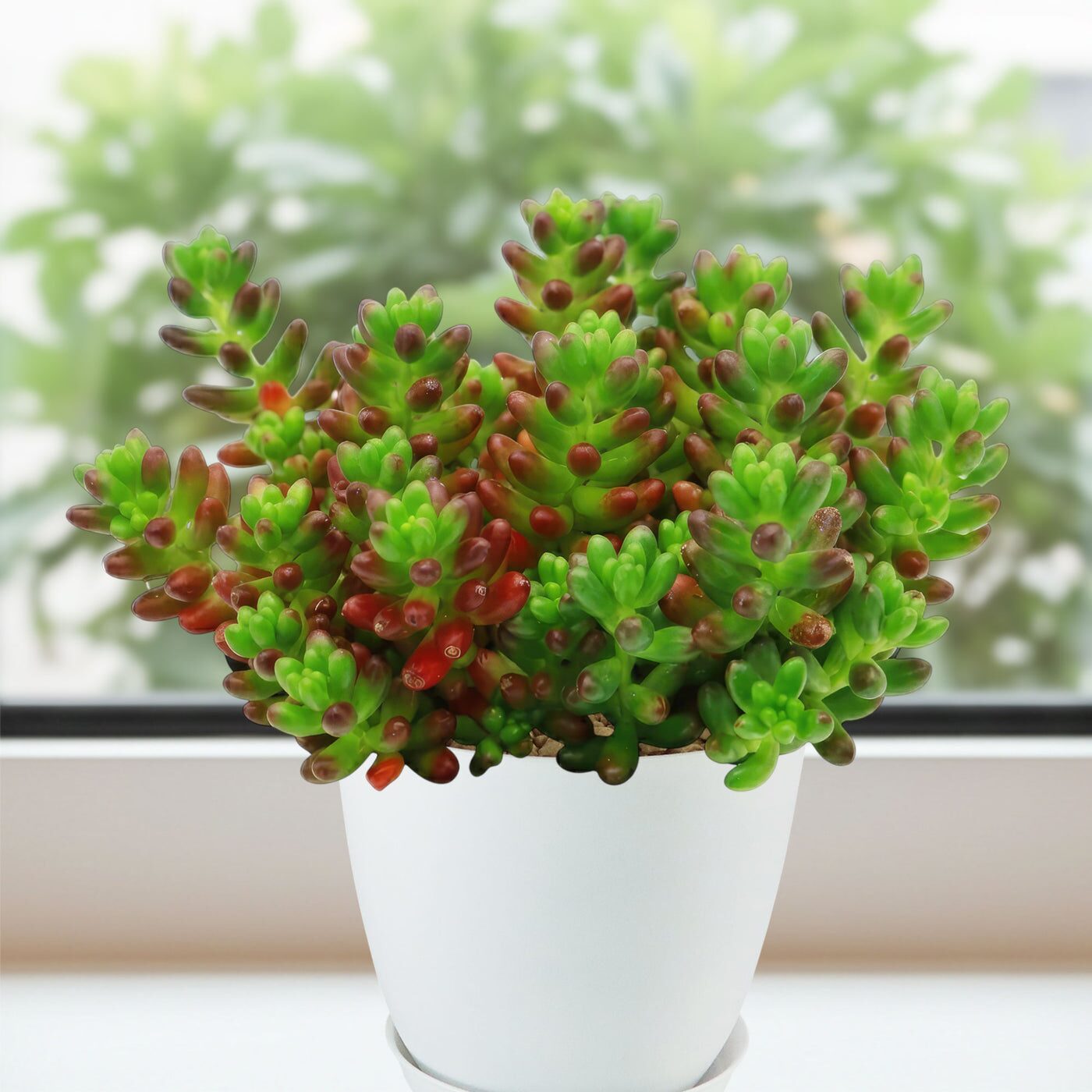
Imagine a bowl of jelly beans that changes flavor with the weather—that’s Sedum rubrotinctum, the Jelly Bean Plant. Give it bright days and cooler nights and those glossy green beads blush coppery red, as if the plant is brewing its own sunset. This is a succulent that lets you see its physiology in action, and with a little savvy about light, temperature swings, and careful sun‑acclimation, you can coax brilliant color without a hint of sunburn.
Meet the Jelly Bean Plant
- Names: Sedum rubrotinctum (a Crassulaceae succulent from Mexico), known as Jelly Bean Plant, Pork and Beans, Christmas Cheer Sedum, and Red Jelly Bean Plant.
- Habit and size: Low, mounding, and increasingly trailing with age—about 10–20 cm (4–8 in) tall, spreading 20–45 cm (8–18 in) or more over time.
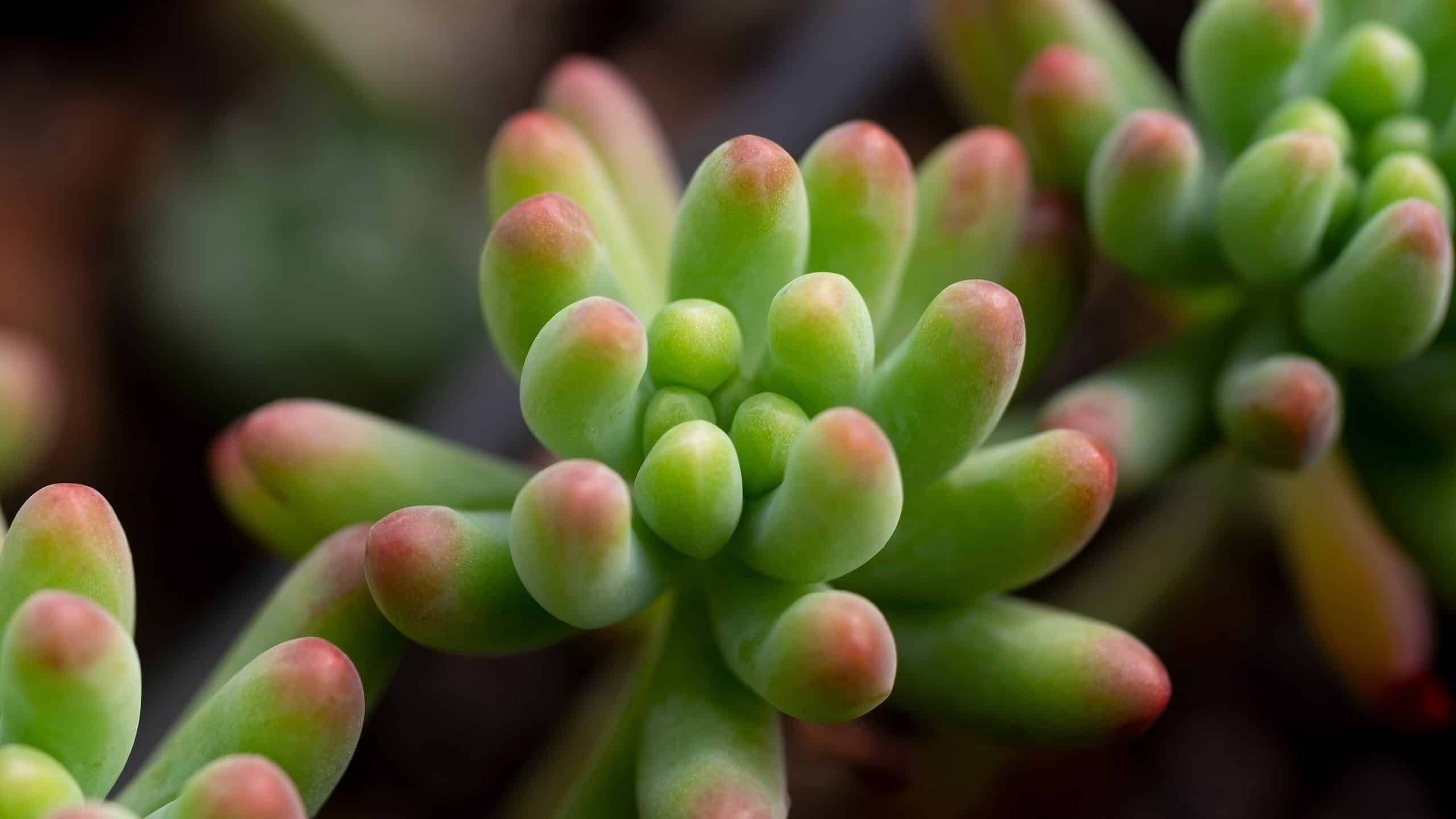
- Leaves: Plump, glossy, bean‑shaped beads packed along short stems. Mid‑green in lower light; in strong sun (especially with warm days and cooler nights) tips and often whole leaves flush coppery red to reddish‑brown.
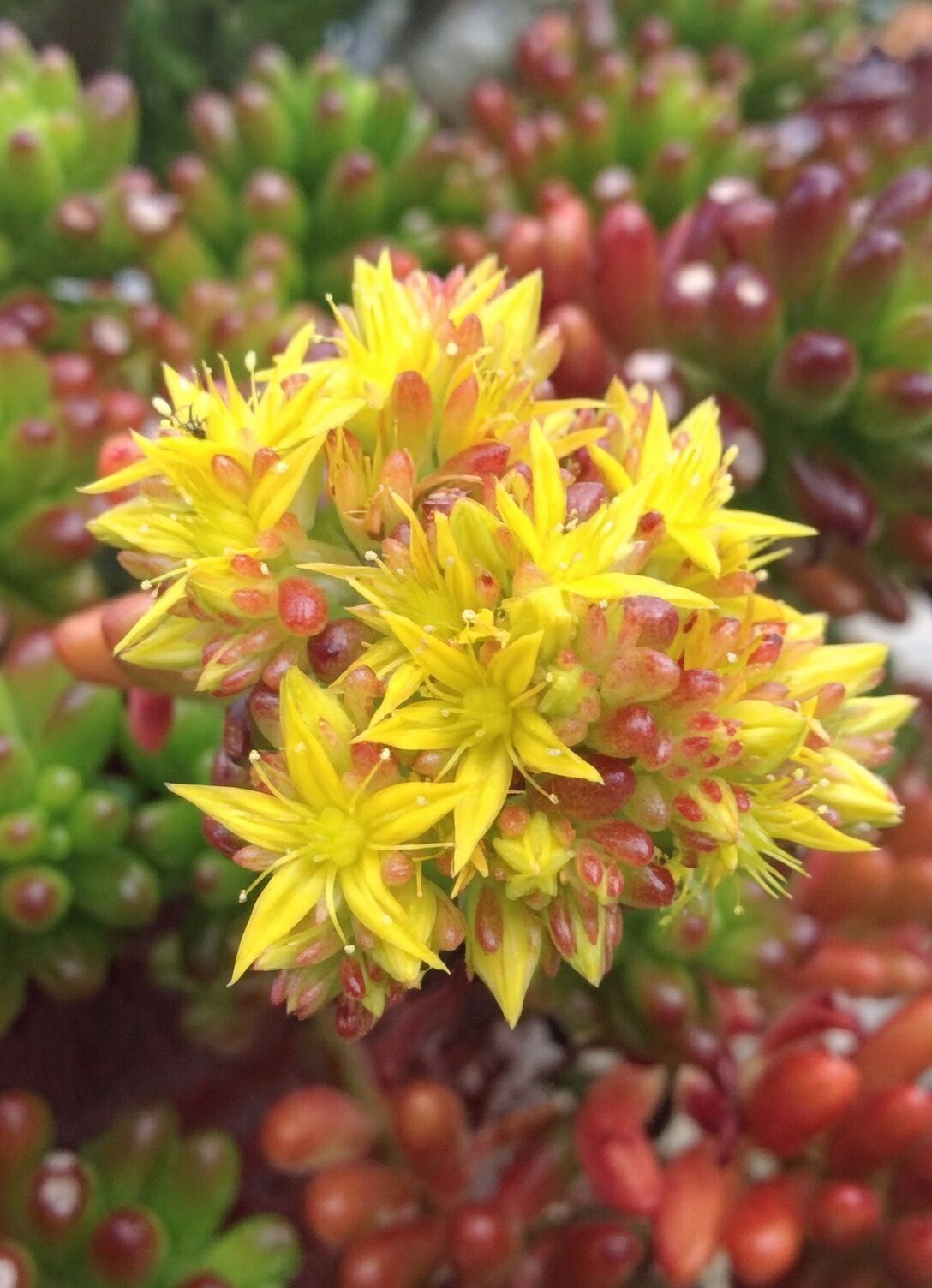
- Flowers: Small, starry yellow blooms at stem tips, most commonly winter to spring; sporadic indoors.
- Personality: Tough, beginner‑friendly, happy in containers, quick to propagate from a single fallen leaf.
Why the beans blush: a friendly dive into plant physiology
Anthocyanins: the plant’s built‑in sunglasses
The red you see isn’t just “pretty stress”—it’s anthocyanins, water‑soluble pigments stored inside leaf vacuoles. They act like a pair of lightly tinted sunglasses:
- They shade the photosynthetic machinery from excess light.
- They mop up reactive oxygen (antioxidant behavior) when the sun’s too intense or the air is chilly.
Light intensity: more photons, more “sunscreen”
Stronger light ramps up sugar production in the leaves. Higher sugar levels can spur anthocyanin synthesis, tinting those beans coppery to red‑brown. In softer light the plant stays greener and stretches; in strong sun (with acclimation) it tightens up and colors.
Day–night temperature swings: cool nights seal the deal
Sedum rubrotinctum uses a water‑saving strategy typical of many succulents. Cool nights favor its nightly gas exchange and organic acid storage; warm, bright days turn that stored carbon into sugars. The combination—bright days plus cooler nights—nudges anthocyanin pathways, deepening the red blush. Think of it as hot‑and‑cold brewing a better color.
Color vs. damage: know the line
- Good stress: gradual reddening, firm leaves, compact spacing.
- Bad stress: sudden bleaching, tan or gray patches (especially on the glass‑facing side), crispy edges. That’s sunburn—pigments can’t keep up, and tissues overheat.
Getting that coppery‑red safely: a sun‑acclimation game plan
The “glass‑baked” caveat
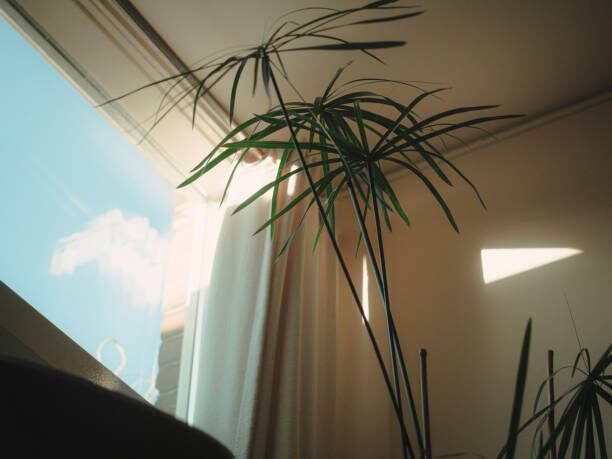
Behind window glass, light can be deceptively intense and heat builds fast. Jelly Bean Plants love sun, but sudden exposure can lead to bleached, scalded patches. Acclimate gradually and give midday shade in very hot midsummer—especially indoors behind glass.
A gentle, two‑to‑three‑week ramp
- Days 1–3: 45–60 minutes of direct morning sun; otherwise very bright indirect light.
- Days 4–7: 1.5–2 hours morning sun. Rotate the pot so all sides share the light.
- Week 2: 3–4 hours total (morning plus late‑afternoon). Watch for pallor or spotting.
- Week 3: 4–6 hours if temps are reasonable; in heatwaves, hold or back off.
- Outdoors move: Start in dappled shade, then morning sun, saving harsh midday sun for last (or skip it in midsummer).
Signs to proceed: deeper color, tighter spacing, no scorch. If you see bleaching or soft patches, retreat to bright indirect light for a week, then resume more slowly.
Everyday care, powered by plant sense
Light
- Bright light to full sun for best form and color; several hours of direct sun after acclimation.
- In very hot midsummer, provide light midday shade, especially behind glass.
Temperature
- Sweet spot: about 13–18°C (55–64°F). Protect from cold; keep above ~5°C (41°F). Not frost‑hardy.
Watering rhythm (always let the mix dry well)
- Spring (active growth): roughly every 2 weeks after dry‑down.
- Summer: go much drier; water lightly only after a full dry‑out; shield from extreme heat.
- Autumn: moderate again, often ~every 2 weeks; bright light boosts red tones.
- Winter: cut to about once a month (or less indoors). Never keep constantly moist.
Red flags: frequent leaf drop plus wrinkling with a soft stem base suggests rot—unpot, remove rot, let cuts callus, and replant in fresh gritty mix.
Soil and pot
- Very fast‑draining succulent mix. A trusty recipe: 1 part potting soil to 1 part coarse sand/grit/perlite/pumice. Pot must have drainage holes.
Humidity and airflow
- Prefers dry air and good ventilation. Avoid persistently humid, stagnant conditions and wet foliage.
Feeding
- Lightly during spring through early autumn: about monthly with a diluted balanced or low‑nitrogen cactus feed. Avoid heavy nitrogen.
Pruning and tidiness
- Trim leggy stems to keep a compact mound; handle gently—leaves pop off easily (save them for propagation).
Repotting and placement
- Repot every 1–3 years in spring or when the mix breaks down. A 12–15 cm (4.7–5.9 in) pot suits a typical plant; plant 3–5 cuttings together for a fuller look.
- Placement: Indoors, the brightest window (south or west is great). Outdoors, sunny balcony/patio or, in frost‑free dry climates, a low groundcover with excellent drainage.
Propagation: the happiest accident
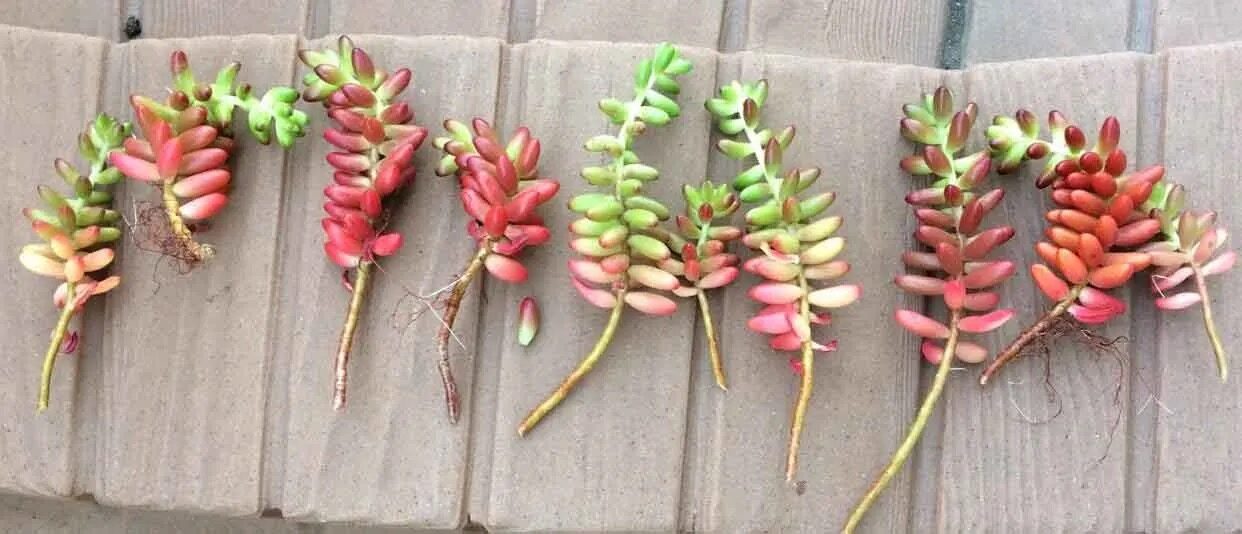
- Leaf propagation: Set a healthy fallen leaf on dry, gritty mix; it readily roots and sprouts plantlets. Slight ambient humidity helps—avoid soggy soil.
- Stem cuttings: In spring or autumn, take a 5–7 cm (2–3 in) tip cutting. Let it callus, then place into dry‑to‑slightly‑moist gritty mix. Roots usually form in about 10–21 days in warm, bright conditions.
- Seeds: Sow indoors late winter to spring (about February–May) at 18–21°C (64–70°F). Germination often in ~12–15 days.
Troubleshooting at a glance
- Lots of leaf drop + soft base: likely rot from excess moisture—refresh the mix, cut out rot, water less often.
- Stretching (long gaps between leaves): insufficient light—move to a brighter spot or add morning sun; consider a grow light in dim homes.
- Pests: Aphids and scale show up occasionally. Treat early with insecticidal soap or horticultural oil, repeating as needed.
- Leaf spot/rust: More likely in humid, stagnant air. Improve ventilation and keep foliage dry.
Bloom time: a winter surprise
Small star‑shaped yellow flowers usually appear from winter into spring, perched at stem tips. Indoors they can be sporadic, but bright light and a drier, cooler winter often help.
Safety note
Toxicity for Sedum rubrotinctum isn’t consistently documented. Treat it as potentially mildly irritating if chewed or ingested. Keep away from pets and small children, and seek professional advice if ingestion occurs.
The color recipe (quick reference)
- Several hours of direct sun after careful acclimation.
- Warm days paired with cooler nights.
- Dry‑down between waterings.
- Light feeding, gritty mix, and excellent airflow.
- Midday shade in extreme heat—especially behind glass.
Flower language and the joy of sharing
Garden folklore links Jelly Bean Plant with resilience and enduring affection—fitting for a plant that can bounce back from a tumble and regenerate from a single detached leaf. That easy sharing (a leaf gifted to a friend becoming a whole new plant) turns “hearts in sync” from a sweet saying into a small, living ritual. In other words: pass along a bean, and you’re passing along a bond.
Give this plant light, let the nights cool a little, and watch the chemistry paint your windowsill. The beans will blush, your confidence will bloom—and you’ll have spare leaves for everyone who admires them.