
If you go hunting for a secret “flower language” behind Dieffenbachia, you won’t find a Victorian code or a Hanakotoba entry. Yet in modern houseplant culture, this bold tropical has gathered a different kind of meaning: lush prosperity, easy-going abundance, and—especially in parts of Brazil—a reputation for warding off bad vibes. Why this particular plant? Its evergreen vigor and dramatic green-and-cream variegation do a lot of the talking. Add a complicated common name (“dumb cane”) and a bit of cross-cultural name confusion in Chinese, and you’ve got a plant with stories as layered as its leaves.
Meet Dieffenbachia seguine (aka Dumb Cane)
- Botanical family: Araceae (aroids)
- Native range: Tropical Americas—Caribbean, Central America, and northern South America (from Mexico and the West Indies south toward Argentina, including Brazil and Colombia)
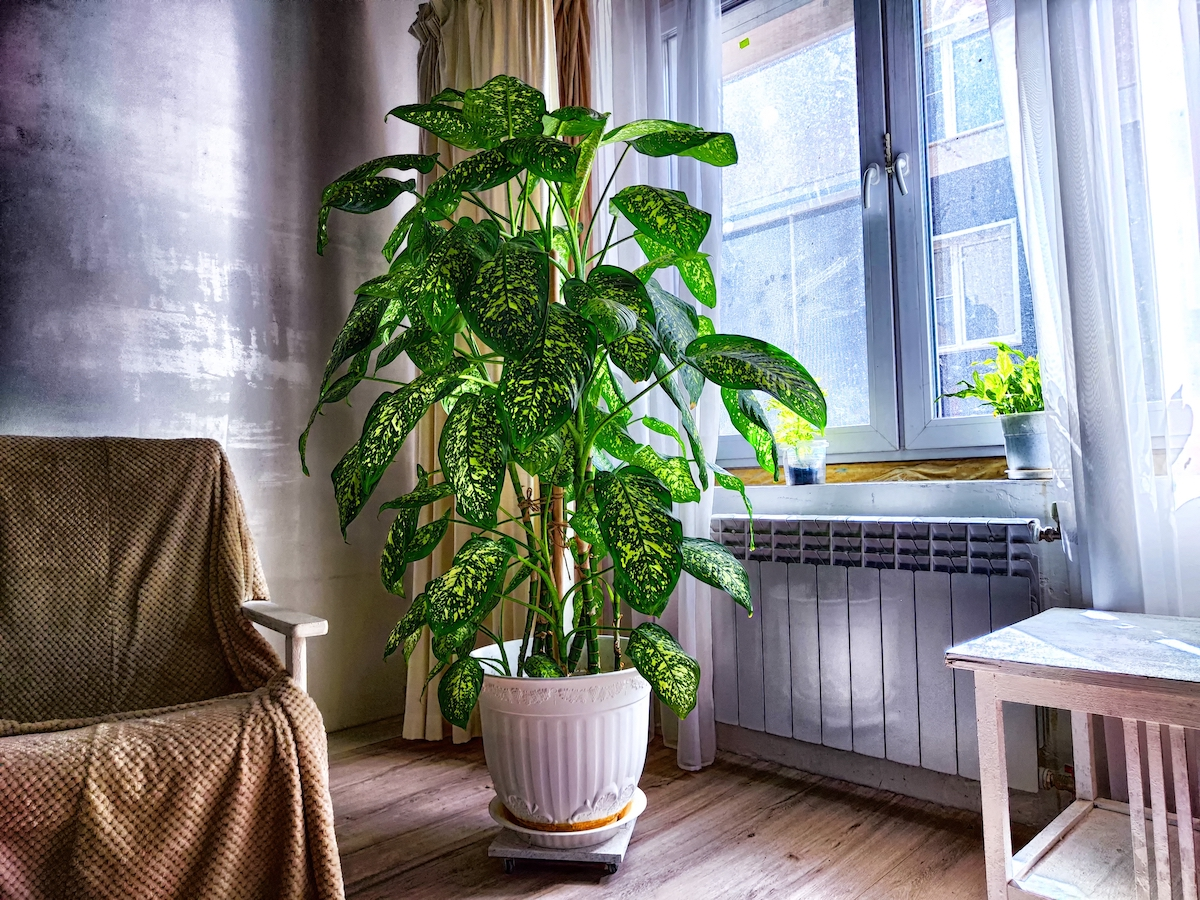
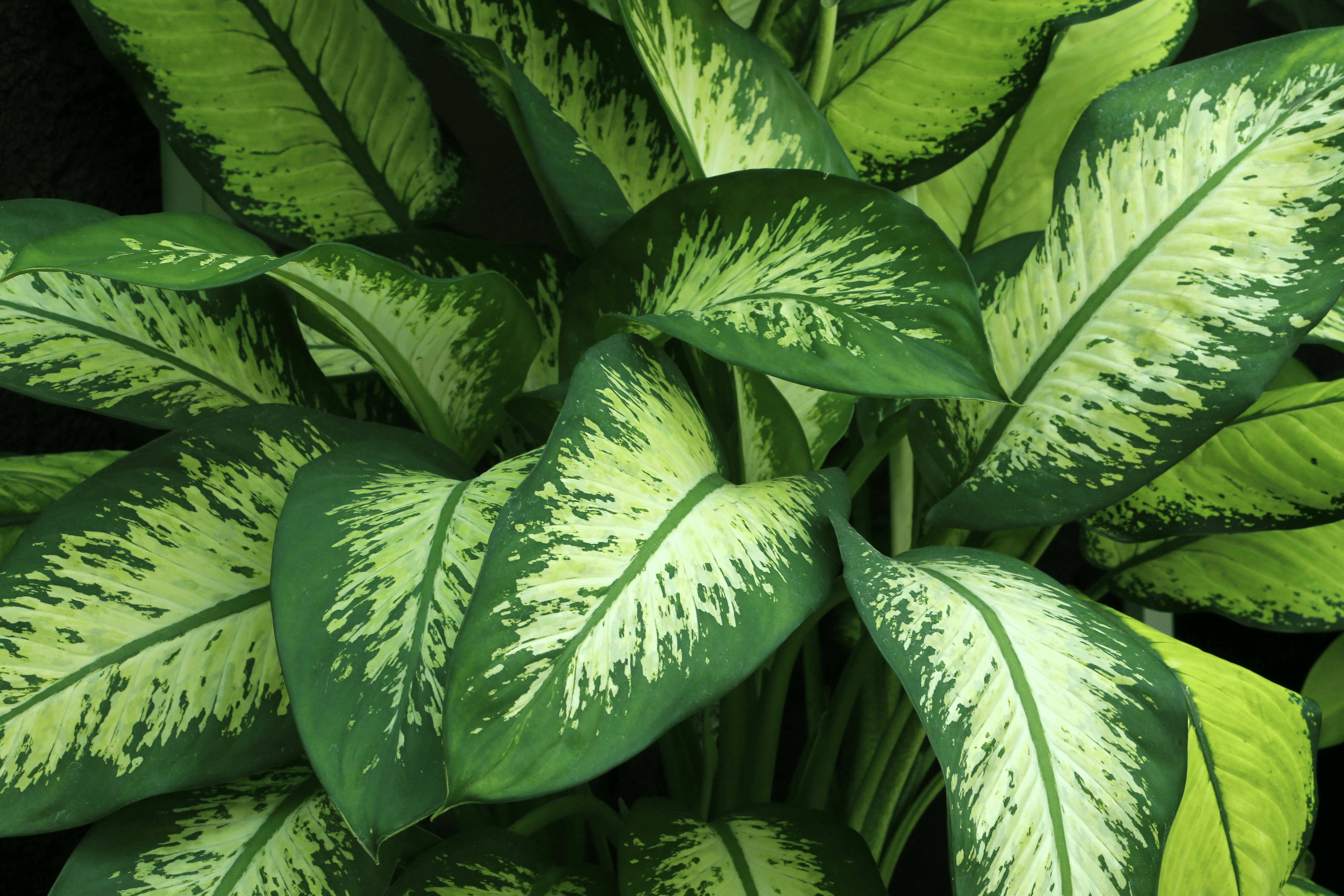
- Look: Upright canes with large, glossy, ovate leaves splashed and speckled with creamy white to pale green patterns—an instant statement in a room
- Size indoors: Typically 3–5 ft (0.9–1.5 m), with the potential to reach up to 10 ft (3 m) in ideal conditions; canes become more tree-like as lower leaves naturally shed
- Flowers: A spadix wrapped in a pale spathe; not flashy and uncommon indoors
Common names you’ll meet: Dumb Cane, Dieffenbachia, and sometimes Leopard Lily (not a true lily).
Meanings, myths, and modern symbolism
No classic “flower language,” but strong contemporary associations
- There’s no established Victorian or Hanakotoba symbolism for Dieffenbachia.
- Today, it’s widely seen as a shorthand for tropical lushness—think “full, thriving, and well.” That’s where ideas of prosperity and abundance take root.
Why prosperity and protection stuck to this plant
- Evergreen stamina: Year-round foliage suggests continuity and “always-green” fortune.
- Dramatic variegation: Bright, creamy patterns read as lively and opulent; in interiors, a thriving Dieffenbachia simply looks successful.
- Easy adaptation: It tolerates a bit of shade, stays architectural, and bounces back with proper care—qualities people often project into meanings of resilience and wealth.
A Brazilian folk thread: fending off negative energy
- In Brazilian folk tradition, Dieffenbachia is sometimes kept as a household guardian, said to repel negativity. Culturally, lush, clean-looking greenery is linked with freshness and good fortune, so the belief dovetails with how this plant presents itself.
- Take it as cultural symbolism, not a scientific claim—though a vibrant, healthy plant does brighten a home’s mood.
Feng shui footnote
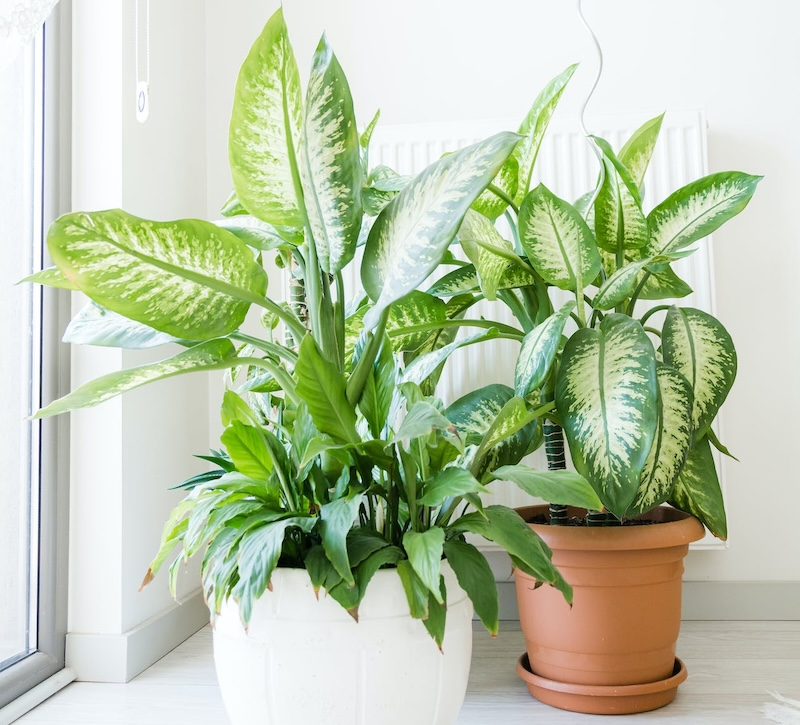
- Among feng shui enthusiasts, Dieffenbachia is often treated as a Wood element plant that symbolizes growth and vitality. Some place it in the southeast (a wealth area in many schools) to “invite” abundance.
- Consider this a design ritual: keep the plant healthy in bright, indirect light first—good care is the real magnet for good energy.
The name tangle: 万年青, 花叶万年青—and the Aspidistra confusion
- In Chinese, Dieffenbachia is often called 花叶万年青 (“variegated evergreen”). But “万年青” on its own is a slippery label in commerce and folk usage—it’s frequently applied to other evergreen houseplants, notably Aspidistra.
- Result: some plant tags and anecdotes mix these plants up. If you’re chasing care or cultural lore, check the leaves (and genus) before the legend.
How “dumb cane” shaped perceptions
- The nickname comes from the plant’s calcium oxalate crystals: chewing the tissue can cause intense mouth and throat irritation and temporary difficulty speaking. Sap can irritate skin and eyes.
- Historical misuse stories exist, which colored its public image. Today, most people meet Dieffenbachia as a safe, beautiful houseplant—as long as it’s kept away from pets and children and handled with care when pruning.
Styling it at home: bold, tropical, and forgiving
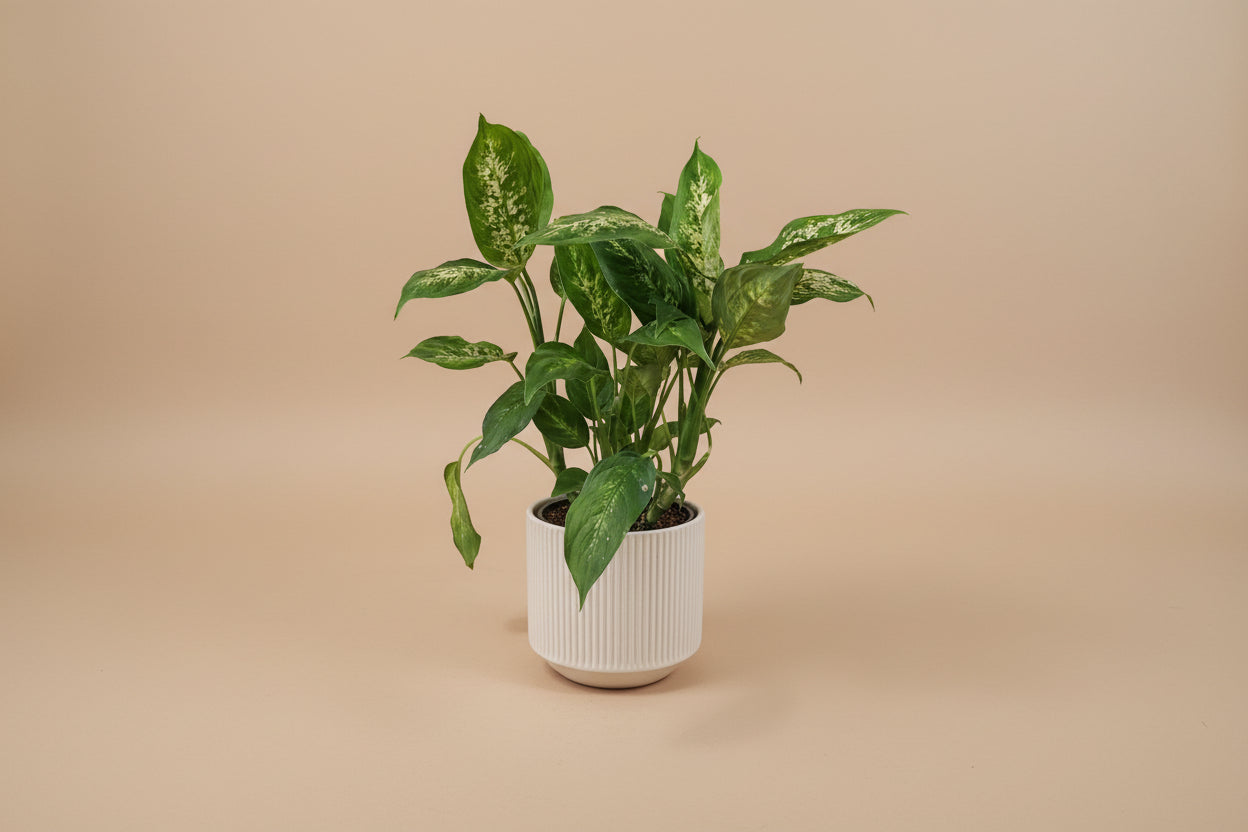
- Best rooms: Living rooms, offices, lobbies, and bright bathrooms with gentle humidity
- Light sweet spot: A few feet back from a bright window; east or north windows are great, south/west need sheer curtains
- Design moves:
- Use a single large plant as a sculptural focal point by a sofa or entry console.
- Pair with airy ferns or trailing pothos to contrast leaf shape and create a layered jungle look.
- Choose a simple pot in cream, charcoal, or natural fiber to let the variegation shine.
Care, at a glance
- Light: Bright, indirect light is ideal. Tolerates partial shade/low light, but growth slows and variegation can fade. Avoid harsh direct sun to prevent scorch.
- Temperature: Aim for 65–75°F (18–24°C); steady growth up to ~81°F (27°C). Protect from drafts; avoid prolonged dips below ~54–59°F (12–15°C).
- Humidity: Enjoys 50%+ but adapts to typical homes. Pebble trays, grouping plants, or occasional misting can help in dry seasons.
- Watering: Keep evenly moist, never soggy. Water when the top 1–2 in (2.5–5 cm) of potting mix is dry. Reduce in winter—cool + wet is a fast track to rot.
- Soil: A loose, well-draining, peat- or coco-based mix with perlite/chunkier aeration. Slightly acidic to neutral is perfect.
- Feeding: During spring to early fall, use a balanced liquid fertilizer every 4–6 weeks (or monthly at label rate; half-strength if sensitive). Pause in winter.
- Pruning: Remove yellowing lower leaves. If stems get tall and bare, cut leggy canes to encourage fresh shoots. Use clean tools; wear gloves.
- Propagation: Easy from cane/stem cuttings or by division; air layering works too. Use 4–5 in (10–13 cm) sections with nodes; provide warmth and humidity for a few weeks.
- Repotting: Every 1–3 years in spring or when roots circle the pot or push through drainage holes; size up just 1–2 in (2.5–5 cm).
- Hardiness: USDA 10–12; treat as a houseplant in cooler zones.
Safety note: Highly toxic if chewed/ingested by people and pets (dogs/cats). Causes severe mouth/throat irritation, drooling, swelling, and temporary speech difficulty. Keep out of reach and wear gloves when handling.
Troubleshooting (quick hits)
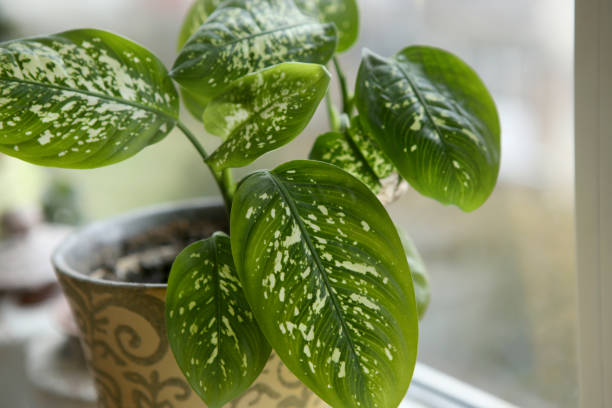
- Yellow leaves?
- Most often watering trouble (too wet or too dry), low light, cold drafts, or nutrient shortfall.
- Fix by letting the top 1–2 in dry before watering, increasing indirect light, and keeping temps above 60°F (15°C).
- Faded variegation or leggy growth?
- Increase bright, filtered light. Rotate the plant every few weeks for even growth.
- Pests?
- Watch for spider mites (especially in dry air), mealybugs, scale, thrips, and aphids. Treat early with insecticidal soap or horticultural oil; improve humidity for mite prevention.
- Tall and bare canes?
- Rejuvenate by cutting back canes to just above a node; new shoots will sprout and fill in.
Air and energy: what it really does for your space
- Air quality: Often listed among “air-purifying” houseplants, but remember: plants complement, not replace, good ventilation and routine cleaning.
- Mood and presence: A thriving Dieffenbachia is visual shorthand for vitality. Whether or not you subscribe to feng shui or folk beliefs, its tropical volume and fresh greens can make a room feel calmer, livelier, and yes—more prosperous.
Fun little facts
- Indoors it rarely blooms—you grow it for the spectacular foliage.
- If it gets leggy, a good haircut can trigger a flush of new shoots and turn one tall cane into a fuller, multi-stemmed plant.
- Variegation intensity usually improves with brighter, indirect light.
The cultural takeaway
Dieffenbachia seguine doesn’t carry a codified “flower language,” but it doesn’t need one. Its evergreen push, big confident leaves, and adaptable nature have written their own modern script: prosperity, abundance, and a keep-the-bad-out, bring-the-good-in sort of optimism. Just learn its boundaries—no direct sun, no soggy roots, and definitely no nibbling—and this tropical original will turn even a modest corner into a thriving, energy-forward vignette.