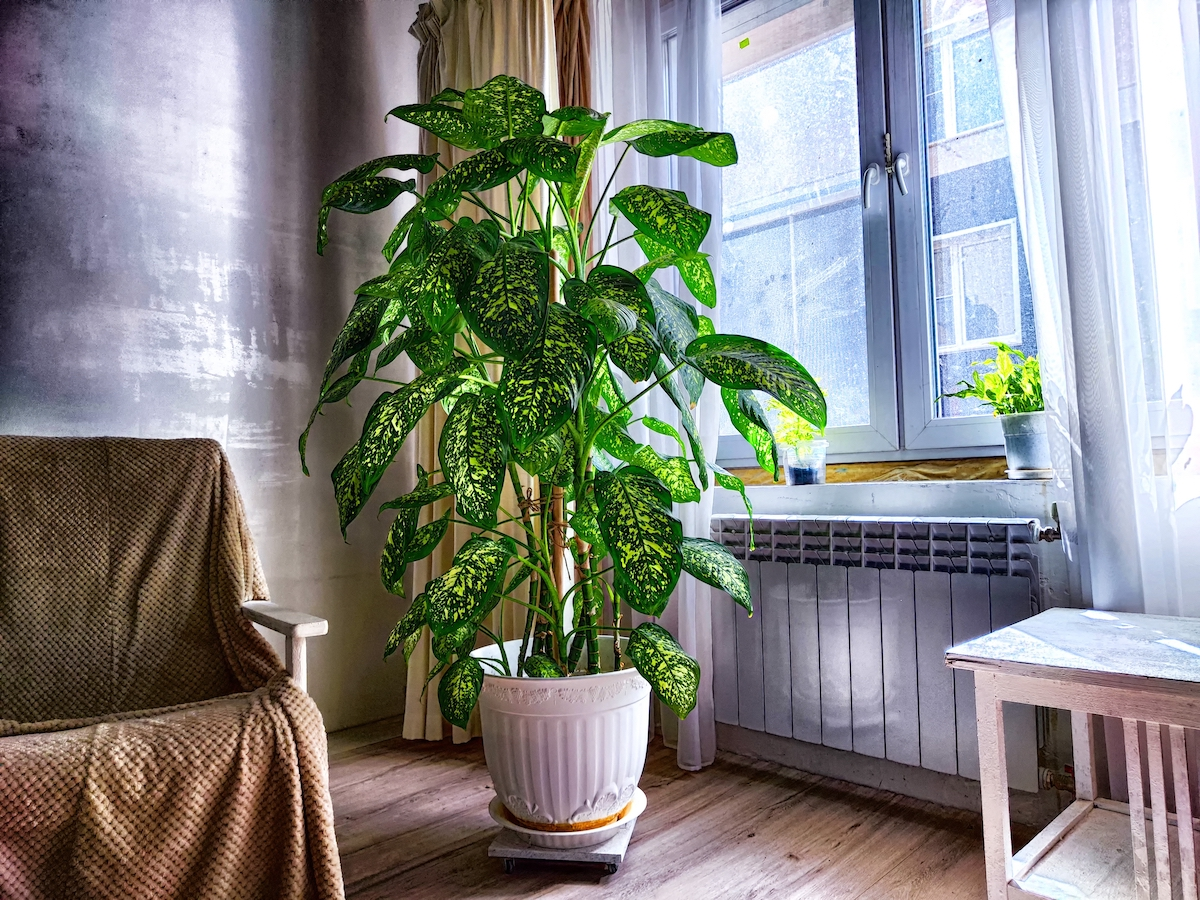
If you like your houseplants bold, a little mischievous, and endlessly shapeshifting, meet Dieffenbachia seguine—the classic “dumb cane.” It’s the tropical aroid that starts out plush and leafy, then slowly graduates into a sculptural, cane-forming statement piece. Along the way, it pulls a few botanical tricks: blooms you almost never see indoors, color patterns that change with light, and an architectural glow-up you can steer with a single, gutsy cut.
Meet the plant
- Scientific name: Dieffenbachia seguine (Araceae)
- Also called: Dumb Cane, Dieffenbachia, Leopard Lily
- Native range: Tropical Americas—Caribbean, Central America, and northern South America
- Look: Big glossy leaves splashed and speckled with creamy white to pale green variegation
- Size indoors: Typically 0.9–1.5 m (3–5 ft); with age and great care, up to 3 m (10 ft)
- Vibe: Upright, cane-forming, evergreen, architectural
Bite-sized quirks you’ll love
Why your Dieffenbachia almost never flowers inside (and what it looks like when it does)
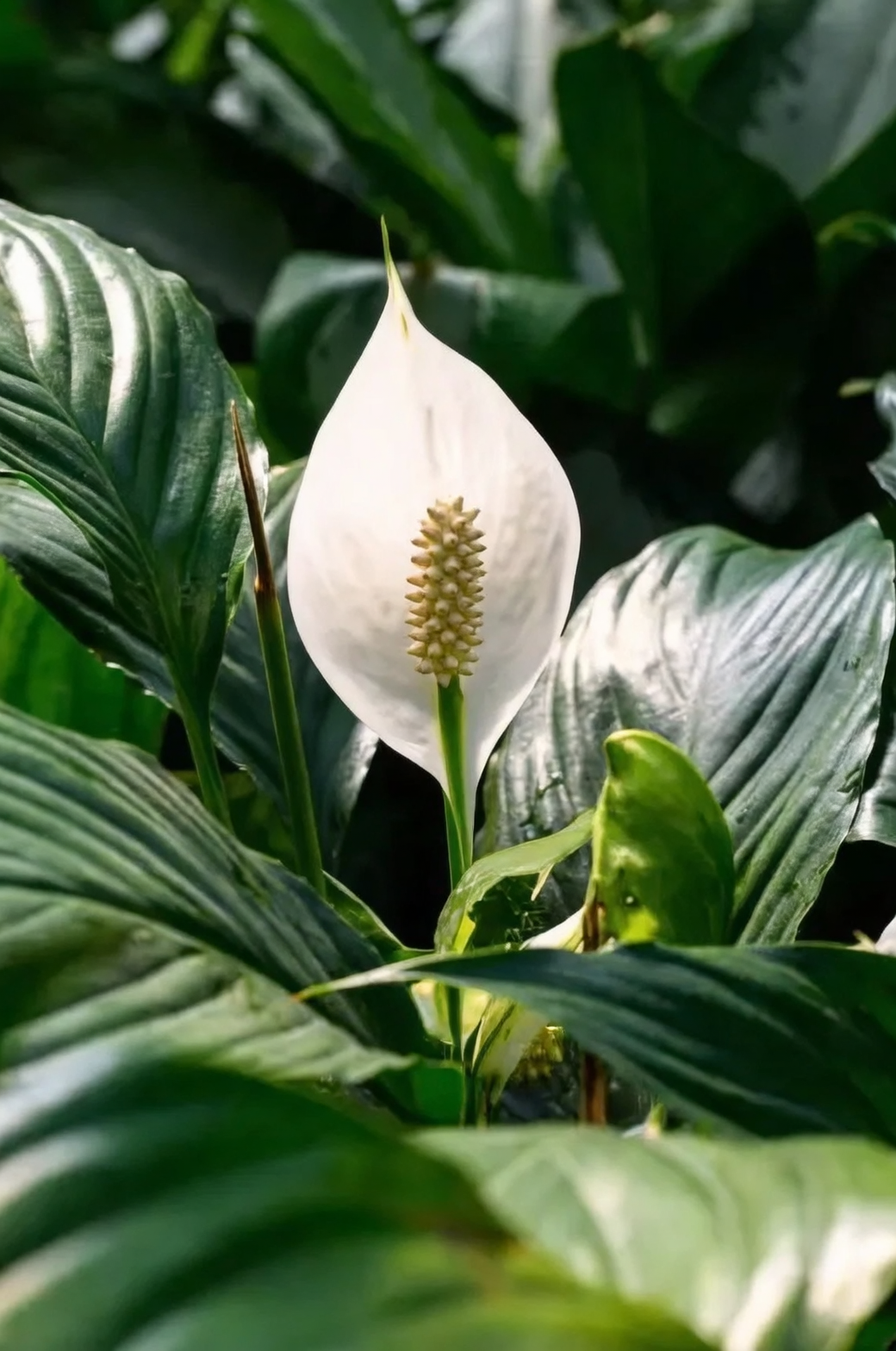
- The bloom: Like its aroid cousins, the inflorescence is a pale greenish-white spathe (a leaf-like sheath) surrounding a fingerlike spadix dotted with tiny flowers. It’s subtle, not a big floral show.
- Why you rarely see it indoors:
- Seasonal cues are muted: Indoors, daylength, temperature, and humidity barely swing—so the plant stays in leafy “growth mode” instead of switching to “reproduction mode.”
- Light is strong but not “jungle strong”: Even bright rooms are dim compared to tropical canopy clearings; intense light and sustained warmth often trigger blooms.
- Houseplant priorities: Cultivated Dieffenbachia are selected for foliage; under comfy, steady conditions they invest energy in leaves and canes rather than inflorescences.
- If it blooms: You can enjoy the oddity or snip it off to conserve energy for foliage—a common practice since the bloom isn’t especially showy.
The bold haircut that makes it bushier: “Beheading” the cane

- The move: When your plant gets tall and bare, cut the cane back. This interrupts auxin flow from the tip and wakes up sleepy buds along the stem—cue fresh shoots and a fuller plant.
- How-to (wear gloves—sap can irritate skin):
1) Choose a node-rich stretch of stem and cut with clean, sharp pruners.
2) Leave a stump with several nodes in the original pot; that’s your “sprout factory.”
3) Root the top you removed: let the cut end dry briefly, then place in a warm, humid setup in airy mix. You’ve just cloned your plant.
4) Alternatively, slice the leftover cane into 10–13 cm (4–5 in) sections with nodes and root them horizontally (“cane cuttings”), or try air layering first for a lower-risk start.
- Result: Multiple new shoots from the stump, a rejuvenated silhouette, and extra plants for sharing.
Variegation that shifts with light (and how to keep it crisp)
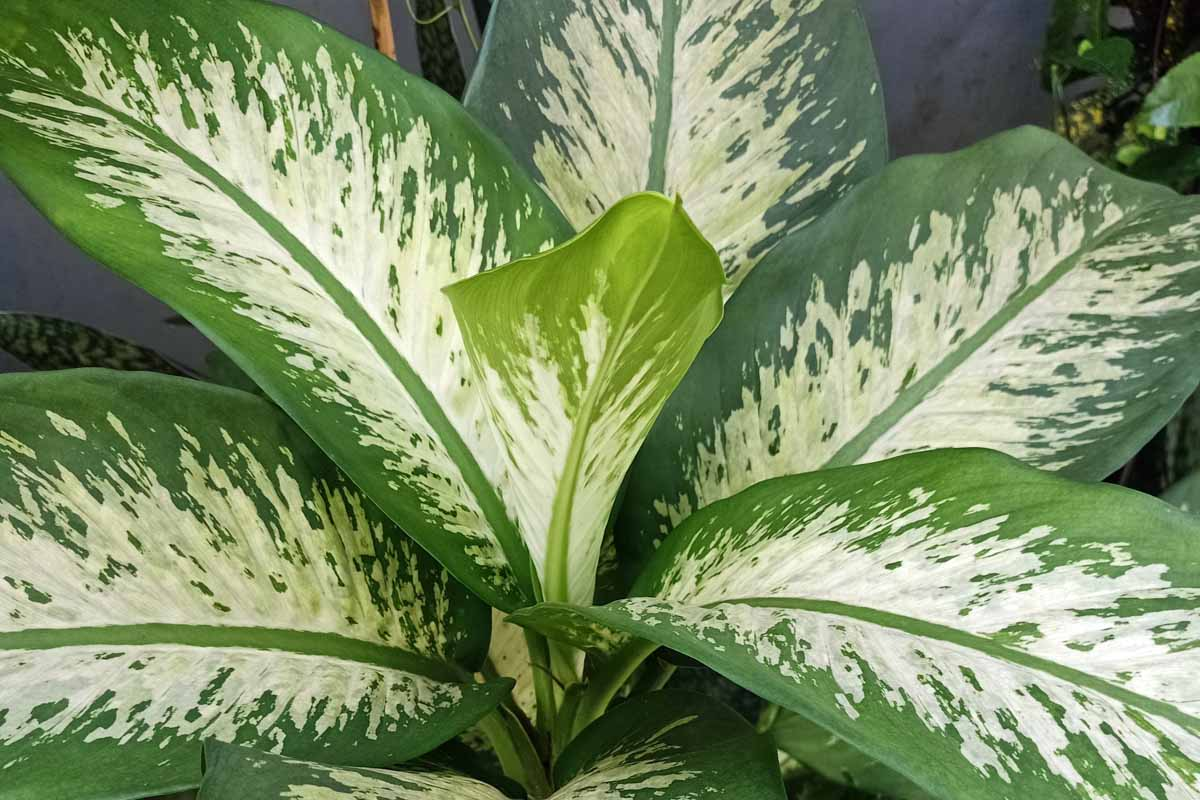
- What’s happening: Creamy patches have less chlorophyll than deep green zones. In lower light, new leaves may develop more green to photosynthesize efficiently—variegation looks duller. In bright indirect light, patterns pop.
- Best practice:
- Aim for bright, indirect light (think east windows, or pulled back from a bright south/west exposure with a sheer).
- Too little light = stretched stems, larger gaps between leaves, muted patterns.
- Too much direct sun = scorched, bleached patches.
- Expect seasonal shifts: late fall and winter often bring softer contrast; spring brightens patterns again.
A living sculpture: how this cane-forming aroid evolves over time
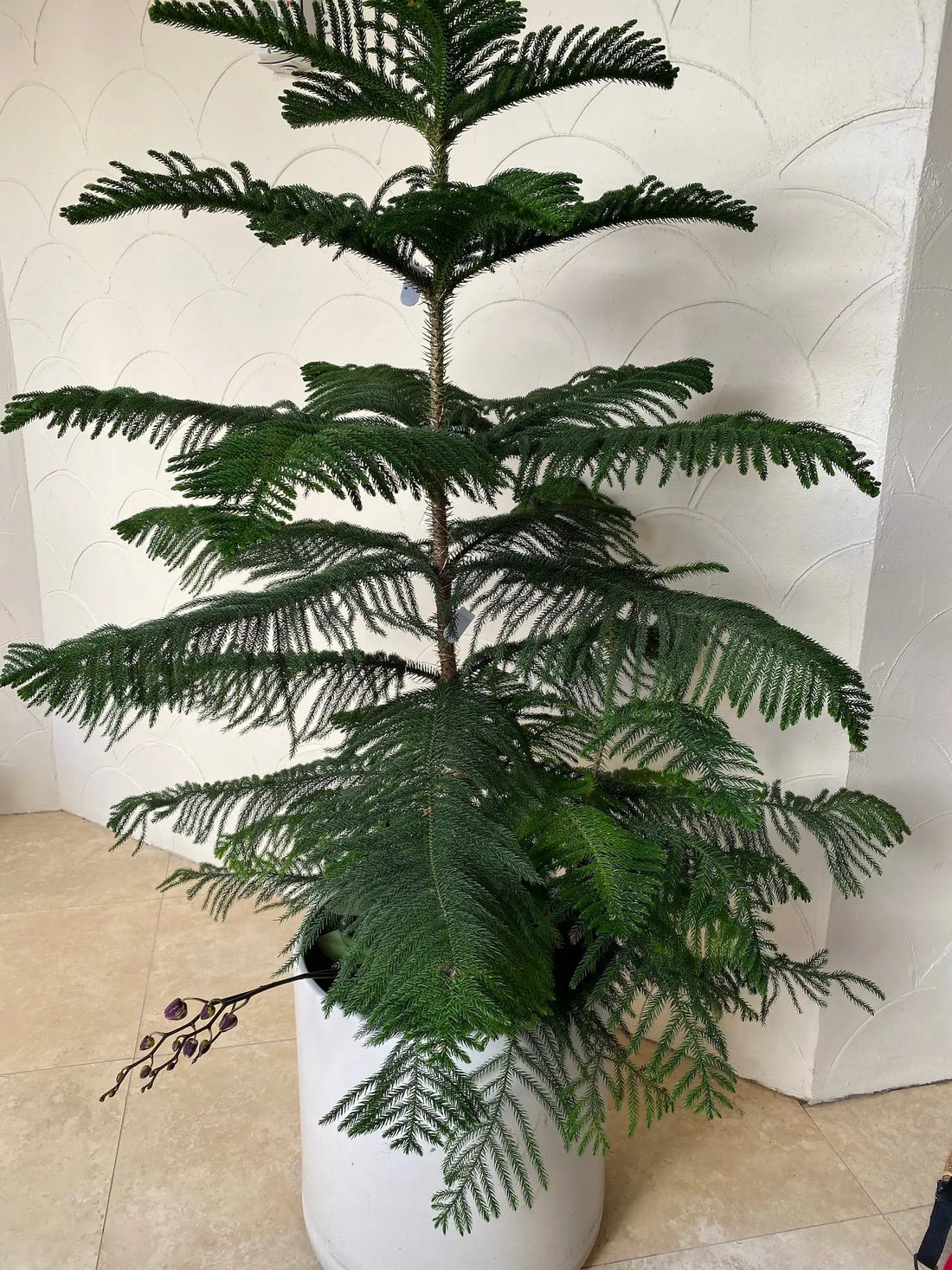
- Stage 1: Juvenile cushion—dense, leafy rosette with short internodes.
- Stage 2: Cane rise—each new leaf emerges higher; lower leaves age and drop, revealing a thickening, upright stem.
- Stage 3: Architectural phase—stems become more tree-like; the plant clumps as basal shoots appear or after you cut it back.
- Your steering wheel:
- Let a few canes mature for height and drama.
- “Behead” selectively to spark branching and fill bare ankles.
- Rotate the pot for even light so canes don’t lean.
- Endgame: A layered, multi-stemmed specimen that feels deliberate—part houseplant, part interior architecture.
Care cheat sheet (indoor success, zero stress)
Light
- Best: Bright, indirect light.
- Tolerates: Partial shade and lower light (slower growth, softer variegation).
- Avoid: Harsh direct sun that scorches.
Water
- Keep evenly moist, never soggy. Water when the top 2.5–5 cm (1–2 in) of mix is dry.
- Spring–summer: usually once or twice a week for larger plants, depending on conditions.
- Winter: reduce—cool, dim rooms + wet soil = root/stem rot.
Temperature and humidity
- Sweet spot: 18–24°C (65–75°F); grows well up to about 27°C (81°F).
- Protect from cold drafts; avoid prolonged dips below about 12–15°C (54–59°F).
- Humidity: Likes 50%+, but adapts to average homes. Pebble trays, grouping, or a room humidifier help with leaf size and vigor.
Soil and potting
- Use a loose, well-aerated, well-draining mix (peat/coco base with perlite and/or bark).
- Slightly acidic to neutral is ideal. Great drainage is non-negotiable.
Feeding
- During active growth (spring to early autumn): a balanced liquid fertilizer every 4–6 weeks (half-strength if sensitive).
- Pause in winter or when temps are below ~15°C (60°F).
Pruning and grooming
- Remove yellowing lower leaves as they age.
- Cut back leggy canes to trigger new shoots (gloves on).
- Wipe leaves to keep them glossy and photosynthesizing.
Repotting
- Repot in spring when root-bound or roots emerge from drainage holes—typically every 1–3 years.
- Upsize by just 2.5–5 cm (1–2 in) to avoid lingering wetness.
Propagation
- Easiest: cane/stem cuttings with nodes, or division of clumps.
- Air layering works well on tall canes.
- Warmth and moderate humidity speed rooting (often within a few weeks).
Seasonal rhythm
- Spring: repot, start feeding, restart regular watering, great time to propagate.
- Summer: steady moisture, bright filtered light, guard against sun scorch.
- Fall: taper feeding; water a bit less.
- Winter: keep lightly moist, hold fertilizer, and shelter from drafts.
Safety first (this one bites back)
- All parts contain calcium oxalate crystals. Chewing causes intense mouth/throat burning, drooling, swelling, and temporary speech difficulty—hence “dumb cane.”
- Keep out of reach of children and pets; wear gloves when pruning. Avoid sap contact with eyes/skin.
Common hiccups and quick fixes
- Yellowing leaves: Usually watering trouble (too wet/too dry), low light, or a chill. Adjust watering, brighten the spot, and keep it warm (above ~15°C/60°F).
- Faded variegation: Increase bright, indirect light; avoid deep shade.
- Brown tips: Low humidity or inconsistent watering—raise humidity and water more evenly.
- Leaning cane: Rotate the pot monthly, give brighter filtered light; stake temporarily if needed.
- Pests: Spider mites (dry air), mealybugs, scale, thrips, aphids. Treat early with insecticidal soap or horticultural oil and boost humidity/airflow.
Design notes and a cultivar crush
- Placement: Living rooms, offices, lobbies, or bright bathrooms (hello, humidity). Set near an east or north window, or behind sheers in brighter exposures.
- Pairing: Its broad leaves contrast beautifully with fine-textured companions like ferns or upright sansevierias.
- Cultivar spotlight—‘Tropic Marianne’: A widely grown selection with a luminous chartreuse-to-cream center and deep green margins; stays relatively compact and symmetrical, forming short canes over time. Great for strong pattern without towering height.
Symbolism and “flower language”
- Symbolism: Often read as a sign of prosperity and lush tropical abundance. In some Brazilian folk traditions, it’s said to help ward off negative energy.
- Reality check: Unlike roses or chrysanthemums with long-standing floriography, houseplant “flower language” tends to be modern, culture-by-culture storytelling. With Dieffenbachia, the lore rides alongside a very real cautionary tale—the sap’s painful effects inspired the “dumb cane” nickname. In other words, admire the bold beauty, respect the chemistry.
At a glance: the promise of a long, good plant friendship
- Forgiving of shade but flashier in bright, indirect light
- Easy to rejuvenate—one decisive cut can reset the whole look
- Variegation you can “tune” with placement
- An evolving form that keeps interiors interesting for years
Give Dieffenbachia seguine a gentle-bright stage, steady moisture, and a warm, draft-free seat. Then stand back and enjoy the slow, satisfying drama of a tropical that grows up, glows up, and—every now and then—surprises you with a secret aroid bloom.