
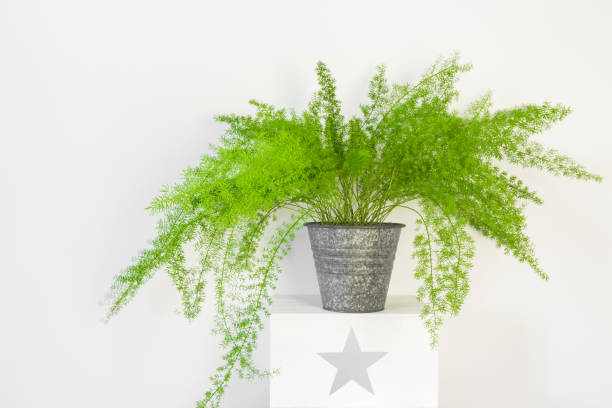
Picture a frond as soft as calligraphy on rice paper, a green line that curls and pauses like a scholar’s brushstroke. That’s the quiet charm of Asparagus setaceus—known in Chinese as Wenzhu (文竹) and in English as the Asparagus Fern. It may look like a delicate fern, but it’s actually a cousin of edible asparagus. And it carries a remarkable cultural story: from the Chinese literati desk and its feng shui calm to the coded whispers of Victorian bouquets.
Meet Asparagus setaceus at a glance
- Names: Asparagus setaceus (Kunth) Jessop; Asparagus Fern; also called Lace Fern, Plumosa/Plume Asparagus, Ferny Asparagus, Climbing Asparagus
- Family: Asparagaceae (not a true fern)
- Origin: Southern to eastern/southern Africa (notably South Africa; also Botswana, Lesotho, Mozambique, Eswatini/Swaziland, Tanzania, Zambia, Zimbabwe)
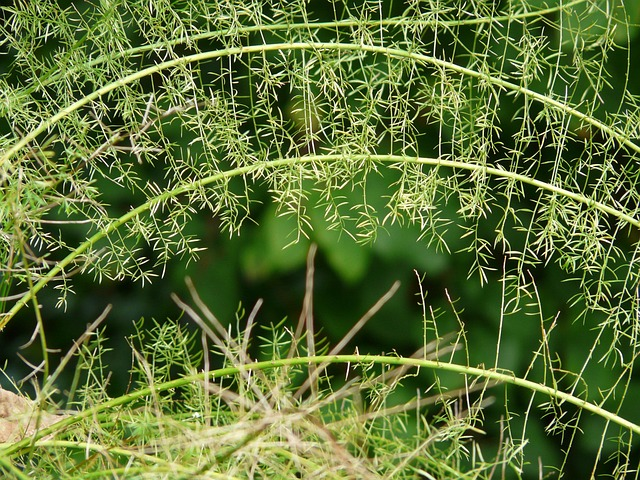
- Look: Airy, lace-like “fronds” that are really tiny, soft cladodes (leaf-like stems) on arching canes—billowy, feathery, and utterly graceful
- Size indoors: Commonly 30–90 cm tall; stems can trail or climb 1–3 m with support
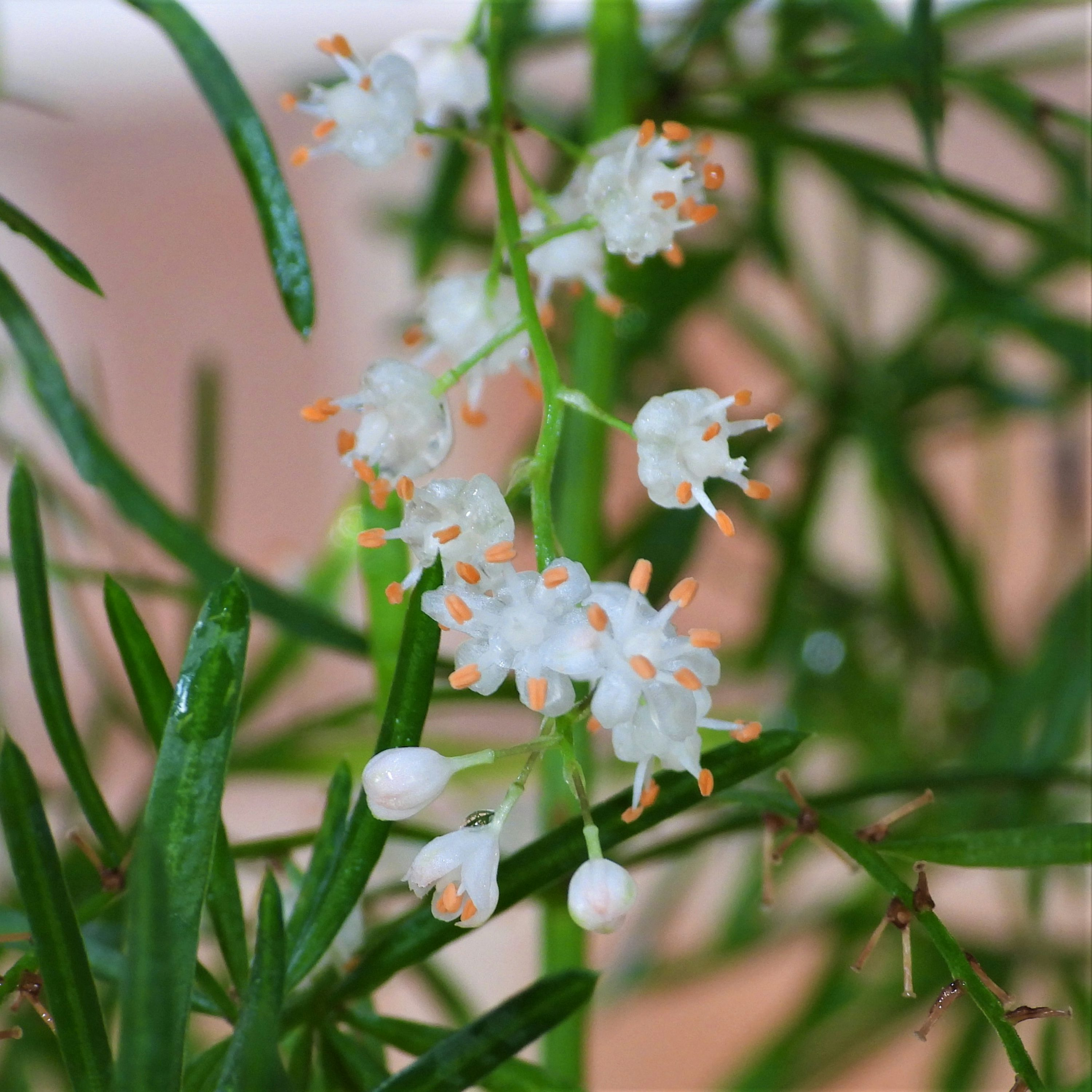
- Flowers & fruit: On mature plants, small starry white to greenish-white flowers in summer into autumn, followed by purple-black berries if pollinated
- Safety note: Mildly toxic if ingested—berries are the main concern; sap/foliage may irritate sensitive skin
- Honors: Recognized by the Royal Horticultural Society (Award of Garden Merit) for ornamental value
From brush and ink to buttonholes: how “flower language” shaped Wenzhu
Chinese literati aesthetics: the desk plant as a moral metaphor
In Chinese taste, the scholar’s desk was an inner landscape—inkstone like a mountain, brush as bamboo, a potted plant as a living line. Wenzhu (literally “cultured/written” + “bamboo”) echoes bamboo’s virtues—elegance, resilience, and upright character—without being bamboo at all. Its filigreed sprays soften the mind’s edges, offering what feng shui would call gentle protection and steady, supportive energy for study and career.
Desk symbolism in practice:
- Placement: A potted Wenzhu near a bright east window or a few feet back from south/west light with a sheer curtain—never in harsh midday sun—creates a study-friendly, contemplative nook.
- Pairings: A pale celadon pot, a scholar’s rock, a brush rest—keep the vignette spare and intentional. Odd numbers (one plant, three companion objects) subtly heighten vitality, echoing classical display principles.
- Message: Gifted to students, writers, or anyone starting a new intellectual chapter, Wenzhu stands for cultivated calm, growth through patience, and the soft strength to persevere.
The Victorian language of flowers: greens that whisper support
Floriography—the Victorian “language of flowers”—was a code of sentiments conveyed through bouquets. Not every plant had a fixed meaning, and dictionaries often disagreed. Asparagus setaceus, prized as a lace-like greenery, rarely headlined those lists, yet its visual role spoke volumes: it framed the showy blooms, lending softness, continuity, and constancy.
- What it “said” in arrangements: A supportive presence, a gentle veil; in modern readings, this aligns beautifully with themes of enduring love and long-lasting affection.
- Bouquet ideas with a Victorian mood:
- Enduring love: Pink or blush roses (grace) and white freesia (trust) woven through asparagus fern’s feathery mist.
- New beginnings: Tulips (declaration of care) with the fern for buoyant, hopeful energy.
- Quiet sympathy or encouragement: Lily-of-the-valley (return of happiness) set off by the fern’s soothing texture.
Note: Flower meanings have never been fully standardized. That’s part of the magic—composition, season, and story all shape the message.
Feng shui placement that also keeps the plant happy
Think of feng shui as choreography for air, light, and intention—exactly what Asparagus Fern thrives on.
- Light: Bright, indirect light or light shade. East-facing spots are ideal; place a bit back from south/west windows with a sheer to avoid scorch.
- Where it sings:
- Study/office: North (career) or East (health/family) areas to bolster focus and steady growth.
- Living room: Near seating to soften edges and invite conversation—never blocking pathways.
- Bright bathroom: The humidity sweet spot, provided there’s filtered light.
- Energy notes:
- Gentle protection: Place it to buffer a harsh visual line (like the corner of a bookshelf) while keeping airflow and light.
- Tidy qi, tidy plant: Prune out yellowed or wayward stems at the base to keep both energy and foliage fresh.
- Practical cautions: Keep above 4–5°C (39–41°F). Avoid vents and hot, dry air (yellowing risk). If your plant sets berries, position it out of reach of pets and children.
When to gift Asparagus Fern—and what you’re really saying
Perfect moments:
- Graduation, exams, new job, or career pivot: “Steady growth and clear focus.”
- New home or home office: “Gentle protection and calm momentum.”
- Anniversaries and weddings: “Enduring love—softness that lasts.”
- Creative launches (a book, exhibit, startup): “Grace, stamina, and supportive inspiration.”
How to present it:
- Include a short care card: “Bright filtered light, evenly moist—not soggy—plus a bit of humidity.”
- Choose a vessel with character: Unglazed clay for grounded calm, or celadon/white porcelain for literati elegance.
- Add a simple stake or petite trellis: It invites upward movement—an auspicious visual cue.
Care that keeps the symbolism alive
Asparagus Fern loves the middle path: bright but not harsh, moist but never waterlogged, humid yet airy.
- Water: Thorough soak, then let the top 2–3 cm (about 1 inch) dry slightly. No standing water in the saucer.
- Light: Bright, indirect is the sweet spot; tolerates lower light but becomes thinner and slower.
- Humidity: Aim for 50%+. Try a pebble tray, humidifier, or grouped plants; light morning misting in hot, dry spells with good airflow.
- Feeding: Spring–summer, feed every 4–6 weeks at half strength with a balanced liquid fertilizer. Ease off in autumn/winter.
- Pruning & training: In spring, remove yellowed or overly long stems at the base. Pinch very young tips to encourage branching. A small trellis improves airflow and shape.
- Repotting: Every 1–2 years (3 years if slower), in spring. Go up one pot size and refresh the mix; loosen circling roots. Larger, mature plants in 20–25 cm pots are more likely to flower and set berries.
- Soil: Loose, well-draining mix with organic matter and perlite/coarse sand; slightly acidic to neutral is fine.
- Temperature: Best around 20–25°C (68–77°F); keep above 4–5°C (39–41°F).
Common signals and fixes:
- Yellowing: Often too wet, too much sun, or old compacted mix—adjust watering/light; refresh the soil.
- Brown tips: Usually low humidity or inconsistent watering—increase humidity; water evenly.
- Pests: Spider mites (especially in dry air), scale, mealybugs. Rinse, then treat with insecticidal soap or horticultural oil; repeat weekly until gone.
Styling ideas: literati calm or Victorian romance
- Scholar’s vignette: One refined plant in a pale pot beside a brush rest and a small stone. Keep space around it; let the fronds “breathe.”
- Hanging cloud: In a 15–18 cm hanging basket near an east window, the plant drifts like green ink in water.
- Trellised scroll: Train a few arching canes on a minimalist support, echoing the vertical sweep of a hanging scroll.
- Bathroom spa: On a stool or shelf with filtered light—humidity keeps sprays plush.
- Bouquet accent: Use clipped sprays as an ethereal veil around roses or tulips for an understated Victorian nod.
Quick FAQ
- Why is my Asparagus Fern turning yellow and dropping? Most often waterlogged soil, harsh direct sun, very dry heat/low humidity, or compacted mix. Shift to bright indirect light, refresh the soil, water evenly (not soggy), and raise humidity.
- Can it grow in low light? It copes, but becomes thinner and slower; bright filtered light yields that iconic fluffy look.
- How to boost humidity without mold? Humidifier or pebble tray plus space for airflow; if misting, do it lightly and early in the day.
- Flowers but no berries? Plants may be immature, or pollination/airflow is poor. Improve light and thin crowded growth slightly; a light bloom-leaning feed just before the season may help.
Fun (and important) to know
- Not a true fern: Those “needles” are cladodes—modified stems—while the true leaves are tiny scales.
- Built-in reserves: Tuberous roots store water, helping it rebound from short dry spells (but it still dislikes drought).
- Outdoors in frost-free regions, it can spread vigorously and is considered invasive in some places; keep plants and seeds contained.
- Mild toxicity: Keep berries away from pets and children; handle foliage with care if you have sensitive skin.
In the end, Asparagus setaceus is a master of subtext. On the scholar’s desk, it’s a breath of cultivated stillness. In a bouquet, it’s the lace that lets the melody carry. In the home, it’s gentle protection and steady green resolve. Gift it when you mean to say: I’m rooting for your growth—quietly, constantly, and with grace.