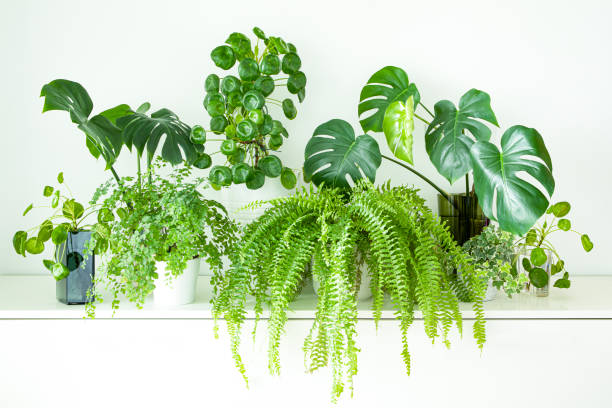
Walk into a room with a Boston fern and you feel it: the hush of a woodland edge, the soft green swoop of fronds catching the light. Nephrolepis exaltata doesn’t bloom, yet it’s steeped in “flower language.” How? Its meanings unfurled from Victorian floriography and later found a second life in modern floristry and feng shui—proof that a plant without petals can still speak volumes.
Meet Nephrolepis exaltata, the fern that made parlors swoon
- Botanical identity: Nephrolepis exaltata (family Nephrolepidaceae), commonly called Boston fern, sword fern, or ladder fern.
- Origin story: Native to tropical regions of the Americas (including Florida and the West Indies) and now a globe-trotting houseplant classic.
- The look: Evergreen, finely divided, feathery fronds rise upright and then spill outward in a lush fountain. Indoors, most mature plants settle around 30–90 cm tall and 60–90 cm wide; individual fronds can stretch close to 120 cm in good conditions.
- Secret life: It’s a true fern—no flowers, no seeds. It reproduces by spores (often dotted beneath mature fronds) and runners (stolons) that root to form new plantlets.
From floriography to feng shui: how a fern found its voice
Victorian “flower language,” minus the flowers
In the 19th century, language-of-flowers manuals helped people say the unsayable through bouquets. Ferns had starring roles:
- Sincerity and honest fascination: A fern frond tucked into a posy whispered, “I mean this.”
- Prudence and modesty: Those soft fronds suggested restraint and good sense.
- Renewal and quiet magic: Unfurling fiddleheads evoked cyclical rebirth and, in folklore, the dreamy allure of hidden places. (The famous “flowering fern” is mythic—ferns don’t bloom—but the idea fed the era’s enchantment.)
Boston fern itself rose to fame then: a distinctive form was noticed and widely propagated in the late 1800s, turning porches and parlors into little green theaters of taste.
Modern floristry and the shift to mood
Today, designers still slide Boston fern fronds into arrangements to add:
- Texture that softens structure
- A sense of freshness and calm
- A quiet, confident green that reads as sincere rather than showy
Feng shui and the Wood element
In feng shui, lush, upward-reaching plants carry Wood energy—growth, vitality, renewal. Boston fern’s gentle, arching habit tempers that vigor with calm. It’s a go-to when you want:
- Harmony and tranquility (soft fronds diffuse “edgy” spaces)
- Fresh starts (the perpetual unfurling suggests new beginnings)
- Sincerity and steadiness (hidden spores and subtle textures signal depth over display)
Why this symbolism fits the biology
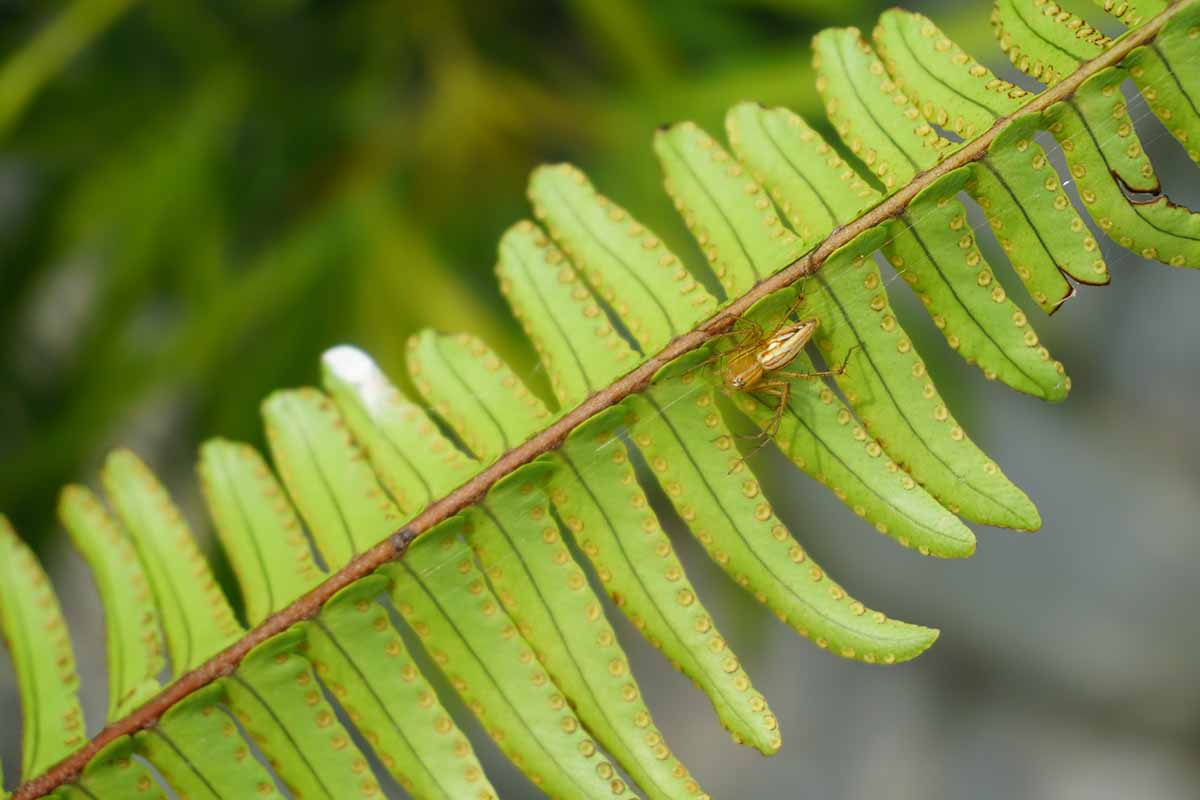
- Hidden spores, hidden depths: The underside of a frond conceals the plant’s reproductive story—mirroring sincerity that doesn’t need spectacle.
- Unfurling fronds = renewal: Each coiled fiddlehead opens into clean, fresh growth—renewal embodied.
- Feathery texture = calm: The fine, lacy leaflets visually “soften” hard lines, dialing down visual noise and inviting ease.
Where to place a Boston fern for Wood-element harmony
Match the plant’s needs with the energy of the room. Think bright, indirect light, humidity, and steady moisture first—then layer in feng shui.
Best zones (Bagua-friendly ideas)
- East (Family/Health): Classic Wood sector—use a Boston fern to encourage growth in relationships and well-being.
- Southeast (Wealth/Abundance): Wood thrives here; a vigorous, well-kept fern underscores steady, organic prosperity.
- Near entries (if bright and gentle): A fern by a lightly lit foyer or hallway refreshes incoming qi—just avoid drafts and scorching sun through glass.
Rooms that love Boston ferns
- Bathrooms with good light: Humidity keeps fronds plush; add a pebble tray if needed.
- Bright kitchens (not beside hot, dry appliances): Lively, fresh, and easy to glance-water.
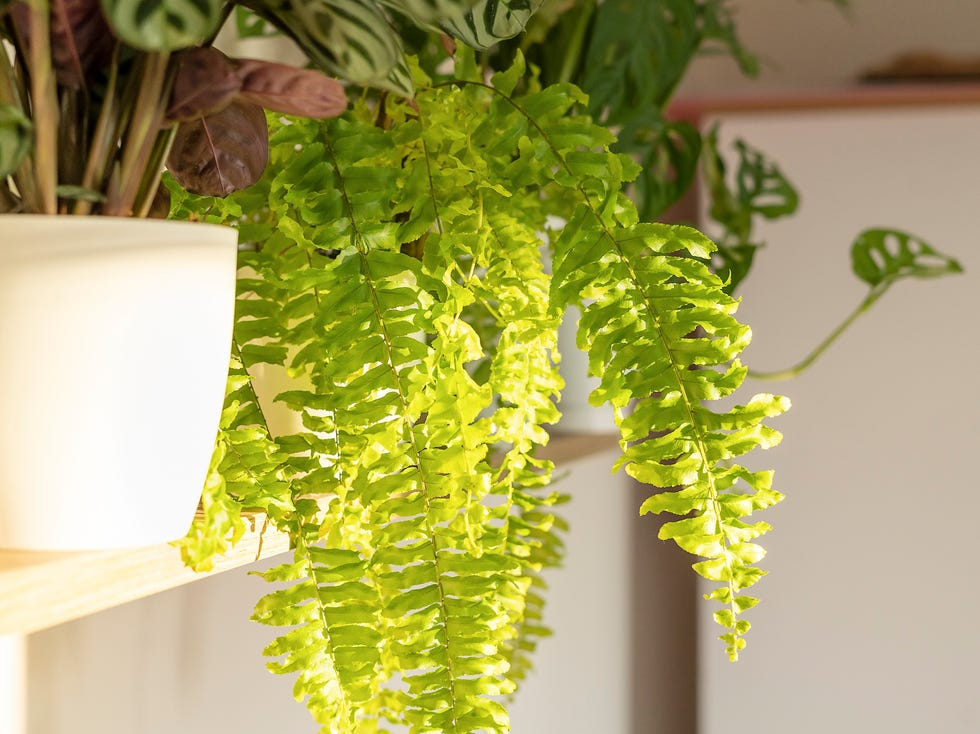
- Living rooms with filtered light: Hang or pedestal-place to let fronds cascade and soften corners.
Placement do’s and don’ts
- Do give bright, indirect light; gentle morning sun is fine. Filter harsh midday/afternoon rays.
- Do keep it away from heaters, AC vents, and frequently opened exterior doors.
- Do allow breathing room so fronds can arch without tangling.
- Don’t cram it into very low light; growth becomes sparse and meanings fall flat.
- Don’t block pathways or doors; let energy (and people) flow.
Quick care that keeps the symbolism alive
A serene fern reflects serene care. When it thrives, the message of renewal and calm rings true.
Light
- Bright, indirect to partial shade. Too little light = thin growth; too much sun = scorched tips.
Water and humidity

- Evenly moist, never soggy. Water thoroughly when the top 2–3 cm (about 1 inch) dries.
- Humidity sweet spot: 50–70%+. Use a humidifier, pebble tray (keep pot above the waterline), grouping, or gentle misting with airflow.
- Rehydrate trick: Every couple of weeks, soak the pot 10 minutes, then drain well.
Temperature
- Comfortable at 16–24°C (61–75°F). Protect from cold drafts; keep above ~7°C (45°F). Prolonged heat above ~35°C (95°F) can stress fronds.
Soil and feeding
- Light, moisture-retentive, free-draining, slightly acidic mix (e.g., peat/leaf-mold base with perlite).
- Feed lightly in the growing season: once a month at half-strength, or more diluted every two weeks Apr–Sep. Flush occasionally to prevent salt tip-burn.
Pruning and repotting
- Snip yellowed/brown fronds at the base; trim crisp tips and correct the cause.
- Repot every 2–3 years in spring, one size up, refreshing mix and trimming any rotten roots.
Propagation
- Easiest by division or potting up runner (stolon) plantlets. Spores are possible but slow—strictly for the patient.
Pet friendliness
- Generally regarded as non-toxic to humans, cats, and dogs. As with any plant, nibbling can still upset sensitive tummies.
Designing with meaning: sincere, renewing, calm
In bouquets or home vignettes
- Sincerity: Pair Boston fern with pale blooms and minimal color contrast; the green does the honest talking.
- Renewal: Let a few newly unfurling fronds show; combine with springlike greens.
- Calm: Layer multiple textures in a green-only palette—ferns, soft moss, and matte ceramics—so the eye rests.
Micro-rituals at home
- Welcome note: Place a Boston fern at an entry console with a small dish for handwritten intentions—simple, steady, and sincere.
- Renewal corner: In the East sector, set a fern beside a journal and a carafe of water; refresh both weekly to reinforce new-beginning energy.
A brief, candid word on “air purifying”
Boston ferns often appear on air-improving plant lists. They do trap dust and can contribute to a fresher-feeling room, but real-world air quality depends far more on ventilation and the number/size of plants. Enjoy them first for their beauty and calm.
Troubleshooting the mood (and the plant)
- Brown tips? Usually low humidity or a too-dry root ball. Raise humidity, water more evenly, and flush salts if you fertilize.
- Fronds yellowing from the center? Check for overwatering or poor drainage.
- Fine webbing? Spider mites love dry air. Rinse fronds, boost humidity, and treat with insecticidal soap if needed.
Why Boston fern still captivates
It’s the classic “green fountain” that made Victorian porches lush—and it still softens our modern edges. With no flowers to steal the show, Nephrolepis exaltata speaks through form and feeling: spores tucked out of sight, fronds that unfurl again and again. In the language that grew from floriography to feng shui, it says sincerity, renewal, and calm—then shows you how to live them, one fresh frond at a time.