If a Boston fern could talk, it would say: “Give me light like a bright forest path—never a blazing clearing.” Once you nail placement, Nephrolepis exaltata turns into the lush, arching, green fountain of your dreams. Here’s the no-stress, window-by-window guide—plus simple fixes for rooms that run too bright and the exact signals your fern uses to say “a little more” or “whoa, too much.”
East vs. North Windows: Which One Wins?
Short answer: both can be excellent. The right choice depends on your room and your goals.
East-facing windows (the “morning glow” choice)
- What the fern gets: gentle morning sun and bright, indirect light the rest of the day.
- Why it works: morning light is kind to fronds and fuels growth without scorching.
- Placement:
- On the sill to 1–3 ft (0–90 cm) back is usually perfect.
- One sheer curtain is optional; use it if your east window gets a fierce early beam in summer.
- Expect: full, happy growth with minimal fuss.
North-facing windows (the “steady and safe” choice)
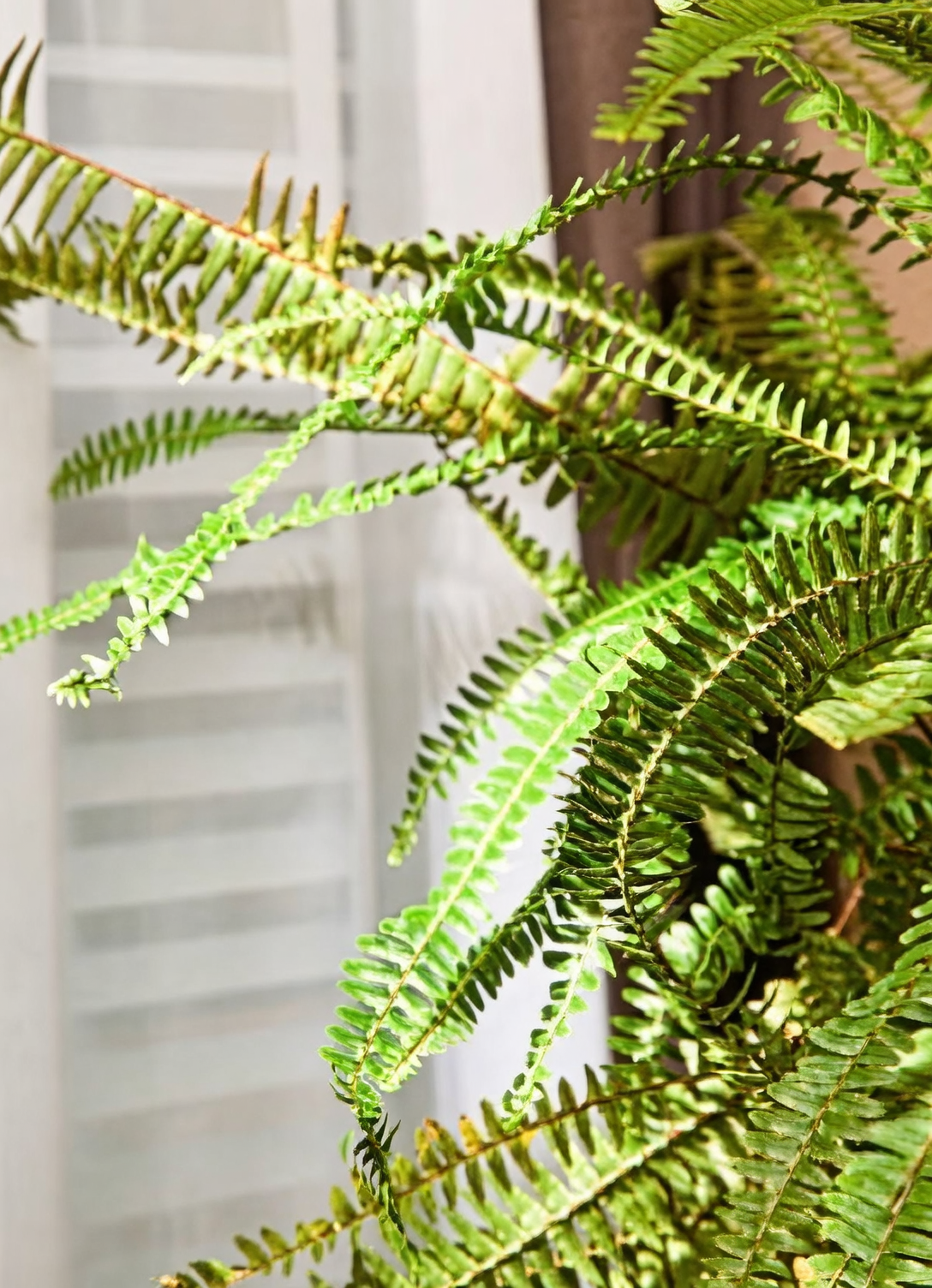
- What the fern gets: soft, all-day light with little to no direct sun.
- Why it works: ferns evolved for bright shade; north light is rarely harsh.
- Placement:
- Right on the sill or within 0–12 in (0–30 cm) is best, especially in winter.
- Expect: slower but steady growth and fewer risks of scorch. If growth feels sparse, slide it a touch closer to the glass or brighten the backdrop (white walls, a mirror) to bounce more light.
Tip: In very dim north rooms, aim for the brightest possible spot near the pane, or add a lightweight sheer to a neighboring brighter window and place the fern a bit closer there instead.

Sunny Rooms, Solved: Sheers and Set-Backs
South- or west-facing rooms pour on intensity—great for people, tough for Boston ferns. Diffuse and distance are your best friends.
Sheer-curtain fixes
- One sheer (lightweight): softens glare and makes a south/west window usable.
- Distance: about 1–4 ft (30–120 cm) from the window.
- Double sheer or a heavier fabric: for especially hot, bright exposures.
- Distance: 1–2 ft (30–60 cm) often works well.
- Bonus diffusers:
- Slatted blinds tilted up to bounce light off the ceiling.
- Place the fern just behind a taller plant to mimic “dappled shade.”

No-sheer strategy
- Set it further back: 3–6+ ft (1–2 m) from a south/west pane, or park it off to the side of the window where sun won’t strike directly.
- Watch for “sneaky beams” that travel across the floor in the afternoon—move the pot out of their path.
How Far From the Glass? Simple Distance Rules
Use these as starting points, then fine-tune by watching the fronds.
- East window: sill to 1–3 ft (0–90 cm)
- North window: sill to 0–12 in (0–30 cm)
- South/west with one sheer: 1–4 ft (30–120 cm)
- South/west with double sheer: 1–2 ft (30–60 cm)
- South/west, no sheer: 3–6+ ft (1–2 m), or offset from the sun’s direct line
Seasonal tweak:
- Summer: pull back a little if fronds look stressed by afternoon heat.
- Winter: slide closer to the pane (especially on east/north) to keep light levels up.
Side note: Glass can amplify heat and dry air near the pane. Keep Boston fern away from heaters and AC vents, and maintain moderate to high humidity (50–70%+ keeps fronds lush).
The Hand-Shadow Test (Fast and Foolproof)
- Soft, fuzzy shadow of your hand on the wall/soil: bright, indirect light—ideal.
- Crisp, high-contrast shadow: likely too direct; add a sheer or move back.
- Barely-there shadow: too dim; move closer or use a brighter window with diffusion.
The Fern’s Feedback: Too Much vs. Too Little Light
Your Boston fern speaks through its fronds. Read the signs and adjust.
Signs of too much light
- Scorched or bleached patches on fronds, especially where sun hits.
- Crispy edges on leaflets (pinnae), paling on the sun-facing side.
- Fronds feel dry or papery even when soil is moist.
Fix it:
- Add a sheer, move 1–3 ft (30–90 cm) farther back, or sidestep the direct beam.
- Prioritize humidity and keep soil evenly moist (never boggy).
Signs of too little light
- Sparse “fountain” with stretched, longer fronds and a thinning center.
- Pale or undersized new fronds; few new fronds forming.
- Soil stays wet for too long (slow uptake), growth stalls.
Fix it:
- Nudge the plant closer to the window in small steps over a week or two.
- Choose an east window or the brightest north spot; brighten the surroundings (light walls, mirrors).
- Consider a sheer-equipped south/west spot at a safe distance if north isn’t cutting it.
Note on brown tips: Low humidity, missed watering, or fertilizer salts can also crisp tips. If brown tips come with bleached patches, light is likely part of the problem; if it’s uniform tip-browning without pale blotches, check humidity and watering first.
Room-by-Room Placement Ideas
- Bathroom with an east window: classic match—humidity plus kind light.
- Kitchen north nook: safe and steady; keep it close to the glass.
- Living room with a big south window: hang a sheer, place the fern 2–4 ft (60–120 cm) back, or park it off to the side.
- Bright office: behind a voile curtain or under a skylight where sun doesn’t strike directly.
Outdoor Season? Think Bright Shade
If you summer your fern outdoors in a frost-free period:
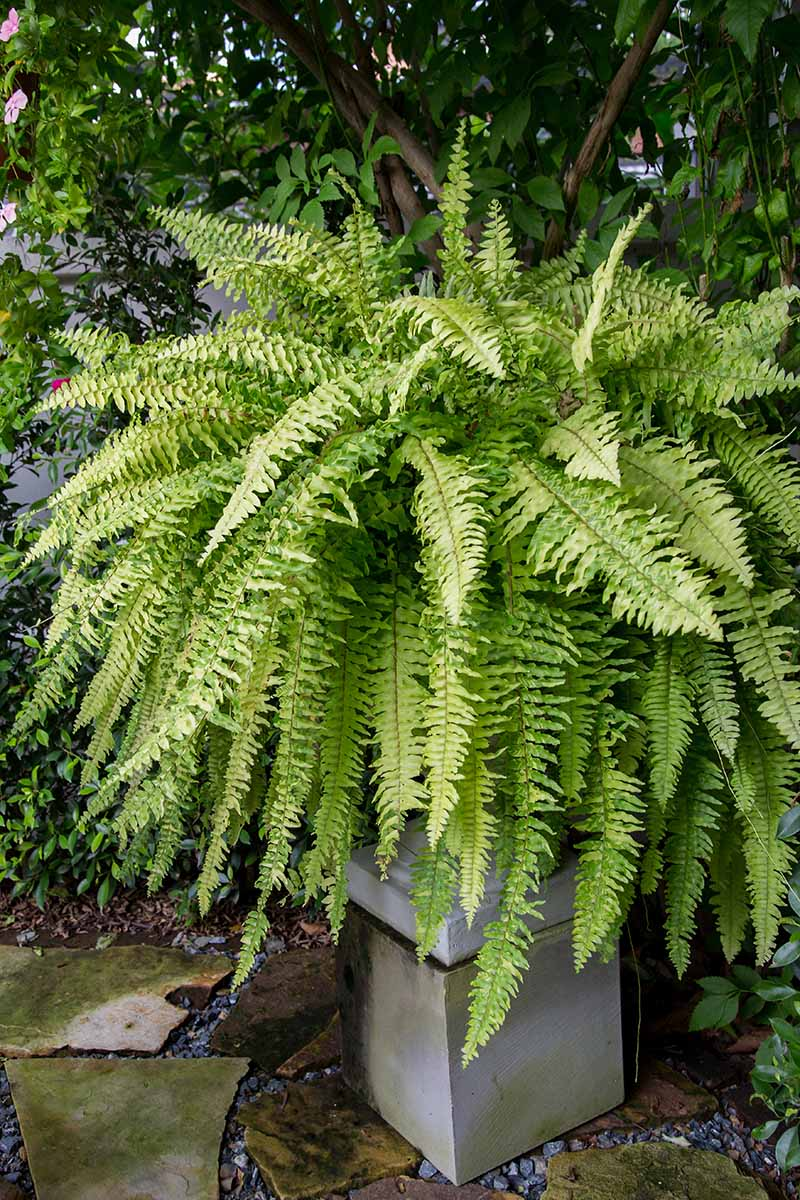
- Place it in bright shade or dappled light (under trees or on a north-facing porch).
- Avoid hot afternoon sun that can scorch through even thin clouds.
Quick Setup Checklist
- Pick your exposure:
- East for lively growth with gentle morning sun.
- North for reliable, low-risk light (closest to the pane).
- South/west only with diffusion and distance.
- Do the hand-shadow test.
- Place at the suggested distance for your window.
- Keep humidity moderate to high; water to maintain evenly moist (not waterlogged) mix.
- Watch for feedback on the fronds for 2–3 weeks and adjust in small moves.
A Few Fast FAQs
- Can Boston ferns handle any direct sun?
- Brief, gentle morning sun is usually fine. Avoid strong midday/afternoon sun, which scorches fronds.
- What if my room is bright but I can’t hang curtains?
- Move the plant 3–6+ ft (1–2 m) back, set it off to the window’s side, or let taller plants act as a living filter.
- What about winter?
- Light dips. Shift closer to an east or north pane; they often welcome a touch more light then. Keep it above 45°F (7°C).
When you match your Boston fern with bright, indirect light—especially near an east or north window—and finesse the scene with sheers and smart distances in sunnier rooms, it rewards you with a full, flowing fountain of green for years. Keep the air humid, the soil evenly moist, and let the fronds do the talking.