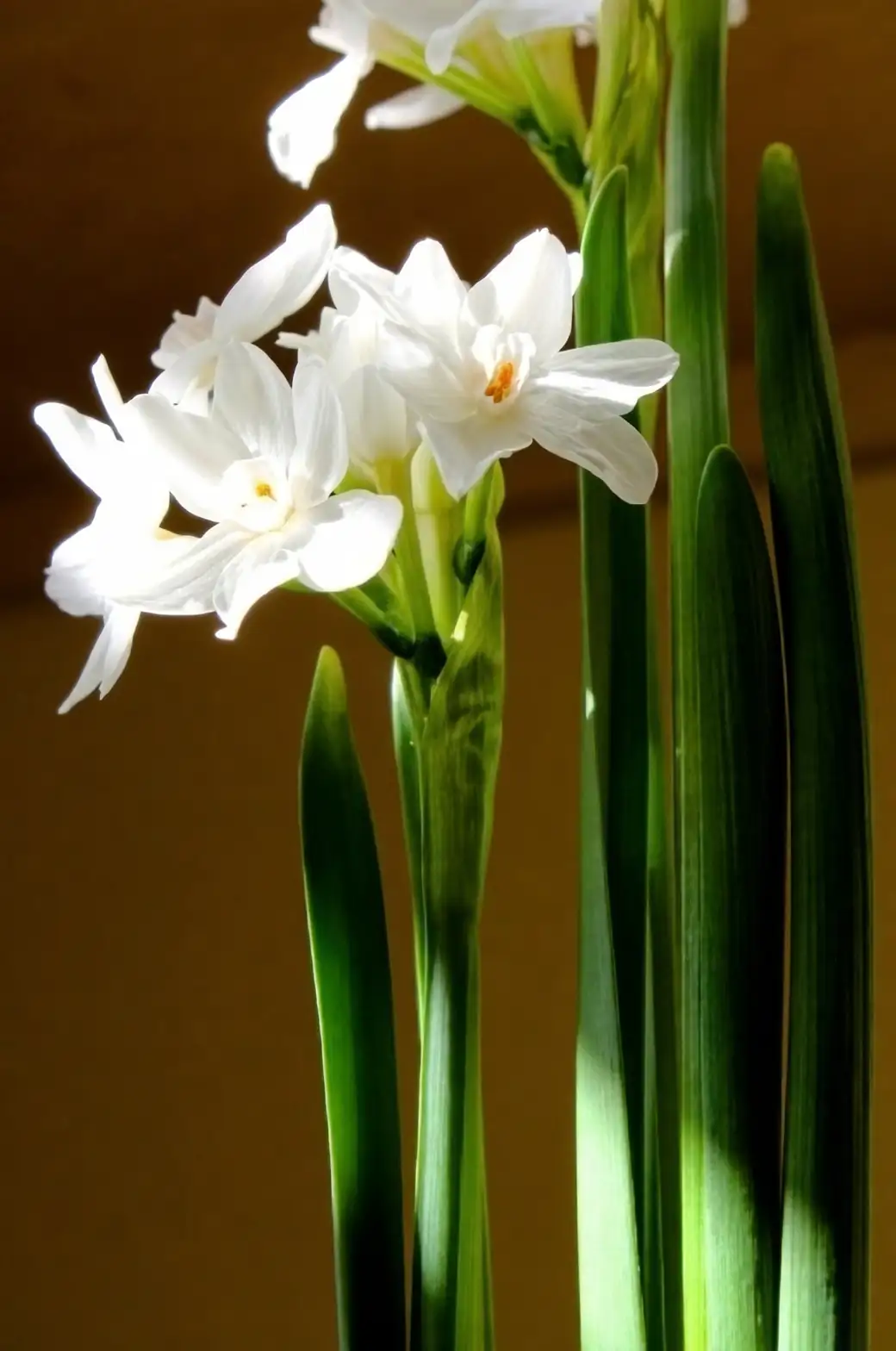
Paperwhite narcissus are the winter whisper of spring—sleek green stems, clusters of perfumed stars, and a brightness that makes a room feel newly aired. But when you’re using Narcissus tazetta as a cut flower, there’s a catch: that milky sap. Handle it right and you’ll gain days of vase life; handle it wrong and your tulips and roses will fold by morning. Here’s the cut‑flower know‑how florists rely on for long‑lasting, mixed arrangements.
Meet Narcissus tazetta (Paperwhite Narcissus)
- What it is: A tazetta-type Narcissus with clusters of small, starry blooms—most often white with a tiny cup—and a famously strong, sweet fragrance.
- Where it shines: Winter-to-spring bloomers indoors (often in 4–6 weeks when “forced” in bowls or pots) and outdoors in mild climates.
- Size and habit: Typically 20–45 cm tall in containers, with narrow, strap-shaped leaves and clump-forming bulbs.
- A seasonal favorite: Widely grown for East Asian winter and Lunar New Year displays, and beloved on windowsills everywhere.
- Safety first: All parts are toxic if ingested (bulbs most of all). The sap can irritate sensitive skin—gloves are a smart idea.
The sap story: why daffodil stems “poison” the vase
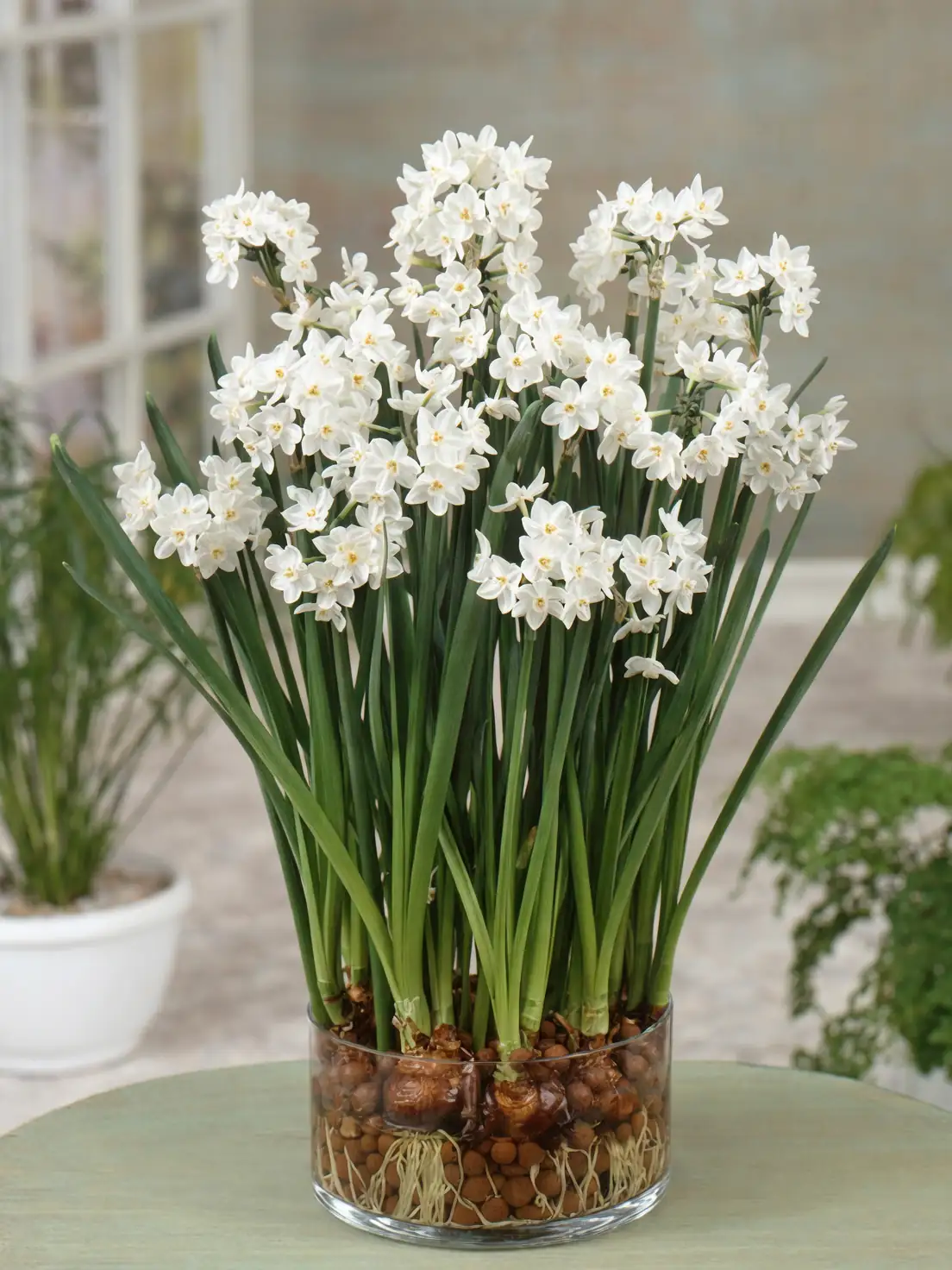
Narcissus stems exude a slippery, clear sap when cut. It’s loaded with:
- Alkaloids (including lycorine) and calcium oxalate that can irritate skin.
- Mucilaginous compounds that ooze into the water and can clog the water uptake of neighboring flowers.
Result: unconditioned narcissus can drastically shorten the vase life of companions like tulips, anemones, or ranunculus. The good news? A simple conditioning routine neutralizes the problem.
Timing the cut: harvest at “showing color”
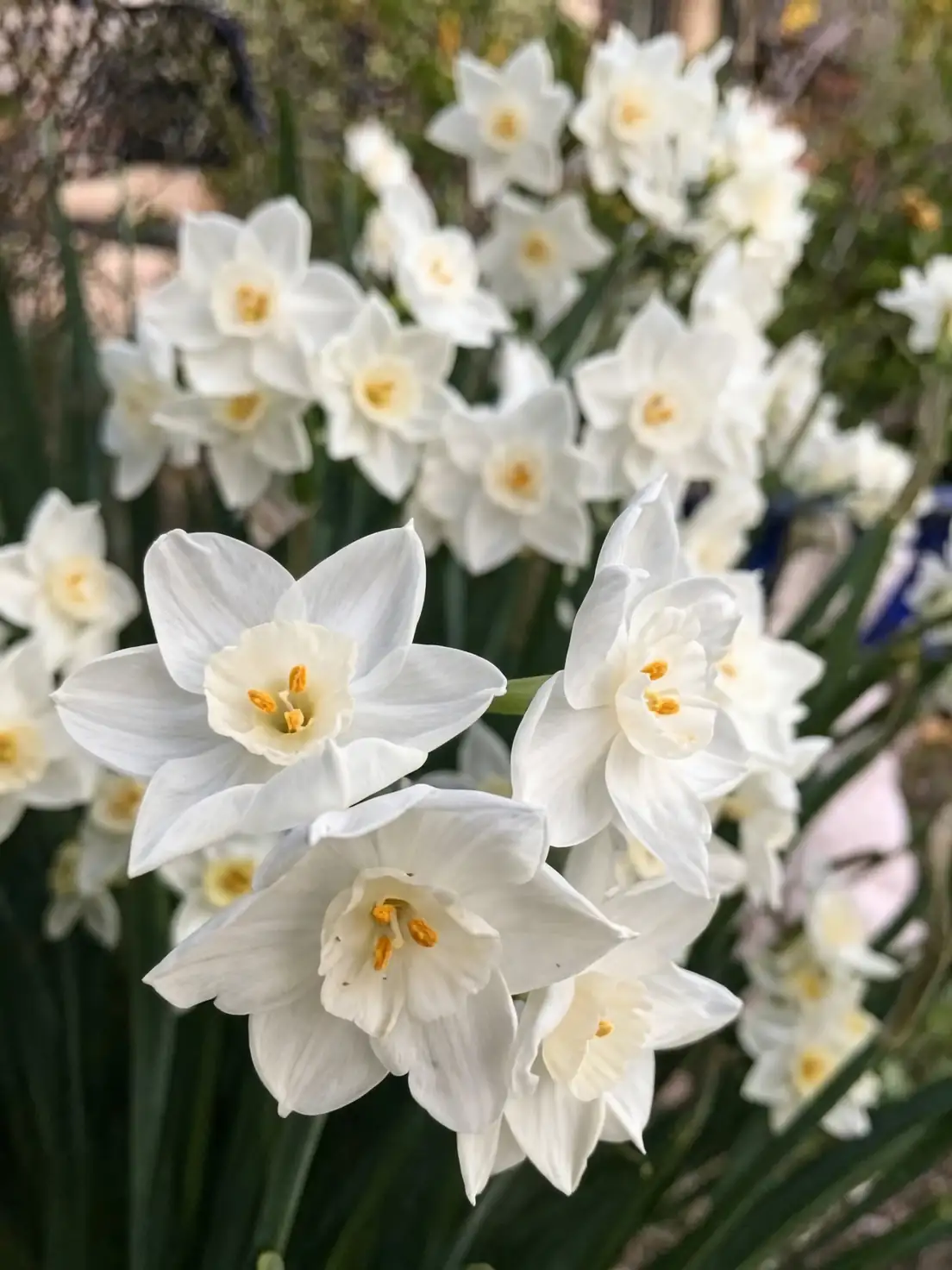
For the longest vase life, harvest when buds are colored but not fully open—the classic gooseneck stage (buds slightly nodding).
- Multi-flowered tazetta stems: cut when the first floret is just cracking or buds clearly show white; the rest will open in the vase.
- Time of day: cool mornings are best.
- Tools: use very sharp, clean snips; strip any leaves that would sit below the waterline.
Pro tip: Wear gloves if your skin is sap-sensitive, and avoid getting sap on other stems or tools—wipe and rinse right away if you do.
Condition like a pro (the two-bucket rule)
The aim is to let narcissus stems release sap and then “callus” before they meet other flowers.
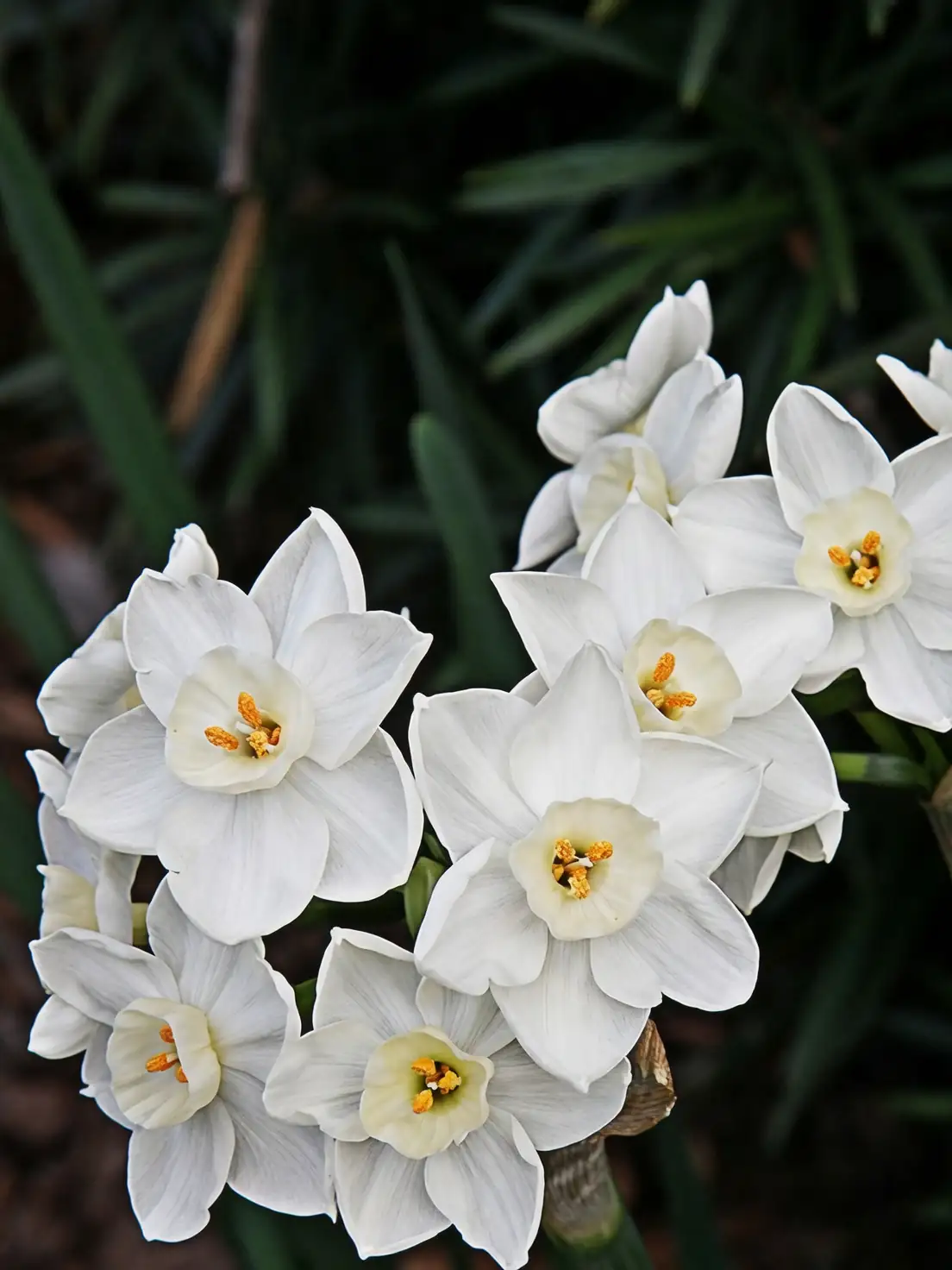
1) Keep them separate
- Place freshly cut narcissus in their own clean bucket of cool water—no other flowers, no food—minimum 2–3 hours; overnight is even better in a cool spot.
- During this time the cut ends begin to seal; the heavy sap flushes out.
2) Don’t recut before arranging
- Recutting breaks that seal and restarts sap flow. Instead, cut to final length at harvest, then condition.
- If you must shorten later, do it—and then recondition separately again for a few hours before mixing.
3) Temperature matters
- Condition and display cool (roughly 10–20°C / 50–68°F). Warm rooms speed fading; cool rooms prolong perfume and petals.
4) Water and hygiene
- Plain, fresh water works well; cleanliness beats additives here. Rinse stems if they feel slimy, refresh water daily, and use squeaky-clean vases.
Mixing safely with other blooms
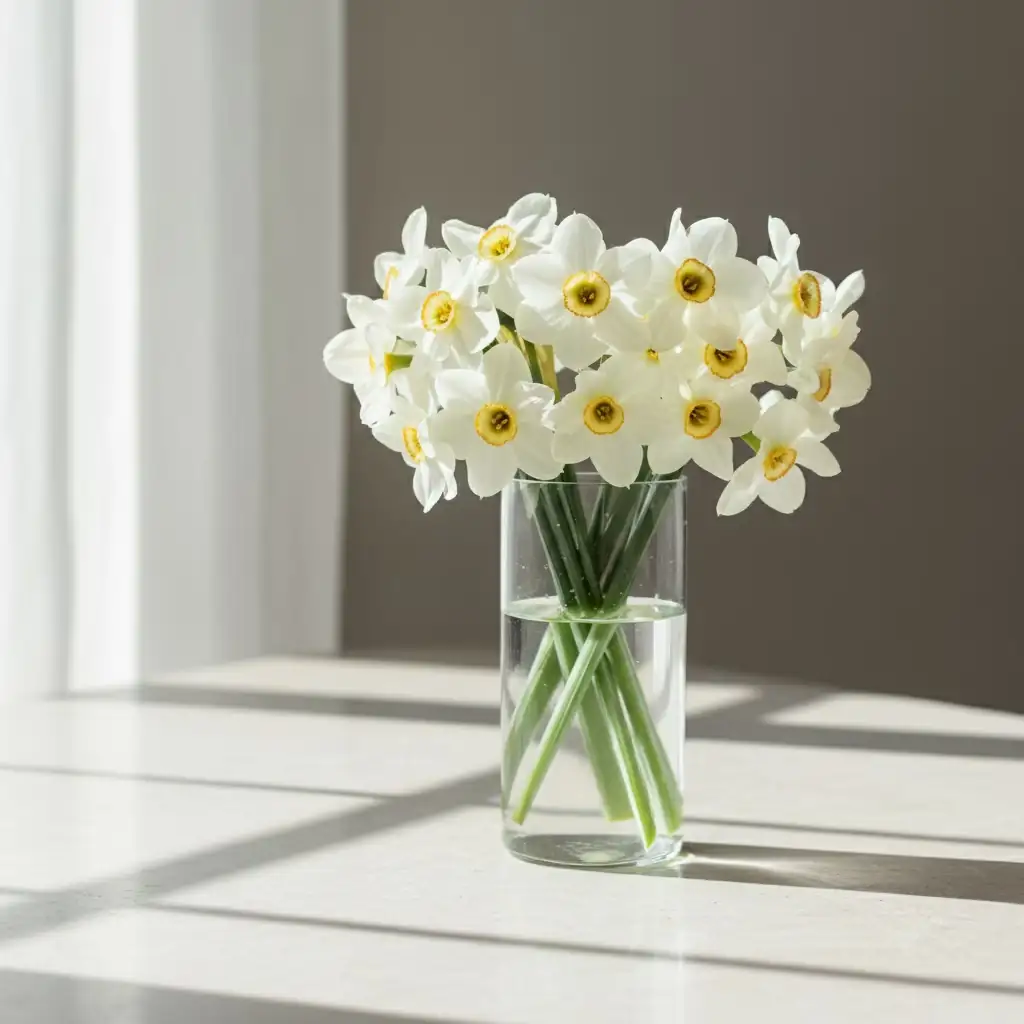
Once conditioned, narcissus can be mixed thoughtfully without cutting their neighbors’ careers short.
- Great companions after conditioning
- Woody and sturdy stems: flowering branches, waxflower, eucalyptus, olive, camellia foliage.
- Classic cuts with good tolerance: roses, stock, snapdragons, lisianthus, hyacinths, viburnum.
- Neutral greenery: ruscus, fern, pittosporum.
- Handle-with-care companions
- Sensitive, soft-stemmed spring flowers (e.g., tulips, anemones, ranunculus, hellebores) are fine once narcissus are preconditioned—but avoid recutting narcissus in the final vase.
- Clever mechanic trick
- Use nested vessels: slip a slim bud vase filled with conditioned narcissus into a wider arrangement. The flowers mingle visually, but water stays separate.
- When in doubt: keep it pure
- A mass of paperwhites on their own is chic, fragrant, and bulletproof—no conditioning anxiety required.
Vase-care habits that add days
- Cool placement: away from radiators, sunny windows, and fruit bowls (ethylene gas ages flowers).
- Clean water: change daily; wash vases between uses.
- No leaves underwater: they rot fast and cloud water.
- Gentle airflow: fresh, not drafty; keeps mildew and mustiness at bay.
Troubleshooting
- Cloudy water or slime returning quickly? Dump it, rinse stems, and recondition narcissus separately for a few hours; refresh the vase for the whole arrangement.
- Floppy stems? Condition longer and keep cooler; use a grid of floral tape or a twiggy framework for support.
- Fragrance feels strong? Fewer stems, more space—paperwhites are wonderfully perfumed, and a little goes a long way indoors.
Safety note
All parts of Narcissus tazetta are toxic if ingested, especially bulbs. Keep away from children and pets. Sap can irritate skin; wash up after handling.
A short note on meaning and midwinter magic
Narcissus has a double life in symbolism. In Greek myth, Narcissus falls for his reflection—hence the association with self-regard and reflection. In East Asia, paperwhite 水仙 is a cherished emblem of renewal and good fortune, especially at Lunar New Year: coaxing bulbs to bloom in a bowl of pebbles feels like inviting spring into the home. Either way, it’s a flower about fresh starts—fitting for a stem that wakes winter tables with light and scent.
Quick cut-and-condition checklist
- Harvest at gooseneck stage (buds showing color, not fully open).
- Strip lower leaves; cut to final length now.
- Condition narcissus alone in cool water 2–3 hours (overnight is ideal).
- Do not recut before mixing. If you must shorten, recondition separately again.
- Mix with tolerant companions, or keep in a separate inner vase if you’re cautious.
- Keep arrangements cool, clean, and out of direct heat for maximum vase life.
Handled this way, Narcissus tazetta becomes a generous cut flower—sharing its winter perfume without stealing days from its neighbors. Condition first, mix wisely, and enjoy a long-lasting, luminous arrangement.