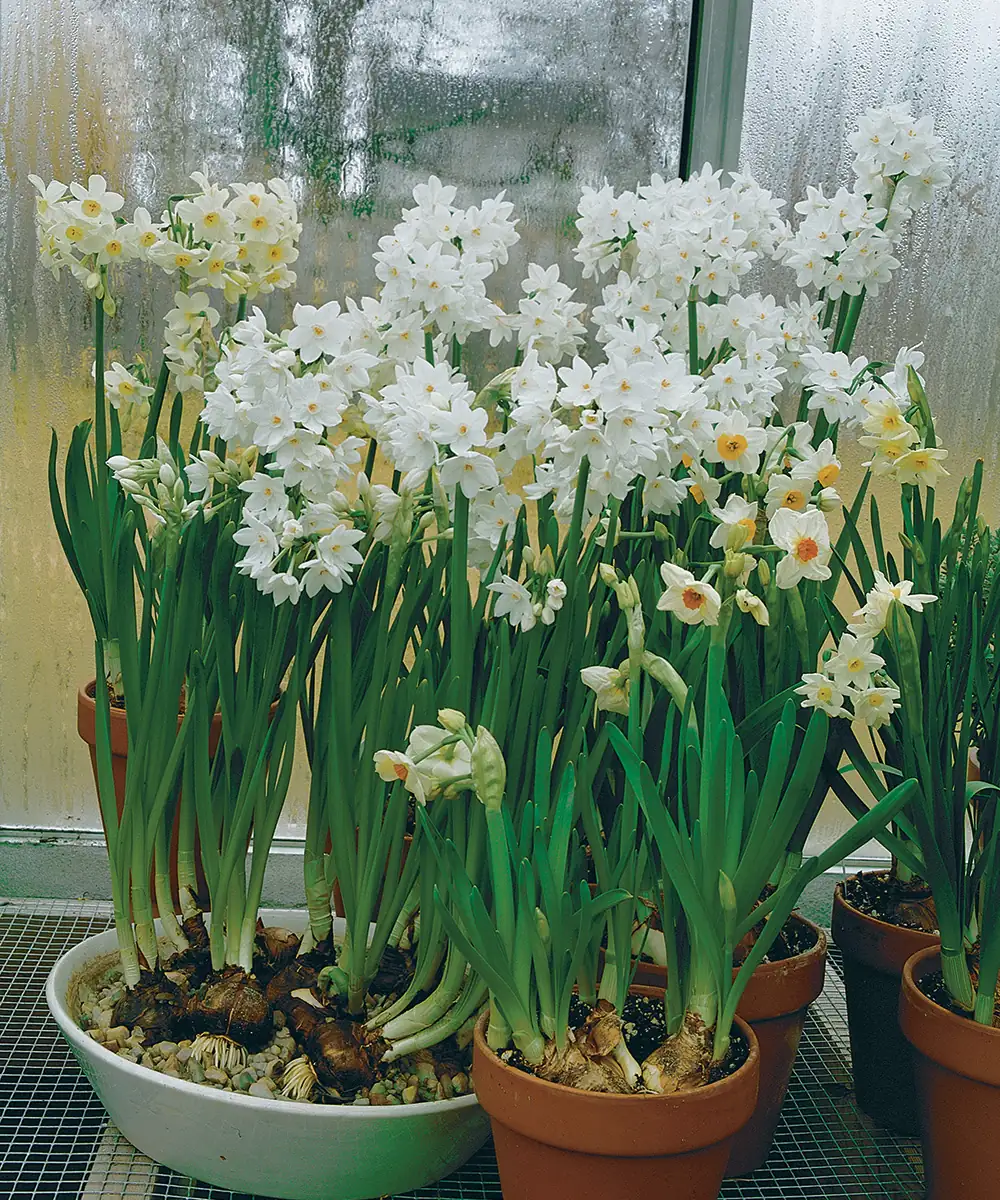
If your winter windowsill stars are suddenly sulking—stems flopping, bulbs blotched, leaves a sticky aphid magnet—this quick, field-tested guide is for you. Paperwhite Narcissus (Narcissus tazetta) is famously easy to force in pebbles or pots, and a resilient clumper outdoors in mild climates. Most mishaps trace back to one combo: warmth + low light + stale water. Here’s how to diagnose common problems in seconds, then prevent and fix them fast—indoors and out.
Rapid diagnosis: what’s wrong in 10 seconds?
- Soft, smelly bulb; tan mush at the base: rot (often bacterial soft rot). Toss it.
- Firm bulb but dry brown plates or pinkish/white fungal growth inside: basal rot (fungal). Don’t replant; discard.
- Powdery blue‑green fuzz on bulb scales or in the bowl: Penicillium “blue mold.” Clean and improve airflow; replace badly affected bulbs.
- Tiny, pearly mites under bulb scales; corky basal plate; slow plants: bulb mites. Start fresh with clean bulbs; deep-clean gear; consider hot-water sanitation for stored stock.
- Bulb hollowed out; small hole in basal plate; plant fails to emerge or sends “grass” tufts: narcissus bulb fly. Remove and destroy infested bulbs; use mesh in fly season.
- Sticky leaves; sooty mold; distorted buds: aphids. Wash off, then treat; watch for virus symptoms.
- Tall, floppy leaves and stems: warmth + low light. Move to brightest, coolest spot; support if needed.
—
Problem-by-problem quick guides
Rot (basal and soft rot)

What you’ll see
- Soft rot (often bacterial): bulb turns watery and foul-smelling, tissue collapses from the neck or base.
- Basal rot (often Fusarium): brown, dryish decay radiating from the basal plate; sometimes whitish to pinkish fungal growth between scales; plant stunts or fails.
Why it happens
- Warmth, overwatering, or stale water in bowls; poor drainage or injury in pots and beds.
Quick cures
- Indoors (bowls/pots):
- Isolate. Remove and discard soft or clearly rotting bulbs—do not compost.
- Sanitize. Scrub bowls and pebbles; soak 10% bleach for 10–15 minutes; rinse well. Keep water shallow—roots in, bulb out of water.
- Air + cool. Move to very bright, cool air (about 5–15°C / 41–59°F). Avoid heaters and direct hot drafts.
- Outdoors (clumps):
- Lift and bin obviously rotted bulbs.
- Improve drainage (raised beds, grit in planting hole). Don’t injure basal plates when lifting/dividing.
- Rotate sites if losses were heavy. Keep summer-dormant bulbs on the dry side.
Pro tip (advanced): Commercial growers suppress Fusarium and some pests with carefully controlled hot-water treatments; for home collections this is risky—if attempted, research temperatures and timings precisely or seek professional services.
—
Penicillium blue mold (storage/bulb-surface mold)
What you’ll see
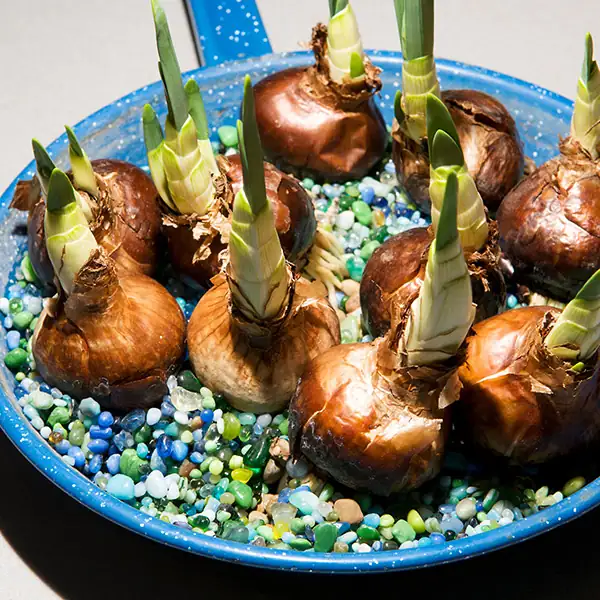
- Blue‑green powdery patches on the bulb tunic or cut surfaces; shallow sunken spots; bulbs may shrivel in storage or spread mold in water bowls.
Why it happens
- Cool, damp, stagnant storage; fresh wounds; bowls kept warm and under-ventilated.
Quick cures
- Indoors:
- Remove badly moldy bulbs. For light surface patches, peel to clean tissue, let cuts dry and callus in airy shade 1–2 days.
- Optional: dust cut edges with garden sulfur. Rinse bowls/pebbles; refresh water frequently early on (daily) then weekly in bloom.
- Outdoors/storage:
- Store dry, airy, and cool (roughly 10–15°C / 50–59°F). Never in sealed plastic. Handle gently to avoid nicks.
- Plant promptly in well-drained soil if mold appears but tissue is still firm.
—
Bulb mites (Rhizoglyphus, Tyrophagus)
What you’ll see
- Stunted starts; corky, pitted basal plates; tiny, slow-moving, translucent mites under bulb scales; often co-occurs with fungal rot.
Why it happens
- Storing bulbs with decaying material; warm, humid conditions; injuries that invite mites and fungi.
Quick cures
- Indoors:
- Discard heavily infested bulbs. Deep-clean containers and pebbles (10% bleach). Start again with firm, clean bulbs.
- Outdoors/storage:
- Cull suspect stock. Keep stored bulbs cool, dry, and well ventilated. Avoid mixing with rotting onions/garlic, which can harbor mites.
- Encourage rapid post-planting root growth with good light and even, not soggy, moisture in a free-draining mix.
Note: Few home miticides are labeled for bulbs. Prevention and sanitation beat cure.
—
Narcissus bulb fly (Merodon equestris and relatives)
What you’ll see
- A small hole in the basal plate; bulb feels oddly firm early on, then hollows out around a fat grub. In the ground: failure to emerge next season, or “grass” tufts from surviving basal tissue.
Why it happens
- Adult flies (they look like small bumblebees) lay eggs near foliage in warm, calm weather; larvae chew into the bulb and feed at the core.
Quick cures and defenses
- Indoors: Rare under clean, indoor forcing.
- Outdoors:
- Remove and destroy infested bulbs (don’t compost).
- During fly activity (often when temperatures exceed ~20°C / 68°F on still days), cover clumps with fine mesh/fleece to block egg-laying. Note: this won’t stop emergent flies already in the soil.
- If a cherished cultivar is affected, some growers carefully excise the larva and grow on any remaining sound basal tissue—but recovery isn’t guaranteed.
There’s no practical amateur chemical control. Hot-water treatment can kill larvae in bulbs, but the internal damage is often already done.
—
Aphids (and the virus risk)
What you’ll see
- Clusters on leaf bases and flower stems; sticky honeydew and sooty mold; distorted or streaked buds. Aphids can vector potyviruses that reduce bloom quality in Narcissus, including tazetta forms.
Quick cures
- Indoors:
- Rinse plants in the sink/shower to dislodge aphids. Follow with insecticidal soap or a light horticultural oil, avoiding open flowers. Repeat weekly as needed.
- Quarantine new plants; use yellow sticky traps for winged aphids; keep air moving.
- Outdoors:
- Blast with water; follow with soap/oil on undersides of leaves. Encourage lady beetles, lacewings, and hoverflies. Avoid high-nitrogen feeds that create soft, aphid-friendly growth.
Virus watch: Persistent mottling, streaks, and stunting across a clump suggest virus. There’s no cure—rogue out affected bulbs to protect the rest.
—
Leaf flop (the “why are they so tall?” problem)

What you’ll see
- Stretchy, noodle-like stems and leaves; flowers faceplanting.
Why it happens
- Warm rooms and insufficient light. Tazettas love bright, cool conditions during growth.
Quick cures
- Indoors:
- Move to the brightest window (east/south) and the coolest room you have: aim for about 5–15°C (41–59°F).
- Rotate pots every few days; add a small fan for gentle airflow.
- Support discreetly with twigs or a circle of clear string. In bowls, set bulbs into deeper pebbles for extra stability.
- Optional “shorten-the-stems” hack: water with a dilute ethanol solution (about 4–6% ethanol, e.g., 1 part 40% vodka to 7 parts water) once shoots are 5–8 cm tall; then continue with plain water. Do not exceed strength or use denatured products.
- Outdoors:
- Flop usually signals too much shade or warmth. Move or divide to a brighter site with good spring sun.
—
Prevention checklists
Indoor bowls (water-and-pebbles) and pots
- Choose bulbs: firm, heavy, papery skins intact; no soft spots, mold, or pest scars. Bigger bulbs bloom more reliably.
- Planting setup:
- Water culture: keep water just at or slightly below the basal plate—roots in, bulb out. Start cool and bright.
- Pots: use a sharply draining bulb mix (about 2 parts potting mix to 1 part grit).
- Environment:
- Light: at least ~6 hours of strong light; supplement with a grow light if needed.
- Temperature: cooler is better for compact growth (10–20°C / 50–68°F; ideal 5–15°C / 41–59°F).
- Air: steady airflow; avoid damp, stagnant corners.
- Hygiene:
- Refresh water frequently (often daily at first); clean bowls and pebbles between uses.
- Avoid splashing open flowers; remove spent blooms promptly.
- Watering:
- Keep evenly moist, never sodden. Let the surface of potting mix dry slightly between waterings.
- After bloom (if keeping bulbs):
- Deadhead; keep leaves until fully yellow to recharge. Feed lightly every ~2 weeks in pots. Then allow a dry, airy dormancy.
Outdoor clumps (mild climates; best in roughly USDA Zones 8–10/11)
- Site: full sun to bright partial shade with excellent drainage; avoid waterlogged areas.
- Soil: well-drained, gritty, and neutral to slightly acidic. Raised beds help.
- Spacing: don’t overcrowd; divide when clumps decline (every 4–5 years).
- Seasonal rhythm: active in cool seasons, then drier summer dormancy—respect the rest.
- Sanitation: lift and discard any suspect bulbs; don’t replant soft or moldy stock.
- Pest barriers: consider fine mesh during bulb-fly season; encourage beneficial insects for aphids.
—
When to salvage vs. when to toss
- Toss immediately:
- Mushy, smelly bulbs; extensive rot; hollowed bulbs from bulb fly; bulbs collapsing in bowls.
- Consider salvaging:
- Minor Penicillium on otherwise firm bulbs (peel, callus, replant).
- Slight mechanical damage (let wounds dry in airy shade before planting).
- A valued bulb with localized pest damage you can clean to sound tissue—quarantine and grow on, accepting it may take seasons to recover.
—
Setups that avoid 90% of problems
- The “cool window” method: Bright east/south window, night temps near 5–10°C (41–50°F), water kept shallow and fresh. Result: compact stems, fewer flops, longer-lasting bloom.
- The “clean bowl” routine: Rinse pebbles before use, keep the bulb shoulder dry, refresh water often, and run a small fan nearby. Result: dramatically less mold and rot.
—
Safety quick note
All parts of Narcissus tazetta are toxic—especially the bulbs. Keep away from children and pets. Sap can irritate skin; wash hands after handling, and consider gloves if you’re sensitive.
—
A cultural side note: why paperwhites mean “new beginnings”
This winter daffodil is cherished as a symbol of renewal—the first whiff of spring arriving on a cold day. In East Asian New Year traditions, 水仙 (paperwhite narcissus) is lovingly trained in shallow bowls, its sculptural leaves and starry blossoms standing for good fortune and a thriving home. The broader “narcissus” name also nods to the Greek myth of Narcissus and self-reflection—reminding us that beauty can be both fragrant and thought‑provoking.
—
Fast reference: ideal conditions at a glance
- Light: bright light to full sun; more light = sturdier stems.
- Temperature: 10–20°C (50–68°F) in growth; 5–15°C (41–59°F) is ideal for compact indoor plants; avoid sustained heat >25°C (77°F).
- Water culture: roots in water, bulb dry; keep water fresh; strong airflow.
- Pots/ground: free-draining mix/soil; evenly moist in growth, then drier as leaves yellow.
Keep it cool, bright, and clean, and your Paperwhite Narcissus will reward you with weeks of perfume and winter cheer—minus the drama.