Think of Narcissus tazetta—your fragrant, starry paperwhites—as the most reliable performers on your event lineup. They’re fast, photogenic, and they don’t need a backstage cold room to learn their cues. With a little temperature and light management, you can schedule blooms 4–6 weeks out, stagger waves of flowers across a multi-day program, and nudge early or late buds into perfect timing.
Why paperwhites work so well for events
- They bloom quickly: most displays flower about 4–6 weeks after you start them.
- They look lush in groups: multiple small, waxy, white blooms per stem create full, elegant clumps.
- The scent reads “winter luxury”: sweet, room-filling fragrance that pairs beautifully with candlelight and linen.
- They’re easy: water-culture bowls or simple pots, bright light, and cool air are the “secret sauce.”
Botanical note: Paperwhite Narcissus (Narcissus tazetta) is a bulb-forming member of the Amaryllidaceae family, long prized across the Mediterranean and East Asia for winter-to-spring bloom.
Bloom-timing 101: count back 4–6 weeks
Start with your event date, then count back 30–40 days to plant. Warmer rooms push the schedule toward four weeks; cooler rooms lean to six.
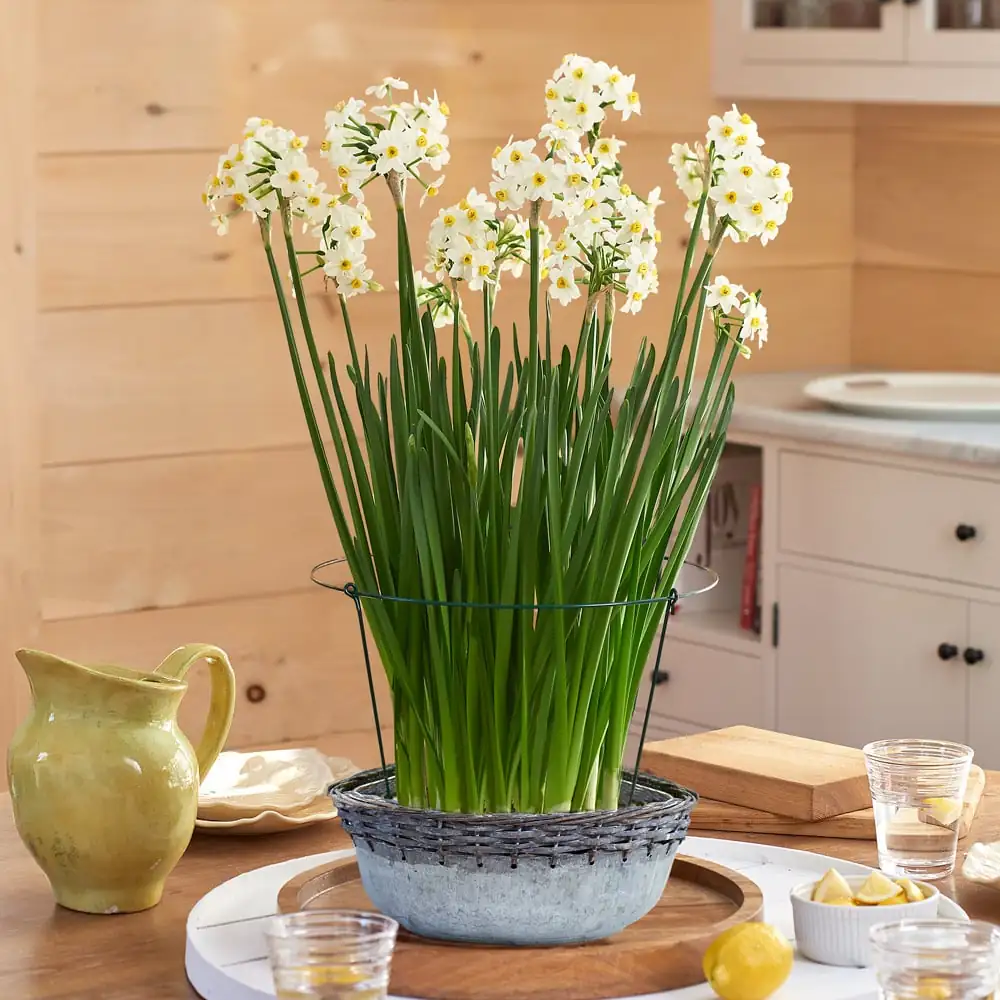
- Week 0 (Planting): Set bulbs tightly in a shallow bowl of clean pebbles or into a free-draining bulb mix. Add water to just touch the bulb’s base—roots in water, bulb mostly dry. Place in bright light and a cool room.
- Weeks 1–2: Roots establish; shoots rise. Keep conditions bright with strong indirect sun; refresh water frequently (daily early on in water culture).
- Weeks 3–4: Buds form. Maintain cool, bright conditions. Rotate containers for even growth.
- Weeks 4–6: Buds show color and open. Fine-tune temperature to hit your date (details below).
Target environment for sturdy, on-time plants:
- Light: bright light to full sun; aim for at least 6 hours daily. Low light = tall, floppy stems.
- Temperature: 10–20°C (50–68°F) while growing. For compact plants and longer-lasting flowers, 5–15°C (41–59°F) is excellent. Avoid sustained heat above 25°C (77°F).
Speed control: use temperature like a dimmer switch

- To speed up late buds: move to a brighter, slightly warmer spot around 18–20°C (64–68°F). Don’t exceed 25°C.
- To slow down or hold early buds: shift to 5–10°C (41–50°F) in bright light. Cool nights dramatically extend bud development and bloom life.
- To stretch display life once open: keep the room as cool as guests can comfortably enjoy; move arrangements to a cooler space overnight.
Event-friendly “cool” spaces:
- An unheated but bright spare room
- A cool vestibule window away from drafts
- A wine fridge or floral cooler set above 5°C (41°F), for short holding periods (keep bulbs upright and ventilated)
Safeguards:
- Never freeze water-grown bowls; keep above 0°C (32°F).
- Many tazetta forms are damaged below about -5°C (23°F), so outdoor parking in hard frost is risky.
Staggered plantings for multi-day or rolling events
To guarantee fresh flowers across a week (or longer):
- Start batches every 5–7 days for three consecutive weeks.
- Label containers with start dates and intended event days.
- Use bulb size as insurance: larger, heavier bulbs generally flower more reliably.
- Crowd bulbs in each container—tight spacing looks abundant and helps support stems.
Sample plan for a Saturday gala:
- Batch A: Start five to six weeks before (cool room, very bright).
- Batch B: Start four to five weeks before.
- Batch C: Start three to four weeks before (keep slightly cooler if they sprint).
Water culture vs. potting: which to choose?
- Water and pebbles (classic bowls)
- Best for fast, pristine displays and easy cleanup.
- Keep water just at the bulb’s base; refresh often (daily early, then weekly once buds set).
- Clean stones and containers before use; good airflow prevents rot.
- Pots with mix (more lasting)
- Use a free-draining bulb mix (about 2 parts potting mix to 1 part grit).
- Water lightly; never let pots sit in water.
- A good option if you’ll keep bulbs after the event.
Styling and support that reads “intentionally designed”
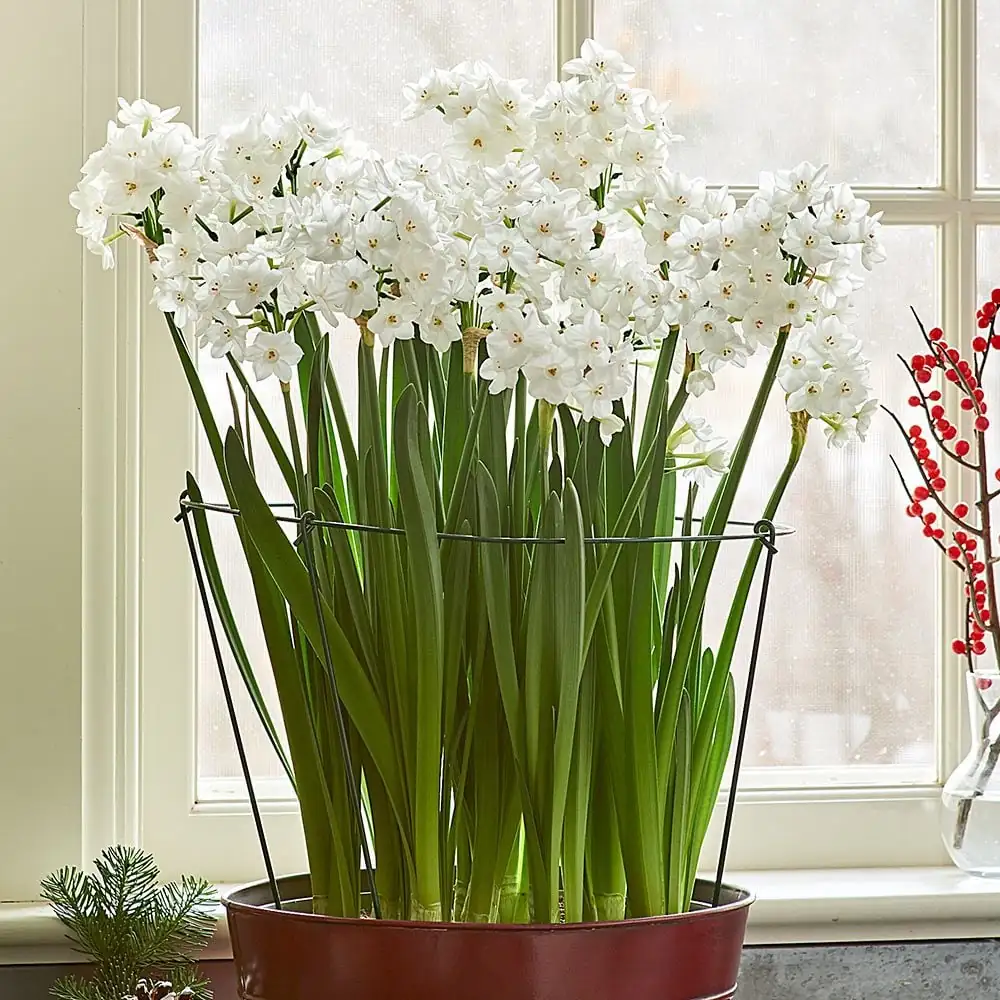
- Choose shallow, stable vessels; group multiple bowls for impact.
- Tuck in airy twig frameworks (willow, birch) that discreetly support stems.
- Use containers with narrow necks for natural support if stems run tall.
- Avoid spraying open flowers; water spotting shortens bloom life.
Cut-flower tip: If you cut stems for mixed arrangements, condition daffodil stems separately in plain water for several hours first. Their sap can shorten the life of other flowers.
Troubleshooting timeline slips
Buds are running early
- Move to 5–10°C (41–50°F) with bright light; keep out of hot sun and away from heaters.
- Slightly lower light intensity (still bright) to slow expansion without causing floppiness.
- Reduce watering frequency a notch (don’t let roots dry) to slow metabolism.
Buds are lagging
- Shift to 18–20°C (64–68°F) in strong light.
- Refresh water; ensure roots are actually in water (water bowls) or that potting mix is evenly moist (pots).
- Inspect for rot or soft bulbs; remove any failing bulbs to protect the group.
- Build a safety net: for critical moments, source a few pre-budded plants as backups.
Tall, floppy growth
- Classic cause: warmth + low light.
- Fix: maximum light, cooler room (5–15°C / 41–59°F).
- Use decorative twig grids or crowd containers; avoid tying or braiding foliage.
Rot or mold
- Keep bulbs mostly dry—only roots in water.
- Refresh water often; sanitize containers; provide airflow.
- Remove decaying tissue promptly; start with firm, unblemished bulbs.
Sourcing and prep checklist
- Choose firm, heavy bulbs with intact skins; avoid soft spots, mold, or black marks.
- Aim for bulbs about 20 mm (0.8 in) diameter or larger for reliable flowering.
- Handle gently—stems snap easily.
- Plan your cool-bright staging area before you start.
- For water culture, rinse stones and bowls thoroughly; for carved/trained displays, let any cut surfaces dry before returning to bright light.
Event-week care routine
- 5–7 days out: fine-tune temperature—warmer to nudge, cooler to hold.
- 3–4 days out: rotate containers daily for straight stems; keep water at the correct level.
- 1–2 days out: aim for buds just cracking with a few flowers open; move to a cool holding room overnight.
- Day-of: stage away from heat sources and direct blasts of sun or HVAC; refresh water right before setup.
After the party: keep or compost?
- Short-term displays (especially in water): no fertilizer needed; many planners compost after bloom.
- Want to keep them? Deadhead spent flowers, keep leaves in bright light until they yellow naturally (often 6–8 weeks), and water sparingly. A light, balanced feed during active leaf growth in pots can help recharge bulbs. Allow a dry, airy summer rest. In mild climates (roughly USDA 8–10/11), bulbs can go outdoors in well-drained spots; protect from hard freezes.
Safety notes
- All parts are toxic—especially the bulbs. Keep away from children, dogs, and cats.
- Sap can irritate skin; wear gloves if you’re sensitive and wash hands after handling.
Cultural meaning you can weave into the brief
- Renewal and new beginnings: a classic symbol of winter giving way to spring—perfect for openings, launches, and fresh starts.
- East Asian tradition: known as 水仙, paperwhites are beloved for Lunar New Year displays, linked with good fortune and a thriving home.
- The Narcissus myth: the name traces to the Greek tale of self-regard; in Victorian “flower language,” narcissus can suggest self-love. Today, planners often lean into the “fresh start” and “good luck” readings for celebratory contexts.
Quick-reference numbers to remember
- Lead time: 4–6 weeks from start to bloom in good conditions.
- Light: bright to full sun; ≥6 hours daily.
- Temperature: grow at 10–20°C (50–68°F); compact/long-lasting at 5–15°C (41–59°F); avoid >25°C (77°F).
- Water culture: roots in water; bulb mostly dry; refresh frequently.
With a calendar, a cool room, and bright light, Narcissus tazetta reliably hits its mark—giving you fragrant, elegant blooms right on cue, whether you’re dressing a single table or orchestrating a multi-week festival of winter white.