

Walk into any contemporary Asian home or café and you’ll spot it: a sculptural silhouette of bold, arrow-shaped leaves catching the light like polished lacquer. Alocasia—often nicknamed Elephant’s Ear or African Mask Plant—has become the emblematic foliage muse of the modern houseplant moment. And with that rise has come a fresh “flower language” for a plant that rarely flowers indoors at all: resilience, transformation, and prosperity. Here’s how those meanings took root, how they play out in Feng Shui, and how to gift and place Alocasia so its symbolism feels as intentional as its style.
What “flower language” means for a plant that’s all leaf
In East Asian popular culture, flower language (花语) has evolved beyond literal blossoms to include the visual poetry of leaves, form, and growth habit. Alocasia’s message isn’t about petals; it’s about posture and process:
- It stands tall, leaf after leaf, as if braced for the tropical understory.
- Its new leaves unfurl in spirals—visible, time-lapse theater of becoming.
- In ideal warmth and humidity, it can push a new leaf roughly each week in summer.
These living cues are why today’s plant lovers in places like Taiwan, Thailand, Singapore, and urban China often read Alocasia as a symbol of resilience, transformation, and prosperity—meanings that also dovetail with long-standing Feng Shui interpretations of lush, upward-growing plants.
The three modern meanings, leaf by leaf
Resilience: standing tall through seasons
Alocasia’s upright clumps arise from tough, energy-storing rhizomes or tubers. Even when growth slows or leaves drop in winter dormancy, the plant can rebound once warmth and humidity return. That ability to “lean into” the season and then restart is the heart of its resilience message.
- Visual cue: Firm petioles lifting shield- or arrow-shaped leaves; steady, rhythmic leaf replacement.
- Life analogy: Momentum after setbacks; stamina in a new role or city.
- Gift it for: Recovery after a challenge, academic milestones, moves, or anyone rebuilding good habits.
What to write on the card: “May you stand tall and keep unfolding your next bright leaf.”
Transformation: the art of unfurling
Watch a new Alocasia leaf unwind—tight coil to full shield—and you’ll see why it reads as transformation. Its seasonal slowdown and spring revival echo this, too.
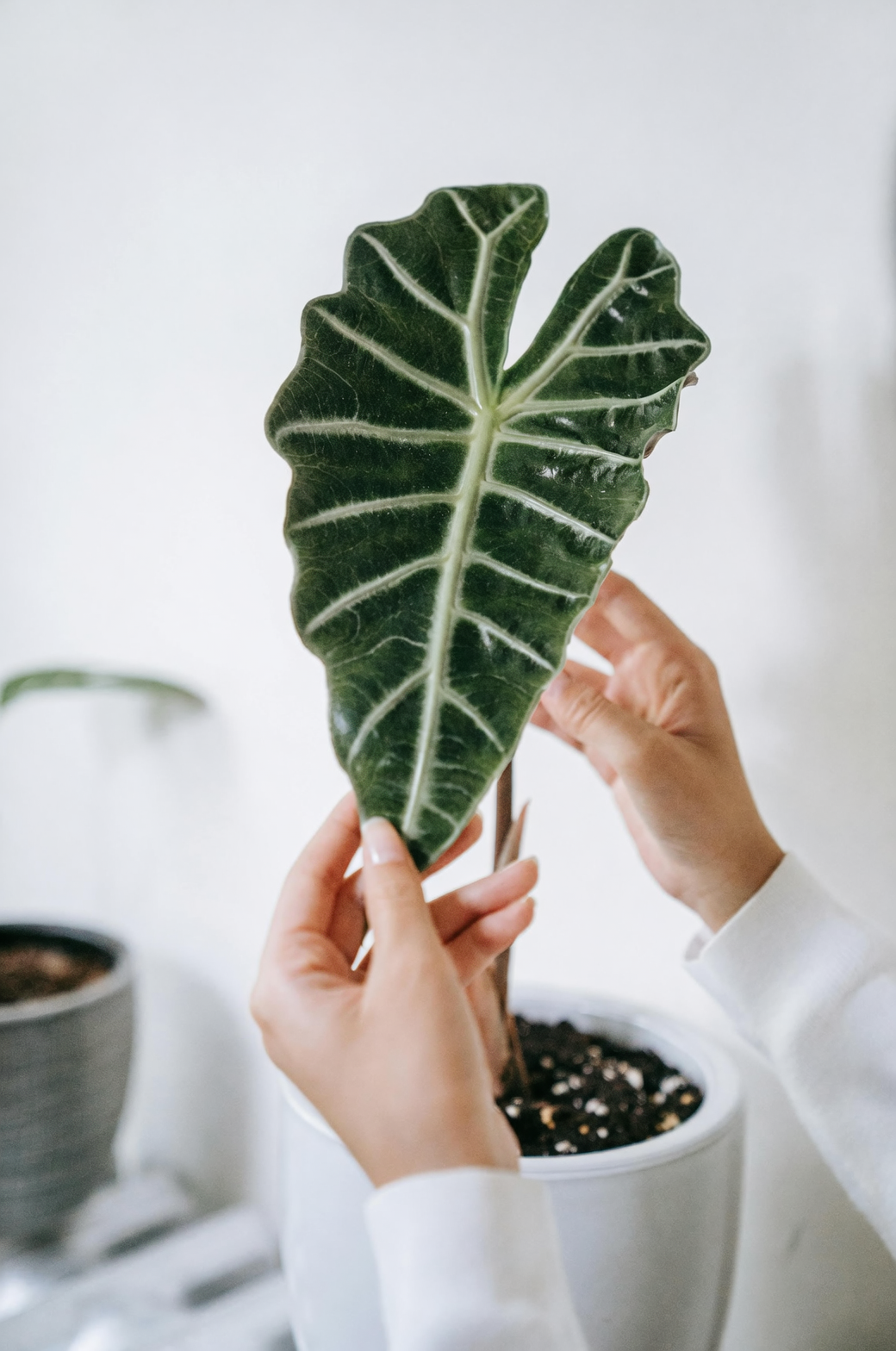
- Visual cue: Spiraled leaf tips, then a gleaming reveal of veins and texture.
- Life analogy: Career pivots, creative rebirth, mindful personal change.
- Gift it for: New beginnings—startups, rebrands, first homes, fresh creative cycles.
Card idea: “For every chapter that opens, a leaf that unfurls.”
Prosperity: lush growth, gathered energy
In Feng Shui, bold, healthy foliage suggests vitality and abundance. Alocasia’s large leaves feel like catchers of good fortune, while its upright habit hints at career lift. Many people associate it with prosperity and career luck—especially when it’s thriving.
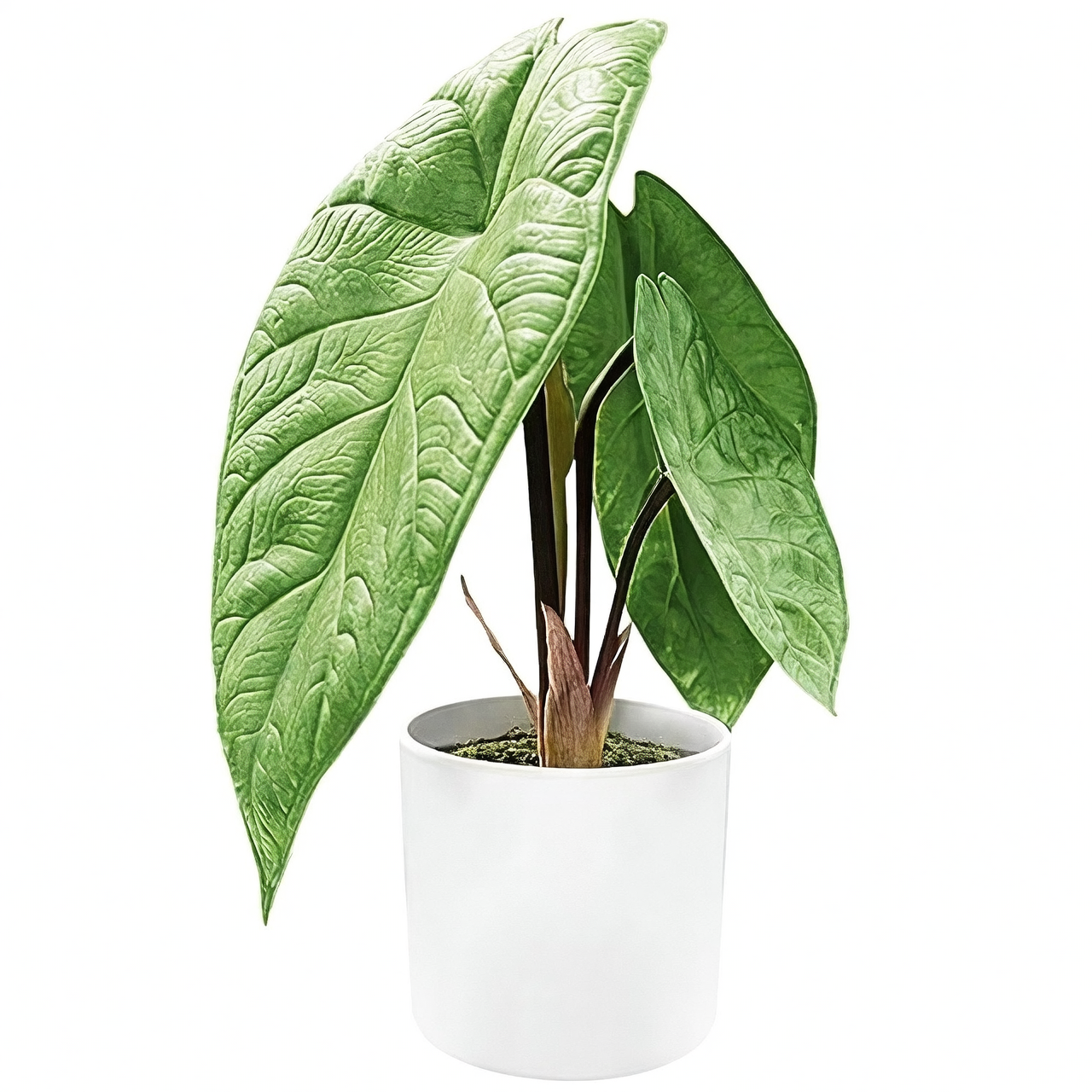
- Visual cue: Broad, glossy leaves with prominent white or silvery veins.
- Life analogy: Financial steadiness, promotions, opportunity flow.
- Gift it for: Promotions, launches, housewarmings, new offices.
Card idea: “For momentum and abundance—may your opportunities grow as boldly as these leaves.”
How these meanings took hold in modern Asia
- Native roots: Alocasia hails from tropical and subtropical Asia through Southeast Asia to eastern Australia. Its “jungle” charisma is authentic, not invented.
- Design language: The dramatic, architectural foliage suits minimalist and contemporary interiors—from Tokyo apartments to Singapore studios—so it migrated quickly from greenhouses to living rooms.
- Online culture: From Bangkok and Jakarta collector groups to WeChat and Instagram feeds in Shanghai and Taipei, jewel alocasias (like A. reginula ‘Black Velvet’ and A. cuprea) amplified the plant’s aura of rarity, elevation, and personal growth.
- Feng Shui resonance: Lush, upward, and vigorous plants fit prosperity and career-luck narratives. Over time, this reinforced Alocasia’s modern “wealth and momentum” reading in urban homes and offices.
Feng Shui decoding: prosperity with practical roots
Feng Shui is interpretive and tradition-rich—so always prioritize your plant’s needs first, then align intention.
First, honor the plant
- Light: Bright, indirect light—think rainforest understory. East- or west-facing windows are excellent, but avoid harsh direct sun.
- Warmth: 60–85°F (15–29°C); keep it away from cold drafts and sudden swings.
- Humidity: Higher is better—aim for 65%+ if you can. Bathrooms or bright kitchens are great if naturally humid.
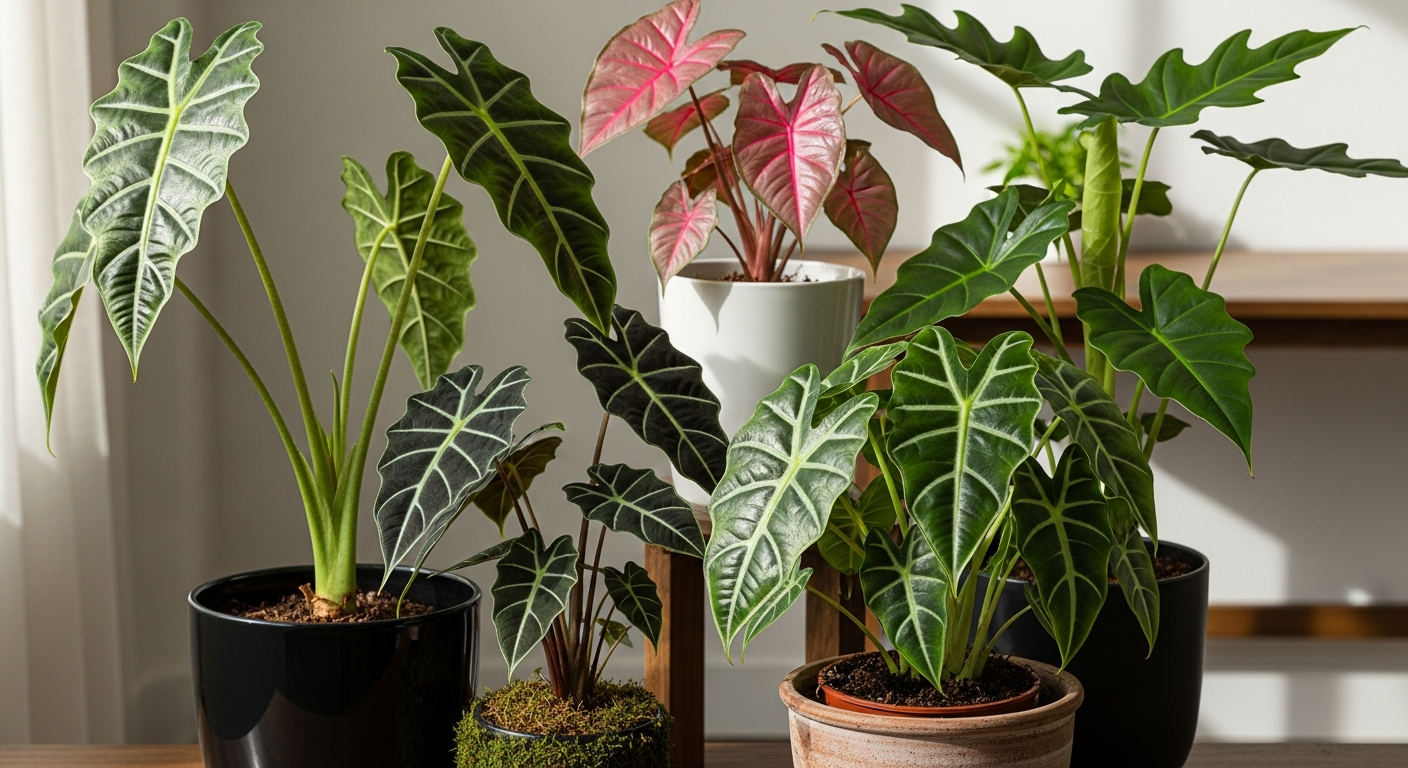
A thriving Alocasia looks and feels more auspicious than a struggling one.
Then, place with intention
Common Feng Shui alignments used by many practitioners:
- Career momentum (North/Water): Position an Alocasia near the north area of a room or office to symbolize flow and progress at work.
- Wealth and abundance (Southeast/Wood): Place a lush specimen in the southeast to echo growth and resourcefulness.
- Health and family (East/Wood): An Alocasia here can signal steady, living energy.
Styling tips for stronger symbolism:
- Breathing room: Give space around the plant so its presence feels commanding, not cramped—smooth “Qi” flow mirrors good circulation and good luck.
- Pot choices: If you like elemental cues, blue/black ceramics can nod to Water (flow, career), while green/wood tones underscore growth.
- Bedrooms: Some practitioners avoid bold, dominant foliage in sleeping spaces. If you do place one there, choose a smaller variety and keep it at a restful distance.
Gifting Alocasia: match the message to the moment
When it shines
- Career chapters: Promotions, new jobs, entrepreneurial launches.
- Life pivots: Housewarmings, post-recovery milestones, creative restarts.
- Celebrations of grit: Finishing a degree, completing a tough project, moving abroad.
What to gift
- Pick a healthy, sturdy plant: Firm stems, crisp leaves, no widespread yellowing or pests.
- Consider the space: Compact “jewel” types for desks and shelves; larger floor types for living rooms and lobbies.
- Add a care card:
- Water when the top 2–3 inches (5–8 cm) of mix is dry; never let the pot sit in runoff.
- Keep warm and humid; reduce watering in winter when growth slows.
- Bright, indirect light only.
Important etiquette
- Safety first: Alocasia is toxic to people and pets (calcium oxalate crystals). Encourage placement out of reach and handwashing after handling. If the recipient has curious pets or toddlers, suggest a high shelf in a bright room—or consider a different, pet-safe gift.
- Seasonal truth: Some Alocasias go semi-dormant in winter and may drop leaves—this isn’t failure; it’s a growth pause before the next chapter. That, too, can be part of the gift’s message.
If it ever flowers: a quiet, elegant bonus
Indoors, many Alocasias never bloom, focusing instead on foliage. When they do, expect a subtle aroid-style spathe-and-spadix, yellow to yellow-green. You can enjoy the bloom as a symbol of “inner potential revealed”—or remove it to conserve energy for leaves. Either choice supports the plant’s larger story: resilience and transformation in motion.

Placement cheat sheet: practical meets poetic
- Light: Bright, filtered; avoid harsh midday sun.
- Best rooms: Bright living spaces, home offices, bathrooms, or kitchens with good humidity.
- Temperature: Keep above 60°F (15°C) year-round.
- Humidity: 65%+ preferred; use a humidifier or pebble tray.
- Soil: Airy, well-draining aroid mix (peat or coco with bark and perlite), slightly acidic.
- Watering: Evenly moist, never soggy. Empty saucers after watering.
- Feeding: During spring–summer, half-strength balanced liquid fertilizer 1–2× per month; pause in winter.
- Growth rhythm: Peak growth in warm months (sometimes a leaf a week). In fall–winter, slow down is normal—water less and stop fertilizing.
A note on names and origins
- Alocasia, Elephant’s Ear, African Mask Plant, Giant Taro—popular nicknames can blur lines among aroids. Your houseplant Alocasia is primarily an ornamental foliage plant; despite some relatives being historically processed as food in certain regions, do not treat Alocasia as edible.
- Native range: Tropical and subtropical Asia through Southeast Asia to eastern Australia—a lineage that explains its appetite for warmth, humidity, and filtered light.
Bringing it all together
Place Alocasia where its leaves can catch bright, indirect light—and your intention. In modern Asian houseplant culture, this plant stands for showing up, leaf after leaf (resilience), becoming who you’re becoming (transformation), and gathering what you need for the journey (prosperity). When you gift it, you’re not just giving a plant. You’re handing over a living metaphor—one that, with a little warmth and water, will keep unfurling its meaning all year long.